Bridging the Biophysical Gap: Holistic Environmental Awareness for 3D Linker Design
Time
9:00 AM, August 4, 2026 ( Beijing)3:00 AM, August 4, 2026 ( Italy)
9:00 PM, August 3, 2026 (New York)
Contact Us
Email: cbmjournal@sciexplor.comSpeaker
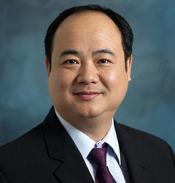
Prof. Jijun Tang
Faculty of Computer Science and Artificial Intelligence, Shenzhen University of Advanced Technology, Shenzhen, Guangdong, China.
Prof. Jijun Tang is a Professor at Shenzhen University of Advanced Technology. He previously served as a tenured Professor in the College of Computing Science and Engineering at the University of South Carolina and as a Professor at Tianjin University. His research focuses on bioinformatics, computational biology, artificial intelligence, and algorithm development for large-scale biomedical data mining across multiple biological scales. He has received research support from major funding agencies including the U.S. National Science Foundation (NSF), National Institutes of Health (NIH), Office of Naval Research (ONR), National Endowment for the Humanities (NEH), the National Natural Science Foundation of China (NSFC), and the Ministry of Science and Technology of China.
He has published over 260 original journal and conference papers, with research appearing in leading journals including Nature Communications, Nature Microbiology, Nucleic Acids Research, Briefings in Bioinformatics, and IEEE/ACM Transactions on Computational Biology and Bioinformatics.
He has been recognized with prestigious honors, including the Tianjin Natural Science Award and the Wu Wenjun Artificial Intelligence Science and Technology Award, for contributions to computational biology and artificial intelligence. He has played leadership roles in major international bioinformatics conferences and actively contributes to the global research community through editorial and professional services. He currently serves as a Standing Committee Member of the Bioinformatics Technical Committee of the China Computer Federation (CCF).
He has published over 260 original journal and conference papers, with research appearing in leading journals including Nature Communications, Nature Microbiology, Nucleic Acids Research, Briefings in Bioinformatics, and IEEE/ACM Transactions on Computational Biology and Bioinformatics.
He has been recognized with prestigious honors, including the Tianjin Natural Science Award and the Wu Wenjun Artificial Intelligence Science and Technology Award, for contributions to computational biology and artificial intelligence. He has played leadership roles in major international bioinformatics conferences and actively contributes to the global research community through editorial and professional services. He currently serves as a Standing Committee Member of the Bioinformatics Technical Committee of the China Computer Federation (CCF).
Host
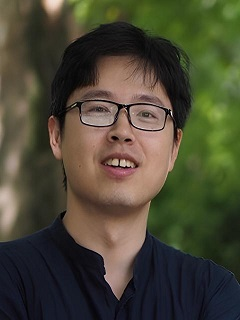
Prof. Leyi Wei
Faculty of Applied Sciences, Macao Polytechnic University, Macao, China.
Prof. Leyi Wei is a Professor at Macau Polytechnic University. His research focuses on AI for Science, particularly the development and application of artificial intelligence algorithms for biomacromolecular sequence and structure analysis, functional annotation, and AI-driven computational drug discovery.
He has authored over 100 high-quality peer-reviewed publications, including numerous first-author and corresponding-author papers in leading journals such as Nature Communications, Genome Biology, Nucleic Acids Research, and Advanced Science. Several of his publications have been recognized as ESI Highly Cited Papers and Hot Papers, highlighting his significant international impact in computational biomedicine and AI-driven drug discovery.
Prof. Wei was consecutively named a Clarivate Highly Cited Researcher and an Elsevier Highly Cited Chinese Researcher in 2021 and 2022, and has also been listed among Stanford University’s World’s Top 2% Scientists.
He has authored over 100 high-quality peer-reviewed publications, including numerous first-author and corresponding-author papers in leading journals such as Nature Communications, Genome Biology, Nucleic Acids Research, and Advanced Science. Several of his publications have been recognized as ESI Highly Cited Papers and Hot Papers, highlighting his significant international impact in computational biomedicine and AI-driven drug discovery.
Prof. Wei was consecutively named a Clarivate Highly Cited Researcher and an Elsevier Highly Cited Chinese Researcher in 2021 and 2022, and has also been listed among Stanford University’s World’s Top 2% Scientists.
Introduction
3D molecular linker design is a critical task in structure-based drug discovery, which requires the precise synthesis of chemical bridges to connect fragments within the constrained environment of a protein binding pocket. Existing methods often suffer from environmental blindness, treating the inter-fragment space as a vacuum and yielding candidates with poor binding affinity or severe steric clashes. To address this, we propose LinkerBridge, an equivariant framework that unifies biochemical semantics with physical constraints through two innovations: a Contextual Interaction-Aware Representation module that internalizes pre-existing biochemical semantics, and a Differentiable Physical Guidance mechanism derived from Van der Waals potentials to steer generation away from collision zones. Extensive evaluations on ZINC, GEOM, and BindingMOAD benchmarks, as well as Hsp90 and JNK3 case studies, demonstrate that LinkerBridge significantly outperforms state-of-the-art methods in real-world drug discovery.
Presentation
Journal Introduction
12
Presentation
194
Q&A
8


