Conference Collaborations

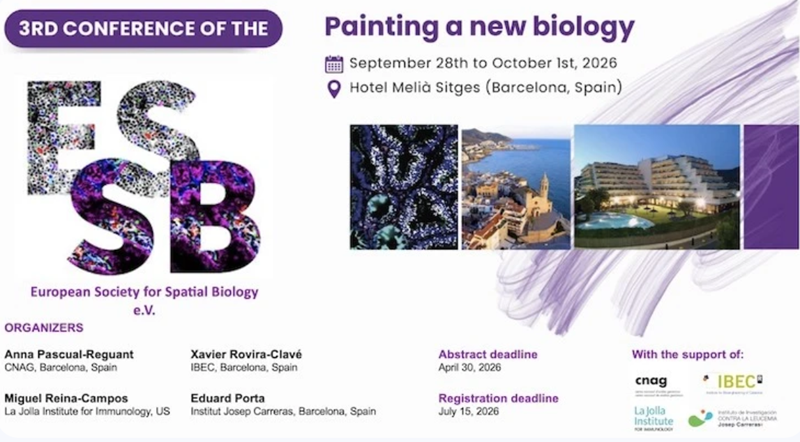
3rd Conference of the European Society for Spatial Biology

Date: September 28-October 1, 2026 | Venue: Barcelona, Spain

Organised by the European Society for Spatial Biology e.V. (ESSB), the 3rd ESSB Conference brings together researchers at the forefront of spatial biology to exchange ideas, present recent advances, and build collaborations. The programme combines scientific sessions, round tables, and poster presentations, creating a focused forum for exploring how spatial approaches are transforming biological and biomedical research.
The European Society for Spatial Biology e.V. (ESSB) is a scientist-run, non-profit organisation that promotes scientific exchange in spatial biology. It connects researchers developing and applying spatial technologies with industry partners and advances the field through focused working groups, conferences, workshops, hackathons, and specialist training.
Website:

https://essb2026.org/programme/

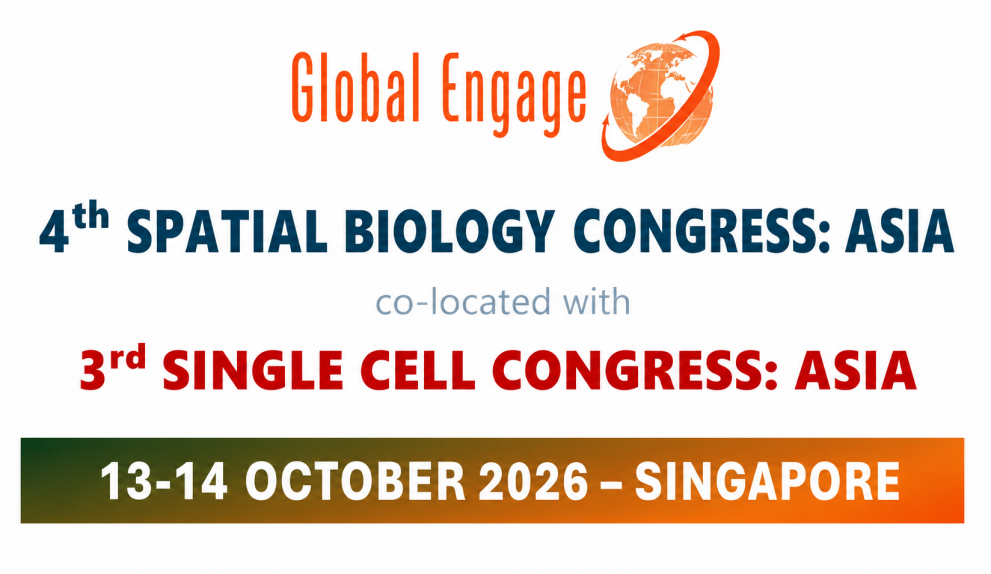
4th Spatial Biology Congress: Asia 2026

Date: October 13-14, 2026 | Venue: Singapore

This co-located conference in Singapore will bring together leaders in spatial biology, imaging, bioinformatics and multi-omics technologies to explore the latest methods and applications transforming biological insights and translational medicine.
As part of the dual-track format, delegates can also engage with the 3rd Single Cell Congress: Asia to share the latest advances in single-cell genomics, transcriptomics, and multi-omics technologies as well as fostering cross-disciplinary learning and collaboration across spatial and single-cell technologies.
Get 20% off and apply promo code: SBSC20 - not applicable for tech or service providers/vendors. Inquiry: saffuan@global-engage.com

Website:

https://global-engage.com/product/spatial-biology-asia/

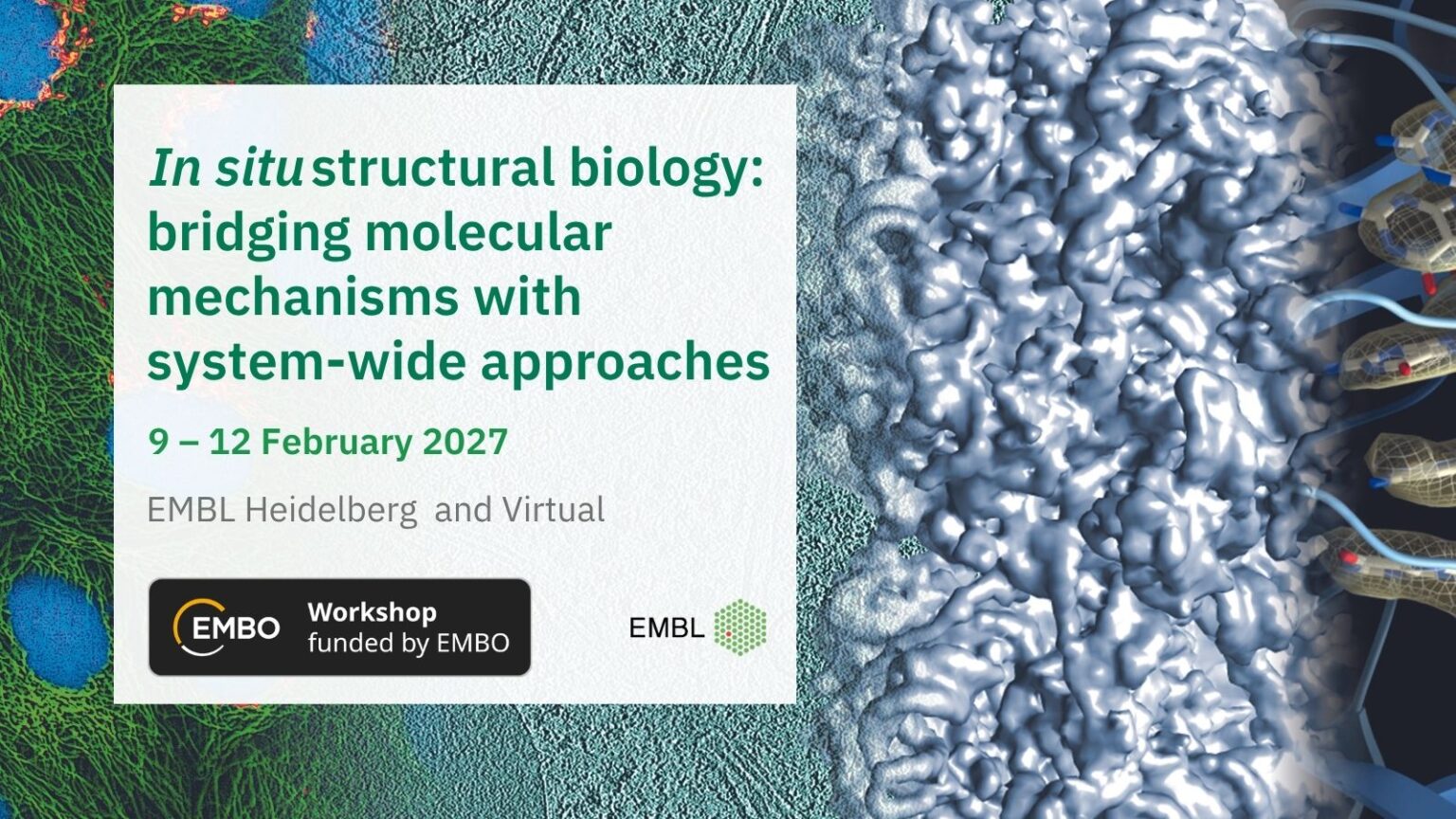
EMBO Workshop | In situ structural biology: bridging molecular mechanisms with system-wide approaches

Date: February 9-12, 2027 | Venue: EMBL Heidelberg and Virtual

The EMBO Workshop “In situ structural biology: bridging molecular mechanisms with system-wide approaches” will take place from 9-12 February 2027 at EMBL Heidelberg, with virtual participation available. The meeting will bring together researchers using cryo-electron microscopy, fluorescence microscopy, mass spectrometry, computational modelling, and data integration to study molecular structures and interactions directly within cells and tissues. With a focus on connecting molecular mechanisms to cellular and system-wide organisation, the workshop will feature lectures, short talks, poster sessions, and networking opportunities for scientists across structural biology, cell biology, and computational research.

Website:

https://www.embl.org/about/info/course-and-conference-office/events/ISS27-01/?utm_source=scieExpress&utm_medium=mpreferral&utm_id=ISS27-01

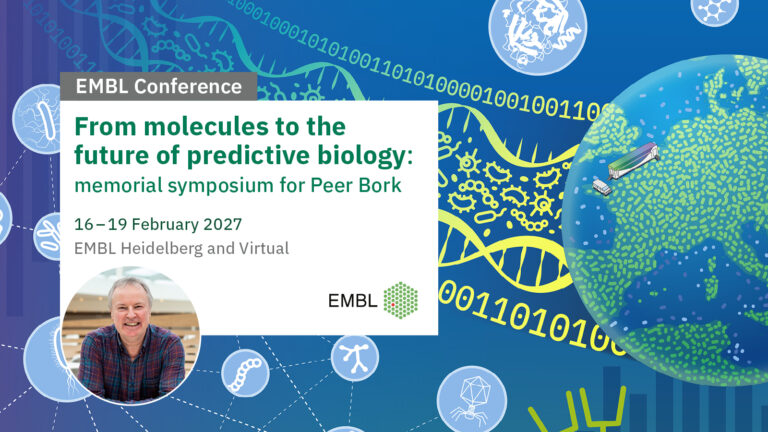
EMBL Conference | From molecules to the future of predictive biology: memorial symposium for Peer Bork

Date: February 16-19, 2027 | Venue: EMBL Heidelberg and Virtual

The EMBL Conference “From molecules to the future of predictive biology: memorial symposium for Peer Bork” will take place from 16–19 February 2027 at EMBL Heidelberg, with virtual participation available. The symposium will celebrate Peer Bork’s scientific legacy by bringing together international researchers across protein biology, molecular evolution, systems biology, the human microbiome, planetary biology, and predictive biology. The programme will include invited lectures, abstract-selected short talks, poster sessions, and networking opportunities.

Website:

https://www.embl.org/about/info/course-and-conference-office/events/PBS27-01/?utm_source=scieExpress&utm_medium=mpreferral&utm_id=PBS27-01

EMBL-KAUST Conference | The expanding world of RBPs: from posttranscriptional control to riboregulation

Date: March 15-18, 2027 | Venue: EMBL Heidelberg and Virtual

The EMBL-KAUST Conference “The expanding world of RBPs: from posttranscriptional control to riboregulation” will take place from 15–18 March 2027 at EMBL Heidelberg, with virtual participation available. The meeting will bring together researchers studying RNA-binding proteins and their roles in RNA regulation, protein function, cell biology, metabolism, disease, and condensates. The programme will highlight emerging experimental technologies, data analysis, and AI/modelling approaches, with lectures, short talks, poster sessions, and networking opportunities.

Website:

https://www.embl.org/about/info/course-and-conference-office/events/RBP27-01/?utm_source=scieExpress&utm_medium=mpreferral&utm_id=RBP27-01

EMBO | EMBL Symposium - The maternal-fetal dialogue: from mechanisms to pregnancy outcomes

Date: April 13-16, 2027 | Venue: EMBL Heidelberg and Virtual

The EMBO | EMBL Symposium “The maternal-fetal dialogue: from mechanisms to pregnancy outcomes” will take place from 13–16 April 2027 at EMBL Heidelberg, with virtual participation available. The symposium will explore how maternal-fetal interactions support healthy development and how disruptions may contribute to pregnancy complications. Topics will include embryo implantation, placental development, trophoblast biology, decidualisation, immune interactions, pregnancy disorders, and emerging stem-cell, organoid, single-cell, spatial, and multiomic approaches.

Website:

https://www.embl.org/about/info/course-and-conference-office/events/EES27-01/?utm_source=scieExpress&utm_medium=mpreferral&utm_id=EES27-01

EMBL Conference | Chromatin and epigenetics

Date: April 27-29, 2027 | Venue: EMBL Heidelberg and Virtual

The EMBL Conference “Chromatin and epigenetics” will take place from 27–29 April 2027 at EMBL Heidelberg, with virtual participation available. This established international meeting will present cutting-edge research on chromatin biology and epigenetic regulation, including DNA methylation, histone modifications, non-coding RNAs, heterochromatin, nuclear architecture, developmental epigenetics, and chromatin-related disease. The programme will feature renowned speakers, selected short talks, poster sessions, and opportunities for scientific exchange across the chromatin and epigenetics community.

Website:

https://www.embl.org/about/info/course-and-conference-office/events/CHR27-01/?utm_source=scieExpress&utm_medium=mpreferral&utm_id=CHR27-01

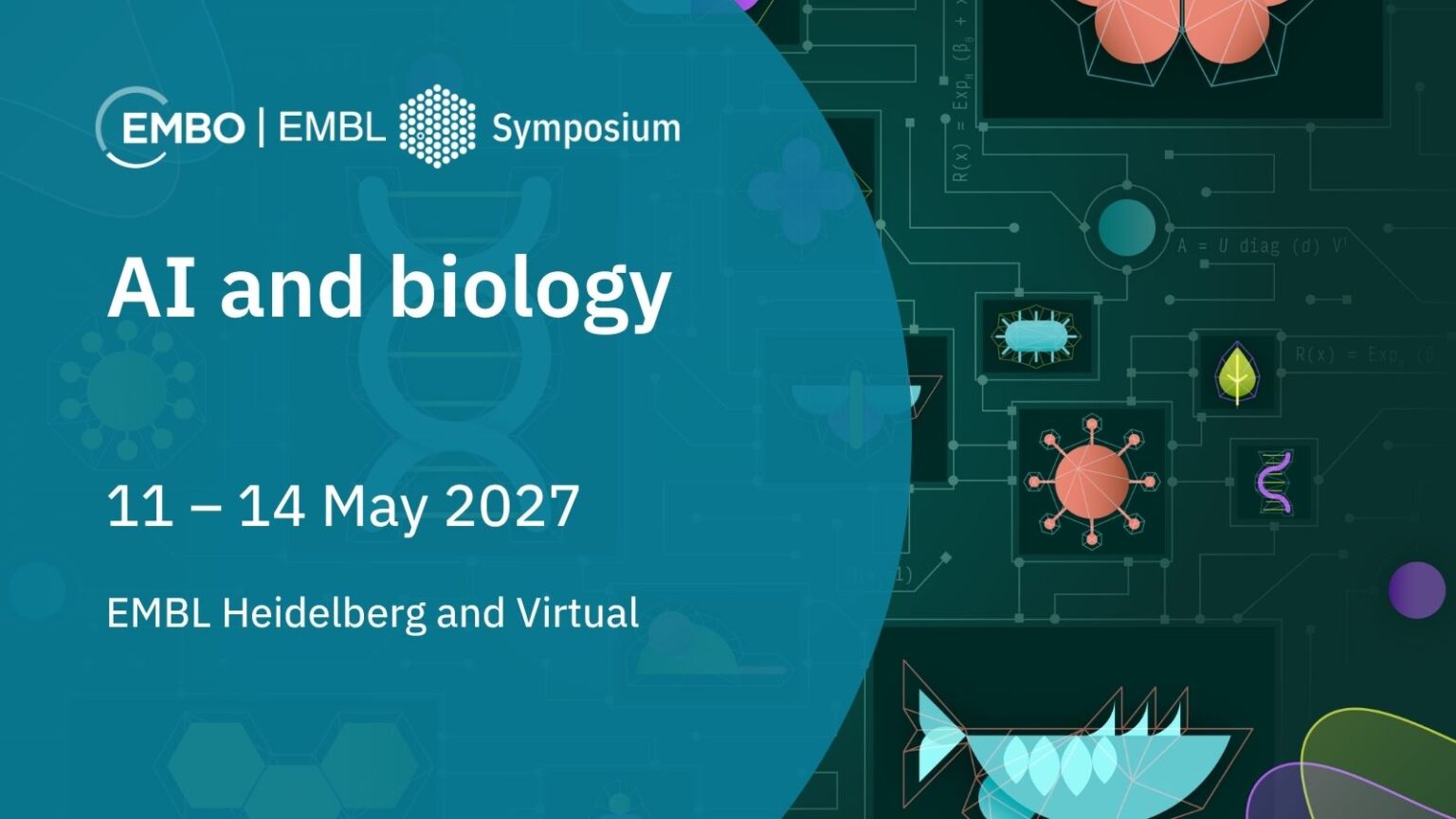
EMBO | EMBL Symposium-AI and biology

Date: May 11-14, 2027 | Venue: EMBL Heidelberg and Virtual

This symposium will explore how artificial intelligence is transforming biology and biomedicine, from experimental design and data analysis to simulation, modelling, and discovery. It will bring together researchers working across sequencing, imaging, structural biology, foundation models, generative modelling, explainable AI, causality, mechanistic interpretability, and agentic systems. The programme will encourage cross-domain exchange between AI and life science communities, with talks, posters, and hands-on workshops and tutorials.

Website:

https://www.embl.org/about/info/course-and-conference-office/events/EES27-12/?utm_source=scieExpress&utm_medium=mpreferral&utm_id=EES27-12

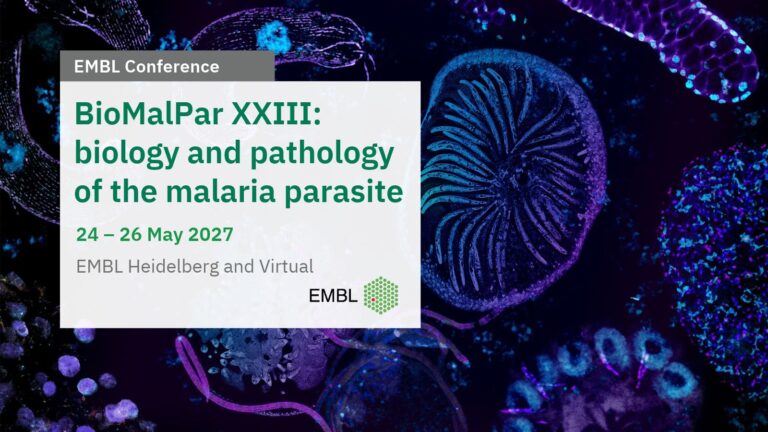
EMBL Conference | BioMalPar XXIII: biology and pathology of the malaria parasite

Date: May 11-14, 2027 | Venue: EMBL Heidelberg and Virtual

This conference will explore malaria research through a cross-disciplinary lens, connecting parasite biology with host interactions, mosquito-vector dynamics, environmental adaptation, epidemiology, drug resistance, and public health challenges. It will highlight breakthrough discoveries and emerging technologies that are advancing the understanding of malaria biology, while creating space for scientific exchange, collaboration, and discussion across career stages and research fields.

Website:

https://www.embl.org/about/info/course-and-conference-office/events/BMP27-01/?utm_source=scieExpress&utm_medium=mpreferral&utm_id=BMP27-01

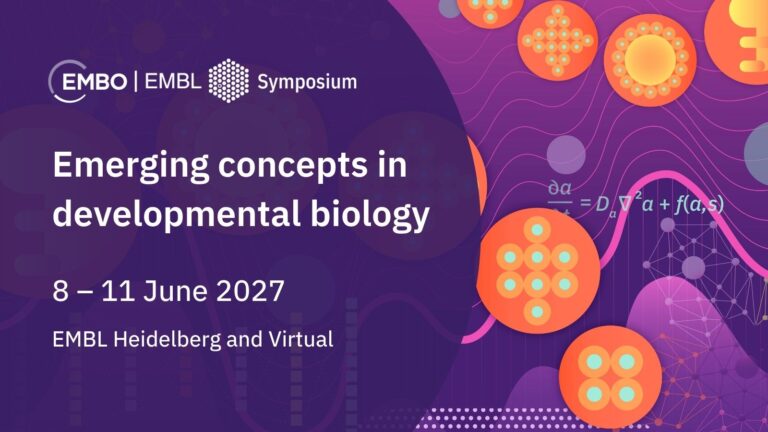
EMBO | EMBL Symposium-Emerging concepts in developmental biology

Date: June 8-11, 2027 | Venue: EMBL Heidelberg and Virtual

This symposium will highlight emerging concepts and technologies reshaping developmental biology. It will explore how organisms develop through advances in embryology, genetics, cell and molecular biology, biophysics, systems biology, multi-omics, evolutionary biology, and quantitative approaches. Key topics include patterning, morphogenesis, cell differentiation, growth, organogenesis, regeneration, developmental evolution, synthetic developmental biology, advanced imaging, AI-driven analysis, genetic engineering, and high-throughput genotype-to-phenotype platforms. The programme will bring together researchers using in vivo, ex vivo, and non-model systems to develop new frameworks for understanding developmental complexity.

Website:

https://www.embl.org/about/info/course-and-conference-office/events/EES27-02/?utm_source=scieExpress&utm_medium=mpreferral&utm_id=EES27-02

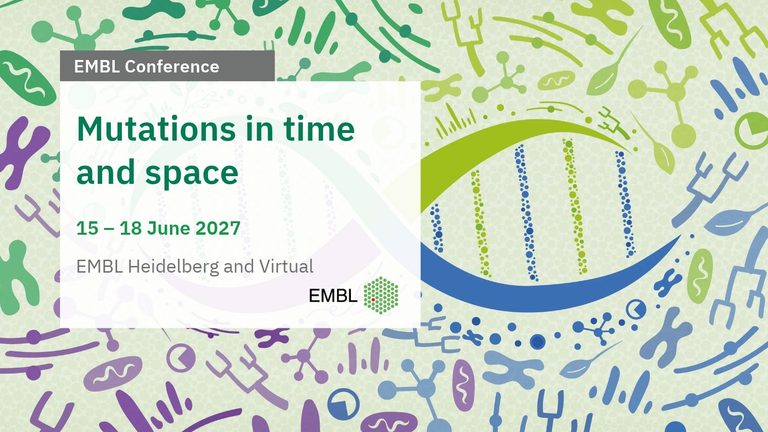
EMBL Conference | Mutations in time and space

Date: June 15-18, 2027 | Venue: EMBL Heidelberg and Virtual

This conference will explore the origins, patterns, and consequences of mutations across cells, tissues, individuals, populations, and species. It will connect advances in sequencing accuracy, experimental perturbation, multi-omics, and computational analysis to better understand how genetic heterogeneity shapes genome function, evolution, cancer, disease, and biological diversity. The programme will bring together researchers from genomics, mutagenesis, evolution, developmental biology, functional biology, and related fields to exchange ideas and foster new collaborations.

Website:

https://www.embl.org/about/info/course-and-conference-office/events/MTS27-01/?utm_source=scieExpress&utm_medium=mpreferral&utm_id=MTS27-01

EMBO | EMBL Symposium-New approaches and concepts in microbiology

Date: June 22-25, 2027 | Venue: EMBL Heidelberg and Virtual

This symposium will showcase new concepts and technologies shaping modern microbiology, with a focus on bacterial physiology, microbial communities and microbiomes, host–bacteria and phage–bacteria interactions, and bacteria in natural ecological contexts. It will bridge traditional microbiology with systems-level, single-cell, and other emerging approaches, helping researchers explore new ways to investigate fundamental questions in bacterial biology and microbial ecosystems.

Website:

https://www.embl.org/about/info/course-and-conference-office/events/EES27-07/?utm_source=scieExpress&utm_medium=mpreferral&utm_id=EES27-07

EMBO | EMBL Symposium-Evolutionary biochemistry and molecular biology: origin and diversification of molecular systems

Date: June 29-July 2, 2027 | Venue: EMBL Heidelberg and Virtual

This symposium will explore how modern molecular systems originated, evolved, and diversified to generate biological complexity. It will bring together perspectives from chemistry, biochemistry, evolutionary biology, genomics, structural biology, AI-enabled protein analysis, and computational science. Key topics include the origins of biological chemistry and early metabolism, protein structure and function evolution, metabolic networks, evolutionary cell biology, ancestral sequence reconstruction, protein resurrection, and new methods for investigating molecular evolution.

Website:

https://www.embl.org/about/info/course-and-conference-office/events/ees27-03/

EMBL Conference | Gene regulation: one molecule at a time

Date: July 13-16, 2027 | Venue: EMBL Heidelberg and Virtual

This conference will examine gene regulation at single-molecule resolution, connecting imaging, genomics, and theoretical approaches to reveal the dynamic mechanisms that control gene expression. Topics will span chromatin organisation, epigenetic regulation, transcription dynamics, RNA processing and fate, translation regulation, single-molecule genomics, and live-cell imaging. The programme will also highlight quantitative modelling, AI-driven analysis, and best practices for integrating imaging and genomic data.

Website:

https://www.embl.org/about/info/course-and-conference-office/events/GRG27-01/?utm_source=scieExpress&utm_medium=mpreferral&utm_id=GRG27-01

EMBO | EMBL Symposium-Theory and concepts in biology

Date: July 20-23, 2027 | Venue: EMBL Heidelberg and Virtual

This symposium will bring theorists and experimental biologists together to explore how living systems can be understood, not only measured. It will examine the role of theory in biology across scales, with themes including active matter, cellular information processing, memory and learning, organismal behaviour, mechanics and morphogenesis, spatial ecology, living dynamical systems, and the philosophy of biological understanding. The programme will encourage interactive discussion and cross-disciplinary exchange, especially around theory–experiment integration, abstraction, and biological understanding in the age of AI.

Website:

https://www.embl.org/about/info/course-and-conference-office/events/EES27-06/?utm_source=scieExpress&utm_medium=mpreferral&utm_id=EES27-06

EMBL Conference | Protein synthesis and translational control

Date: September 1-5, 2027 | Venue: EMBL Heidelberg and Virtual

This conference will focus on protein synthesis and translational control, from the molecular and structural basis of the translation machinery to its regulation in cells, organisms, and disease. It will highlight how mRNA translation maintains cellular homeostasis and responds to environmental, physiological, and pathological cues. Topics include translation dynamics in living cells, quality control mechanisms, translation regulators, links with metabolism, and dysregulation in cancer, neurological and metabolic disorders, and viral infection.

Website:

https://www.embl.org/about/info/course-and-conference-office/events/TRC27-01/?utm_source=scieExpress&utm_medium=mpreferral&utm_id=TRC27-01

EMBO | EMBL Symposium-The Peer Bork symposium on the human microbiome

Date: September 14-17, 2027 | Venue: EMBL Heidelberg and Virtual

This symposium will explore the human microbiome and its influence on health, disease, lifestyle, and genetics. It will highlight global efforts to characterise microbial communities across body sites, understand host–microbe interactions, and uncover the roles of microbiota in disease development and intervention strategies. Topics will include microbiome profiling, microbial ecology, bioactive compound discovery, microbe–molecule interactions, and therapeutic or dietary approaches, creating a timely forum for exchange across the human microbiome research community.

Website:

https://www.embl.org/about/info/course-and-conference-office/events/EES27-08/?utm_source=scieExpress&utm_medium=mpreferral&utm_id=EES27-08

EMBO | EMBL Symposium-Organoids: modelling organ development and disease in 3D

Date: October 20-23, 2027 | Venue: EMBL Heidelberg and Virtual

This symposium will focus on organoids as powerful 3D models for studying tissue biology, human development, homeostasis, regeneration, and disease. It will explore how organoids are formed, maintained, and engineered to better represent tissue complexity, while highlighting their growing potential in disease modelling, drug discovery, regenerative medicine, and tissue replacement. Key themes include developmental concepts, organoid complexity, biomedical applications, and the integration of engineering approaches into organoid research.

Website:

https://www.embl.org/about/info/course-and-conference-office/events/EES27-10/?utm_source=scieExpress&utm_medium=mpreferral&utm_id=EES27-10

EMBO | EMBL Symposium - Microtubules: from atoms to complex systems

Date: June 17-20, 2026 | Venue: EMBL Heidelberg and Virtual

Established in 2010, this biennial symposium brings together both established and early-career researchers from around the world who share a common interest in microtubule biology and its roles in human health and disease. The meeting covers diverse aspects of the field, from chromosome segregation and intracellular transport to cell motility and polarity, emphasizing interdisciplinary advances in genetics, biochemistry, biophysics, and structural biology. Through keynote lectures, selected talks, poster sessions, and networking events, the symposium provides a vibrant platform for scientific exchange and collaboration within the global microtubule community.

Website:

https://www.embl.org/about/info/course-and-conference-office/events/EES26-09/?utm_source=scieExpress&utm_medium=mpreferral&utm_id=EES26-09

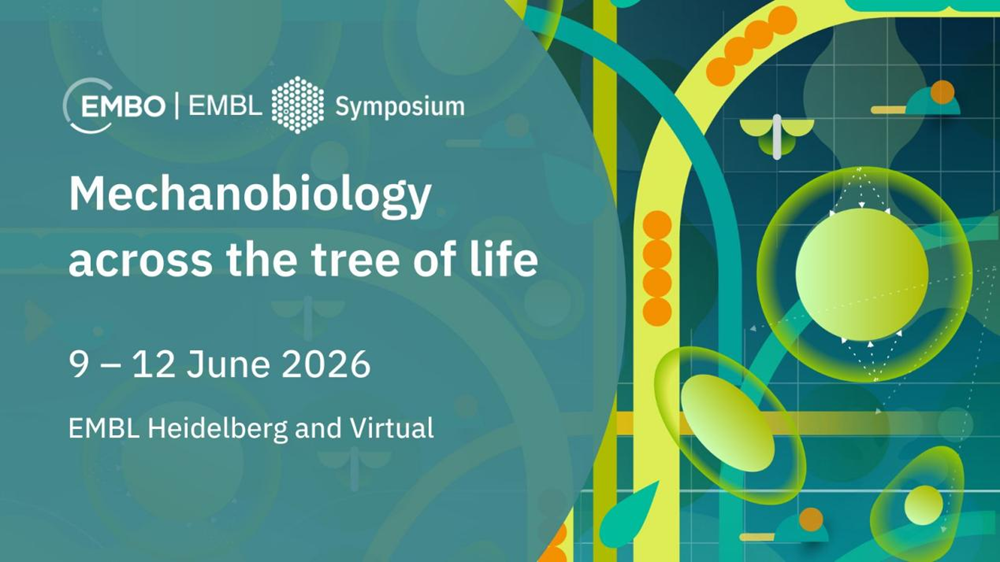
EMBO | EMBL Symposium - Mechanobiology across the tree of life

Date: June 9-12, 2026 | Venue: EMBL Heidelberg and Virtual

This symposium will bring together researchers from biology, physics, and engineering to explore how cells and tissues construct themselves and respond to their environments. Focusing on mechanobiology across biological systems, the meeting will highlight new technologies for studying cell walls, cytoskeletons, and membranes through advanced imaging and integrated molecular, computational, and biophysical approaches. With a strong emphasis on early-career researchers, the symposium aims to foster collaboration and develop a unified understanding of the physical and biochemical principles underlying cellular structure and dynamics.

Website:

https://www.embl.org/about/info/course-and-conference-office/events/EES26-06/?utm_source=scieExpress&utm_medium=mpreferral&utm_id=EES26-06#vf-tabs__section-overview

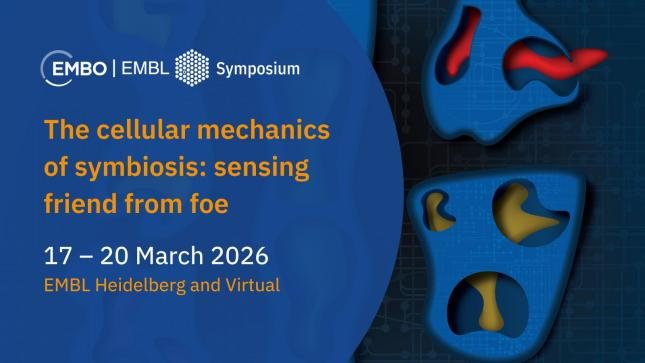
EMBO | EMBL Symposium - The cellular mechanics of symbiosis: sensing friend from foe

Date: March 17-20, 2026 | Venue: EMBL Heidelberg and Virtual

This symposium will bring together researchers from cellular, molecular, ecological, physiological, and theoretical disciplines to explore the evolution and dynamics of host–microbe interactions. It will focus on the cellular systems, metabolic pathways, and ecological factors that drive transitions between pathogenic and beneficial symbioses. A central theme is understanding how hosts distinguish between friend and foe, maintain partner fidelity, and achieve stable symbiotic relationships, offering insights into the mechanisms underlying symbiotic complexity.

Website:

https://www.embl.org/about/info/course-and-conference-office/events/EES26-03/?utm_source=scieExpress&utm_medium=mpreferral&utm_id=EES26-03

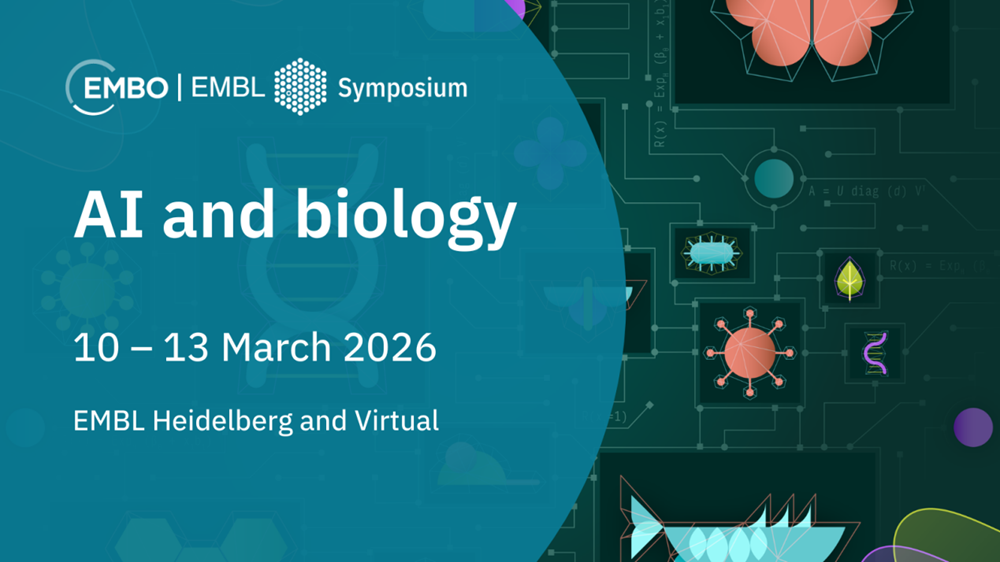
EMBO | EMBL Symposium - AI and biology

Date: March 10-13, 2026 | Venue: EMBL Heidelberg and Virtual

The 2026 symposium will bring together AI and life science researchers to explore the application of AI across biology and biomedicine. Key topics include shared theoretical approaches, cross-domain experiments, foundation models, data integration, agent-based workflows, and collaboration with experimental labs. The meeting will focus on AI-driven advances in sequencing, imaging, and structural biology, aiming to foster synergy across these rapidly growing fields and identify high-potential areas for future research and applications.

Website:

https://www.embl.org/about/info/course-and-conference-office/events/EES26-02/?utm_source=scieExpress&utm_medium=mpreferral&utm_id=EES26-02

EMBO | EMBL Symposium - Collectivity in living systems: emergence, function, and evolution

Date: February 24-27, 2026 | Venue: EMBL Heidelberg and Virtual

The symposium will focus on the common principles driving the emergence of collective behavior across biological systems, from cells and tissues to whole organisms and animal groups. Key topics include coordination, cooperation, emergence, interaction, and decision-making, examined in diverse systems such as bacterial biofilms, cytoskeletal elements, cell migration, tissue and organ formation, disease models, and animal behavior, integrating both theoretical and empirical perspectives.

Website:

https://www.embl.org/about/info/course-and-conference-office/events/EES26-01/?utm_source=scieExpress&utm_medium=mpreferral&utm_id=EES26-01