A multi-objective optimization design framework for ultra-high performance concrete based on stacking ensemble learning

Wei Zhang
1

,
Chao Liu
2,*
,
Yizhou Yao
2
,
Ahmed Nasr
1
,
Qingmei Yang
1
,
Zhenhua Duan
1,*
*Correspondence to:
Chao Liu, School of Civil Engineering, Xi’an University of Architecture and Technology, Xi’an 710055, Shaanxi, China.
E-mail: chaoliu@xauat.edu.cn
Zhenhua Duan, Department of Structural Engineering, College of Civil Engineering, Tongji University, Shanghai 200092, China. E-mail: zhduan@tongji.edu.cn
Zhenhua Duan, Department of Structural Engineering, College of Civil Engineering, Tongji University, Shanghai 200092, China. E-mail: zhduan@tongji.edu.cn
J Build Des Environ. 2026;4:202618. 10.70401/jbde.2026.0044
Received: April 22, 2026Accepted: August 19, 2026Published: August 19, 2026
This article belongs to the Special lssue Advanced Concrete Structures and Sustainable Construction
Abstract
Ultra-high performance concrete (UHPC), an advanced cementitious composite characterized by superior mechanical properties and durability, requires multi-objective collaborative optimization in mix proportion design to facilitate its large-scale engineering applications. To address this challenge, this study proposes an intelligent design framework for UHPC driven by the synergistic integration of Stacking ensemble learning and the non-dominated sorting genetic algorithm III (NSGA-III). In the model construction stage, a Stacking ensemble model was developed by integrating eight heterogeneous algorithms as base learners and employing linear regression as the meta-learner. Subsequently, six hyperparameter optimization strategies were employed to fine-tune the model. At the optimization decision stage, the optimal Stacking ensemble model was embedded into the NSGA-III algorithm, and the technique for order preference by similarity to ideal solution (TOPSIS) was employed to select the optimal mix design from the Pareto front. The results demonstrate that the predictive accuracy of the Stacking ensemble model significantly outperforms that of the individual single-algorithm models. Furthermore, multi-objective optimization conducted for three target strength grades, UC100, UC120, and UC140, revealed that all optimized schemes successfully meet the specified strength requirements while effectively balancing environmental impact and production cost. This research establishes a data-driven, multi-criteria intelligent decision-making pathway for the multi-objective design of UHPC, with substantial implications for advancing the interdisciplinary integration of materials science and artificial intelligence.
Keywords
Ultra-high performance concrete, stacking ensemble learning, multi-objective optimization, performance prediction
1. Introduction
Ultra-high performance concrete (UHPC) has emerged as a promising advanced cementitious material in modern civil engineering, owing to its superior mechanical properties and durability[1,2]. However, the realization of these performance advantages is critically dependent on the precise proportioning of multiple constituents, including cementitious components, fibers, and admixtures. The high-dimensional and strongly coupled nature of the mix proportion space renders conventional empirical and trial-and-error methods ineffective for systematic optimization[3,4]. On the one hand, localized search strategies struggle to accurately capture the nonlinear mapping relationships between components and performance across the entire variable space, thereby failing to exploit the intrinsic performance potential of UHPC materials. On the other hand, existing design paradigms predominantly emphasize unidimensional improvements in mechanical performance, while paying comparatively limited attention to the simultaneous consideration of multi-dimensional metrics such as global warming potential (GWP) and production cost. This deficiency impedes the fulfillment of practical engineering demands for under the imperatives of green and low-carbon construction[5,6]. Consequently, developing a mixed design optimization method capable of accurately predicting UHPC performance while simultaneously addressing multiple conflicting objectives holds considerable practical significance for promoting the large-scale engineering application of UHPC[7].
In recent years, with the interdisciplinary advancement of materials data science and artificial intelligence, machine learning methods have garnered widespread attention in concrete performance prediction and mix proportion optimization[8-11]. Compared with traditional regression models, machine learning algorithms can autonomously extract the intrinsic relationships between compositional features and target properties from extensive experimental datasets without the need for predefined explicit physical equations, thereby exhibiting distinct advantages in addressing complex multicomponent and highly nonlinear systems such as UHPC[12]. Existing studies have successfully employed algorithms including random forest (RF) and support vector regression (SVR) to predict UHPC compressive strength[13,14], flexural strength[15], elastic modulus[16], and durability performance[17,18], achieving varying degrees of improvement in predictive accuracy. However, most of these studies have focused on the construction and evaluation of single-algorithm models, with limited in-depth exploration of the systematic integration of multi-model collaboration and multi-objective optimization decision-making.
Despite the considerable potential demonstrated by machine learning techniques in UHPC materials research, several pivotal challenges persist. First, single-algorithm models are prone to imbalances between bias and variance. For instance, tree-based models have limited extrapolation capabilities, kernel methods are sensitive to hyperparameter selection, and neural networks are prone to overfitting with limited sample sizes. Moreover, the hyperparameter tuning process for these models frequently relies on empirical heuristics and lacks an efficient dynamic update mechanism[19]. Second, the complementary advantages of different algorithms have not yet been effectively integrated, and the generalization bottleneck of single-algorithm models constrains the reliability of subsequent optimization. Third, existing research has predominantly focused on predictive accuracy and has not extended to embedding high-fidelity predictive models within a multi-objective optimization framework, resulting in a conspicuous disconnection between performance prediction and mix proportion decision-making. UHPC mix design is inherently a high-dimensional, multi-constraint optimization problem, yet current machine learning methods struggle to achieve coordinated optimization across multiple mutually constraining objectives such as mechanical performance, environmental effects, and economic cost. Therefore, establishing an effective linkage between predictive accuracy and decision-making intelligence constitutes a critical bottleneck that urgently demands resolution in this domain.
To address the aforementioned limitations, this study innovatively proposes a multi-objective optimization design framework for UHPC based on Stacking ensemble learning. Stacking ensemble learning and non-dominated sorting genetic algorithm III (NSGA-III) were adopted to enhance surrogate prediction reliability and to handle constrained multi-objective optimization with conflicting performance, environmental, and economic targets. Firstly, a Stacking ensemble predictive model integrating multiple heterogeneous machine learning algorithms was constructed, including RF, SVR, multi-layer perceptron neural network (MLPNN), gradient boosting decision tree (GBDT), extreme gradient boosting (XGBoost), categorical boosting (CatBoost), adaptive boosting (AdaBoost), and light gradient boosting machine (LightGBM), serving as base learners, with linear regression employed as the meta-learner. To fully leverage the strengths of each base learner, various hyperparameter optimization strategies, including random search (RS), Bayesian optimization (BO), particle swarm optimization (PSO), grey wolf optimization (GWO), simulated annealing (SA), and the tree-structured parzen estimators (TPE), were further employed to fine-tune the model. Subsequently, the optimal Stacking model is embedded as the surrogate objective function within the NSGA-III multi-objective optimization framework. With the objectives of maximizing compressive and flexural strength while simultaneously minimizing environmental and economic impacts, a global search for the optimal UHPC mix proportion was performed under actual engineering constraints to obtain a set of Pareto non-dominated solutions. Finally, the technique for order preference by similarity to ideal solution (TOPSIS) method was employed to comprehensively rank the non-dominated solutions, thereby identifying the mix design with the optimal overall performance. The research aims to provide innovative insights into the multi-objective collaborative optimization of UHPC and to promote deeper integration of engineering materials and machine learning technologies.
2. Datasets and Methods
2.1 Dataset construction
This study established a UHPC database by collecting 1,133 samples collected from 95 peer-reviewed publications. To improve data consistency and compatibility among different literature sources, only samples with clearly reported mix proportions, specimen dimensions, curing age, and corresponding mechanical properties were retained. The curing age was fixed at 28 days to reduce the uncertainty caused by age-dependent strength development. In addition, compressive specimen volume (CV) and flexural specimen volume (FV) were introduced as input variables to partially account for the influence of different specimen dimensions on measured strength.
Table 1 presents the input and output parameters of the dataset, along with their units and statistical distribution characteristics. The input parameters consist of the following variables: cement (CE), fly ash (FA), quartz powder (QP), steel slag powder (SSP), slag powder (SLP), limestone powder (LSP), metakaolin (ME), rice husk ash (RHA), silica fume (SF), steel fiber (Fiber), sand (SA), coarse aggregate (CA), water (WA), superplasticizer (SP), water-to-binder ratio (WB), CV and FV. The model output variables are the compressive strength (CS) and flexural strength (FS) of UHPC. Some mineral admixture variables, such as LSP, ME, and RHA, exhibit relatively high skewness because they are selectively used in different literature-derived UHPC mixtures, resulting in a large proportion of zero values.
| Dataset | Abbreviation | Unit | Minimum | Maximum | Skewness | Kurtosis | Coefficient of variation |
| Compressive strength dataset | CE | kg/m3 | 116.5 | 1,933 | 0.75 | 2.32 | 0.31 |
| FA | kg/m3 | 0 | 528 | 1.46 | 1.77 | 1.44 | |
| QP | kg/m3 | 0 | 380 | 3.88 | 14.27 | 3.87 | |
| SSP | kg/m3 | 0 | 250 | 3.62 | 12.40 | 3.53 | |
| SLP | kg/m3 | 0 | 957.80 | 4.66 | 31.23 | 2.66 | |
| LSP | kg/m3 | 0 | 1,058.20 | 5.75 | 40.22 | 4.15 | |
| ME | kg/m3 | 0 | 308 | 5.20 | 29.92 | 4.32 | |
| RHA | kg/m3 | 0 | 230 | 9.38 | 94.41 | 7.97 | |
| SF | kg/m3 | 0 | 583 | 1.00 | 1.57 | 0.74 | |
| Fiber | kg/m3 | 0 | 470 | 0.41 | -0.47 | 0.94 | |
| SA | kg/m3 | 0 | 1,540 | -0.96 | 1.29 | 0.30 | |
| CA | kg/m3 | 0 | 1,200 | 2.08 | 2.84 | 2.24 | |
| WA | kg/m3 | 57.6 | 387 | 1.36 | 4.24 | 0.23 | |
| SP | kg/m3 | 0 | 68.30 | 0.70 | 0.44 | 0.58 | |
| WB | — | 0.10 | 0.26 | -0.05 | 0.13 | 0.13 | |
| CV | cm3 | 10.86 | 3,375 | 1.84 | 2.55 | 1.26 | |
| CS | MPa | 100.10 | 187.66 | 0.43 | -0.21 | 0.13 | |
| Flexural strength dataset | CE | kg/m3 | 113.99 | 1,171.90 | -0.25 | 0.09 | 0.26 |
| FA | kg/m3 | 0 | 528 | 1.34 | 1.57 | 1.31 | |
| QP | kg/m3 | 0 | 562 | 5.61 | 36.29 | 4.67 | |
| SSP | kg/m3 | 0 | 196.30 | 3.87 | 13.63 | 3.93 | |
| SLP | kg/m3 | 0 | 683.91 | 3.02 | 10.47 | 2.47 | |
| LSP | kg/m3 | 0 | 332 | 3.54 | 11.00 | 3.62 | |
| ME | kg/m3 | 0 | 300 | 3.59 | 12.98 | 3.24 | |
| RHA | kg/m3 | 0 | 230 | 6.61 | 46.71 | 5.65 | |
| SF | kg/m3 | 0 | 494 | 0.70 | 0.20 | 0.75 | |
| Fiber | kg/m3 | 0 | 390 | 0.10 | -0.80 | 0.79 | |
| SA | kg/m3 | 332 | 1,460.30 | -0.48 | 0.60 | 0.20 | |
| CA | kg/m3 | 0 | 1,075 | 2.59 | 5.89 | 2.56 | |
| WA | kg/m3 | 126.70 | 310.68 | 1.03 | 2.99 | 0.15 | |
| SP | kg/m3 | 4.20 | 54 | 0.31 | -0.65 | 0.43 | |
| WB | — | 0.10 | 0.26 | -0.09 | 1.12 | 0.12 | |
| FV | cm3 | 256 | 5,000 | 0.83 | -1.13 | 1.15 | |
| FS | MPa | 12.14 | 42.77 | 0.82 | 0.37 | 0.30 |
FS: flexural strength; FV: flexural specimen volume; WB: water-to-binder ratio; SP: superplasticizer; WA: water; CA: coarse aggregate; SA: sand; Fiber: steel fiber; SF: silica fume; RHA: rice husk ash; ME: metakaolin; LSP: limestone powder; SLP: slag powder; SSP: steel slag powder; QP: quartz powder; FA: fly ash; CE: cement.
To eliminate the adverse effects of different feature dimensions and numerical scales on model training, a normalization procedure was applied to the raw dataset. The specific calculation formula is as follows:
where Xmin and Xmax represent the minimum and maximum values within the dataset, respectively, while X and Xnorm denote the original and normalized values.
2.2 Feature correlation analysis
To elucidate the interrelationships and distribution characteristics among the feature variables, a matrix plot was employed to visualize the dataset, as illustrated in Figure 1 and Figure 2. In this matrix plot, the kernel density estimation curve for each variable is displayed along the diagonal. The lower triangular region presents pairwise scatter plots accompanied by linear regression lines, whereas the upper triangular region reports the Pearson correlation coefficients, with the background color gradient representing the sign and magnitude of the correlations. In addition to revealing the relationships between mix proportion variables and mechanical properties, this analysis also provides a preliminary assessment of variable redundancy and compatibility in the collected multi-source dataset. It can be found that the absolute values of all pairwise Pearson correlation coefficients among the variables are less than 0.7, indicating the absence of strong pairwise linear correlations and suggesting a low risk of pairwise collinearity[115]. Therefore, no feature was removed solely on the basis of the pairwise correlation analysis at this stage.
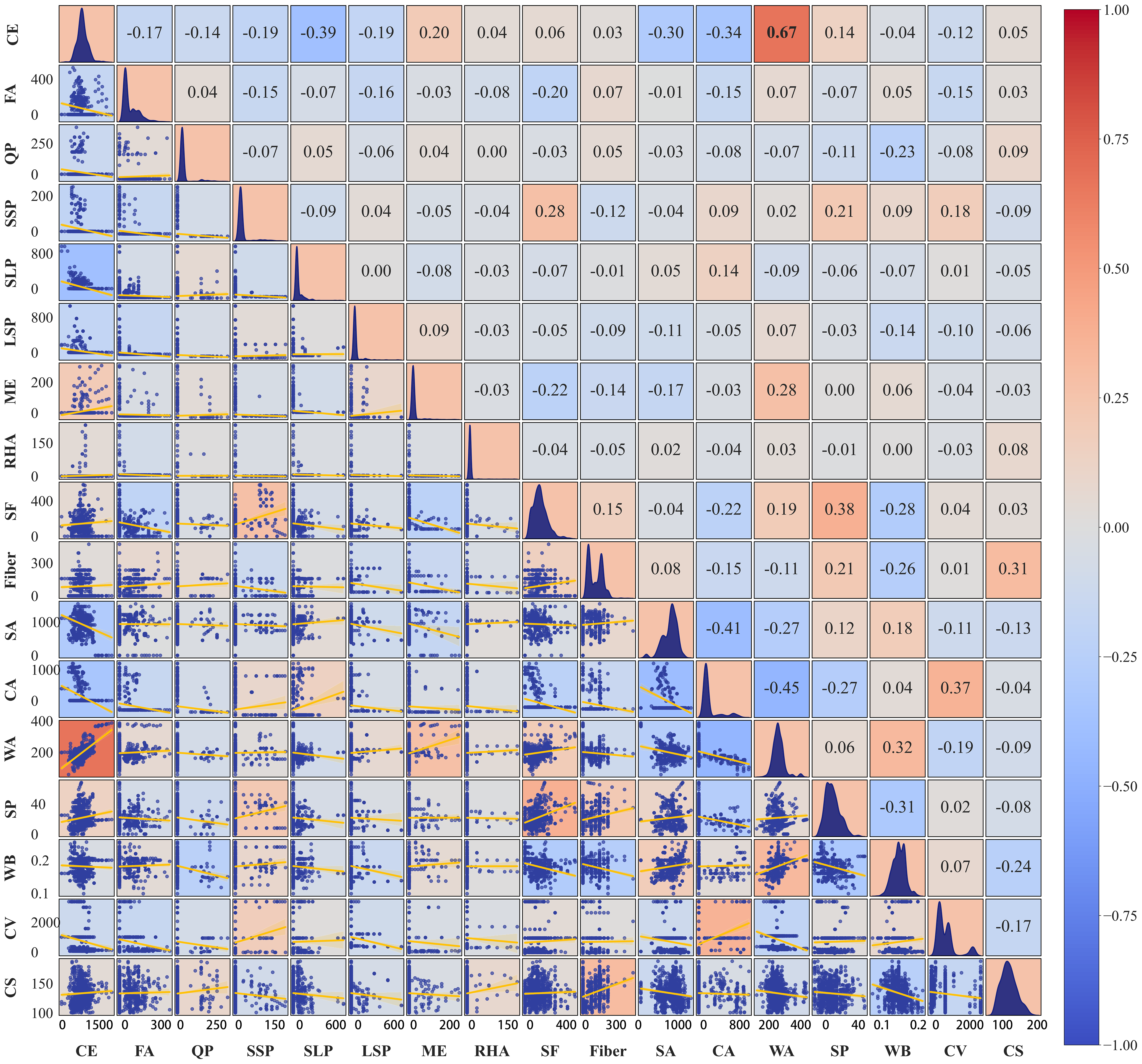
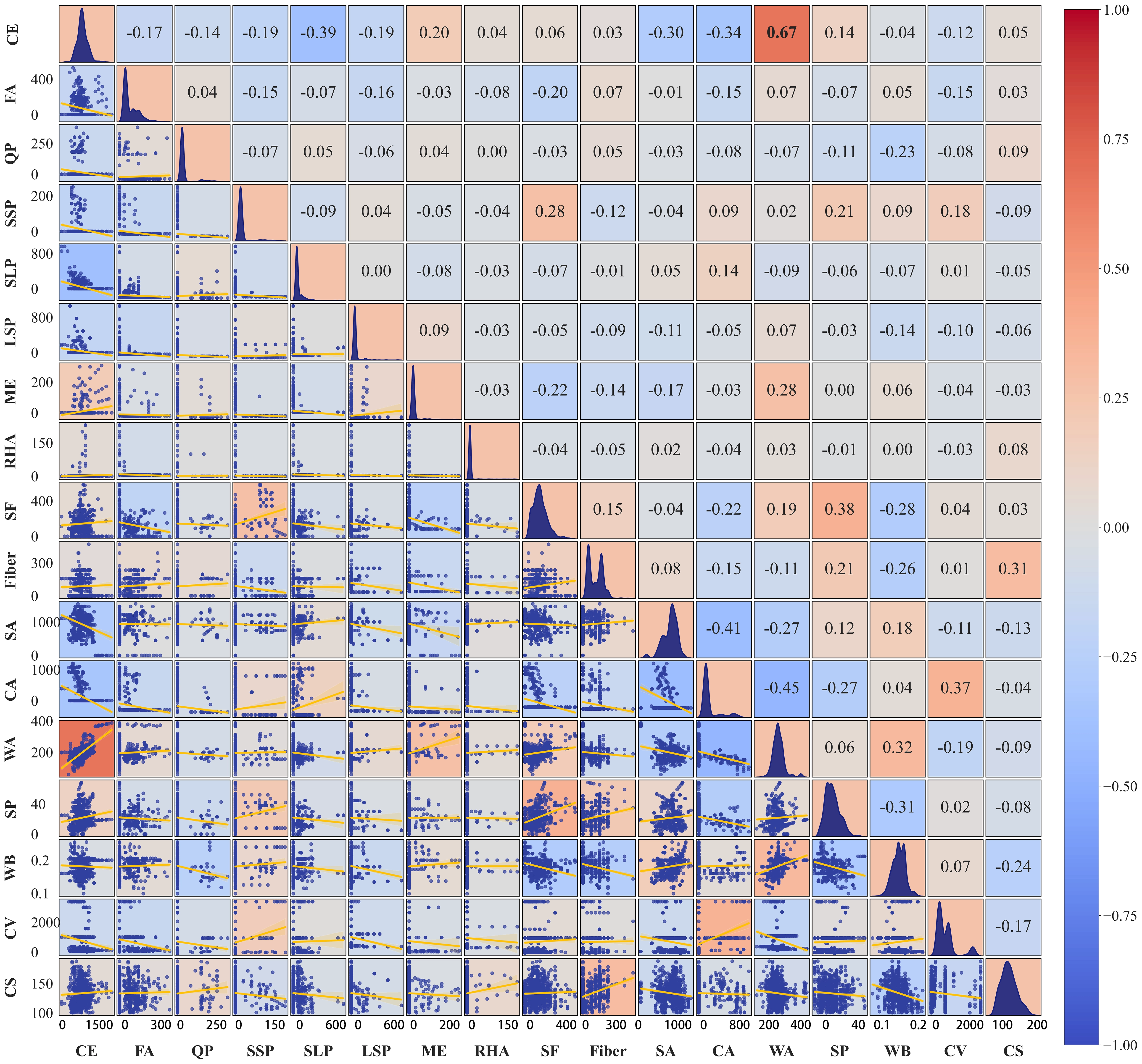
Figure 1. Feature correlation analysis heatmap for compressive strength dataset. CS: compressive strength; CV: compressive specimen volume; WB: water-to-binder ratio; SP: superplasticizer; WA: water; CA: coarse aggregate; Fiber: steel fiber; SA: sand; SF: silica fume; RHA: rice husk ash; ME: metakaolin; LSP: limestone powder; SLP: slag powder; SSP: steel slag powder; QP: quartz powder; FA: fly ash; CE: cement.
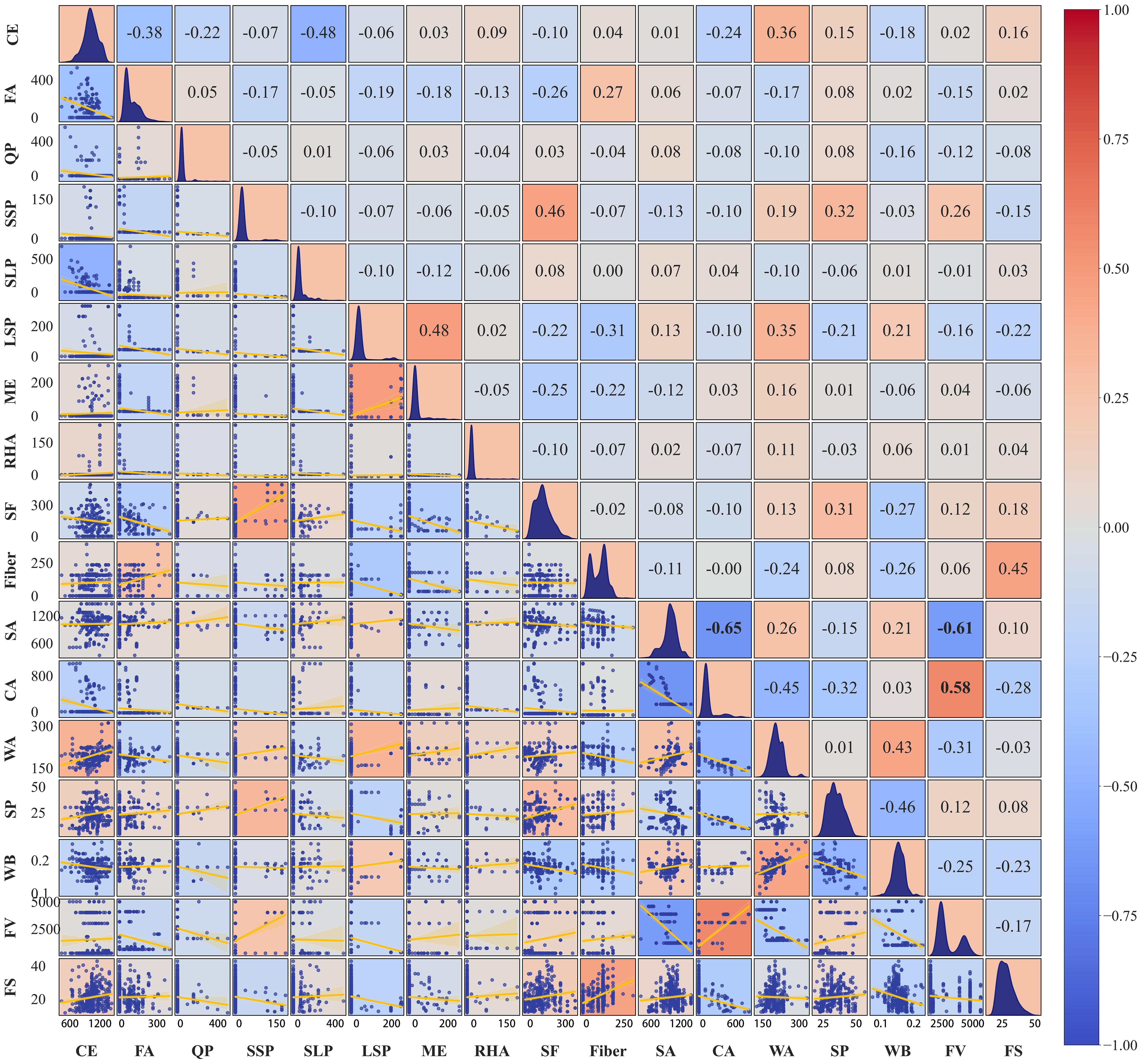
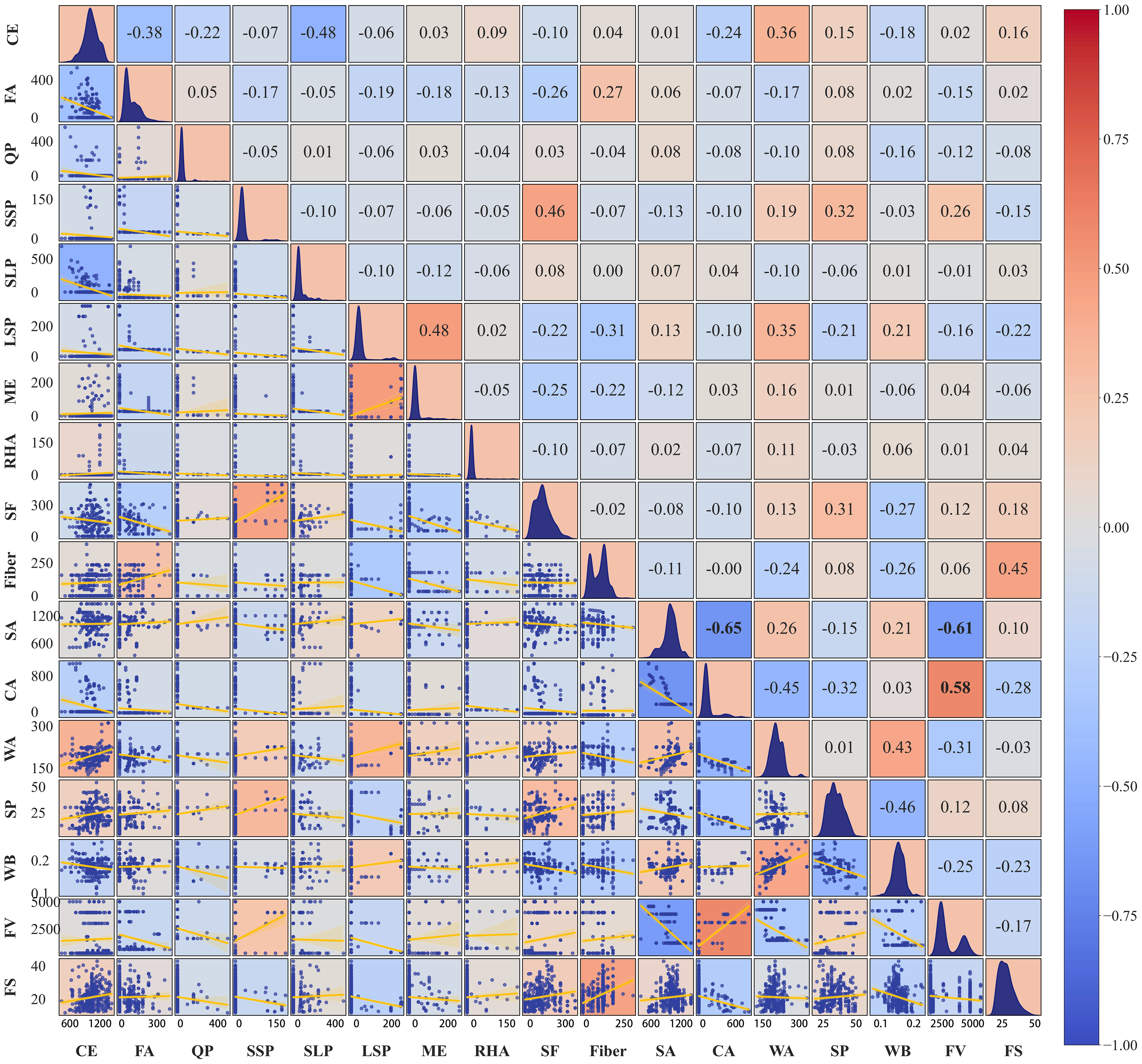
Figure 2. Feature correlation analysis heatmap for the flexural strength dataset. FS: flexural strength; FV: flexural specimen volume; WB: water-to-binder ratio; CA: coarse aggregate; SA: sand; Fiber: steel fiber; SF: silica fume; RHA: rice husk ash; ME: metakaolin; LSP: limestone powder; SLP: slag powder; SSP: steel slag powder; QP: quartz powder; FA: fly ash; CE: cement.
Furthermore, the steel fiber content exhibits a significant positive effect on both compressive and flexural strength, with Pearson coefficients of 0.31 and 0.45, respectively. This is primarily attributed to the ability of steel fibers to bridge cracks through interfacial bonding forces following matrix cracking, effectively alleviating stress concentration at the crack tip and thereby inhibiting crack propagation. Under flexural loading, this bridging effect is particularly pronounced, significantly delaying the process from initial cracking to ultimate failure. Consequently, flexural strength is more sensitive to variations in steel fiber content.
Conversely, the water-to-binder ratio exerts a consistent negative influence on the mechanical properties of UHPC, with Pearson coefficients of -0.24 and -0.23 for compressive strength and flexural strength, respectively. This inverse relationship is attributed to the fact that a lower water-to-binder ratio reduces the initial porosity of the hardened paste and promotes the formation of a denser microstructure within the hydration products, thereby effectively enhancing the mechanical performance of the matrix.
2.3 Machine learning model
2.3.1 Stacking ensemble model
Stacking is an ensemble learning strategy based on a multi-layer architecture, which typically comprises a two-level learning structure. At the first level, multiple base learners are independently trained on the training dataset to generate predictive outputs. At the second level, these predictions serve as newly constructed input features for training a meta-learner, thereby producing the final ensemble prediction[116].
This study selected eight heterogeneous algorithms as the base learners to comprehensively capture the diverse patterns within the data. RF is composed of multiple decision trees that process high-dimensional data through random sampling and complete splitting, exhibiting nonlinearity and high robustness[117]. SVR minimizes structural risk by employing kernel functions and regularization parameters, demonstrating strong performance on small-sample datasets[118]. The MLPNN employs a feedforward network architecture to approximate complex mappings through nonlinear activation functions[119]. GBDT uses decision trees as base learners, and iteratively reduces error through gradient boosting, demonstrating strong fitting capabilities for nonlinear relationships and feature interactions[120]. XGBoost enhances predictive accuracy and computational efficiency through regularization and parallel operations, excelling particularly in handling sparse data and effectively executing classification and regression tasks[121]. CatBoost builds upon the GBDT framework, employing ordered boosting to mitigate gradient bias and prediction drift, enabling high-precision predictions with strong generalization capability[122]. AdaBoost iteratively adjusts sample weights to focus on misclassified instances, enabling fast convergence, though it remains sensitive to noisy data and outliers[123]. LightGBM employs gradient-based one-sided sampling and exclusive feature bundling to achieve rapid model training with low memory consumption, thereby facilitating efficient processing of large-scale datasets[124].
Furthermore, to evaluate the efficacy of the Stacking ensemble model, RF, SVR, MLPNN, and AdaBoost were selected as benchmark models for comparative analysis. These four models represent four distinct modeling paradigms, specifically bagging ensemble, kernel methods, neural networks, and boosting ensemble, thereby providing sufficient representativeness for controlled comparison. The remaining four base learners were excluded from the control group because they belong to the same gradient boosting framework, thereby avoiding redundancy in the comparative assessment.
2.3.2 Hyperparameter optimization
Hyperparameters are configuration parameters set prior to model training, and their assigned values directly influence both the model architecture and the learning process. Systematically adjusting hyperparameter combinations and comparing the corresponding model performance enables the identification of optimal configurations tailored to a specific dataset, thereby effectively enhancing predictive accuracy. In this study, the dataset was randomly partitioned into training and testing subsets at a ratio of 7:3. The training set was employed for model fitting and hyperparameter tuning, whereas the testing set was retained independently to evaluate the generalization performance of the final model. During the hyperparameter optimization phase, a five-fold cross-validation strategy was applied to the training set to mitigate the variance introduced by a single random data split and to ensure the robustness of the performance evaluation.
Based on this validation framework, six hyperparameter optimization algorithms were introduced and systematically compared. RS explores the parameter space through uniform sampling, independent of objective function modeling, exhibiting robust performance and strong global search capabilities[125]. BO iteratively selects evaluation points based on the surrogate model, achieving efficient global optimization with fewer samples[126]. PSO simulates collective intelligence behavior by guiding the search through individual and collective historical optima, achieving fast convergence but remaining prone to local optima[127,128]. GWO emulates the social hierarchy and hunting behavior of grey wolves, effectively balancing global exploration and local exploitation. It is well-suited for continuous optimization problems, features minimal parameters, and demonstrates robust convergence[129]. SA is inspired by the thermodynamic annealing processes, avoids local optima by probabilistically accepting suboptimal solutions, and gradually converges to an approximate solution near the global optimum[130]. TPE is a sequential model-based optimization method that constructs separate probability models for high-performing and mediocre hyperparameters, thereby efficiently guiding the search process and improving overall optimization efficiency[131].
2.3.3 NSGA-III multi-objective optimization and TOPSIS comprehensive evaluation
The NSGA-III[132] is a multi-objective optimization algorithm developed from non-dominated sorting genetic algorithm II (NSGA-II)[133], demonstrating significant advantages in solving high-dimensional objectives and large-scale optimization problems. The core innovation of this algorithm lies in introducing a reference point guidance mechanism. Pre-setting a set of uniformly distributed reference points to guide the evolutionary direction of the population, the algorithm effectively enhances convergence efficiency while maintaining the diversity of the Pareto front[134,135]. This study employs the NSGA-III algorithm to optimize the mix proportion design of UHPC, addressing challenges such as high-dimensional nonlinearity and multi-objective conflicts inherent in this process.
Although the iterative optimization process generates a set of non-dominated solutions constituting the Pareto front, practical engineering applications require selecting an optimal mix proportion design that satisfies specific preference criteria. Considering the inherent conflicts among multiple optimization objectives within the UHPC system, this study employs the TOPSIS comprehensive evaluation method for final decision-making, as shown in Figure 3. This method calculates the Euclidean distance between each alternative and both the positive and negative ideal solutions, thereby comprehensively evaluating their relative merits[136]. A normalized relative closeness score closer to 1 indicates that the corresponding alternative is closer to the theoretical optimum solution when balancing multiple conflicting objectives.
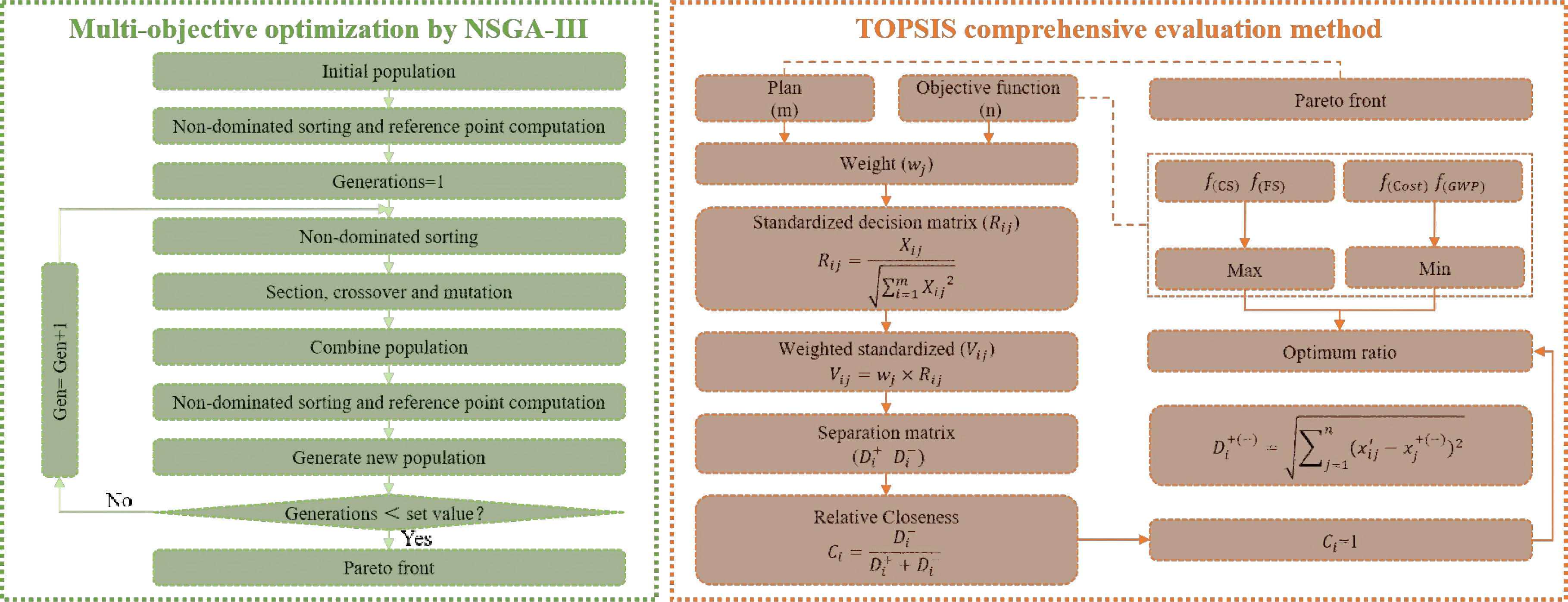
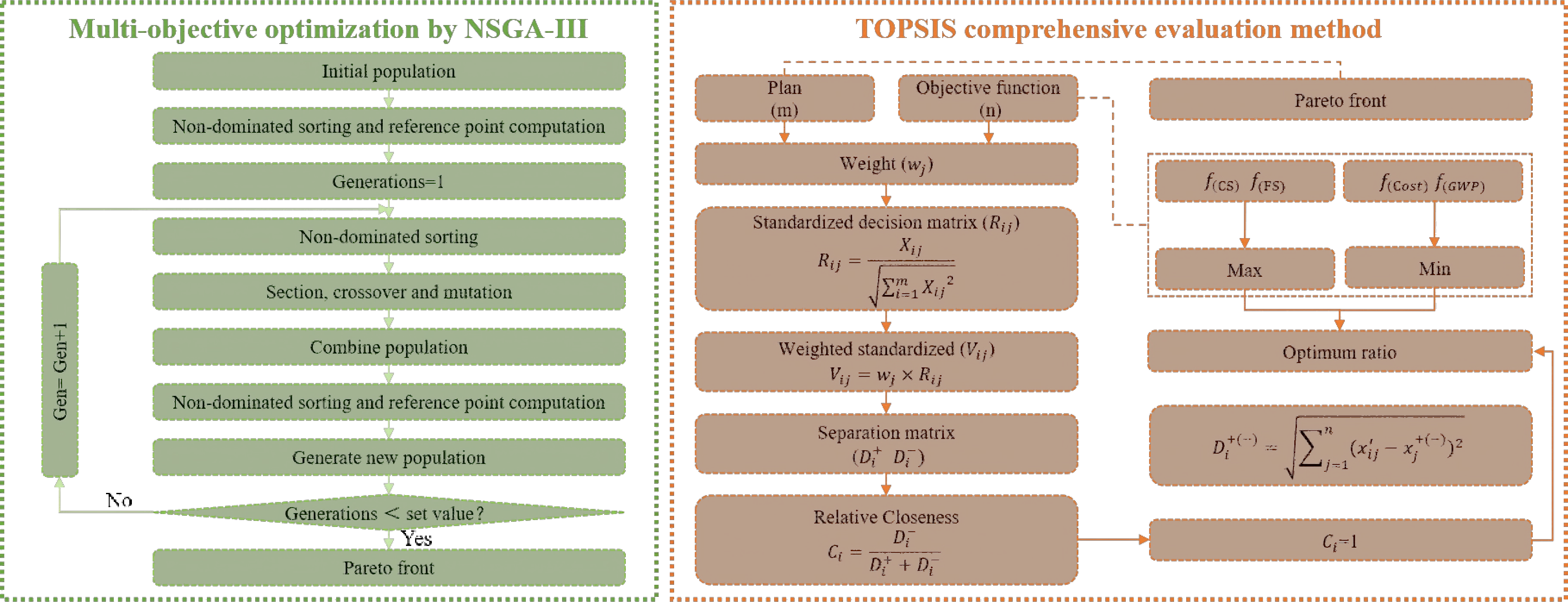
Figure 3. Flowchart of the integrated NSGA-III and TOPSIS framework for UHPC. NSGA-III: non-dominated sorting genetic algorithm III; TOPSIS: technique for order preference by similarity to ideal solution; UHPC: ultra-high performance concrete; GWP: global warming potential; CS: compressive strength; FS: flexural strength.
3. Results and Discussion
3.1 Comparative analysis of predictive performance
The Taylor diagram is a visualization tool for comprehensively evaluating model prediction performance using multiple statistical metrics[137]. In this diagram, the radial distance from the coordinate origin represents the standard deviation (SD) of the predicted values, the radial distance from the observational reference point reflects the root mean square error (RMSE), and the azimuthal angle corresponds to the correlation coefficient (R). The experimental observation reference point is marked with a red five-pointed star. The optimal model was selected according to its proximity to the experimental reference point in the Taylor diagram shown in Figure 4, together with the R, RMSE, and SD values listed in Table 2 and Table 3.
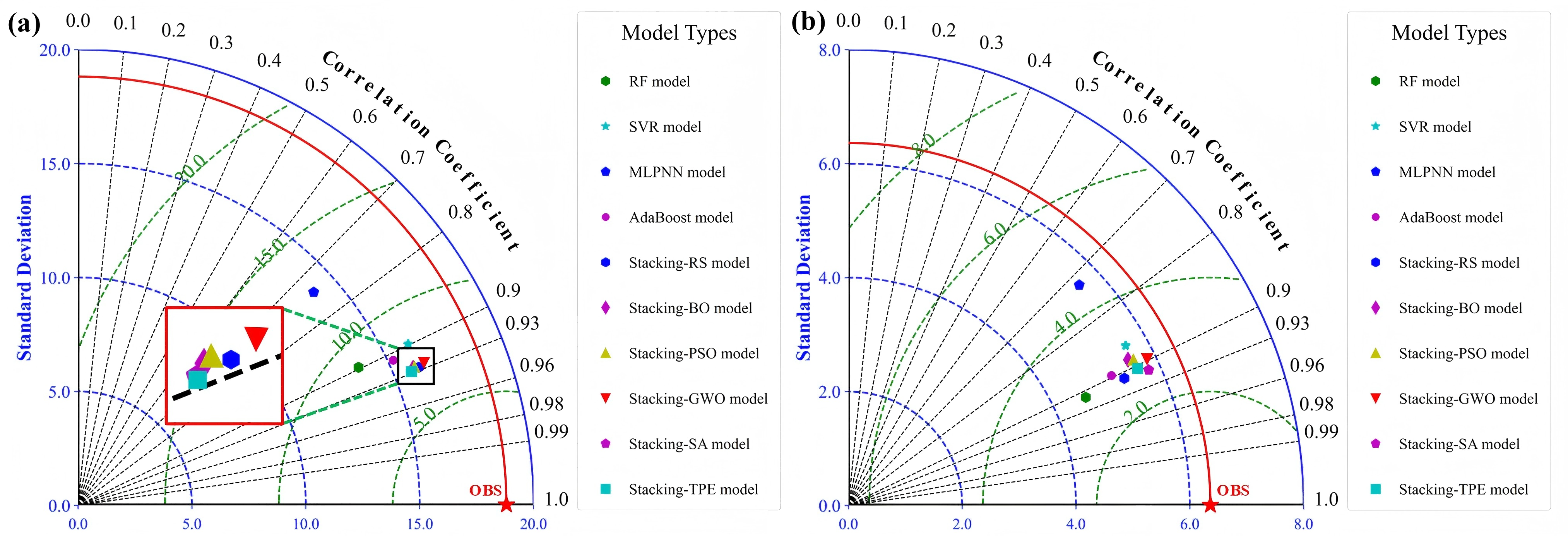
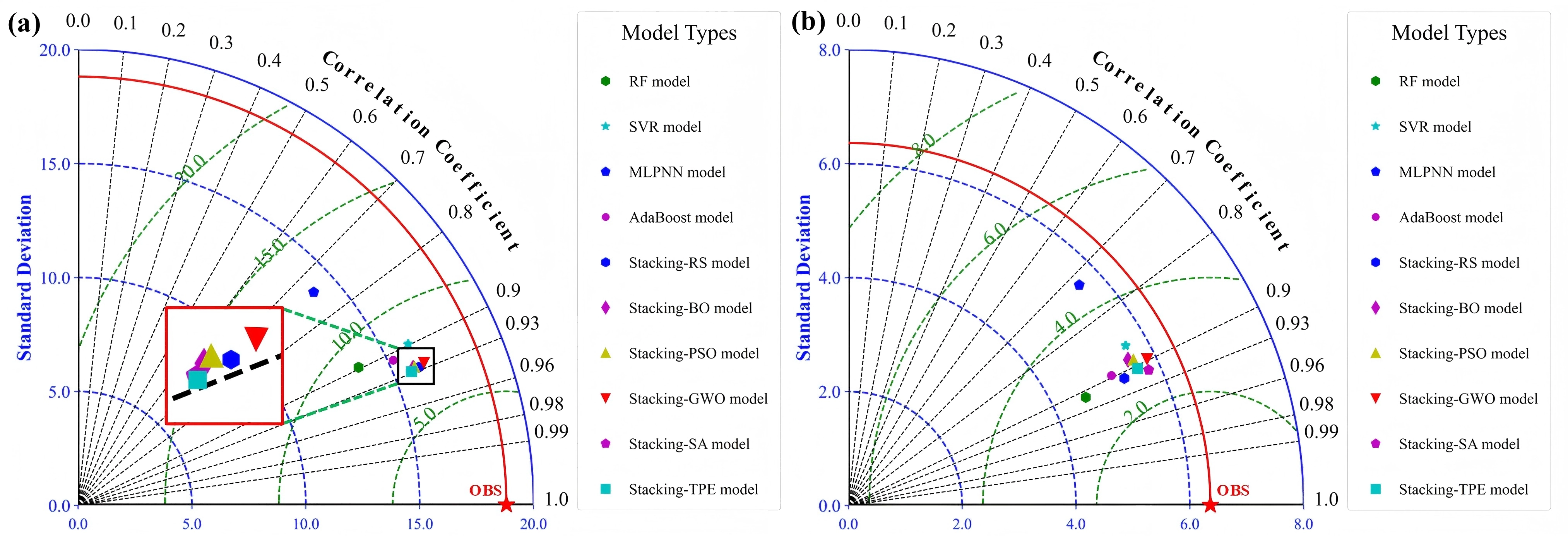
Figure 4. Taylor diagrams of the different models for: (a) Compressive strength; (b) Flexural strength. RF: random forest; SVR: support vector regression; MLPNN: multi-layer perceptron neural network; AdaBoost: adaptive boosting; RS: random search; BO: bayesian optimization; PSO: particle swarm optimization; GWO: grey wolf optimization; SA: simulated annealing; TPE: tree-structured parzen estimators.
Table 2. Taylor diagram parameters of the compressive strength dataset.
| Models | Compressive strength | ||
| SD | RMSE | R | |
| OBS | 18.8091 | 0.0000 | 1.0000 |
| RF model | 13.7252 | 8.8846 | 0.8973 |
| SVR model | 16.1281 | 8.3047 | 0.8984 |
| MLPNN model | 13.9480 | 12.6338 | 0.7416 |
| AdaBoost model | 15.2294 | 8.0824 | 0.9084 |
| Stacking-RS model | 16.1356 | 7.2631 | 0.9268 |
| Stacking-BO model | 15.8901 | 7.3451 | 0.9253 |
| Stacking-PSO model | 15.9687 | 7.3447 | 0.9249 |
| Stacking-GWO model | 16.4329 | 7.3164 | 0.9242 |
| Stacking-SA model | 15.7733 | 7.3270 | 0.9271 |
| Stacking-TPE model | 15.7741 | 7.2723 | 0.9281 |
OBS: observation; RF: random forest; SVR: support vector regression; MLPNN: multi-layer perceptron neural network; AdaBoost: adaptive boosting; RS: random search; BO: bayesian optimization; PSO: particle swarm optimization; GWO: grey wolf optimization; SA: simulated annealing; SD: standard deviation; RMSE: root mean square error; R: correlation coefficient.
Table 3. Taylor diagram parameters of the flexural strength dataset.
| Models | Flexural strength | ||
| SD | RMSE | R | |
| OBS | 6.3620 | 0.0000 | 1.0000 |
| RF model | 4.5833 | 2.9065 | 0.9101 |
| SVR model | 5.6239 | 3.1904 | 0.8665 |
| MLPNN model | 5.6069 | 4.5055 | 0.7236 |
| AdaBoost model | 5.1559 | 2.8686 | 0.8968 |
| Stacking-RS model | 5.3390 | 2.6967 | 0.9084 |
| Stacking-BO model | 5.5400 | 2.9439 | 0.8870 |
| Stacking-PSO model | 5.6205 | 2.8935 | 0.8909 |
| Stacking-GWO model | 5.8476 | 2.8080 | 0.8977 |
| Stacking-SA model | 5.7901 | 2.6178 | 0.9116 |
| Stacking-TPE model | 5.6224 | 2.7235 | 0.9040 |
OBS: observation; RF: random forest; SVR: support vector regression; MLPNN: multi-layer perceptron neural network; AdaBoost: adaptive boosting; RS: random search; BO: bayesian optimization; PSO: particle swarm optimization; GWO: grey wolf optimization; SA: simulated annealing; SD: standard deviation; RMSE: root mean square error; R: correlation coefficient.
For the compressive strength dataset (Figure 4a and Table 2), the Stacking-GWO model exhibits the closest proximity to the experimental reference point, indicating the optimal comprehensive predictive performance. Specifically, this model achieves an SD of 16.4329, which closely approximates the observed value (SD = 18.8091), demonstrating its ability to accurately reproduce the dispersion characteristics of the original data. Concurrently, it attains a relatively low RMSE (7.3164) among all evaluated models. Although the R value of Stacking-GWO (0.9242) is marginally lower than that of the Stacking-SA model (R = 0.9271), the superior reproduction of data variance compensates for this slight discrepancy in the comprehensive distance metric of the Taylor diagram, resulting in a closer spatial alignment with the reference point.
For the flexural strength dataset (Figure 4b and Table 3), the Stacking-SA model demonstrates the most prominent performance. This model attains a SD of 5.7901, exhibiting the smallest deviation from the observed value (SD = 6.3620) among all models, alongside the highest R (0.9116) and the lowest RMSE value (2.6178). In contrast, while the Stacking-GWO model yields a relatively high R (0.8977), its SD deviates more substantially from the observed value, resulting in a larger comprehensive distance from the reference point in the Taylor diagram compared with the Stacking-SA model. Consequently, for flexural strength prediction, the Stacking-SA model not only achieves optimal performance between predicted and measured values but also more accurately captures the fluctuation characteristics of the data.
In comparison, the MLPNN model, which represents a single-algorithm model, demonstrates inferior predictive capability across both datasets. For compressive strength prediction, the MLPNN model yields SD = 13.9480, R = 0.7416, and RMSE = 12.6338. For flexural strength prediction, the corresponding metrics are SD = 5.6069, R = 0.7236, and RMSE = 4.5055, all of which are substantially less favorable than those of the various Stacking ensemble models. This pronounced disparity underscores the inherent limitations of individual machine learning models in addressing complex prediction tasks such as material performance assessment, wherein they often struggle to achieve effective bias control and accurate variability reproduction simultaneously. Conversely, the Stacking ensemble strategy, by integrating the outputs of multiple base learners, substantially enhances model generalization capacity and predictive stability. This improvement is visually corroborated by the overall convergence of the ensemble model positions toward the reference point in the Taylor diagrams, further substantiating the feasibility and effectiveness of the ensemble learning methodology employed in this investigation.
3.2 Objective functions
This section establishes the objective functions for compressive strength, flexural strength, GWP, and economic impact, building upon the optimal Stacking learning algorithm identified in Section 3.1. The NSGA-III algorithm was employed for high-dimensional multi-objective optimization, generating a Pareto-optimal solution set through an elite preservation strategy. Subsequently, the TOPSIS comprehensive evaluation model was established based on this set to achieve multi-criteria decision-making for UHPC mix proportion designs across different strength grades.
The Stacking-GWO and Stacking-SA models serve as the optimal objective functions for predicting compressive strength and flexural strength, respectively. During the NSGA-III iteration, each candidate mix proportion was evaluated by the pre-trained Stacking models to obtain the predicted strengths, which were then combined with the calculated GWP and cost as the four objective values for non-dominated sorting and population updating. The mapping relationship between different objective functions and feature parameters is as follows:
where i ranges from 1 to 17, corresponding to CE, FA, QP, SSP, SLP, LSP, ME, RHA, SF, Fiber, SA, CA, WA, SP, WB, CV and FV, respectively.
The environmental and economic impacts are calculated as the sum of the mass of each constituent material multiplied by its corresponding environmental impact factor or unit cost, with the specific coefficients provided in Table 4.
Table 4. Environmental and economic impact indicators of UHPC.
| Feature parameters | Symbol | Environmental impact(kg CO2 eq) | Economic impact(USD/kg) |
| Cement | CE | 0.927[138] | 0.110[139] |
| Fly ash | FA | 0.027[140] | 0.026[141] |
| Quartz powder | QP | 0.023[142] | 0.800[143] |
| Steel slag powder | SSP | 8.88 × 10⁻³[144] | 0.100[143] |
| Slag powder | SLP | 0.052[140] | 0.100[143] |
| Lime stone powder | LSP | 0.017[145] | 0.120[143] |
| Metakaolin | ME | 0.400[146] | 0.500[143] |
| Rice husk ash | RHA | 0.145[147] | 0.015[139] |
| Silica fume | SF | 0.004[148] | 0.800[149] |
| Steel fiber | Fiber | 1.490[150] | 5.000[149] |
| Sand | SA | 9.87 × 10⁻³[138] | 0.025[141] |
| Coarse aggregate | CA | 0.029[151] | 0.008[139] |
| Water | WA | 1.33×10⁻⁴[138] | 0.001[143] |
| Superplasticizer | SP | 0.944[145] | 1.200[141] |
UHPC: ultra-high performance concrete; SP: superplasticizer; WA: water; CA: coarse aggregate; SA: sand; Fiber: steel fiber; SF: silica fume; RHA: rice husk ash; ME: metakaolin; LSP: limestone powder; SLP: slag powder; SSP: steel slag powder; QP: quartz powder; FA: fly ash; CE: cement.
3.3 Boundary constraints
Before conducting the mix proportion optimization, the decision variables xi were subject to the following boundary constraints:
To eliminate the potential adverse effects of extreme conditions on the cementitious system, the effective range of cement content was defined as the intersection between the 10th and 90th percentiles of the corresponding cement content data for compressive strength and flexural strength.
To control experimental variables, uniform specimen dimensions and curing conditions were adopted. The specific parameter settings are as follows: Compressive strength specimens were 40 × 40 × 40 mm cubes (CV = 64 cm3), while flexural strength specimens were 40 × 40 × 160 mm prisms (FV = 256 cm3). All specimens were cured for 28 days under standardized conditions.
The WB was calculated using the following formula and was subject to the following constraint:
The total amount of cementitious materials was subject to the following distribution range:
The total amount of all raw materials was subject to the following distribution range:
With reference to the draft revision of GB/T 31387-2015 (draft GB/T 31387-2025[152]), the strength thresholds listed in Table 5 were adopted in this study as scenario-specific design constraints for the three UHPC strength grades.
Table 5. Mechanical performance requirements for different strength levels of UHPC.
| Strength levels | Compressive strength (MPa) | Flexural strength (MPa) |
| UC100 (Without steel fiber) | 100 | 12 |
| UC120 | 120 | 17 |
| UC140 | 140 | 20 |
UHPC: ultra-high performance concrete.
3.4 Multi-dimensional performance validation based on NSGA-III and TOPSIS
To evaluate the multi-objective adaptability of UHPC under typical engineering scenarios, a multi-dimensional performance verification was conducted for three different strength grades: UC100, UC120, and UC140. The weights of CS, FS, GWP, and cost were set as 0.05, 0.05, 0.05, and 0.85 for UC100, 0.25, 0.25, 0.25, and 0.25 for UC120, and 0.30, 0.30, 0.20, and 0.20 for UC140, respectively, according to different engineering preferences. The validation utilized the established datasets and the top 100 optimal solutions selected by the TOPSIS decision-making model. The results are shown in Figure 5. For the UC100 strength grade, the GWP range is 414.66-655.42 kg CO2/m3, with a cost range of 104.15-372.89 USD/m3. In contrast, the GWP of UC140 increases further to 425.35-778.24 kg CO2/m3, and the cost rises to 382.50-1182.67 USD/m3. This trend primarily stems from mixture adjustments required to achieve higher mechanical properties, particularly the significant increase in crucial components like steel fiber. As an energy-intensive raw material, steel fiber exhibits substantial carbon emissions during production (1.49 kg CO2 eq) and relatively high market prices (5.00 USD/kg). Consequently, higher fiber content directly drives up both GWP and production cost. Nevertheless, UHPC mixtures across all strength grades still demonstrate a favorable balance of overall performance, confirming the effectiveness of the TOPSIS method in achieving multi-objective synergistic optimization of mechanical properties, environmental impact, and economic cost.
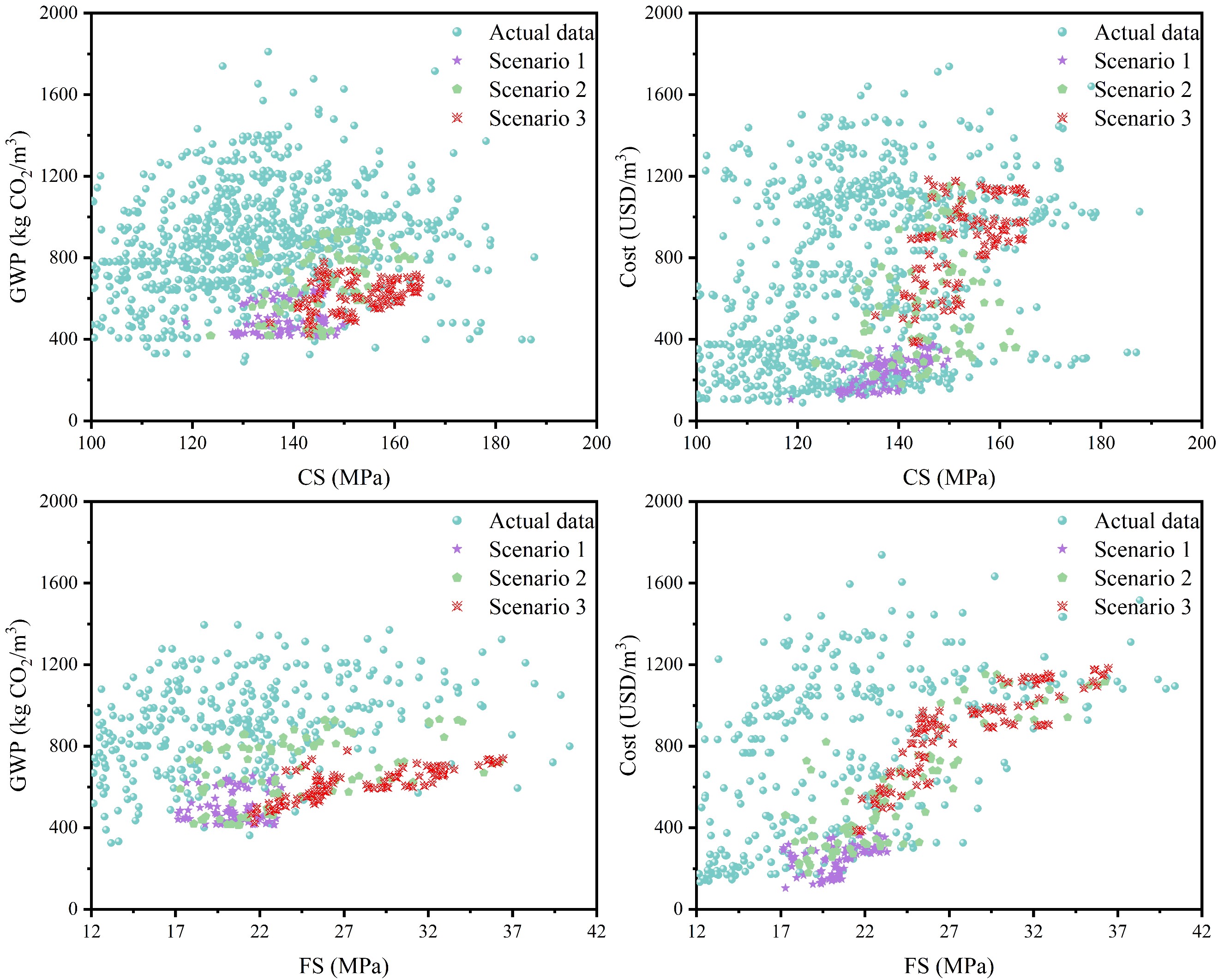
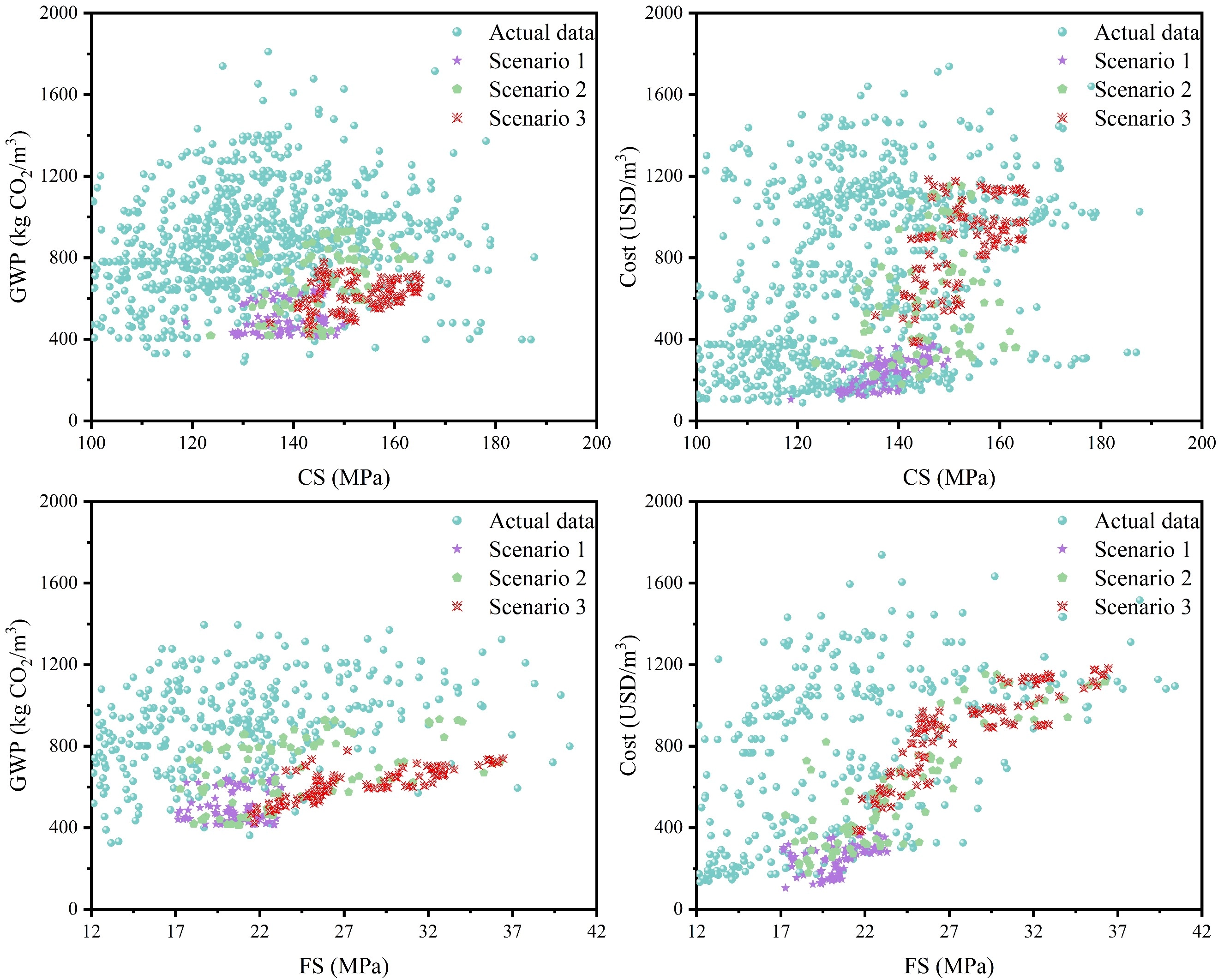
Figure 5. Pareto distribution of optimization objectives in three typical application scenarios. (Scenario 1, Scenario 2 and Scenario 3 correspond to the strength levels of UC100, UC120 and UC140, respectively). GWP: global warming potential; CS: compressive strength; FS: flexural strength.
3.5 Multi-objective optimization results and performance evolution analysis
The optimized mix proportions and corresponding output objectives for different strength grades under multi-objective optimization are summarized in Table 6. As the strength grade progressively increased from UC100 to UC140, the mix proportions were systematically adjusted to meet the escalating performance demands. Regarding mechanical properties, compressive strength exhibited a clear upward trend, reaching 118.65 MPa, 134.44 MPa, and 143.08 MPa for UC100, UC120, and UC140, respectively. The production cost increased from 104.15 USD/m3 for UC100 to 307.54 USD/m3 for UC120 and 382.50 USD/m3 for UC140. Notably, the GWP exhibited an initial increase followed by a decrease: rising from 484.71 kg CO2/m3 in UC100 to 622.27 kg CO2/m3 in UC120, then decreasing to 425.35 kg CO2/m3 in UC140. This variation primarily stems from the mechanical performance enhancement provided by silica fume: the silica fume content progressively increases from UC100 to UC140, peaking at 301.25 kg/m3. This allows for reduced cement usage while achieving the same target strength, consequently lowering the carbon emissions of the concrete.
Table 6. Optimized mix proportions and corresponding performance indicators for UHPC under different strength grades.
| Optimisation results | Symbol | UC100 | UC120 | UC140 |
| Relative Variables | CE | 483.46 | 637.19 | 414.38 |
| FA | 41.01 | 85.02 | 27.04 | |
| QP | 2.97 | 21.11 | 7.61 | |
| SSP | 48.08 | 36.80 | 31.27 | |
| SLP | 12.59 | 77.45 | 80.97 | |
| LSP | 2.37 | 8.40 | 0.00 | |
| ME | 11.31 | 2.51 | 12.12 | |
| RHA | 13.76 | 23.33 | 12.38 | |
| SF | 0.00 | 210.79 | 301.25 | |
| Fiber | 0.00 | 0.00 | 7.44 | |
| SA | 1,047.63 | 1,036.80 | 1,123.89 | |
| CA | 454.11 | 56.59 | 38.75 | |
| WA | 160.20 | 185.16 | 144.99 | |
| SP | 4.44 | 7.61 | 4.93 | |
| WB | 0.26 | 0.17 | 0.16 | |
| Output Objectives | CS | 118.65 | 134.44 | 143.08 |
| FS | 17.28 | 22.91 | 21.69 | |
| GWP | 484.71 | 622.27 | 425.35 | |
| Cost | 104.15 | 307.54 | 382.50 |
FS: flexural strength; WB: water-to-binder ratio; SP: superplasticizer; WA: water; CA: coarse aggregate; SA: sand; Fiber: steel fiber; SF: silica fume; RHA: rice husk ash; ME: metakaolin; LSP: limestone powder; SLP: slag powder; SSP: steel slag powder; QP: quartz powder; FA: fly ash; CE: cement; CS: compressive strength; GWP: global warming potential; UHPC: ultra-high performance concrete.
The optimization performance of the NSGA-III algorithm was quantitatively evaluated using the hypervolume (HV) and spacing (SP) metrics, as shown in Figure 6. The HV value of the solution set fluctuated and gradually increased with iterations before eventually stabilizing, indicating that the algorithm effectively guided the population toward convergence to the true Pareto front through its elite retention strategy[143]. Regarding distribution performance, the SP values rapidly decreased with increasing iterations and eventually stabilized, reflecting continuous improvement in the uniformity of the solution set distribution throughout the evolutionary process. This improvement achieved a balanced distribution of non-dominated solutions while maintaining diversity. The comprehensive evaluation based on the TOPSIS method reveals that the relative closeness gradually decreased from 0.9827 for UC100 to 0.7751 for UC120 and 0.6852 for UC140, as shown in Figure 7. This trend suggests that achieving a delicate balance among mechanical performance, environmental impact, and cost control becomes progressively more challenging at higher strength levels, substantially increasing the complexity of the multi-objective synergistic optimization.
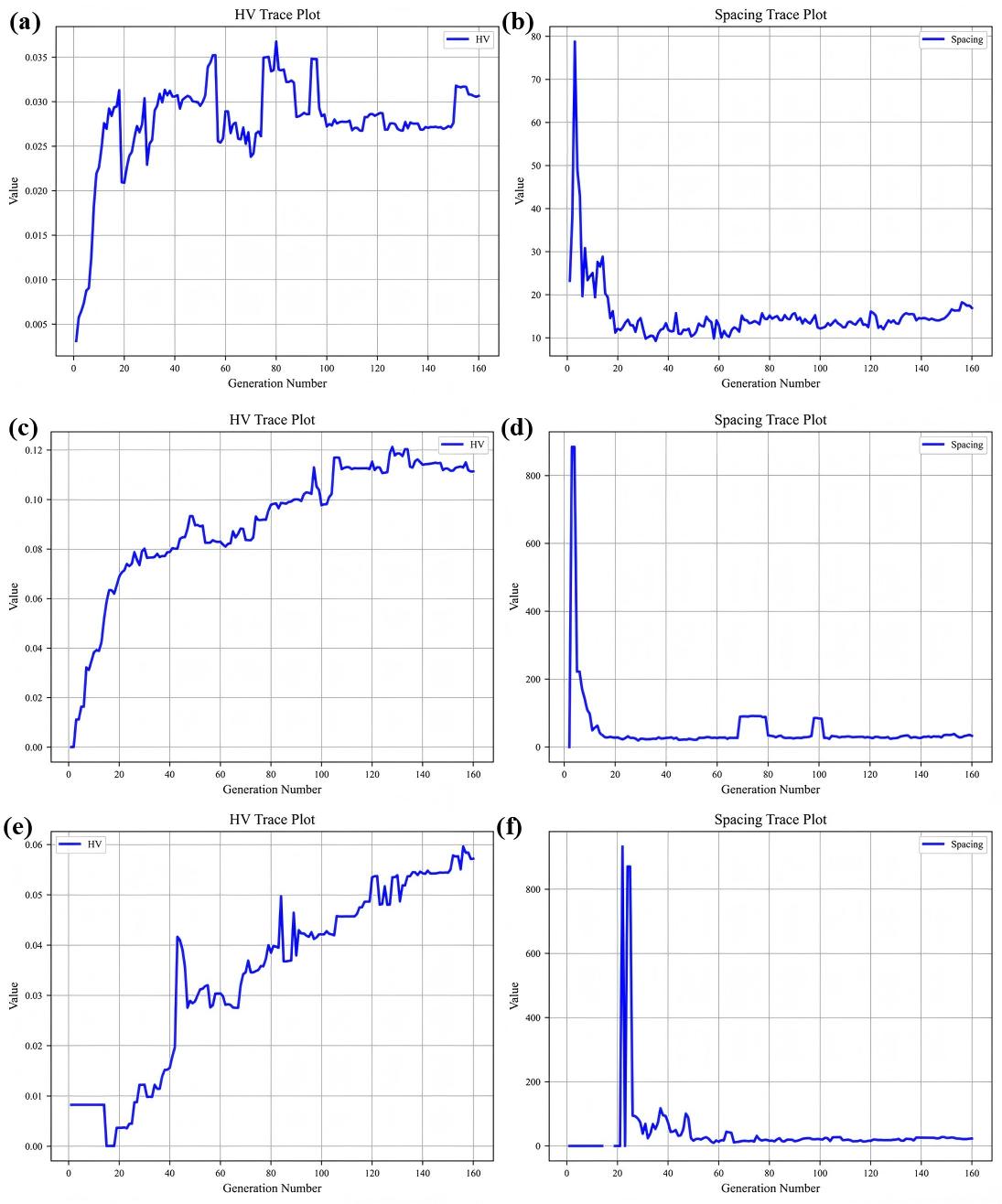
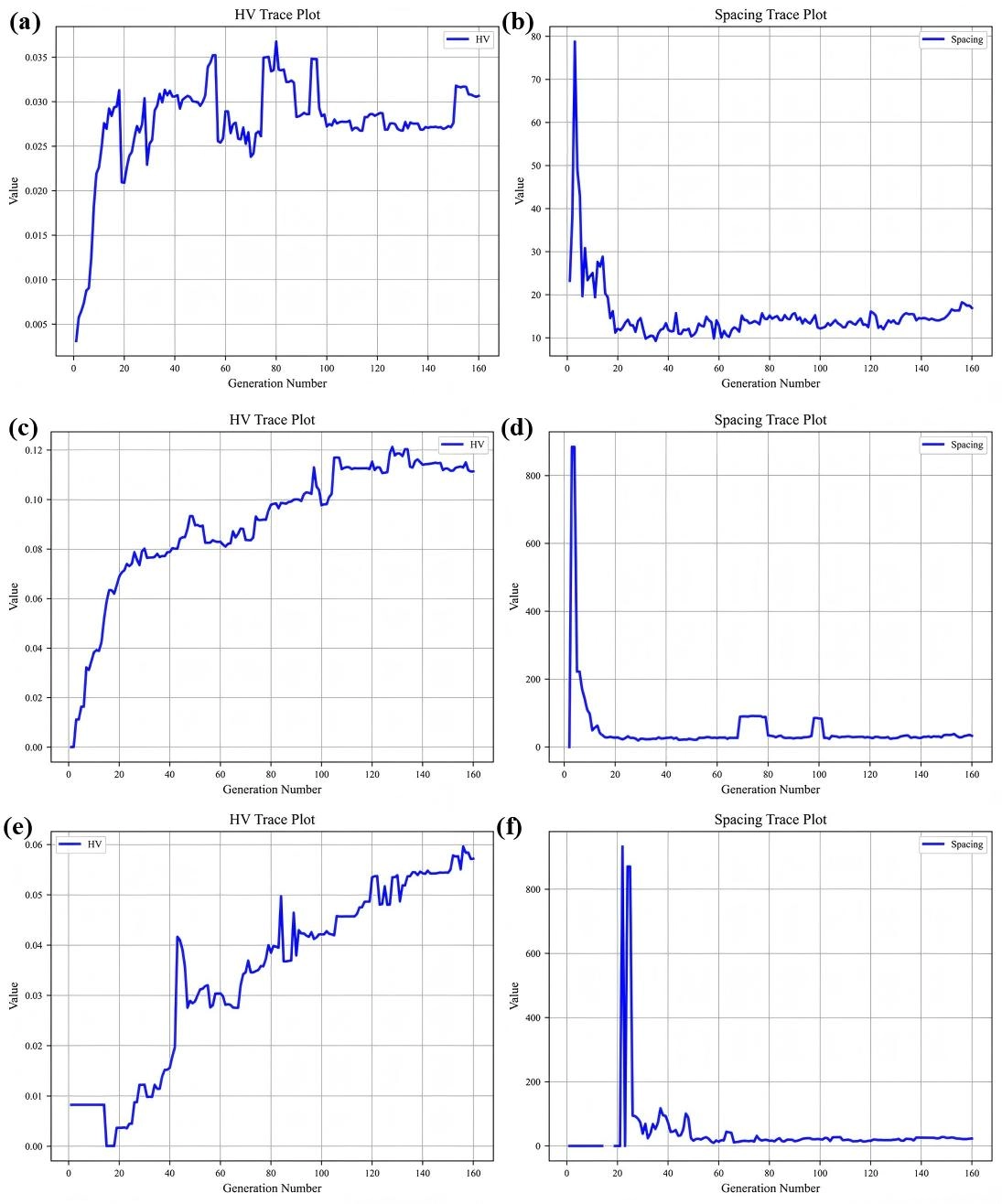
Figure 6. Evolutionary trajectories of the HV and SP metrics under the different strength grades. (a,b) UC100; (c,d) UC120; (e,f) UC140. HV: hypervolume; SP: spacing.
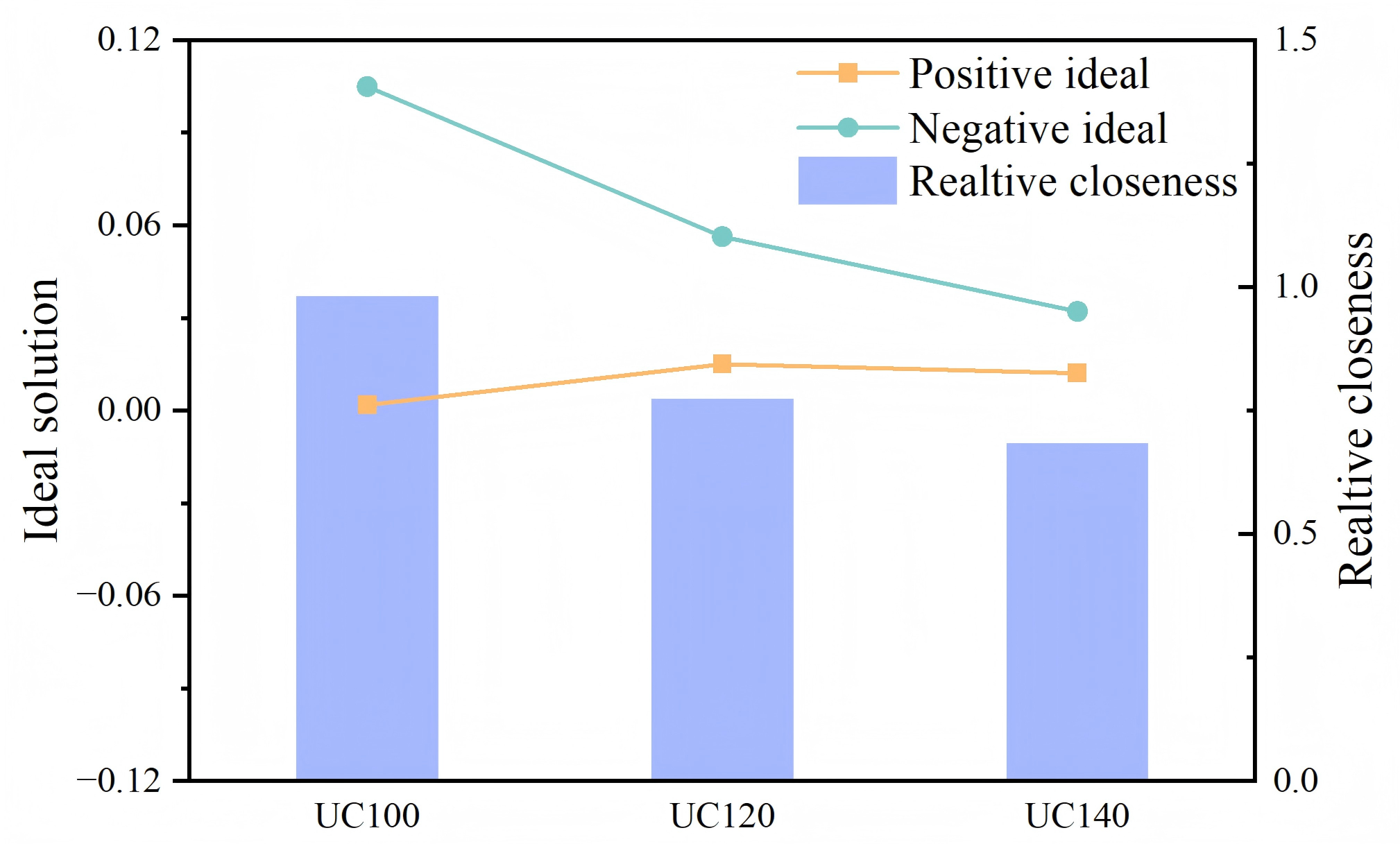
Figure 7. The ideal solution and relative closeness under the different strength grades.
Compared with studies mainly focused on UHPC performance prediction, the present framework further connects the trained Stacking model with NSGA-III optimization and TOPSIS ranking. In this way, the output is extended from predicted strength values to practical mix design options considering strength, cost, and GWP requirements.
4. Conclusions
This study proposes a multi-objective optimization design framework for UHPC based on Stacking ensemble learning. By integrating the NSGA-III multi-objective optimization algorithm with the TOPSIS comprehensive evaluation method, the framework effectively addresses the limitations inherent in conventional trial-and-error approaches when confronting high-dimensional nonlinear problems. The principal conclusions are summarized as follows:
(1) An experimental database comprising 1,133 UHPC mix proportions and their corresponding mechanical properties was established. Feature correlation analysis revealed that steel fiber content exhibits a significant positive correlation with both compressive and flexural strength, with Pearson coefficients of 0.31 and 0.45, respectively. In contrast, the water-to-binder ratio demonstrates a negative correlation, with Pearson coefficients of -0.24 for compressive strength and -0.23 for flexural strength. These findings indicate that the bridging effect exerted by steel fibers enhances the mechanical performance of the concrete, whereas an increase in the water-to-binder ratio adversely affects the mechanical properties by inducing a more porous microstructure.
(2) Comprehensive evaluation based on Taylor diagrams demonstrates that the Stacking ensemble models substantially outperform individual single-algorithm models in predicting both compressive and flexural strength. The Stacking-GWO model performed optimally in compressive strength prediction (R = 0.9242, SD = 16.4329, RMSE = 7.3164), while the Stacking-SA model performed best in flexural strength prediction (R = 0.9116, SD = 5.7901, RMSE = 2.6178). These results validate the superiority of ensemble learning strategies in enhancing prediction accuracy and robustness.
(3) By embedding the optimal Stacking ensemble models into the NSGA-III and TOPSIS frameworks, multi-objective collaborative optimization of UHPC mix designs was successfully achieved. For the optimization of the three strength grades UC100, UC120 and UC140, the predicted compressive strengths reached 118.65 MPa, 134.44 MPa and 143.08 MPa, respectively, while effectively balancing environmental impact and production cost, thereby providing a scientific basis for decision-making that integrates mechanical performance, environmental sustainability, and economic efficiency for practical engineering applications.
(4) Different from existing studies that mainly focus on performance prediction or algorithmic optimization alone, the methodological contribution of this work lies in establishing a closed-loop data-driven design pathway that integrates interpretable performance prediction, engineering-constrained multi-objective optimization and reliable decision-making.
From a practical perspective, the proposed framework can support the preliminary design and rapid screening of UHPC mixtures by balancing strength requirements, environmental impact, and production cost under engineering constraints. Nevertheless, it should be acknowledged that the optimized UHPC mix designs obtained in this study were not experimentally prepared and tested. Future work will further conduct laboratory verification of the optimized mixtures to evaluate the consistency between predicted and measured performance, thereby improving the robustness, reliability, and engineering applicability of the proposed framework.
Acknowledgements
The authors declare that ChatGPT was used solely for language polishing during manuscript preparation. All research content, including the study design, data analysis, interpretation, figures, and tables, is original and was not generated using AI tools. The authors are responsible for the accuracy and scientific content of the article.
Authors contribution
Zhang W: Investigation, data curation, validation, writing-original draft.
Liu C: Conceptualization, resources, supervision.
Yao Y, Nasr A: Validation, writing-review & editing.
Yang Q: Data curation, validation.
Duan Z: Funding acquisition, supervision.
Conflicts of interest
Not applicable.
Ethical approval
Not applicable.
Consent to participate
Not applicable.
Consent for publication
Not applicable.
Availability of data and materials
Data will be made available on request.
Funding
The authors would like to acknowledge the National Natural Science Foundation of China (Grant No. 52178244) for financial support.
Copyright
© The Author(s) 2026.
References
-
1. Zhang W, Duan Z, Wu Y, Liu C, Yao Y, Nasr A, et al. Engineering application of non-dominated sorting genetic algorithm III: Multi-objective optimization of ultra-high performance concrete for diverse scenarios. Eng Appl Artif Intell. 2026;175:114551.[DOI]
-
2. Yang G, Ran Q, Yu R, Wu J, Zuo X, Xiao R, et al. Study on the contribution of physical packing and chemical reactions to the mechanical properties of UHPC. J Build Eng. 2026;120:115590.[DOI]
-
3. Zhang Y, Yi M, Mei W, Long Z, Peng L, Long G. A multi-objective ensemble learning framework for designing low-carbon ultra-high performance concrete (UHPC). Appl Soft Comput. 2025;169:112644.[DOI]
-
4. Kashem A, Karim R, Malo SC, Das P, Datta SD, Alharthai M. Hybrid data-driven approaches to predicting the compressive strength of ultra-high-performance concrete using SHAP and PDP analyses. Case Stud Constr Mater. 2024;20:e02991.[DOI]
-
5. Cheng B, Mei L, Long WJ, Luo Q, Zhang J, Xiong C, et al. Data driven multi-objective design for low-carbon self-compacting concrete considering durability. J Clean Prod. 2024;450:141947.[DOI]
-
6. Bin Teoh K, Hiew SY, Banthia N, Yoo DY. Machine learning in ultra-high-performance concrete (UHPC): A multiscale review of applications, challenges, and prospects. Arch Comput Methods Eng. 2026;33(5):6699-6754.[DOI]
-
7. Guo P, Jiang Z, Meng W, Bao Y. Multi-agent collaboration for knowledge-guided data-driven design of ultra-high-performance concrete (UHPC) incorporating solid wastes. Cem Concr Compos. 2025;164:106230.[DOI]
-
8. Yu R, Chen F, Fan D, Xu W, Zhang L, Li W, et al. Machine learning-based performance prediction and precision design of ultra-high performance concrete. J Chin Ceram Soc. 2025;53(5):1165-1176.[DOI]
-
9. Zhang PF, Zhang D, Zhao Q, Tuerxunmaimaiti Y, Yang X, Zhao X, et al. Machine learning-guided interpretable modelling of code-based equation for bond strength of composite bars in ultra-high-performance concrete. Adv Eng Inform. 2026;73:104542.[DOI]
-
10. Hao J, Jiao W, Xie X, Man D, Huang S. Intelligent prediction and understanding of self-shrinkage in ultra-high performance concrete based on machine learning. Case Stud Constr Mater. 2025;22:e04255.[DOI]
-
11. Zhang W, Duan Z, Liu C, Yao Y, Liu H, Nasr A, et al. Performance optimisation and predictive modelling of rice husk ash recycled concrete under the coupled action of freeze-thaw cycles and chloride erosion: Experimental study and machine learning. Constr Build Mater. 2025;481:141467.[DOI]
-
12. Katlav M, Ergen F, Donmez I. AI-driven design for the compressive strength of ultra-high performance geopolymer concrete (UHPGC): From explainable ensemble models to the graphical user interface. Mater Today Commun. 2024;40:109915.[DOI]
-
13. Kumar R, Kumar DR, Wipulanusat W, Thongchom C, Samui P, Rai B. Estimation of the compressive strength of ultrahigh performance concrete using machine learning models. Intell Syst Appl. 2025;25:200471.[DOI]
-
14. He Y, Gao S, Li Y, Guan Y, Zhang J, Hu D. Adaptive machine learning framework: Predicting UHPC performance from data to modelling. Results Eng. 2025;27:106724.[DOI]
-
15. Mahjoubi S, Meng W, Bao Y. Auto-tune learning framework for prediction of flowability, mechanical properties, and porosity of ultra-high-performance concrete (UHPC). Appl Soft Comput. 2022;115:108182.[DOI]
-
16. Zhang C, Liu P, Song T, He B, Li W, Peng Y. Elastic modulus prediction of ultra-high-performance concrete with different machine learning models. Buildings. 2024;14(10):3184.[DOI]
-
17. Taffese WZ, Sistonen E. Machine learning for durability and service-life assessment of reinforced concrete structures: Recent advances and future directions. Autom Constr. 2017;77:1-14.[DOI]
-
18. Zhao Y, Qin P, Wang Z. Multi-objective optimization and machine learning techniques for predicting early-age shrinkage in ultra-high-performance concrete. Mater Today Commun. 2025;47:112925.[DOI]
-
19. Ke L, Zhang H, Li C, Zhang J, Hao T, Qiu M, et al. Performance prediction and interpretable analysis of concrete based on automatic machine learning. Acta Mater Compos Sin. 2025. Chinese.[DOI]
-
20. Huang W, Sun W. Effects of limestone addition on hydration development of ultra-high performance concrete. J Southeast Univ Nat Sci Ed. 2017;47(4):751-759. Available from: https://kns.cnki.net/kcms2/article/abstract?v=-kV3hmJm4f2Kvn8RF4n58l8xnJfZ39EoW57yFVUr-QHdQLPZAE6o7IL9UuG4I7SNqUUg2HiLAyLMumrRqWTKPtYvXGLtsCo5tI__e8i_es4bVUutzCVj4EZsUcqafjX9ZG8qwxOB7r-adQc--kaqANRrTsKq0M6Fndw4AB6RkfsRhvsGT4OJkA==&uniplatform=NZKPT&languag
-
21. Wang X, Chen B, Zhang F, He Y, Xu J. Influence of steel fiber content on mechanical properties of ultra-high performance concrete. J Water Resour Archit Eng. 2022;20(3):61-66. Available from: https://www.aeeisp.com/slyjzgcxb/en/article/id/49e5fc49-878b-4137-a96d-70e6831600b9
-
22. Liu P. Effect of limestone powder on the properties of ultra-high performance concrete. Fujian Build Mater. 2023. Chinese. Available from: https://kns.cnki.net/kcms2/article/abstract?v=wYvQo-F_OPZmOnzi8N7--oEDJHK14deziZPHyrm3a3Y95Oi8RmHDty3TIt3s42s2QjhlLaaAEgTFSoOQaVLCCQ1T-1Jlq24eNKMuqThlFvt3NmjywXMhsAZCPIn9FU1Vl4fwbG7l4esvBvk6Gadd1JTipcUuyPvgfDmhdDXt8a_GPLhN47cuzw==&uniplatform=NZKPT&languag
-
23. Zhang JS, Zhao YH, Jiang ZX. Mechanical properties and microstructure of ultra-high performance concrete with low cement content. J Dalian Marit Univ. 2017;43(2):123-128.[DOI]
-
24. Cai R. Preparation of high active rice husk silica and it’s application to the super high performance concrete [dissertation]. Guangzhou: Jinan University; 2008. Chinese. Available from: https://kns.cnki.net/kcms2/article/abstract?v=-kV3hmJm4f0K9Oqtu326YH_clmzEd9qT-lmchFsJRjQ9YfZGMRi9ygTJ4WAujvQ6oT1DWM7iXFHEzf09PtLuU0kE-GRSg708KITcMephsRis_AJvl0GXD0gxecau_qoa6J-gS8j_ndNCOVm8j-DrERrlgiDliDjcvARq7xiey5gjFR9flqt3cA==&uniplatform=NZKPT&languag
-
25. Zhang CH, Zhang PD, Lin L, Fang J, Peng P. Effect of rice husk ash at different calcination temperatures on the properties of ultra-high performance concrete. Concr World. 2021. Chinese. Available from: https://kns.cnki.net/kcms2/article/abstract?v=wYvQo-F_OPb4EmL4PmAH-w-mAd2y6niPq_FGFALAkYJnfBzAqjDrjWFyjixQmPxynE0YRNQp7cHTO1RP09QOEQOqBXXw6Hvbj5vIcs5C2iwO9LzVMYXnszOVb6cAMIhz3f7x560mEMW1fzj9f1NRbxCuzoDeSAzSHaXiGpmlzfY=&uniplatform=NZKPT
-
26. Wang W. Effects of the steel fibre on the ultra-high performance fibre reinforced concrete (UHPFRC). World Build Mater. 2019;40(1):13-16.[DOI]
-
27. Li Z. Effect of mixed mineral powder admixture on performance of high performance concrete. Concr. 2023. Chinese. Available from: https://kns.cnki.net/kcms2/article/abstract?v=-kV3hmJm4f0teeR46X4XrkJxzq51WAvKUFuIdFjUaBRjVhvYLfnRkYEOE_60QRzMPbMjjSbOz8ojMv9YjO2j9NKDj2CZ-zW0UtKHH7-jA-lXRHLnbf95XPm-E8ikdevEl7wOyWPeUsAY_Zuy7iuc-R4sg4erQ7mIA3BqtbZGiFb0oHNw87qxdQ==&uniplatform=NZKPT&languag
-
28. Wang SY, Zeng M, Hu FJ, Yu R, Shui ZH, Fan DQ, et al. Study on preparation of ecological ultra-high performance concrete with steel slag powder. China Concr Cem Prod. 2022. Chinese.[DOI]
-
29. Zhang L, Gao F, Peng LW, Lei Q, Ai MX. Preparation and test analysis of ultra-high performance concrete. Concr World. 2023. Chinese. Available from: https://kns.cnki.net/kcms2/article/abstract?v=-kV3hmJm4f1fFgmJwMnKMFsDORpf6yNmn1VG8zzAnzN14k3oydjZuSk5CfcGMNbcvruElfKJCIMtupovH2vH9v-Akvk-Wsw1ksrRmed2kBm5yuBQ-vBJvbeYt81367IdGKf76blox97LR440lnbzVwK7mUnJnIlzwHCzIXkTdYttL95h9_Nf-w==&uniplatform=NZKPT&languag
-
30. Fan R, Study on size effect of basic mechanical properties of ultra-high performance concrete [dissertation]. Inner Mongolia: Inner Mongolia University; 2019.
-
31. Zhang X. The effect of particle size and mixing amount of coarse aggregate on the performance of ultra-high performance concrete. Concr World. 2023. Chinese. Available from: https://kns.cnki.net/kcms2/article/abstract?v=-kV3hmJm4f2AEPQPrqGiV0MBCy7DPAATxK7fkqo-_3Yddag0Al2xkGDbIvqglN8mqEHlSopwd4OH6VfGc5-R1wDifeO_UXGiK0c5rf3pOVPrvtT0YrdV-UrS_6oOeWfR3cwryuueJTOPnVvlXzhKhFZsiHUHxFaR43djCX2jBlM5JuD7sqTbaQ==&uniplatform=NZKPT&languag
-
32. Ge ZL. Effect of fly ash and glass powder on the properties of ultra-high performance concrete. J Hubei Polytech Univ. 2024;40(3):61-65. Chinese. Available from: https://kns.cnki.net/kcms2/article/abstract?v=-kV3hmJm4f0J2ztvDxeN6ZM-dhLJR0LGkHpyuRITJKW-xPw9CCFCp6faJ-YV9gfplVMgkS4FXS9Q8r75J-zS94Qe4gp4VR3yAvGLPUY4TKpv5AggGSt2lj8wh3E2WKKbVL8qqxfbG8Xn_crn2La7_7lNQjg_J9kY0pcQwfvby-8FcX_XcuLxDQ==&uniplatform=NZKPT&languag
-
33. Liu C, Zhu ZW, Dai L, Chen LW, Wu FQ, Li LH. Study on the optimum mix ratio of fly ash based ultra-high performance concrete. Fly Ash Compr Util. 2024;38(3):11-15. Chinese.[DOI]
-
34. Tang XY, Ma JL, Luo J, He BB, Lu CJ. Analysis of influencing factors on mechanical properties of steel slag powder ecological ultra-high performance concrete. Bulletin of the Chinese Ceramic Society. 2023;43(2):601-617. Chinese.[DOI]
-
35. Liu SB, Feng WQ. Mechanical properties and durability of ultra-high performance concrete containing coarse aggregate Concr. 2024. Chinese. Available from: https://kns.cnki.net/kcms2/article/abstract?v=-kV3hmJm4f3gbRw2A-cv4j1-fSxe1JiXZOBMLB0Tq8j3Pr-5BeLkCLSpeboDDDXYgxseJCK2K48LaVdlNU4pvJMu63IftzalTLhuKV0c_Vod--4Mh_2V4GMyDCxBRJ86pMxCAAOU7CJyTmYbuvrVVJnXcldkRW3PtJDSlwj6ahJ09X1mkwBc8w==&uniplatform=NZKPT&languag
-
36. Liu G, Kang X. Experimental research on mechanical properties of ultra-high performance concrete with coarse aggregate. China Build Mater Sci Technol. 2024;33(3):67-71. Chinese.[DOI]
-
37. Zhao XT, Yang DY, Zhu CX, Yang J, Liu M, Shen C. Study on sand ratio of ultra high performance concrete. Concr. 2021. Chinese. Available from: https://kns.cnki.net/kcms2/article/abstract?v=-kV3hmJm4f0JGqIQ1NgdPoIvaVjM2pdgjKzDO9lVeJQqPOXLz9kFF5mp562kUdjE4OE-Wh7j9cKYb4EXKgDrtyZTTpchdA1NxqzBdF0hK-wae8R5gPdwK3QZQypoTV6r5PpfNd_rSyZUukuKUSJfUVOMKCi-zBrgg8hfpyt_z5jTH0ZrCdLxtg==&uniplatform=NZKPT&languag
-
38. Chen Y. Preparation, performance research and engineering application of ultra-high performance concrete. Build Constr. 2021;43(3):453-455. Chinese.[DOI]
-
39. Huang W, Yang Y, Cui T, Liu Y. Study on the workability and mechanical properties of ultra-high performance concrete containing coarse aggregate. Concr. 2021. Chinese. Available from: https://kns.cnki.net/kcms2/article/abstract?v=-kV3hmJm4f0XVxB1escP3qpFyEOxc_RgkJRpfMFwpAyg4S0LRBiV7JxZMcjz26oRSBxTOBZly77uRDJCBoyRSYH6LpVAHXyaNKaRUO6tZt3nrIBxmVldyjemOCWsBG1LbLHkz44iZHrWC7wBSVw-JeHD2ujX8l0sng7PmrsRondSuh9OUD3hrA==&uniplatform=NZKPT&languag
-
40. Qian H, Jiao C, Lai J, Hu D. Mix proportion design and experiment verification of reactive powder concrete. Concrete. 2016. Chinese. Available from: https://kns.cnki.net/kcms2/article/abstract?v=-kV3hmJm4f0hmMiM9Q47xNt1GSN4zzp7Mv1IF4uLD6kkyM_PvODpSUsnRM7HVu2YaexY19bs3bmEM49iYa8zVNt90dbvNk3Jj9wO6afp69Z8kO4LtMZcC2zfx3bouvhPP4q_Qsu2wTgfmSbuqSzPGMuUxaXWQjozRZL912ZFuxhVzHh9Y5Oasw==&uniplatform=NZKPT&languag
-
41. Chen Q, Ma R, Jiang ZW, Wang H. Compressive strength prediction and mix proportion design of UHPC based on GA-BP neural network. J Build Mater. 2020;23(1):176-183. Available from: https://kns.cnki.net/kcms2/article/abstract?v=-kV3hmJm4f24-1a4LyAw0mDTnmQMTi_vJXC63sWjs4-rCuHBlKL83VQ3eJZWd9MubOP_FWtZDr7PaZPBQ6DQFpv516ObWvZYcbENoior5K7rap_Ccva85FCyDq4kg4DwMWBQ9NiW3F1vhqaQuSuqfwt_M-YbSEuQlizcNRR_UowdH7GSxfcjcQ==&uniplatform=NZKPT&languag
-
42. Wang Z, Xiao XG, Shui ZH, Leng Y, Tong Y, Yu R, et al. Rational selection of the dosage of superplasticizer for UHPC based on the close packing theory. Bull Chin Ceram Soc. 2019;38(5):1503-1509. Chinese.[DOI]
-
43. Chen SH, Tang XY, Ma JL, Luo J, Tang YZ, Shen SY, et al. Optimization of the mix proportion of steel slag UHPC based on orthogonal test. J Guangxi Univ Sci Technol. 2023;34(2):52-60. Chinese.[DOI]
-
44. Dai GF. Experimental study on mix proportion of filled reactive powder pavement concrete. J Shijiazhuang Inst Railw Technol. 2022;21(4):7-10. Chinese. Available from: https://kns.cnki.net/kcms2/article/abstract?v=-kV3hmJm4f1BO7ICktGmU_3henpXggBOKE8t0IzKH1QIz40Pu_HdQQ9TrZGAgNlr_gyYLZ9Ac_s211DMiZnqshLE_Mq9sHKGmjiB-SQRUr3C8m55z3mBPq2GdV7XITiBVuBNcLTGBZURTPcGEYLT4NHs7pJKZQULBRl6lLAdMJOh0qyuOFsaUA==&uniplatform=NZKPT&languag
-
45. Ju Y, Shao A, Wang D. Study on factors affecting the compressive strength of reactive powder concrete. Concr. 2017. Chinese. Available from: https://kns.cnki.net/kcms2/article/abstract?v=-kV3hmJm4f3Nttw4j3fOmHyd2FkGYCZo2paI8KcowbEj2vvnuUaIX3oog2hEEpZOQPBx9UisG6u5DYCm50jKq1nQTVV5pJ7J0qArpMrNlK8tSj_Lr8Jq3Pz91DK6ZZdAWSNHp0Tkd6bnXDUqMpq2EP4Ws2VbQW-UTUa8T-ZOQgbXfwVBhqkS5A==&uniplatform=NZKPT&languag
-
46. Zuo X. Research on type evolution of calcium silicate hydrate in ultra-high performance concrete [dissertation]. Beijing: Beijing Jiaotong University; 2021. Chinese. Available from: https://kns.cnki.net/kcms2/article/abstract?v=-kV3hmJm4f0R_6qY1XMV-HKvFNzb9EJ4ZVSONlz-iFKU3nZHSJY7BV3JFDp1KIG6r-3Lkf6CPdOSTFaocd-RBDUPsuoVDUUqjYH0WNhwj8ORMjOgyAgFUuhGUHX350ljXJY_NeSAIzxCu1BDfANQJO1sf_AIXLokpVQ2jAWEhbMOthgo8baGVdS9WwitlZ0e&uniplatform=NZKPT
-
47. Shareef A. A study on durability properties of ultra-high performance concrete (UHPC) utilizing local fine quartz sand. King Fahd University of Petroleum and Minerals; 2013. Available from: https://eprints.kfupm.edu.sa/id/eprint/139067
-
48. Liu J, Guo R. Applications of steel slag powder and steel slag aggregate in ultra-high performance concrete. Adv Civ Eng. 2018;2018:1426037.[DOI]
-
49. Ngo TV, Tran VB, Le BH, Dang HT, Matos J, Tran MQ, et al. An assessment of the impact of locally recycled cementitious replacement materials on the strength of the ultra-high-performance concrete. Appl Sci. 2024;14(17):7484.[DOI]
-
50. Luan C, Wang J, Gao J, Wang J, Du P, Zhou Z, et al. Changes in fractal dimension and durability of ultra-high performance concrete (UHPC) with silica fume content. Arch Civ Mech Eng. 2022;22(3):123.[DOI]
-
51. Wu Z, Shi C, He W. Comparative study on flexural properties of ultra-high performance concrete with supplementary cementitious materials under different curing regimes. Constr Build Mater. 2017;136:307-313.[DOI]
-
52. Ouyang X, Shi CJ, Shi JH, Shan B, Wu ZM, Huang Y, et al. Compressive mechanical properties and prediction for elastic modulus of ultra-high performance concrete. J Chin Ceram Soc. 2021;49(2):296-304. Chinese.[DOI]
-
53. Wang X, Ma Z, Wang X, Xue S, Shen W, Wu D, et al. Design of self-compacting ultra-high performance concrete (SCUHPC) towards to the cementitious materials packing optimization. Cem Concr Compos. 2024;148:105443.[DOI]
-
54. Liu Z, Qi X, Yu Z, Ke J, Gao X, Shui Z. Development and properties of cost-effective self-sensing Ultra-High Performance Fiber-Reinforced Concrete (UHPFRC) incorporating steel slags. Constr Build Mater. 2024;449:138502.[DOI]
-
55. Gao B, Xu L, Tang T, Su K, Chi Y, Huang L. Development of low-carbon ultra-high performance concrete with low cement content: Workability, mechanical properties, and microstructure characterization. J Build Eng. 2024;94:109907.[DOI]
-
56. Habel K, Viviani M, Denarié E, Brühwiler E. Development of the mechanical properties of an ultra-high performance fiber reinforced concrete (UHPFRC). Cem Concr Res. 2006;36(7):1362-1370.[DOI]
-
57. Abdellatief M, AL-Tam SM, Elemam WE, Alanazi H, Elgendy GM, Tahwia AM. Development of ultra-high-performance concrete with low environmental impact integrated with metakaolin and industrial wastes. Case Stud Constr Mater. 2023;18:e01724.[DOI]
-
58. Li Z. Drying shrinkage prediction of paste containing meta-kaolin and ultrafine fly ash for developing ultra-high performance concrete. Mater Today Commun. 2016;6:74-80.[DOI]
-
59. Tahwia AM, Elgendy GM, Amin M. Durability and microstructure of eco-efficient ultra-high-performance concrete. Constr Build Mater. 2021;303:124491.[DOI]
-
60. Gong Y, Hua Q, Wu Z, Yu Y, Kang A, Chen X, et al. Effect of basalt/steel individual and hybrid fiber on mechanical properties and microstructure of UHPC. Materials. 2024;17(13):3299.[DOI]
-
61. Huang W, Kazemi-Kamyab H, Sun W, Scrivener K. Effect of cement substitution by limestone on the hydration and microstructural development of ultra-high performance concrete (UHPC). Cem Concr Compos. 2017;77:86-101.[DOI]
-
62. Meng W, Khayat KH. Effect of hybrid fibers on fresh properties, mechanical properties, and autogenous shrinkage of cost-effective UHPC. J Mater Civ Eng. 2018;30(4):04018030.[DOI]
-
64. Sun J, Wang H, Lan J, Zhou K, Liu H. Effect of raw fly ash on performance of ultra-high performance concrete. Bull Chin Ceram Soc. 2022;41(1):209. Available from: https://www.researching.cn/articles/OJc86650d849bb497a?alichlgref=https%3A%2F%2Fwww.google.com.hk%2F
-
65. Tang XY, Guo B, Ma JL, Luo J. Effect of steel slag powder on the properties of ultra-high performance concrete (UHPC). China Concr Cem Prod. 2021. Chinese.[DOI]
-
66. Amin M, Tayeh BA, Agwa IS. Effect of using mineral admixtures and ceramic wastes as coarse aggregates on properties of ultrahigh-performance concrete. J Clean Prod. 2020;273:123073.[DOI]
-
67. Fernand M, Li Y, Qian Q, Chi Y, Yang Z. Effects of coarse aggregates on 3D printability and mechanical properties of ultra high performance fiber reinforced concrete. J Build Eng. 2024;96:110516.[DOI]
-
68. Wu Z, Shi C, He W, Wu L. Effects of steel fiber content and shape on mechanical properties of ultra high performance concrete. Constr Build Mater. 2016;103:8-14.[DOI]
-
69. Yu R, Fan DQ, Sun MJ, Zhang JJ, Shui ZH, Hou DS, et al. Effects of steel fibre content and 3D network on performance of ultra-high performance concrete. J Chin Ceram Soc. 2021;49(11):2313-2321. Chinese.[DOI]
-
70. Jin L, Zhang R, Tian Y, Dou G, Du X. Experimental investigation on static and dynamic mechanical properties of steel fiber reinforced ultra-high-strength concretes. Constr Build Mater. 2018;178:102-111.[DOI]
-
71. Ashkezari GD, Fotouhi F, Razmara M. Experimental relationships between steel fiber volume fraction and mechanical properties of ultra-high performance fiber-reinforced concrete. J Build Eng. 2020;32:101613.[DOI]
-
72. Ahmad S, Al-Fakih A, Bahraq AA, Yusuf MO. Fracture toughness of UHPC mixtures: Effects of w/b ratio, cement and silica fume contents. Constr Build Mater. 2024;417:135327.[DOI]
-
73. Arora A, Yao Y, Mobasher B, Neithalath N. Fundamental insights into the compressive and flexural response of binder- and aggregate-optimized ultra-high performance concrete (UHPC). Cem Concr Compos. 2019;98:1-13.[DOI]
-
74. Roberti F, Cesari VF, de Matos PR, Pelisser F, Pilar R. High- and ultra-high-performance concrete produced with sulfate-resisting cement and steel microfiber: Autogenous shrinkage, fresh-state, mechanical properties and microstructure characterization. Constr Build Mater. 2021;268:121092.[DOI]
-
75. Mo Z, Wang R, Gao X. Hydration and mechanical properties of UHPC matrix containing limestone and different levels of metakaolin. Constr Build Mater. 2020;256:119454.[DOI]
-
76. Liu Y, Jing R, Yan P. Improving environmental efficiency of ultra-high-performance concrete (UHPC) through appropriate application of ultrafine quartz powder. J Sustain Cem Based Mater. 2023;12(8):941-950.[DOI]
-
77. Sharma Y, Yeluri M, Allena S, Owusu-Danquah J. Incorporating limestone powder and ground granulated blast furnace slag in ultra-high performance concrete to enhance sustainability. Int J Concr Struct Mater. 2024;18(1):79.[DOI]
-
78. Huang H, Gao X, Wang H, Ye H. Influence of rice husk ash on strength and permeability of ultra-high performance concrete. Constr Build Mater. 2017;149:621-628.[DOI]
-
79. Prakash S, Kumar S, Biswas R, Rai B. Influence of silica fume and ground granulated blast furnace slag on the engineering properties of ultra-high-performance concrete. Innov Infrastruct Solut. 2021;7(1):117.[DOI]
-
80. Xu D, Tang J, Hu X, Zhou Y, Yu C, Han F, et al. Influence of silica fume and thermal curing on long-term hydration, microstructure and compressive strength of ultra-high performance concrete (UHPC). Constr Build Mater. 2023;395:132370.[DOI]
-
81. Wu Z, Shi C, Khayat KH. Influence of silica fume content on microstructure development and bond to steel fiber in ultra-high strength cement-based materials (UHSC). Cem Concr Compos. 2016;71:97-109.[DOI]
-
82. Wu Z, Shi C, Khayat KH. Investigation of mechanical properties and shrinkage of ultra-high performance concrete: Influence of steel fiber content and shape. Compos Part B Eng. 2019;174:107021.[DOI]
-
83. Memiş S, Ramroom AA. Investigation of the use of waste mineral additives in ultra-high-performance concrete. Građevinar. 2023;75(6):539-553.[DOI]
-
84. Yang R, Yu R, Shui Z, Gao X, Xiao X, Zhang X, et al. Low carbon design of an Ultra-High Performance Concrete (UHPC) incorporating phosphorous slag. J Clean Prod. 2019;240:118157.[DOI]
-
85. Paredes JA, Gálvez JC, Enfedaque A, Alberti MG. Matrix optimization of ultra high performance concrete for improving strength and durability. Materials. 2021;14(22):6944.[DOI]
-
86. Miao X, Yuan A, Wang K, Chen Q, Wang X, Kong H, et al. Mechanical and autogenous shrinkage properties of coarse aggregate ultra-high performance concrete (CA-UHPC): The effect of mineral admixtures. J Build Eng. 2024;98:111154.[DOI]
-
87. Jiao Y, Zhang Y, Guo M, Zhang L, Ning H, Liu S. Mechanical and fracture properties of ultra-high performance concrete (UHPC) containing waste glass sand as partial replacement material. J Clean Prod. 2020;277:123501.[DOI]
-
88. Corinaldesi V, Moriconi G. Mechanical and thermal evaluation of ultra high performance fiber reinforced concretes for engineering applications. Constr Build Mater. 2012;26(1):289-294.[DOI]
-
89. Zhang H, Ji T, Zeng X, Yang Z, Lin X, Liang Y. Mechanical behavior of ultra-high performance concrete (UHPC) using recycled fine aggregate cured under different conditions and the mechanism based on integrated microstructural parameters. Constr Build Mater. 2018;192:489-507.[DOI]
-
90. Chu SH, Kwan AKH. Mixture design of self-levelling ultra-high performance FRC. Constr Build Mater. 2019;228:116761.[DOI]
-
91. Zhan P, Xu J, Wang J, Jiang C. Multi-scale study on synergistic effect of cement replacement by metakaolin and typical supplementary cementitious materials on properties of ultra-high performance concrete. Constr Build Mater. 2021;307:125082.[DOI]
-
92. Fan D, Yu R, Shui Z, Liu K, Feng Y, Wang S, et al. A new development of eco-friendly Ultra-High performance concrete (UHPC): Towards efficient steel slag application and multi-objective optimization. Constr Build Mater. 2021;306:124913.[DOI]
-
93. Song Q, Yu R, Wang X, Rao S, Shui Z. A novel Self-compacting ultra-high performance fibre Reinforced Concrete (SCUHPFRC) derived from compounded high-active powders. Constr Build Mater. 2018;158:883-893.[DOI]
-
94. Song Q, Yu R, Shui Z, Wang X, Rao S, Lin Z. Optimization of fibre orientation and distribution for a sustainable Ultra-High Performance Fibre Reinforced Concrete (UHPFRC): Experiments and mechanism analysis. Constr Build Mater. 2018;169:8-19.[DOI]
-
95. Rambabu D, Sharma SK, Akbar MA. Performance evaluation of ultra-high performance concrete (UHPC) and ultra-high performance fibre reinforced concrete (UHPFRC) in pavement applications. Arab J Sci Eng. 2024;49(10):13685-13707.[DOI]
-
96. Reddy GGK, Ramadoss P. Performance evaluation of ultra-high performance concrete designed with alccofine. Innov Infrastruct Solut. 2020;6(1):6.[DOI]
-
97. Li X, Li J, Lu Z, Hou L, Chen J. Preparation and properties of reactive powder concrete by using titanium slag aggregates. Constr Build Mater. 2020;234:117342.[DOI]
-
98. Wang C, Yang C, Liu F, Wan C, Pu X. Preparation of ultra-high performance concrete with common technology and materials. Cem Concr Compos. 2012;34(4):538-544.[DOI]
-
99. Liu Z, Qi X, Shui Z, Lv Y. The preparation, property and hydration mechanism of ultra high performance concrete with metakaolin substitution for silica fume. J Build Eng. 2024;94:109927.[DOI]
-
100. Hasnat A, Ghafoori N. Properties of ultra-high performance concrete using optimization of traditional aggregates and pozzolans. Constr Build Mater. 2021;299:123907.[DOI]
-
101. Yu BJ. Proportioning analysis and pumping application of C120 ultra high performance concrete. China High-Tech. 2022. Chinese.[DOI]
-
102. Yang X, Zhao X, Lv Y, Wang J, Bai W, Qiao M, et al. Study on workability and mechanical strength of low cement ultra-high performance concrete with ultrafine quartz powder as alternative material under high temperature curing. Case Stud Constr Mater. 2024;21:e04074.[DOI]
-
103. Ge W, Liu W, Ashour A, Zhang Z, Li W, Jiang H, et al. Sustainable ultra-high performance concrete with incorporating mineral admixtures: Workability, mechanical property and durability under freeze-thaw cycles. Case Stud Constr Mater. 2023;19:e02345.[DOI]
-
104. Soliman N, Omran A, Aghaee K, Ozbulut O, Tagnit-Hamou A. Synergistic effect of nano-to-macro waste glass of various particle sizes on ultra-high-performance concrete: Tradeoff between mix design parameters and performance through a statistical design approach. J Build Eng. 2024;95:110129.[DOI]
-
105. Sun G, Du M, Shan B, Shi J, Qu Y. Ultra-high performance concrete design method based on machine learning model and steel slag powder. Case Stud Constr Mater. 2022;17:e01682.[DOI]
-
106. Abdellatief M, Elrahman MA, Abadel AA, Wasim M, Tahwia A. Ultra-high performance concrete versus ultra-high performance geopolymer concrete: Mechanical performance, microstructure, and ecological assessment. J Build Eng. 2023;79:107835.[DOI]
-
107. Xu J, Li Y, Huang Y, Yuan G, Cao Z, Zhang W, et al. Understanding the role of quartz powder content and fineness on the micro-structure and mechanical performance of UHPC. Buildings. 2025;15(9):1513.[DOI]
-
108. Kang SH, Hong SG, Moon J. The use of rice husk ash as reactive filler in ultra-high performance concrete. Cem Concr Res. 2019;115:389-400.[DOI]
-
109. Tahwia AM, Hamido MA, Elemam WE. Using mixture design method for developing and optimizing eco-friendly ultra-high performance concrete characteristics. Case Stud Constr Mater. 2023;18:e01807.[DOI]
-
110. Zhang X, Zhao S, Liu Z, Wang F. Utilization of steel slag in ultra-high performance concrete with enhanced eco-friendliness. Constr Build Mater. 2019;214:28-36.[DOI]
-
111. Lu Z, Feng ZG, Yao DD, Ji HR, Qin WJ, Yu LM. Analysis of influencing factors on workability and strength of ultra-high performance concrete. Mater Rep. 2020,34(S1):203-208. Chinese. Available from: https://kns.cnki.net/kcms2/article/abstract?v=-kV3hmJm4f2c6VHaCms-DwLkeWClELGXHSgujQ3RKmDEbl9bC8DbMi39JFF7ldpok0oeX0dCbUgAG0LOzmOEwLTB6-0ka5HDd0sHocUQe5c_H0iNTvd2fco20pOnTcyPM8F92siXsl1lXay_CzclOvehclIkpQB-j9StuZoEgsYKnrghQtTtYA==&uniplatform=NZKPT&language=CHS
-
112. Xiao X. Study on mechanical and shrinkage properties of coarse aggregate ultra high performance concrete [dissertation]. China: Three Gorges University; 2022. Chinese.[DOI]
-
113. Li Y. Study on property of non-steam curing ultra-high performance concrete [dissertation]. Harbin: Harbin Institute of Technology; 2019. Chinese.[DOI]
-
114. Li L, Zeng Y, Huang L, Chi Y, Xu L. Role of steel fiber on the fatigue behaviors of ultra-high performance concrete containing coarse aggregate. Constr Build Mater. 2025;460:139790.[DOI]
-
115. Guo P, Mahjoubi S, Liu K, Meng W, Bao Y. Self-updatable AI-assisted design of low-carbon cost-effective ultra-high-performance concrete (UHPC). Case Stud Constr Mater. 2023;19:e02625.[DOI]
-
116. Wolpert DH. Stacked generalization. Neural Netw. 1992;5(2):241-259.[DOI]
-
117. Breiman L. Random forests. Mach Learn. 2001;45(1):5-32.[DOI]
-
118. Cortes C, Vapnik V. Support-vector networks. Mach Learn. 1995;20(3):273-297.[DOI]
-
119. Widiasari IR, Nugroho LE, Widyawan. Deep learning multilayer perceptron (MLP) for flood prediction model using wireless sensor network based hydrology time series data mining. In: 2017 International Conference on Innovative and Creative Information Technology (ICITech); 2017 Nov 2-4; Salatiga, Indonesia. Piscataway: IEEE; 2017. p. 1-5.[DOI]
-
120. Friedman JH. Greedy function approximation: A gradient boosting machine. Ann Statist. 2001;29(5):1189-1232.[DOI]
-
121. Chen T, Guestrin C. XGBoost: A scalable tree boosting system. In: Proceedings of the 22nd ACM SIGKDD International Conference on Knowledge Discovery andData Mining; 2016 Aug 13-17; San Francisco, USA. New York: Association for Computing Machinery; 2016. p. 785-794.[DOI]
-
122. Prokhorenkova L, Gusev G, Vorobev A, Dorogush AV, Gulin A. CatBoost: Unbiased boosting with categorical features. In: Bengio S, Wallach HM, Larochelle H, Grauman K, Cesa-Bianchi N, editors. Proceedings of the 32nd International Conference on Neural Information Processing Systems; 2018 Dec 3-8; Montréal, Canada. New York: Curran Associates Inc; 2018. p. 6639-6649. Available from: https://dl.acm.org/doi/10.5555/3327757.3327770
-
123. Freund Y, Schapire RE. A decision-theoretic generalization of on-line learning and an application to boosting. J Comput Syst Sci. 1997;55(1):119-139.[DOI]
-
124. Ke G, Meng Q, Finley T, Wang T, Chen W, Ma W, et al. LightGBM: A highly efficient gradient boosting decision tree. In: von Luxburg U, Guyon I, Bengion S, Wallaach H, Fergus R, editors. In: Proceedings of the 31st International Conference on Neural Information Processing Systems; 2017 Dec 4-9; Long Beach, USA. New York: Curran Associates Inc. Available from: https://dl.acm.org/doi/10.5555/3294996.3295074
-
125. Bergstra J, Bengio Y. Random search for hyper-parameter optimization. J Mach Learn Res. 2012;13(10):281-305. Available from: https://dl.acm.org/doi/10.5555/2188385.2188395
-
126. Pelikan M, Goldberg DE, Cantú-Paz E. BOA: The bayesian optimization algorithm. In: Banzhaf W, Daida JM, Eiben AE, Garzon MH, Honavar V, editors. GECCO’99: Proceedings of the 1st Annual Conference on Genetic and Evolutionary Computation-Volume 1; 1999 Jul 13-17; Orlando, USA. San Francisco: Morgan Kaufmann; 1999. p. 525-532. Available from: https://dl.acm.org/doi/10.5555/2933923.2933973
-
127. Kennedy J, Eberhart R. Particle swarm optimization. In: Proceedings of ICNN’95-International Conference on Neural Networks; 1995 Nov 27-Dec 1; Perth, Australia. Piscataway: IEEE; 1995. p. 1942-1948.[DOI]
-
128. Van den Bergh F, Engelbrecht AP. A convergence proof for the particle swarm optimiser. Fundam Inform. 2010;105(4):341-374.[DOI]
-
129. Mirjalili S, Mirjalili SM, Lewis A. Grey wolf optimizer. Adv Eng Softw. 2014;69:46-61.[DOI]
-
130. Kirkpatrick S, Gelatt CD, Vecchi MP. Optimization by simulated annealing. Science. 1983;220(4598):671-680.[DOI]
-
131. Bergstra J, Bardenet R, Bengio Y, Kégl B. Algorithms for hyper-parameter optimization. In: Shawe-Taylor J, Zemel RS, Bartlett PL, Pereira F, Weinberger KO, editiors. Proceedings of the 25th International Conference on Neural Information Processing Systems; 2011 Dec 12-15; Granada, Spain. New York: Curran Associates, Inc; 2011. p. 2546-2554. Available from: https://dl.acm.org/doi/10.5555/2986459.2986743
-
132. Deb K, Jain H. An evolutionary many-objective optimization algorithm using reference-point-based nondominated sorting approach, part I: Solving problems with box constraints. IEEE Trans Evol Comput. 2014;18(4):577-601.[DOI]
-
133. Deb K, Pratap A, Agarwal S, Meyarivan T. A fast and elitist multiobjective genetic algorithm: NSGA-II. IEEE Trans Evol Computat. 2002;6(2):182-197.[DOI]
-
134. Yang S, Yu M, Wan M, Wang Z, Ma Y, Shen L, et al. Comprehensive optimisation of the economy and emissions of diesel engines: A full factorial design approach combining the Kriging method, NSGA III, and TOPSIS. Results Eng. 2025;27:105719.[DOI]
-
135. Jia G, Gao S, Shu X, Ren B, Zhang B, Ma G, et al. Multi-objective optimization of emission parameters of a diesel engine using oxygenated fuel and pilot injection strategy based on RSM-NSGA III. Energy. 2024;293:130661.[DOI]
-
136. Hwang CL, Yoon K. Multiple attribute decision making: Methods and applications. 1st ed. Berlin: Springer;1981:[DOI]
-
137. Taylor KE. Summarizing multiple aspects of model performance in a single diagram. J Geophys Res. 2001;106(D7):7183-7192.[DOI]
-
138. Braga AM, Silvestre JD, de Brito J. Compared environmental and economic impact from cradle to gate of concrete with natural and recycled coarse aggregates. J Clean Prod. 2017;162:529-543.[DOI]
-
139. Ozturk E, Ince C, Derogar S, Ball R. Factors affecting the CO2 emissions, cost efficiency and eco-strength efficiency of concrete containing rice husk ash: A database study. Constr Build Mater. 2022;326:126905.[DOI]
-
140. Vincent T, Gholampour A, Ozbakkaloglu T, Ngo TD. Waste-based alkali-activated mortars containing low- and high-halloysite kaolin nanoparticles. J Clean Prod. 2021;327:129428.[DOI]
-
141. Zhang D, Jaworska B, Zhu H, Dahlquist K, Li VC. Engineered Cementitious Composites (ECC) with limestone calcined clay cement (LC3). Cem Concr Compos. 2020;114:103766.[DOI]
-
142. Kathirvel P, Sreekumaran S. Sustainable development of ultra high performance concrete using geopolymer technology. J Build Eng. 2021;39:102267.[DOI]
-
143. Mahjoubi S, Barhemat R, Meng W, Bao Y. AI-guided auto-discovery of low-carbon cost-effective ultra-high performance concrete (UHPC). Resour Conserv Recycl. 2023;189:106741.[DOI]
-
144. Kua HW. Integrated policies to promote sustainable use of steel slag for construction: A consequential life cycle embodied energy and greenhouse gas emission perspective. Energy Build. 2015;101:133-143.[DOI]
-
145. Müller HS, Haist M, Vogel M. Assessment of the sustainability potential of concrete and concrete structures considering their environmental impact, performance and lifetime. Constr Build Mater. 2014;67:321-337.[DOI]
-
146. Long G, Gao Y, Xie Y. Designing more sustainable and greener self-compacting concrete. Constr Build Mater. 2015;84:301-306.[DOI]
-
147. Abolhasani A, Samali B, Aslani F. Rice husk ash incorporation in calcium aluminate cement concrete: Life cycle assessment, hydration and strength development. Sustainability. 2022;14(2):1012.[DOI]
-
148. Ghavami S, Naseri H, Jahanbakhsh H, Nejad FM. The impacts of nano-SiO2 and silica fume on cement kiln dust treated soil as a sustainable cement-free stabilizer. Constr Build Mater. 2021;285:122918.[DOI]
-
149. Alsalman A, Dang CN, Martí-Vargas JR, Hale WM. Mixture-proportioning of economical UHPC mixtures. J Build Eng. 2020;27:100970.[DOI]
-
150. Pu BC, Liu B, Li L, Jiang L, Zhou J, Ding P. Using rice husk ash in alkali-activated ultra-high-performance concrete: Flowability, early age strength and elasticity modulus. Constr Build Mater. 2024;443:137771.[DOI]
-
151. Kurda R, Silvestre JD, de Brito J. Life cycle assessment of concrete made with high volume of recycled concrete aggregates and fly ash. Resour Conserv Recycl. 2018;139:407-417.[DOI]
-
152. Ministry of housing and urban-rural development, General Office. Notice on public consultation for the national standard ultra-high performance concrete (draft for revision, GB/T 31387-2025). 2024. Available from: https://www.mohurd.gov.cn/gongkai/zc/wjk/art/2024/art_17339_780361.html
Copyright
© The Author(s) 2026. This is an Open Access article licensed under a Creative Commons Attribution 4.0 International License (https://creativecommons.org/licenses/by/4.0/), which permits unrestricted use, sharing, adaptation, distribution and reproduction in any medium or format, for any purpose, even commercially, as long as you give appropriate credit to the original author(s) and the source, provide a link to the Creative Commons license, and indicate if changes were made.
Publisher’s Note
Science Exploration remains a neutral stance on jurisdictional claims in published
maps
and institutional affiliations. The views expressed in this article are solely those
of
the author(s) and do not reflect the opinions of the Editors or the publisher.
Share And Cite


Science Exploration Style
Zhang W, Liu C, Yao Y, Nasr A, Yang Q, Duan Z. A multi-objective optimization design framework for ultra-high performance concrete based on stacking ensemble learning. J Build Des Environ. 2026;4:202618. https://doi.org/10.70401/jbde.2026.0044
Tips
Copy completed.
Submit a Manuscript
Author Instructions
Cite this Article
Article Metrics
0
View
0
Download
Cited
Article Updates

 Get citation
Science Exploration Style

Zhang W, Liu C, Yao Y, Nasr A, Yang Q, Duan Z. A multi-objective optimization design framework for ultra-high performance concrete based on stacking ensemble learning. J Build Des Environ. 2026;4:202618. https://doi.org/10.70401/jbde.2026.0044
copy
Share Link
copy