
The Seven Deadly Sins of Indoor-environmental Quality Discourse
Time
November 18, 2026, at 10:00 AM ( Austria Time)November 18, 2026, at 5:00 PM (Beijing Time)
Contact Us
Email: jbdejournal@sciexplor.comSpeaker
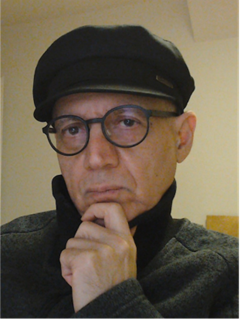
Prof. Ardeshir Mahdavi
Institute of Building Physics, Services and Construction, Graz University of Technology, Graz, Austria.
University Professor Dr. Ardeshir Mahdavi is an internationally recognized expert, researcher, and educator in Building Science. He conducts research in building physics, building performance simulation, building controls and diagnostics, indoor-environmental quality, and human ecology. Prior to his current affiliations at Graz University of Technology (TU Graz, Austria) and Vienna University of Economics and Business (WU Wien, Austria), professor Mahdavi held positions at Carnegie Mellon University (CMU, Pittsburgh, USA) as a tenured full professor of building physics, at the Technical University of Vienna (TU Wien) as the Chair of the Department of Building Physics and Building Ecology, and at the National University of Singapore (NUS) as a Visiting Professor of Building Science. Professor Mahdavi has published over 700 scientific papers and has supervised over 65 doctoral students. He is the recipient of the prestigious IBPSA (International Building Performance Simulation Association) Distinguished Achievements Awards.
Host

Assoc. Prof. Christiane Berger
Department of Architecture, Design and Media Technology, Aalborg University, Aalborg, Denmark.
Dr. Christiane Berger is an Associate Professor in the Department of Architecture, Design and Media Technology at Aalborg University in Denmark. She contributes to international research on occupant-centric building design and operation, including work within the framework of the IEA EBC Annex 79 and 95, and serves as co-director of the Brain, Behavior and Architecture Research Group (BBAR). Her research interests include building performance simulation, building physics, indoor environmental quality, human-building interaction, and performance-based architectural design. Dr. Christiane Berger has published 86 peer-reviewed scientific articles. Her teaching activities have covered both undergraduate and graduate levels at multiple institutions in Denmark, Austria, Germany, Hungary, India, and Egypt. She is the recipient of the International Building Performance Simulation Association (IBPSA) Outstanding Young Contributor Award 2021.
Discussant

Prof. Andrea Gasparella
Faculty of Engineering, Free University of Bozen-Bolzano, Bolzano, Italy.
Andrea Gasparella is Full Professor of Building Physics and Building Energy Systems and Dean of the Faculty of Engineering at the Free University of Bozen-Bolzano, Italy, where he leads the Building Physics Research Group and is responsible for the Building Physics Laboratories. He teaches heat and mass transfer, building physics, and energy efficiency across the bachelor's, master's and PhD programmes. Starting from buildings and HVAC systems, his research has extended to the outdoor environmental context and to indoor comfort and occupant interaction, evolving from component-level technical analysis towards a holistic, human-centric approach to building performance. He is a Director-at-large of the International Building Performance Simulation Association (IBPSA) and past President of IBPSA-Italy, and serves on the editorial boards of the Journal of Building Performance Simulation and the ASME Journal of Engineering for Sustainable Buildings and Cities. He has authored more than 400 publications in international and national journals and conferences.
Introduction
People spend most of their lives inside buildings. Hence, indoor environmental conditions are essentially important for human health and well-being. Systematic scientific research, evidence-based standards, and sound engineering practices are expected to guide building design and operation processes toward delivering indoor environments conducive to human occupancy. There have been indeed considerable advances in the past toward providing improved indoor-environmental quality (IEQ) in buildings. However, further progress in this area would benefit from a critical reassessment of what constitutes adequate conditions in buildings and what are the criteria, constructs, and variables that facilitate the practical provision of suitable IEQ. In this context, the present talk focuses on a number of assumptions, viewpoints, and assertions that may involve certain confusions and fallacies. As such, the purpose of the talk is to encourage a critical reexamination of current thoughts and theories related to the core needs and requirements of building occupants and how such needs can be effectively satisfied.


