CuH-catalyzed asymmetric reduction of vinyl-substituted 1,2-diketones

Chunyun Jiang
1,#
,
Shouang Lan
1,#
,
Chao Xu
1
,
Siyu Shi
1
,
Qinqin Cui
3
,
Jinggong Liu
4
,
Shuang Yang
1
,
Xinqiang Fang
1,2,*

*Correspondence to:
Xinqiang Fang, Key Laboratory of Functional Molecular Solids, Ministry of Education, College of Chemistry and Molecular Sciences, Anhui Normal University, Wuhu 241002, Anhui, China; State Key Laboratory of Structural Chemistry, Fujian Institute of Research on the Structure of Matter, University of Chinese Academy of Sciences, Fuzhou 350100, Fujian, China.
E-mail: xqfang@fjirsm.ac.cn
Chiral Chem. 2026;3:202617. 10.70401/cc.2026.0033
Received: March 29, 2026Accepted: July 21, 2026Published: July 21, 2026
Abstract
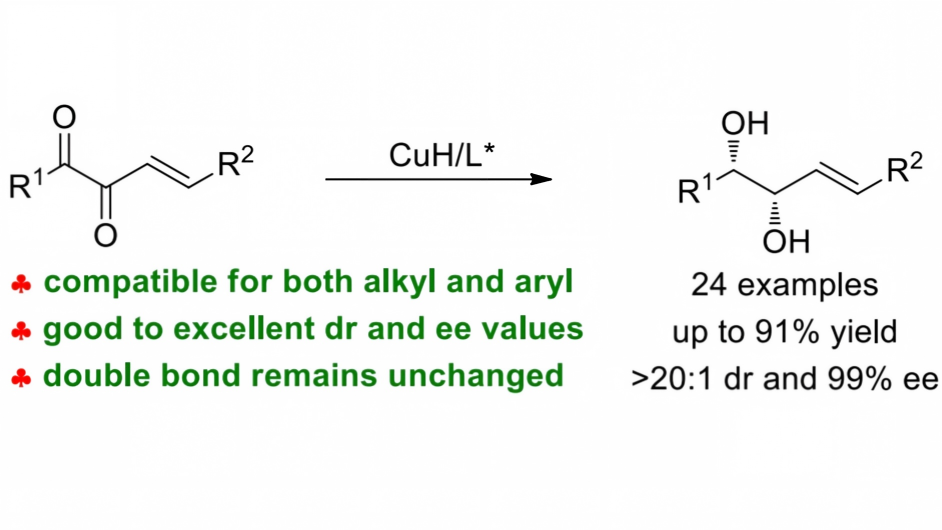
The CuH-catalyzed regio-, diastereo-, and enantioselective reduction of vinyl-substituted 1,2-diketones has been achieved, efficiently affording a range of vinyl-substituted syn-1,2-diols, motifs that are ubiquitous in bioactive molecules and serve as valuable building blocks in organic synthesis. Totally 24 diol products were obtained smoothly (up to 91% yield) with a high level of stereoselectivity control (up to 99% ee and > 20:1 dr). The protocol tolerates both aryl and alkyl substrates, and the products facilitate a range of further transformations. The work represents a new choice that addresses the limitations of known methods.
Graphical Abstract
Keywords
CuH catalysis, vinyl-substituted 1,2-diketone, vinyl 1,2-diol, regioselectivity, stereoselectivity
1. Introduction
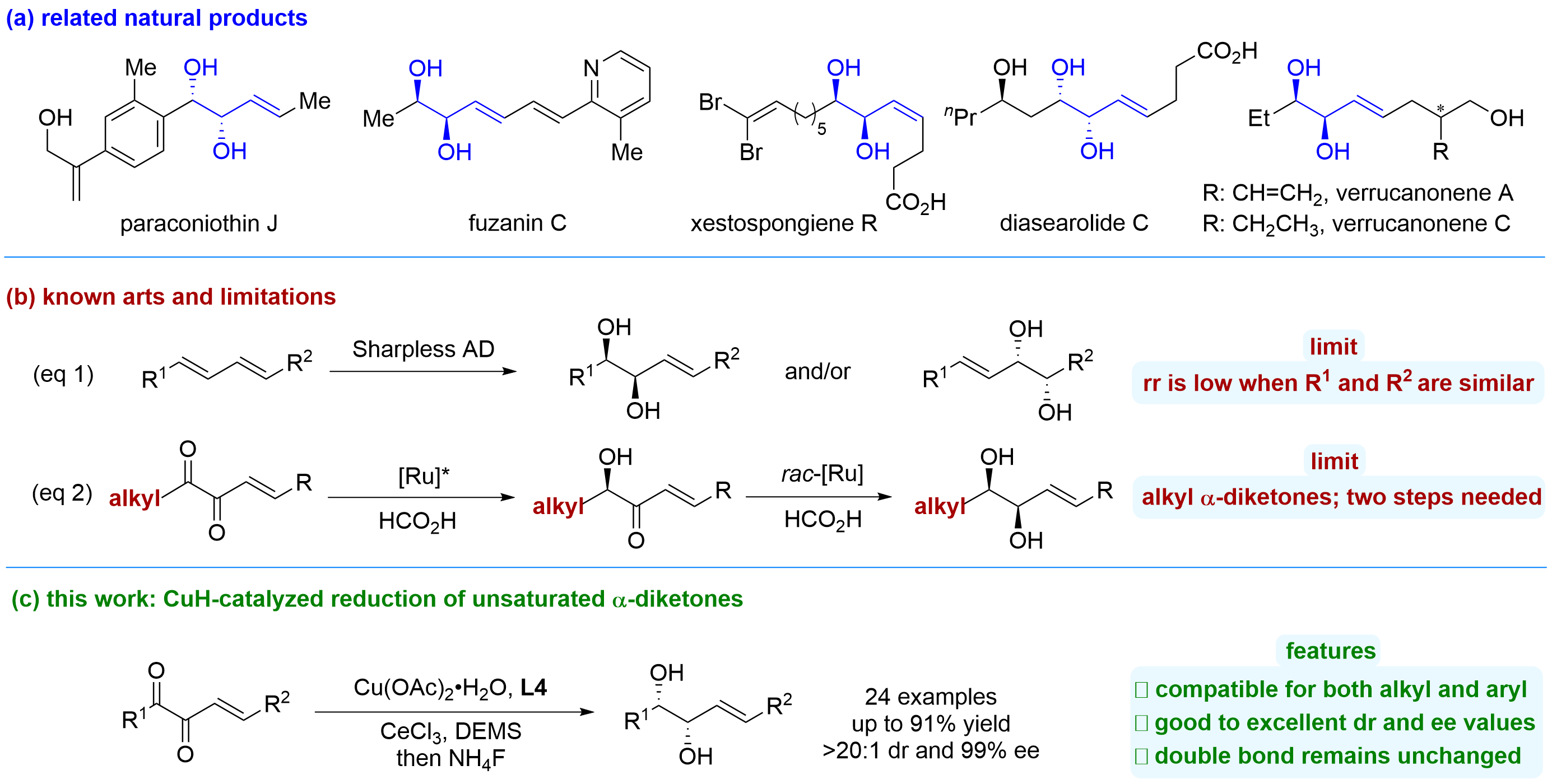
Developing a reaction that tolerates different types of substituents is a long-standing target in organic synthesis, especially when the products are important building blocks and/or ubiquitous motifs in bioactive substances. For instance, enantioenriched vinyl-substituted syn-1,2-diols are valuable synthons in synthetic chemistry[1-5], and widely exist in a range of naturally occurring products and artificial compounds such as paraconiothin J[6], fuzanin C[7], xestospongiene R[8], diasearolide C[9], and others (Scheme 1a). However, asymmetric catalytic methods for making such units are still underdeveloped. Sharpless asymmetric dihydroxylation (AD) of 1,3-butedienes is the most used approach to achieve the purpose, but the regioselectivity is hard to control when the two substituents are with similar properties (Scheme 1b, eq 1)[10]. Asymmetric transfer hydrogenation (ATH)[11-19] has been widely applied to obtain enantioenriched alcohols, and recently we reported that through the ATH of alkyl-substituted vinyl 1,2-diketones and the following diastereoselective reduction, vinyl 1,2-diols could be obtained (Scheme 1b, eq 2)[20]; the reaction is compatible with only alkyl diketones and two steps are needed. Therefore, a general method that affords chiral vinyl 1,2-diols is still highly desirable. As our continued interest in the exploration of the creative application of 1,2-diketone compounds[21-26], we report here the CuH-catalyzed asymmetric reduction of vinyl 1,2-diketones that allows access to a variety of vinyl 1,2-diols with high regioselectivity and stereoselectivity[27-36]. It is noteworthy that although CuH-catalyzed reduction of ketones has been widely studied[37-46], the reduction of vinyl-substituted 1,2-diketones using Cu-H catalysis has not been previously investigated. More importantly, the method tolerates both aryl and alkyl groups including those with similar steric and electronic properties (Scheme 1c).
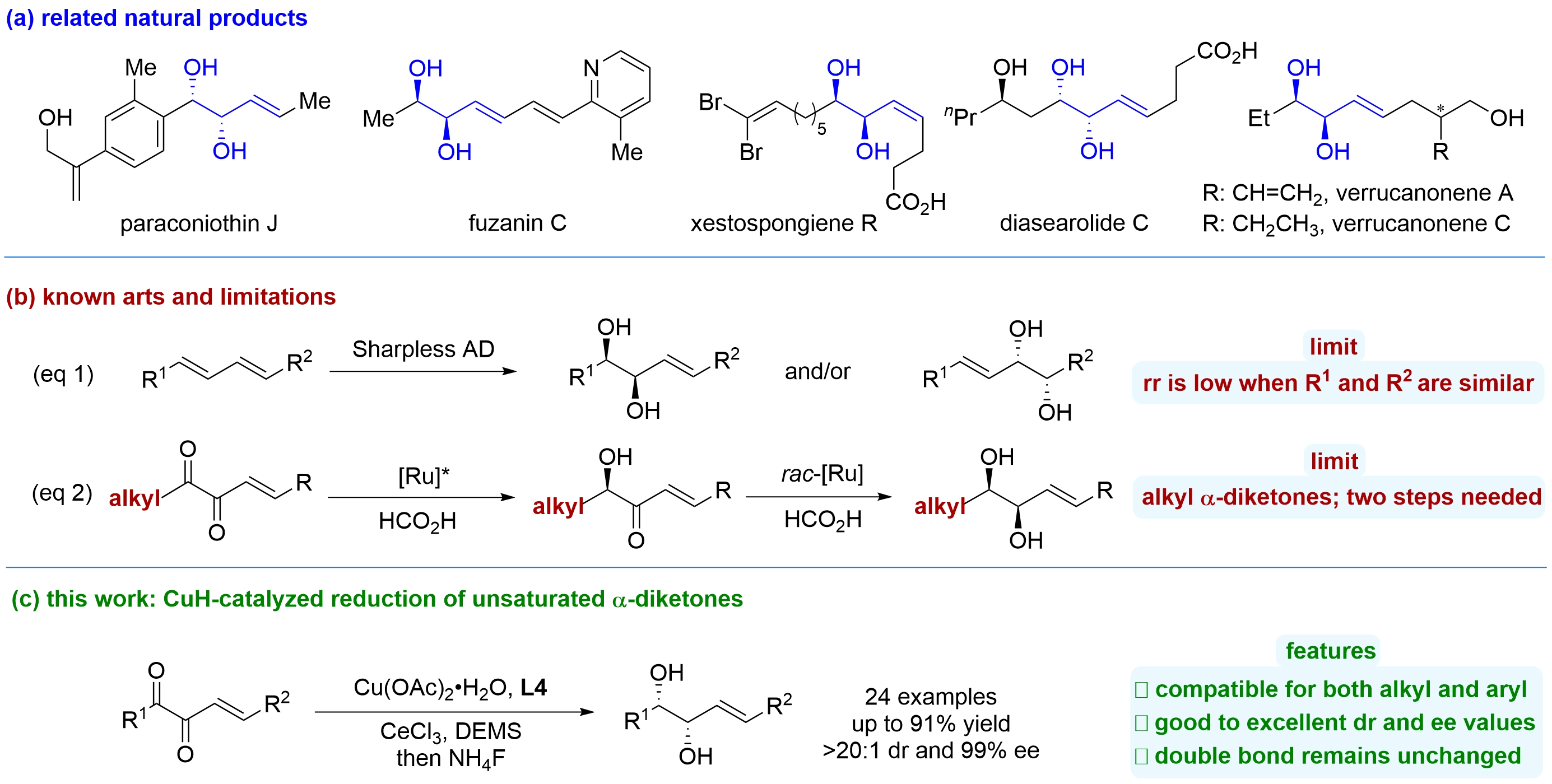
Scheme 1. The importance of vinyl syn-1,2-diols and the related synthetic methods.
2. Experimental Section
General Considerations: Commercially available materials were used as received. Unless otherwise noted, all reactions and manipulations involving air- or moisture-sensitive compounds were performed using standard Schlenk technique. All solvents were purified and dried using typical procedures. Proton nuclear magnetic resonance (1H NMR) spectra were recorded on a Bruker AVANCE III HD400 (400 MHz) spectrometer, a JEOL ECZ600S (600 MHz) and a JEOL ECZ400S (400 MHz). Chemical shifts were recorded in parts per million (ppm, δ) relative to tetramethylsilane (δ = 0.00 ppm), and chloroform (δ = 7.26 ppm). 1H NMR splitting patterns are designated as singlet (s), doublet (d), triplet (t), quartet (q), dd (doublet of doublets), m (multiplet), etc. All first-order splitting patterns were assigned on the basis of the appearance of the multiplet. Splitting patterns that could not be easily interpreted are designated as multiplet (m) or broad (br). Carbon nuclear magnetic resonance (13C NMR) spectra were recorded on a Bruker AVANCE III HD400 (101 MHz) spectrometer, JEOL ECZ600S (151 MHz) and a JEOL ECZ400S (101 MHz). High resolution mass spectral analysis (HRMS) was performed on a Thermo Fisher Scientific Q Exactive Plus Hybrid Quadrupole-Orbitrap Mass Spectrometer. X-ray crystallography analysis was performed on an Agilent Super Nova X-ray diffractometer. Analytical thin-layer chromatography (TLC) was carried out on a WFH-203 F254 pre-coated silica gel plate (0.2 mm thickness). Visualization was performed using an ultraviolet (UV) lamp alongside staining reagents including 2,4-dinitrophenylhydrazine, potassium permanganate, and phosphomolybdic acid.
2.1 Copper-catalyzed asymmetric hydrosilylation
Copper-Catalyzed Asymmetric Hydrosilylation of (E)-1,4-diphenylbut-3-ene-1,2-dione 1a. An oven-dried screw-cap reaction tube equipped with a magnetic stir bar was charged with Cu(OAc)2•H2O (2.0 mg, 0.01 mmol) and ligand L4 (6.7 mg, 0.011 mmol) in a glove box. Anhydrous Et2O (0.2 mL) and anhydrous MTBE (0.05 mL) were added via syringe. The mixture was stirred at room temperature for 15 min, and (EtO)2MeSiH (44 μL, 0.275 mmol) was added via syringe. The mixture was stirred at room temperature for 10 min until the color changed from blue to green. Meanwhile, a second oven-dried screw-cap reaction tube equipped with a magnetic stir bar was charged with substrate 1a (23.6 mg, 0.1 mmol), CeCl3 (12.3 mg, 0.05 mmol), anhydrous Et2O (0.2 mL), and anhydrous MTBE (0.05 mL). The mixture was stirred at room temperature for 30 min. After this period, the catalyst solution from the first reaction tube was added slowly to the stirred mixture via syringe, and the resulting mixture was stirred at 0 °C for 8 h. Then, a saturated solution of NH4F in MeOH (1 mL) was added and the mixture was stirred at room temperature for 10 min until the reaction was complete. The reaction mixture was then extracted with CH2Cl2 (3 × 15 mL). The combined organic extracts were washed with saturated brine (3 × 20 mL), dried over anhydrous Na2SO4, and concentrated under reduced pressure. The residue was purified by flash chromatography (petroleum ether/ethyl acetate, v:v = 3:1) to afford the product 2a (colorless oil, 19.7 mg, 82% yield, 7:1 dr, 92% ee). Compound Data: Rf = 0.45 (petroleum ether/ethyl acetate, v:v = 3:1), 92% ee, [α]D20: -53.0 (c 0.3, CHCl3). 1H NMR (400 MHz, CDCl3) δ 7.39-7.34 (m, 4H), 7.33-7.27 (m, 5H), 7.25-7.20 (m, 1H), 6.57 (dd, J = 16.0, 1.3 Hz, 1H), 6.07 (dd, J = 16.0, 5.9 Hz, 1H), 4.60 (d, J = 7.0 Hz, 1H), 4.40 (ddd, J = 7.1, 6.0, 1.4 Hz, 1H), 2.69 (br, 2H); 13C NMR (101 MHz, CDCl3) δ 140.3, 136.6, 132.3, 128.7, 128.6, 128.3, 127.9, 127.6, 127.1, 126.6, 78.0, 76.9. HRMS (ESI-Quadrupole-Orbitrap) m/z: [M + Na]+ Calcd for C16H16O2Na 263.1043; Found 263.1044. High-performance liquid chromatography (HPLC) analysis: 92% ee (Chiralcel IA, 3:97 iPrOH/hexanes, 1 mL/min, 254 nm), Rt (major) = 32.2 min, Rt (minor) = 37.9 min. IR (KBr thin film, cm-1): ν 3,368, 3,053, 1,494, 1,450, 1,265, 1,195, 1,051, 968, 735, 701, 546.
2.2 Esterification reaction of 2a
Esterification reaction of (1S,2S,E)-1,4-diphenylbut-3-ene-1,2-diol 2a. A 10 mL reaction tube was charged with 2a (24 mg, 0.1 mmol) and DMAP (2.4 mg, 0.02 mmol) at room temperature. CH2Cl2 (1 mL) was added via a syringe. Then, Et3N (42 μL, 0.3 mmol) and 4-chlorobenzoyl chloride (38.5 μL, 0.3 mmol) were added to this tube. The reaction was stirred for 5 h at room temperature. Upon completion, the reaction was quenched with H2O (1 mL) at room temperature. The reaction mixture was extracted with ethyl acetate (3 × 10 mL) and saturated brine (3 × 10 mL). The combined organic phase was dried over anhydrous Na2SO4 and concentrated under reduced pressure. The residue was purified by chromatography (petroleum ether/ethyl acetate, v:v = 2:1) to afford product 3a (white solid, 51.2 mg, 99% yield, 90% ee). Compound Data: Rf = 0.5 (petroleum ether/ethyl acetate, v:v = 2:1), 90% ee, [α]D20: -120.0 (c 0.05, CHCl3). 1H NMR (600 MHz, CDCl3) δ 7.96 (dd, J = 8.6, 2.4 Hz, 4H), 7.50 (d, J = 7.3 Hz, 2H), 7.39-7.36 (m, 6H), 7.34-7.32 (m, 1H), 7.28-7.25 (m, 4H), 7.24-7.21 (m, 1H), 6.64 (d, J = 15.8 Hz, 1H), 6.29 (d, J = 7.8 Hz, 1H), 6.17 (dd, J = 7.2, 7.2 Hz, 1H), 6.07 (dd, J = 15.9, 7.1 Hz, 1H). 13C NMR (101 MHz, CDCl3) δ 164.8, 164.7, 139.9, 136.0, 135.9, 135.4, 131.2, 129.1, 128.9, 128.8, 128.7, 128.5, 128.33, 128.27, 127.8, 126.8, 122.6, 77.3, 76.3. HRMS (ESI-Quadrupole-Orbitrap) m/z: [M + Na]+ Calcd for C30H22O4Cl2Na 539.0787; Found 539.0782. HPLC analysis: 90% ee (Chiralpak IA, 3:97 iPrOH/hexanes, 1 mL/min, 254 nm), Rt (major) = 26.9 min, Rt (minor) = 31.9 min. IR (KBr thin film, cm-1): ν 3,368, 2,961, 2,924, 2,312, 1,721, 1,594, 1,488, 1,455, 1,400, 1,258, 1,090, 1,014, 797, 756, 697.
2.3 N-iodosuccinimide (NIS)-mediated annulation of 2b
N-iodosuccinimide (NIS)-mediated annulation of (1S,2S,E)-1-(4-methoxyphenyl)-4-phenylbut-3-ene-1,2-diol 2b. A 10 mL reaction tube was charged with 2b (27 mg, 0.1 mmol, 92% ee) and NIS (24.7 mg, 0.11 mmol) at room temperature under an argon atmosphere. MeCN (0.7 mL) and H2O (0.7 mL) were added via a syringe. The reaction was stirred for 3 h at room temperature. Upon completion, the reaction was quenched with saturated aqueous Na2S2O3 (1 mL) at room temperature. The reaction mixture was extracted with ethyl acetate (3 × 10 mL) and saturated brine (3 × 10 mL). The combined organic phase was dried over anhydrous Na2SO4 and concentrated under reduced pressure. The residue was purified by chromatography (petroleum ether/ethyl acetate, v:v = 2:1) to afford product 3b (white solid, 24.2 mg, 61% yield, 2:1 dr, 99% ee). Compound Data: Rf = 0.25 (petroleum ether/ethyl acetate, v:v = 2:1), 99% ee, [α]D20: -78.3 (c 0.08, CHCl3). 1H NMR (400 MHz, CDCl3) δ 7.57-7.50 (m, 2H), 7.43-7.33 (m, 5H), 6.98‒6.90 (m, 2H), 5.53 (d, J = 3.0 Hz, 1H), 5.47 (d, J = 10.2 Hz, 1H), 4.40-4.35 (m, 1H), 4.26 (dd, J = 10.2, 3.4 Hz, 1H), 3.82 (s, 3H), 1.86 (d, J = 1.8 Hz, 1H). 13C NMR (101 MHz, CDCl3) δ 159.8, 139.1, 128.69, 128.65, 128.5, 128.1, 126.8, 114.1, 86.8, 83.0, 75.6, 55.4, 36.1. HRMS (ESI-Quadrupole-Orbitrap) m/z: [M + Na]+ Calcd for C17H17O3INa 419.0115; Found 419.0114. HPLC analysis: 99% ee (Chiralpak IA, 3:97 iPrOH/hexanes, 1 mL/min, 254 nm), Rt (major) = 12.2 min, Rt (minor) = 16.6 min. IR (KBr thin film, cm-1): ν 3,458, 2,957, 2,923, 2,853, 1,613, 1,514, 1,456, 1,259, 1,240, 1,071, 1,014, 843, 795, 703.
2.4 CuH-catalyzed stereoselective hydroamination of 2b
CuH-catalyzed stereoselective hydroamination of (1S,2S,E)-1-(4-methoxyphenyl)-4-phenylbut-3-ene-1,2-diol 2b. An oven-dried screw-cap reaction tube equipped with a magnetic stir bar was charged with Cu(OAc)2 (1.8 mg, 0.005 mmol) and ligand ent-L2 (6.5 mg, 0.0055 mmol) in a glove box. Anhydrous THF (0.2 mL) was added via syringe. The mixture was stirred at room temperature for 15 min, and methyldimethoxysilane (DMMS, 61.5 μL, 1 mmol) was added via syringe. The mixture was stirred at room temperature for 10 min until the color changed from blue to yellow. Then, 2b (27 mg, 0.1 mmol, 92% ee) was added to the reaction. The mixture was stirred at room temperature for 48 h. Then, a saturated solution of NH4F in MeOH (1 mL) was added and the mixture was stirred at room temperature for 10 min until the reaction was complete. The reaction mixture was then extracted with CH2Cl2 (3 × 15 mL). The combined organic extracts were washed with saturated brine (3 × 20 mL), dried over anhydrous Na2SO4, and concentrated under reduced pressure. The residue was purified by flash chromatography (petroleum ether/ethyl acetate, v:v = 2:1) to afford the product 4b (colorless oil, 42 mg, 90% yield, > 20:1 dr). Compound Data: Rf = 0.4 (petroleum ether/ethyl acetate, v:v = 2:1). 1H NMR (600 MHz, CDCl3) δ 7.43-7.34 (m, 11H), 7.30-7.28 (m, 2H), 7.24 (d, J = 8.3 Hz, 2H), 7.17 (d, J = 7.0 Hz, 2H), 6.81 (d, J = 8.5 Hz, 2H), 4.44 (d, J = 6.7 Hz, 1H), 4.02 (d, J = 13.0 Hz, 3H), 3.82-3.72 (m, 4H), 3.32 (s, 1H), 2.94 (d, J = 13.0 Hz, 2H), 2.49-2.31 (m, 1H), 1.37 (d, J = 14.0 Hz, 1H). 13C NMR (101 MHz, CDCl3) δ 159.3, 138.2, 135.8, 133.0, 129.5, 129.4, 128.9, 128.4, 128.3, 127.9, 127.6, 113.9, 78.1, 77.4, 62.4, 55.3, 54.0, 32.8. HRMS (ESI-Quadrupole-Orbitrap) m/z: [M + H]+ Calcd for C31H34O3N 468.2533; Found 468.2530. [α]D20: +22.3 (c 0.4, CHCl3). IR (KBr thin film, cm-1): ν 3,304, 3,061, 3,026, 2,835, 1,970, 1,610, 1,512, 1,494, 1,452, 1,247, 1,105, 1,028, 831, 746, 697.
3. Results and Discussion
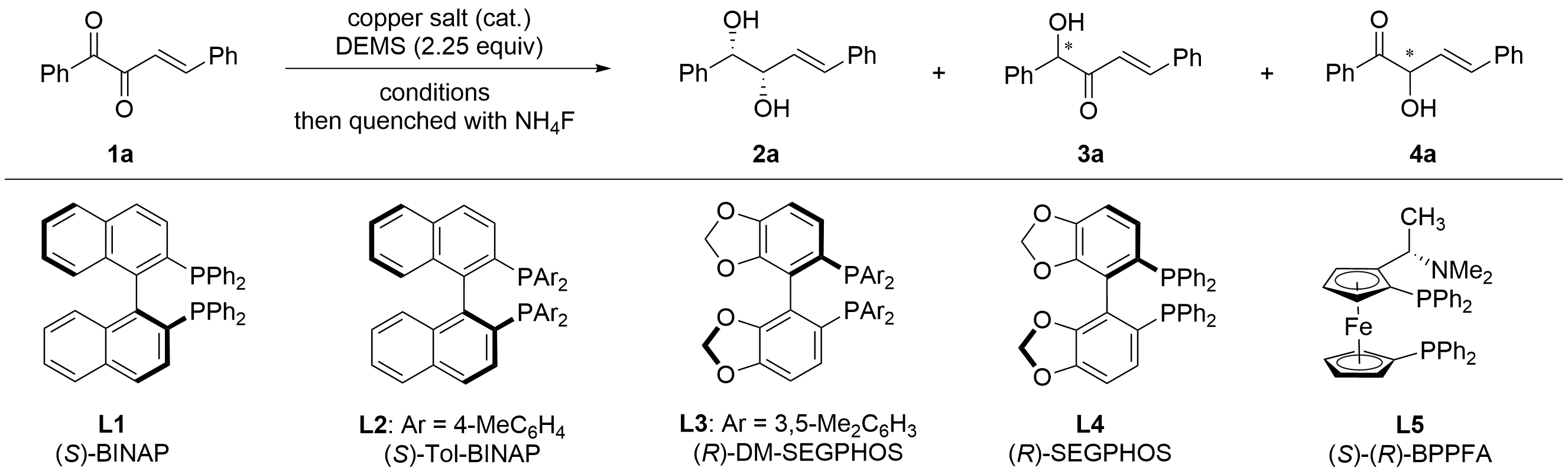
In the reaction optimization section, we selected diphenyl-substituted diketone 1a as the model substrate to evaluate its reactivity under CuH catalysis. As shown in Table 1, the semi-reduction acyloin-type products 3a and 4a are not desired, thus proposing additional challenges. Nevertheless, we employed Cu(OAc)2, ligand L1, and diethoxymethylsilane (DEMS) to reduce 1a and found that diol 2a was obtained in 46% yield with 5:1 dr and 79% ee, together with a 39% total yield of 3a and 4a (Table 1, entry 1). When copper(I) thiophene-2-carboxylate (CuTc) was used as the catalyst, slightly higher dr and ee of 2a were observed (Table 1, entry 2). Then, we found that Cu(OAc)2•H2O was a good precursor to generate an active species in combination with chiral ligand BINAP (L1), which was able to reach high enantioselectivity control (Table 1, entry 3). The solvent screening showed that THF, nhexane, and Et2O are comparable with toluene (Table 1, entries 4-6), with Et2O giving the highest ee of 2a (Table 1, entry 6). To further improve the regio- and stereoselectivities, we checked more ligands such as L2-L5 (Table 1, entries 7-10), and L4 stood out with respect to both the yield and ee of the product (Table 1, entry 9). Using L4 as the ligand, we evaluated more solvents such as 1,4-dioxane, CH2Cl2, and toluene, but failed to obtain better results (Table 1, entries 11-13). To our delight, using the mixture of Et2O and methyl tert-butyl ether (MTBE), 2a was formed in high yield with 87% ee, although the dr was 4:1 (Table 1, entry 14). To enhance the dr value, we introduced a Lewis acid. MgF2 was observed to improve both dr and ee of 2a (Table 1, entry 15), and CeCl3 was found to deliver 2a with higher 6:1 dr and 90% ee (Table 1, entry 16). The role of CeCl3 as a Lewis acid to chelate with a dicarbonyl substrate and promote the stereoselectivities of reduction/hydrogenation reactions has been demonstrated in known reports[47-48]. Adjusting the amount of catalyst/ligand (Table 1, entry 17), the amount of CeCl3 (Table 1, entry 18), and the ratio of Et2O/MTBE and the temperature (Table 1, entry 19) led to slightly different results, and finally we identified the optimal conditions by using Cu(OAc)2•H2O (10 mol%), CeCl3 (0.5 equiv), L4 (11 mol%), and 4:1 Et2O/MTBE at 0 °C, and the vinyl diol 2a was obtained in 82% yield with 7:1 dr and 92% ee (Table 1, entry 20).
Table 1. Optimization of reaction conditionsa.
| entry | cat (mol%) | additive (equiv) | ligand (mol%) | solvent (mL) | temp. (°C) | 2a yield (%) dr ee (%) | 3a+4a yield (%) | ||
| 1 | Cu(OAc)2 (10) | – | L1 (11) | toluene (0.5) | 25 | 46 | 5:1 | 79 | 39 |
| 2 | CuTc (10) | – | L1 (11) | toluene (0.5) | 25 | 50 | 7:1 | 81 | 35 |
| 3 | Cu(OAc)2•H2O (10) | – | L1 (11) | toluene (0.5) | 25 | 48 | 6:1 | 82 | 31 |
| 4 | Cu(OAc)2•H2O (10) | L1 (11) | THF (0.5) | 25 | 47 | 6:1 | 81 | 39 | |
| 5 | Cu(OAc)2•H2O (10) | L1 (11) | nhexane (0.2) | 25 | 57 | 5:1 | 80 | 33 | |
| 6 | Cu(OAc)2•H2O (10) | – | L1 (11) | Et2O (0.5) | 25 | 49 | 7:1 | 83 | 42 |
| 7 | Cu(OAc)2•H2O (10) | – | L2 (11) | Et2O (0.5) | 25 | 62 | 3:1 | 72 | 23 |
| 8 | Cu(OAc)2•H2O (10) | – | L3 (11) | Et2O (0.5) | 25 | 54 | 6:1 | 86 | 30 |
| 9 | Cu(OAc)2•H2O (10) | – | L4 (11) | Et2O (0.5) | 25 | 85 | 4:1 | 86 | – |
| 10 | Cu(OAc)2•H2O (10) | – | L5 (11) | Et2O (0.5) | 25 | – | – | – | 33 |
| 11 | Cu(OAc)2•H2O (10) | – | L4 (11) | 1,4-dioxane (0.5) | 25 | 40 | 4:1 | 86 | 26 |
| 12 | Cu(OAc)2•H2O (10) | – | L4 (11) | CH2Cl2 (0.5) | 25 | 42 | 2:1 | 70 | < 5 |
| 13 | Cu(OAc)2•H2O (10) | – | L4 (11) | toluene (0.5) | 25 | 67 | 3:1 | 83 | < 5 |
| 14 | Cu(OAc)2•H2O (10) | – | L4 (11) | Et2O/MTBE (0.45/0.15) | 25 | 87 | 4:1 | 87 | < 5 |
| 15 | Cu(OAc)2•H2O (10) | MgF2 (1) | L4 (11) | Et2O/MTBE (0.45/0.15) | 25 | 77 | 5:1 | 89 | – |
| 16 | Cu(OAc)2•H2O (10) | CeCl3 (1) | L4 (11) | Et2O/MTBE (0.5/0.1) | 15 | 74 | 6:1 | 90 | <5 |
| 17 | Cu(OAc)2•H2O (15) | CeCl3 (1) | L4 (16) | Et2O/MTBE (0.5/0.1) | 15 | 58 | 7:1 | 91 | 39 |
| 18 | Cu(OAc)2•H2O (10) | CeCl3 (0.5) | L4 (11) | Et2O/MTBE (0.5/0.1) | 15 | 73 | 7:1 | 90 | < 5 |
| 19 | Cu(OAc)2•H2O (10) | CeCl3 (1) | L4 (11) | Et2O/MTBE (0.8/0.2) | 0 | 63 | 6:1 | 90 | 9 |
| 20 | Cu(OAc)2•H2O (10) | CeCl3 (0.5) | L4 (11) | Et2O/MTBE (0.4/0.1) | 0 | 82 | 7:1 | 92 | < 5 |
| 21 | Cu(OAc)2•H2O (10) | CeCl3 (0.5) | L4 (11) | MTBE (0.5) | 0 | 86 | 5:1 | 88 | – |
a:All reactions were run on a 0.1 mmol scale under argon atmosphere for 2-8 h; DEMS (2.75 equiv). The diastereomeric ratio was determined via 1H NMR analysis of the reaction mixtures. All yields were isolated yields. All ee of major product were determined via HPLC analysis on a chiral stationary phase; b: 1a and CeCl3 were stirred for 5 min; c: 1a and CeCl3 were stirred for 30 min; THF: tetrahydrofuran; MTBE: methyl tert-butyl ether; DEMS: diethoxymethylsilane; NMR: nuclear magnetic resonance; HPLC: high-performance liquid chromatography.
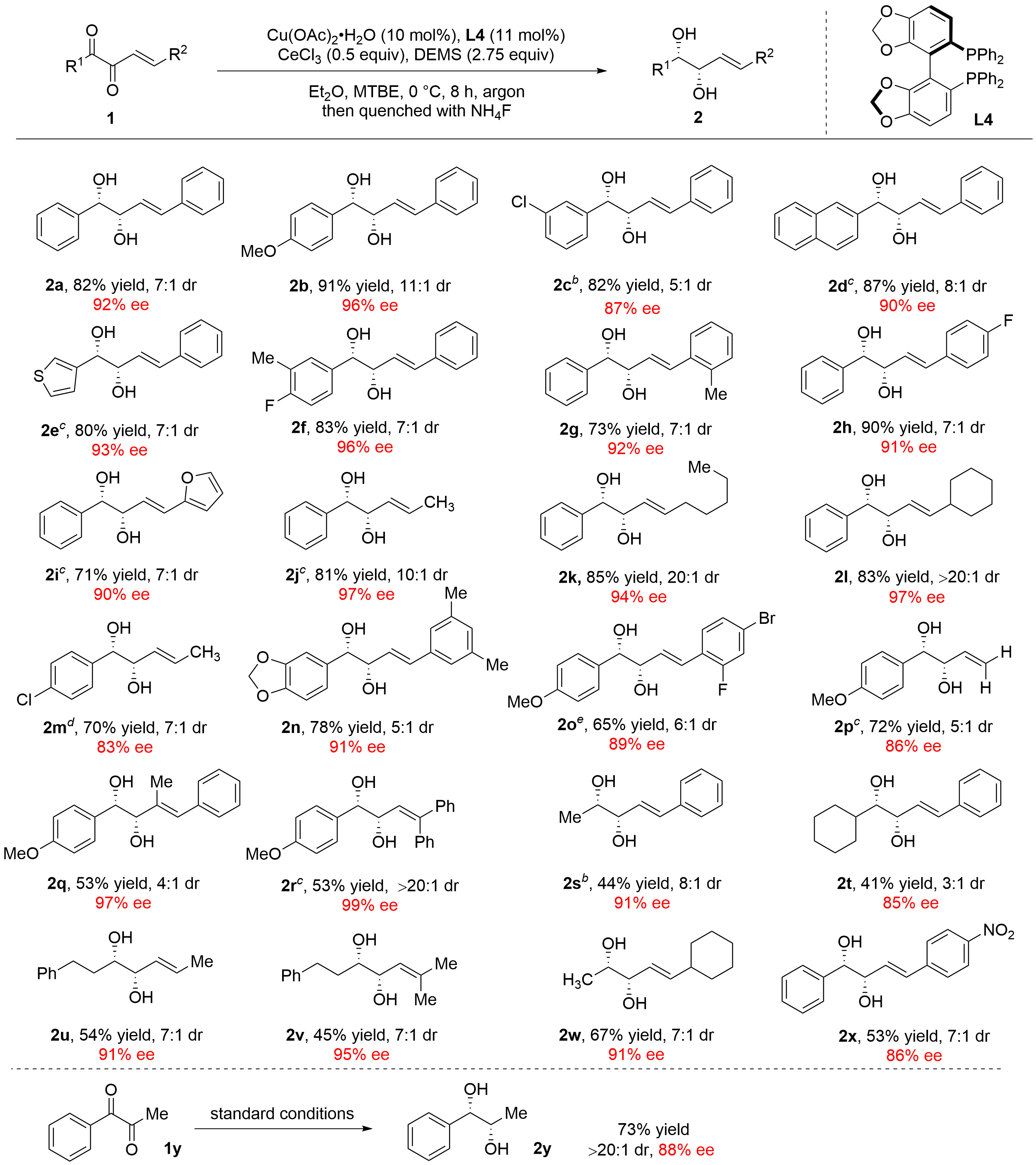
With the optimal conditions in hand, we commenced studying the generality and limitations of the method. As displayed in Scheme 2, the R1 moiety can be both electron-rich and electron-deficient aryl groups, delivering 2b and 2c efficiently with a high level of enantioselectivity (Scheme 2, 2b and 2c). In addition, when R1 is 2-naphthyl, thienyl, or 3-Me-4-FC6H3, the corresponding products were obtained in high yields with 90-96% ee (Scheme 2, 2d-2f). Subsequently, we surveyed the scope of the R2 moiety. The use of 2-MeC6H4, 4-FC6H4, or furyl groups proved compatible with the reaction, generating 2g-2i smoothly (Scheme 2, 2g-2i). Pleasingly, we found that when an alkyl type R2 unit was introduced, the reactions proceeded well to produce the related products with high to excellent ee (Scheme 2, 2j-2l). Moreover, the simultaneous variation of both R1 and R2 was also successful. For example, 2m, bearing an aryl and an alkyl substituent, was obtained in 70% yield with a good level of dr and ee (Scheme 2, 2m); diaryl products bearing diverse phenyl substituents such as 2n and 2o were also formed with good results (Scheme 2, 2n and 2o), and the substrate having a terminal alkene unit was able to give 2p in 72% yield with 86% ee (Scheme 2, 2p). In addition, the substrates having trisubstituted alkene moieties were also suitable for the reaction, releasing 2q and 2r with excellent 97% and 99% ee, respectively (Scheme 2, 2q and 2r). We also checked alkyl type R1 substituents and found that this class of substrates was tolerated under the optimal conditions, delivering 2s and 2t with high to excellent ee values (Scheme 2, 2s and 2t). Additionally, when both R1 and R2 were alkyl groups, the corresponding products were produced with excellent 91-95% ee values (Scheme 2, 2u-2w). Moreover, we tested the substrate containing a NO2 substituent, a highly electron-withdrawing group, and found that the corresponding product 2x was formed in moderate yield with high dr and ee (Scheme 2, 2x). Finally, we also evaluated the diketone without a vinyl moiety such as 1y, and we were delighted to find that syn-diol 2y was produced in good yield with excellent dr and high ee (Scheme 2, 2y).
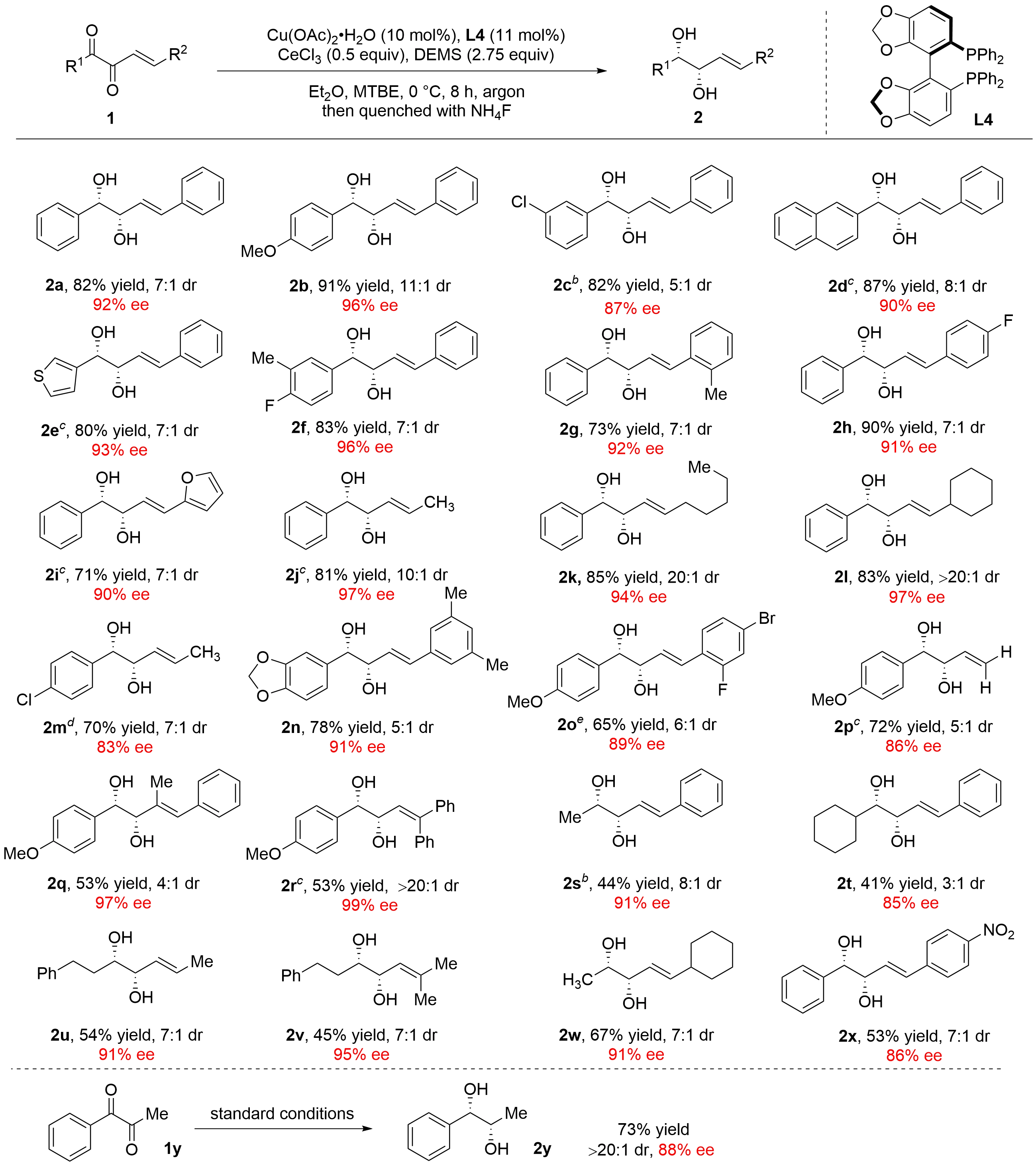
Scheme 2. Substrate scope. a: 1 (0.1 mmol), Cu(OAc)2•H2O (10 mol%), L4 (11 mol%), CeCl3 (0.5 equiv), DEMS (2.75 equiv), Et2O (0.4 mL), MTBE (0.1 mL), 0 °C, 8 h, argon. All yields were of isolated products based on 1; dr values were determined via 1H NMR analysis of the reaction mixtures; ee values were tested by HPLC; b: The reaction was allowed to proceed for 2 h; c: The reaction was allowed to proceed for 14 h; d: Copper bis(2-ethylhexanoate) (10 mol%), L4 (11 mol%), CeCl3 (1.2 equiv), DEMS (2.75 equiv), Et2O (0.4 mL), MTBE (0.1 mL), 0 °C, 8 h, argon. eCu(OAc)2•H2O (20 mol%), L4 (22 mol%), CeCl3 (0.5 equiv), DEMS (2.75 equiv), Et2O (2 mL), MTBE (0.5 mL), CH2Cl2 (0.5 mL), 0 °C, 20 h, argon; MTBE: methyl tert-butyl ether; DEMS: diethoxymethylsilane; NMR: nuclear magnetic resonance.
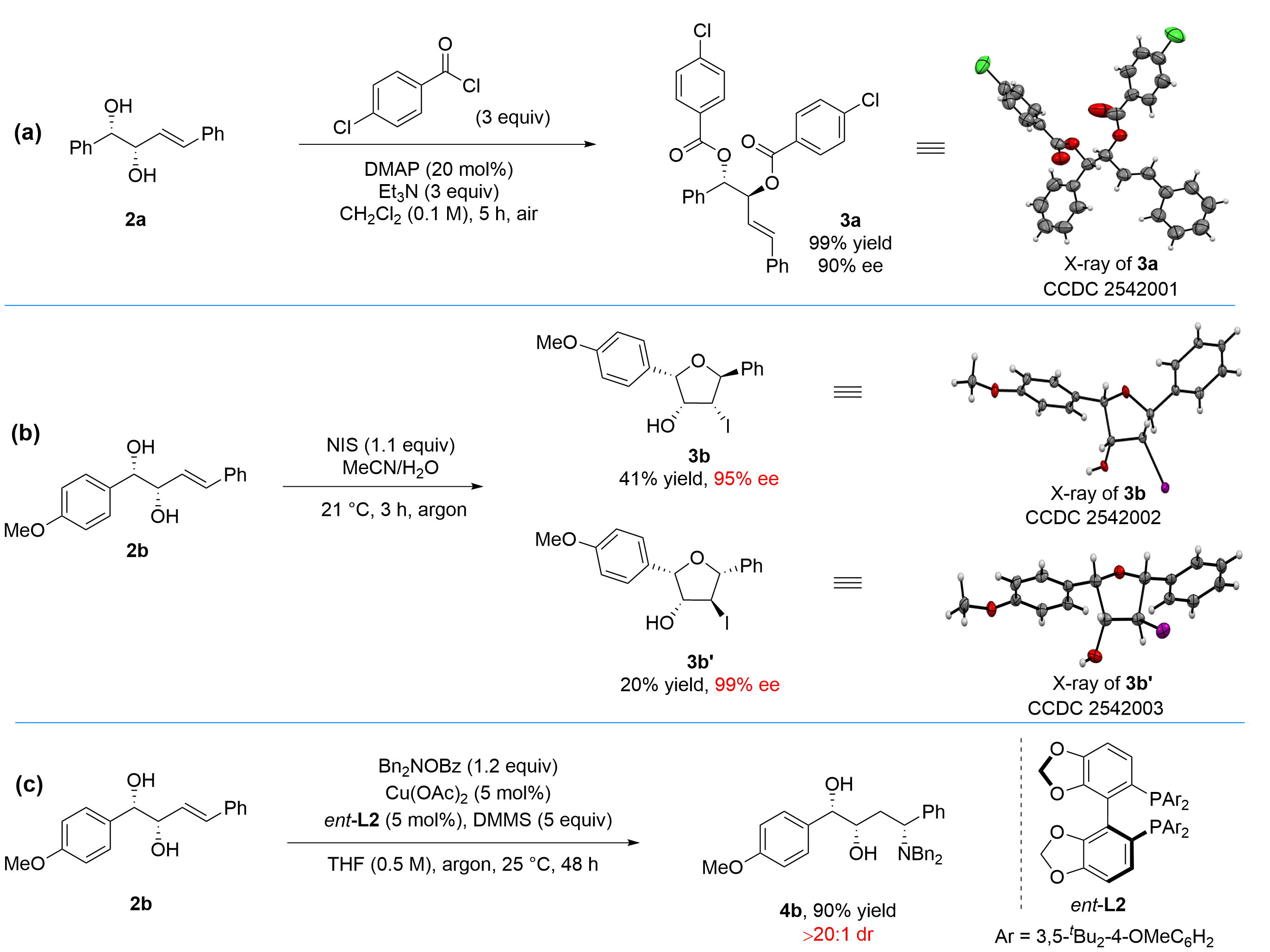
The reaction of 2a with 4-chlorobenzoyl chloride afforded ester 3a, which was determined via single-crystal X-ray diffraction (SCXRD) analysis (Scheme 3a). Furthermore, NIS-mediated annulation of 2b led to the formation of tetrasubstituted tetrahydrofuran 3b and 3b’ with excellent ee values, and their structures were also determined via the SCXRD method (Scheme 3b). The alkene unit within the product could also undergo CuH-catalyzed stereoselective hydroamination to provide amino alcohol 4b (Scheme 3c).
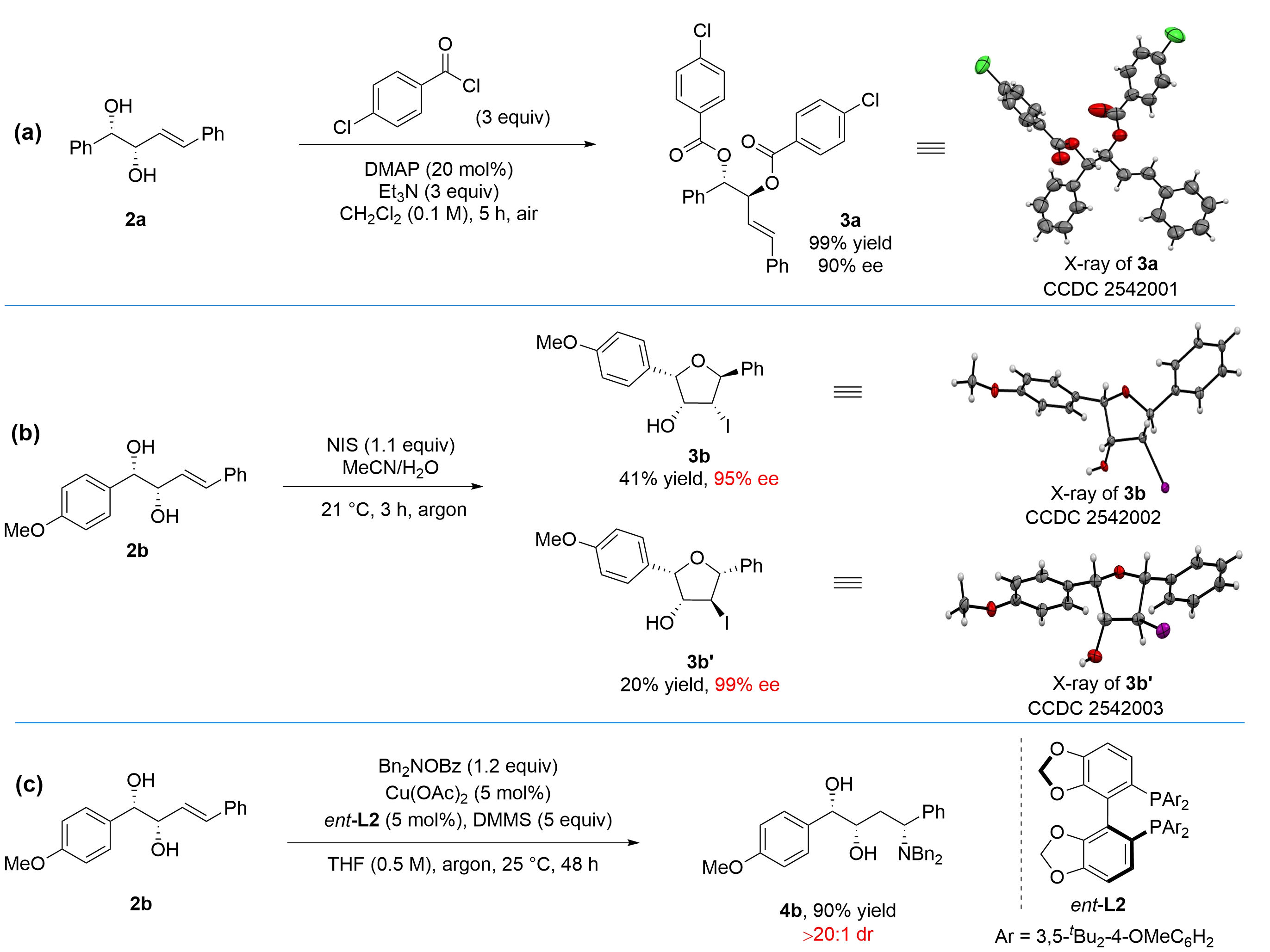
Scheme 3. Synthetic applications. NIS: N-iodosuccinimide; THF: tetrahydrofuran; CCDC: Cambridge Crystallographic Data Centre.
4. Mechanistic Studies
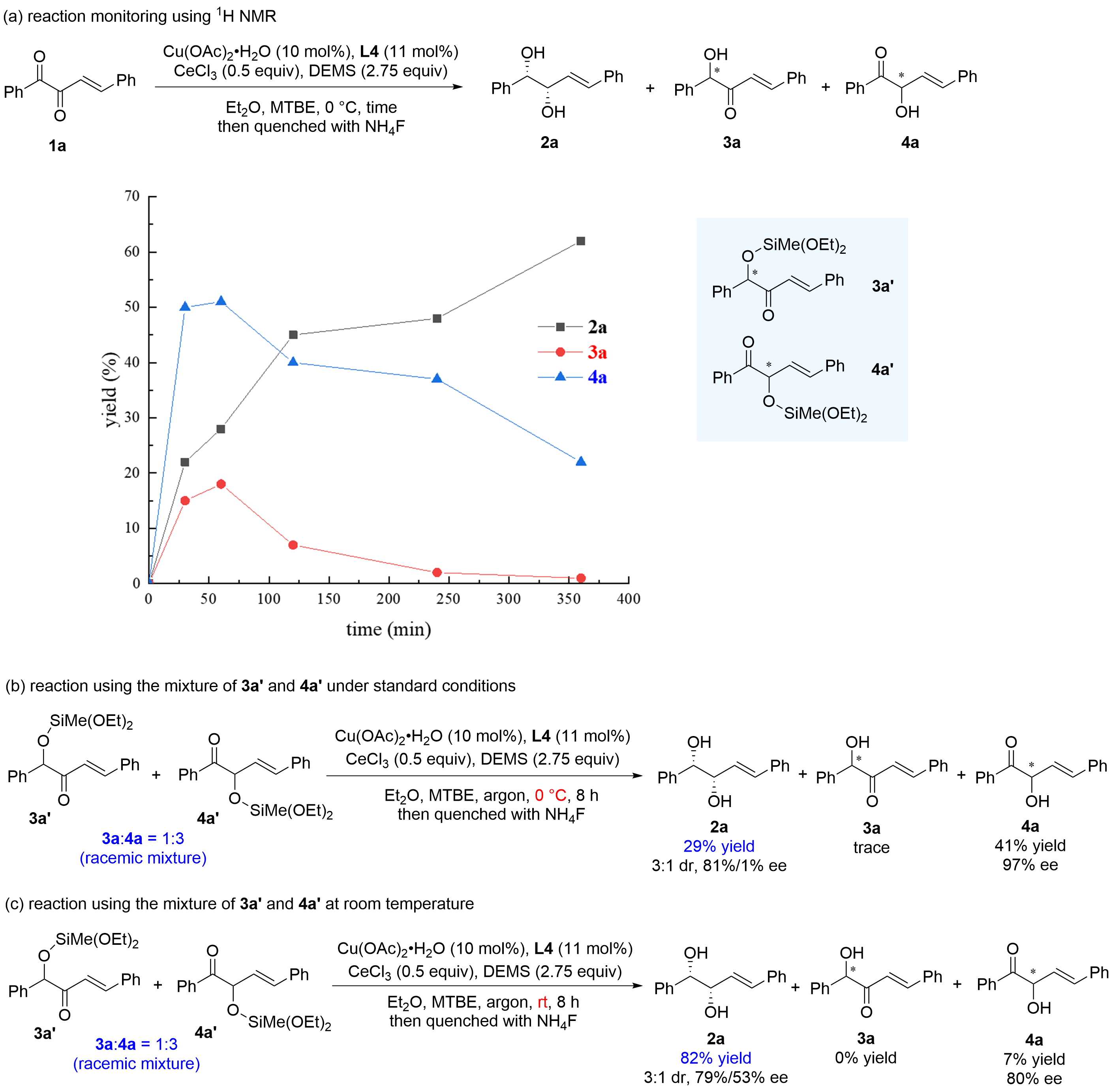
To gain more mechanistic insights into the reaction, we conducted 1H NMR monitoring experiments to track the reaction process. As shown in Scheme 4a, the amounts of the mono-reduction products 3a and 4a increased rapidly at the beginning of the reaction but gradually diminished, while the amount of diol 2a kept increasing, indicating that the reaction proceeds through both 3a’ and 4a’ as transient intermediates. To verify this pathway, we subjected the racemic mixture of 3a’ and 4a’ to the standard conditions (Scheme 4b), which afforded 2a (29% yield, 3:1 dr, 81/1% ee) and 4a (41% yield, 97% ee). When the same mixture was treated at room temperature (Scheme 4c), 2a was obtained in 82% yield (3:1 dr, 79/53% ee) alongside 4a (7% yield, 80% ee). These results suggest that at 0 °C a kinetic resolution (KR) operates during the reduction of hydroxyketones 3a’ and 4a’ to diol 2a, but when the reaction is conducted at room temperature (25 °C), a dynamic kinetic resolution (DKR) process occurs.
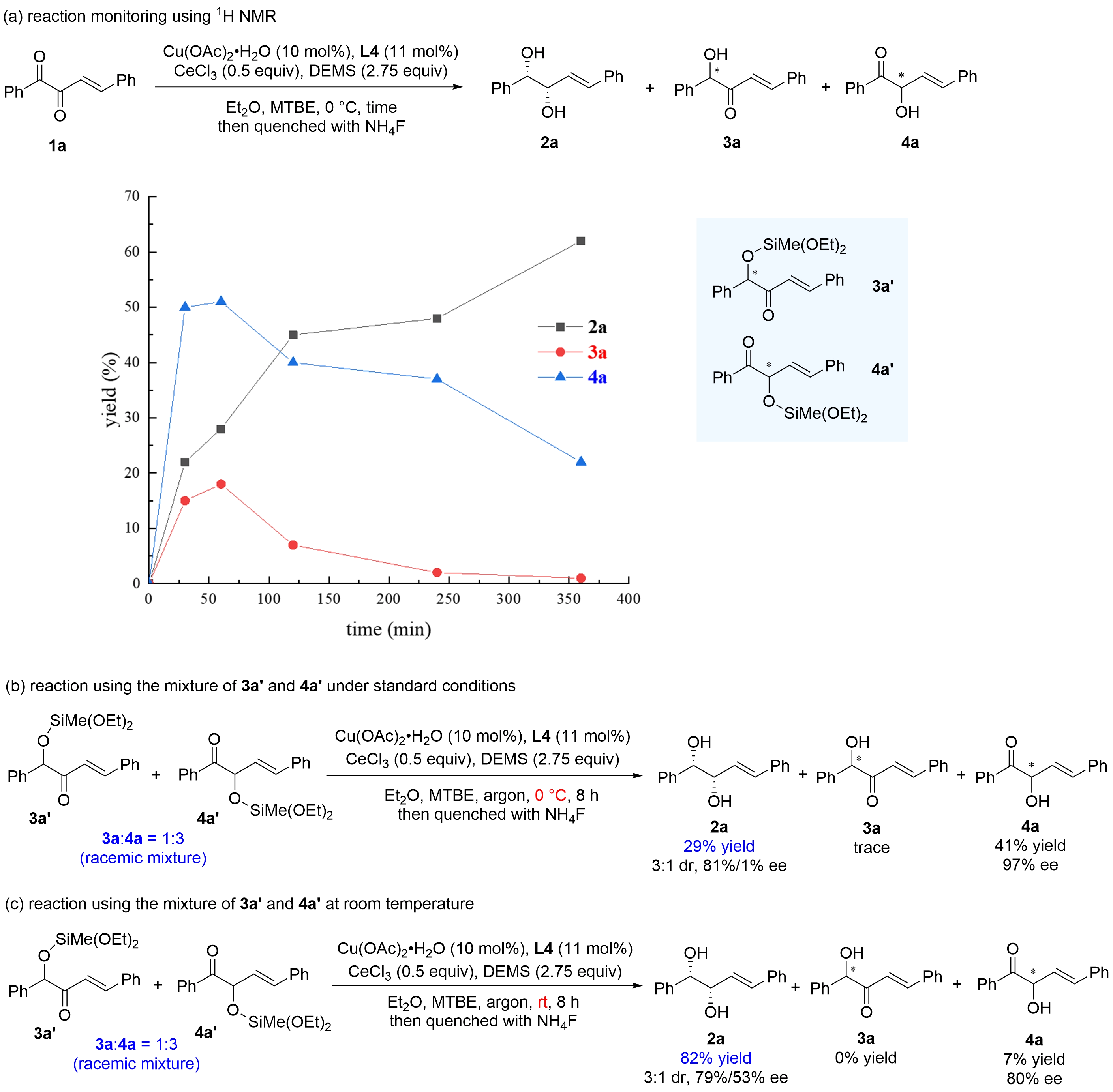
Scheme 4. Mechanistic studies. DEMS: diethoxymethylsilane; NMR: nuclear magnetic resonance.
A probable mechanism for the formation of diol 2a is depicted in Scheme 5a. The reaction proceeds via two distinct pathways simultaneously. In the presence of CeCl3, the copper hydride active species L4-CuH reacts with the carbonyl group of the substrate that is closer to the phenyl ring to give int-I. Int-I then undergoes transmetallation with hydrosilane to give int-II, regenerating L4-CuH. Subsequently, int-II reacts with another equivalent of L4-CuH to give int-III, which undergoes transmetallation with hydrosilane to give the product precursor 2a’, again regenerating L4-CuH to continue the catalytic cycle. On the other hand, in the presence of CeCl3, the copper hydride species L4-CuH reacts with the carbonyl group proximal to the alkenyl group of the substrate, affording int-IV. Int-IV then undergoes transmetallation with hydrosilane to generate int-V and regenerate L4-CuH. Subsequently, int-V reacts with L4-CuH to form int-VI, which, upon transmetallation with hydrosilane, gives the product precursor 2a’ and regenerates L4-CuH. Finally, 2a’ is quenched with NH₄F to deliver the desired product 2a.
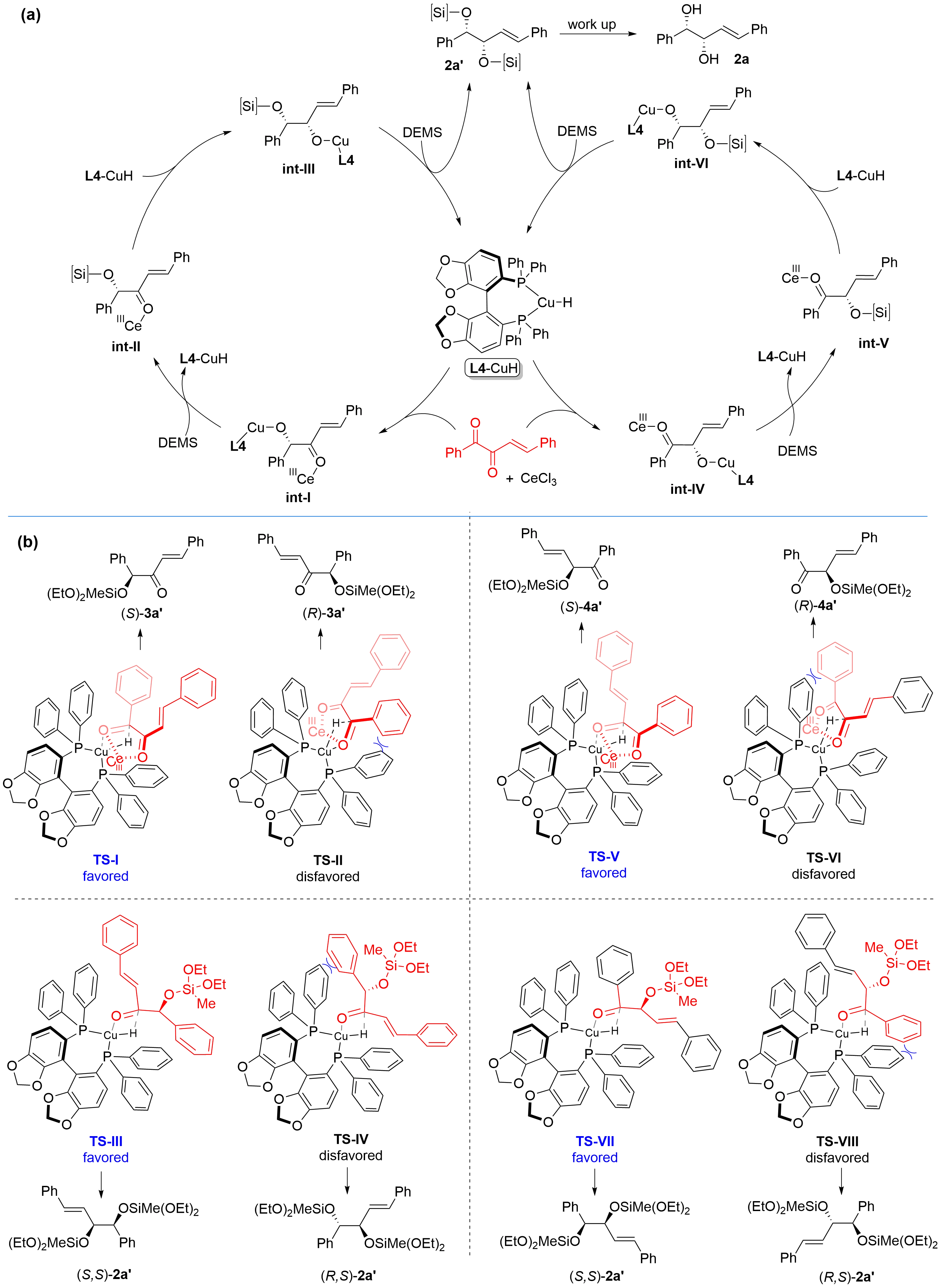
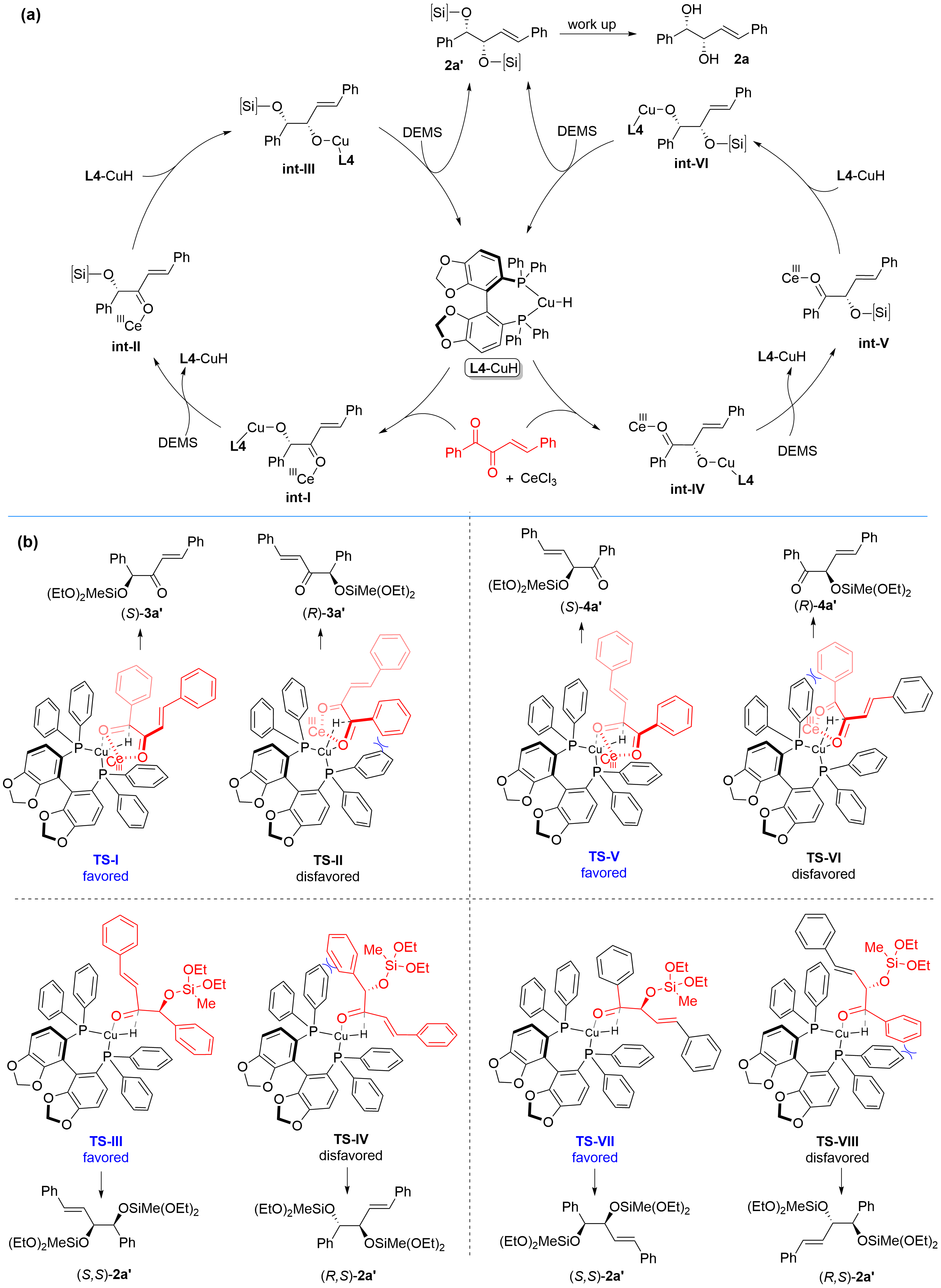
The proposed transition states that rationalize the enantioselectivity are depicted in Scheme 5b. Among them, TS-I, TS-III, TS-V, and TS-VII are sterically accessible and lead preferentially to (S)-3a’, (S)-4a’, and (S,S)-2a’. In contrast, the formation of the (R)-counterparts is disfavored due to unfavorable steric repulsion between the phenyl group of the substrate and the phenyl moieties of the chiral ligand.
5. Conclusion
In summary, the CuH-catalyzed asymmetric reduction of vinyl-substituted 1,2-diketones has been achieved, which allows access to a range of vinyl 1,2-diols with high to excellent enantioselectivities. The method shows good tolerance for both aryl and alkyl groups, although in certain cases the alkyl-substituted substrates afforded only moderate yields. The protocol addresses the challenges encountered in conventional reports. The work also indicates the potential of 1,2-diketones in organic synthesis and will inspire further novel applications of 1,2-diketones.
Supplementary materials
The supplementary material for this article is available at: Supplementary materials.
Authors contribution
Xu C, Shi S, Cui Q: Resources.
Liu J: Validation.
Yang S: Validation, writing-review & editing.
Fang X: Supervision, writing-original draft.
Jiang C, Lan S: Conceptualization, data curation, methodology.
Conflicts of interest
The authors declare no conflicts of interest.
Ethical approval
Not applicable.
Consent to participate
Not applicable.
Consent to publication
Not applicable.
Availability of data and materials
The data reported in this paper are available in the main text or supplementary information, including methods, NMR data, HRMS data, HPLC spectra Crystal data and NMR spectra. Crystallographic data for the structures reported in this article have been deposited at the Cambridge Crystallographic Data Centre, under deposition numbers CCDC 2542001 (3a), 2542002 (3b), and 2542003 (3b’).
Funding
This project was supported by the National Natural Science Foundation of China (Nos. 22571300 and 22071242), the Self-deployment Project Research Program of Haixi Institutes, Chinese Academy of Sciences (No. CXZX-2022-GH03), and the supporting program of State Key Laboratory of Structural Chemistry (E555YA4001).
Copyright
© The Author(s) 2026.
References
-
1. Sønderskov J, Tungen JE, Palmas F, Dalli J, Serhan CN, Stenstrøm Y, et al. Stereoselective synthesis of MaR2n-3 DPA. Tetrahedron Lett. 2020;61(7):151510.[DOI]
-
2. Markovič M, Lopatka P, Koóš P, Gracza T. First total synthesis of natural andytriol and a biomimetic approach to varioxiranes. Tetrahedron. 2015;71(44):8407-8415.[DOI]
-
3. Tsuzaki S, Usui S, Oishi H, Yasushima D, Fukuyasu T, Oishi T, Sato T, Chida N. Total synthesis of sphingofungin F by orthoamide-type Overman rearrangement of an unsaturated ester. Org Lett. 2015;17(7):1704-1707.[DOI]
-
4. Sabitha G, Reddy K, Reddy A. Stereoselective synthesis of the revised structure of γ-lactone polyketide from diaporthe sp. SXZ-19 and its C-8 epimer. Synthesis. 2016;48(21):3812-3820.[DOI]
-
5. Kurashina Y, Miura A, Enomoto M, Kuwahara S. Stereoselective synthesis of malyngic acid and fulgidic acid. Tetrahedron. 2011;67(9):1649-1653.[DOI]
-
7. Aida W, Ohtsuki T, Li X, Ishibashi M. Isolation of new carbamate- or pyridine-containing natural products, fuzanins A, B, C, and D from Kitasatospora sp. IFM10917. Tetrahedron. 2009;65(1):369-373.[DOI]
-
8. Jiang W, Liu D, Deng Z, de Voogd NJ, Proksch P, Lin W, et al. Brominated polyunsaturated lipids and their stereochemistry from the Chinese marine sponge Xestospongia testudinaria. Tetrahedron. 2011;67(1):58-68.[DOI]
-
9. Xiao J, Wu P, Zhang Y, Lv Q, Chi Y, Xu W, et al. New polyketides and a ferroptosis inhibitor from the marine-derived fungus diaporthe searlei CS-HF-1. Mar Drugs. 2025;23(10):402.[DOI]
-
10. Xu D, Crispino GA, Sharpless KB. Selective asymmetric dihydroxylation (AD) of dienes. J Am Chem Soc. 1992;114(19):7570-7571.[DOI]
-
11. Kosiuha M, Karapetyan A, Charron O, Meyer C, Phansavath P, Ratovelomanana-Vidal V. Recent progress and applications of asymmetric hydrogenation and transfer hydrogenation through dynamic kinetic resolution. Synthesis. 2025;57(20):2909-2934.[DOI]
-
12. Bacheley L, Guillamot G, Phansavath P, Ratovelomanana-Vidal V. Asymmetric transfer hydrogenation of fluorinated ketone and imine derivatives: An efficient access to valuable building blocks. Tetrahedron. 2024;152:133781.[DOI]
-
14. Yang S, Fang X. Asymmetric hydrogenation and transfer hydrogenation of diketones. Tetrahedron. 2023;145:133609.[DOI]
-
15. Chu Y, Han Z, Ding K. Progresses in the application of kinetic resolution in transition metal catalyzed asymmetric (transfer) hydrogenation. Chin J Org Chem. 2023;43(6):1934-1951[DOI]
-
16. Peng H, Ritleng V, Michon C. Supported Noyori-Ikariya catalysts for asymmetric transfer hydrogenations and related tandem reactions. Coord Chem Rev. 2023;475:214893.[DOI]
-
17. Yang H, Yu H, Stolarzewicz IA, Tang W. Enantioselective transformations in the synthesis of therapeutic agents. Chem Rev. 2023;123(15):9397-9446.[DOI]
-
18. Ding YX, Zhu ZH, Yu CB, Zhou YG. Recent advances in reductive desymmetrization of diketones. Asian J Org Chem. 2020;9(12):1942-1952.[DOI]
-
19. Cotman AE. Escaping from flatland: Stereoconvergent synthesis of three-dimensional scaffolds via ruthenium(II)-catalyzed Noyori—ikariya transfer hydrogenation. Chem Eur J. 2021;27(1):39-53.[DOI]
-
20. Zhao Z, Dong W, Liu J, Yang S, Cotman AE, Zhang Q, et al. Catalytic asymmetric transfer hydrogenation of β, γ-unsaturated α-diketones. J Am Chem Soc. 2024;146(49):33543-33560.[DOI]
-
21. Zhou L, Zhao L, Ren C, Cui Q, Lan S, Xu C, et al. Catalytic diastereoselective synthesis of bicyclo [3.2.1] octanediones. Adv Synth Catal. 2025;367(13):e202500324.[DOI]
-
25. Chen T, Liu W, Gu W, Niu S, Lan S, Zhao Z, et al. Dynamic kinetic resolution of β-substituted α-diketones via asymmetric transfer hydrogenation. J Am Chem Soc. 2023;145(1):585-599.[DOI]
-
26. Kong X, Yu F, Niu S, Gong F, Yang S, Liu J, et al. Copper-catalyzed diversified annulations between α-diketones and alkynyl α-diketones. Chin Chem Lett. 2022;33(6):2997-3002.[DOI]
-
27. Perry GJP, Jia T, Procter DJ. Copper-catalyzed functionalization of 1, 3-dienes: Hydrofunctionalization, borofunctionalization, and difunctionalization. ACS Catal. 2020;10(2):1485-1499.[DOI]
-
28. Sieber JD, Agrawal T. Recent developments in C-C bond formation using catalytic reductive coupling strategies. Synthesis. 2020;52(18):2623-2638.[DOI]
-
29. Chen J, Guo J, Lu Z. Recent advances in hydrometallation of alkenes and alkynes via the first row transition metal catalysis. Chin J Chem. 2018;36(11):1075-1109.[DOI]
-
30. Lalic G, Suess A. Copper-catalyzed hydrofunctionalization of alkynes. Synlett. 2016;27(8):1165-1174.[DOI]
-
33. Mohr J, Oestreich M. Balancing C=C functionalization and C=O reduction in Cu-H catalysis. Angew Chem Int Ed. 2016;55(40):12148-12149.[DOI]
-
34. Lipshutz B. Rediscovering organocopper chemistry through copper hydride. It’s all about the ligand. Synlett. 2009;2009(4):509-524.[DOI]
-
35. Deutsch C, Krause N, Lipshutz BH. CuH-catalyzed reactions. Chem Rev. 2008;108(8):2916-2927.[DOI]
-
37. Lipshutz BH. CuH in asymmetric reductions. In: Alexakis A, Krause N, Woodward S, editors. Copper-Catalyzed Asymmetric Synthesis. Hoboken: John Wiley & Sons; 2014. p. 179-202.[DOI]
-
38. Malkov AV, Lawson K. 1, 2-versus 1, 4-asymmetric reduction of ketones. In: Harutyunyan SR, editor. Progress in enantioselective Cu(I)-catalyzed formation of stereogenic centers. Cham: Springer; 2015. p. 207-220.[DOI]
-
40. Sui YZ, Zhang XC, Wu JW, Li S, Zhou JN, Li M, et al. CuII-catalyzed asymmetric hydrosilylation of diaryl- and aryl heteroaryl ketones: Application in the enantioselective synthesis of orphenadrine and neobenodine. Chem Eur J. 2012;18(24):7486-7492.[DOI]
-
41. Lee DW, Yun J. Copper-catalyzed asymmetric hydrosilylation of ketones using air and moisture stable precatalyst Cu(OAc)2·H2O. Tetrahedron Lett. 2004;45(28):5415-5417.[DOI]
-
43. Voigtritter KR, Isley NA, Moser R, Aue DH, Lipshutz BH. Regioselective reductions of β, β-disubstituted enones catalyzed by nonracemically ligated copper hydride. Tetrahedron. 2012;68(17):3410-3416.[DOI]
-
47. Sun Y, Wan X, Wang J, Meng Q, Zhang H, Jiang L, et al. Ru-catalyzed asymmetric hydrogenation of α-ketoesters with CeCl3·7H2O as additive. Org Lett. 2005;7(24):5425-5427.[DOI]
-
48. Tao X, Li W, Li X, Xie X, Zhang Z. Diastereo- and enantioselective asymmetric hydrogenation of α-amido-β-keto phosphonates via dynamic kinetic resolution. Org Lett. 2013;15(1):72-75.[DOI]
Copyright
© The Author(s) 2026. This is an Open Access article licensed under a Creative Commons Attribution 4.0 International License (https://creativecommons.org/licenses/by/4.0/), which permits unrestricted use, sharing, adaptation, distribution and reproduction in any medium or format, for any purpose, even commercially, as long as you give appropriate credit to the original author(s) and the source, provide a link to the Creative Commons license, and indicate if changes were made.
Publisher’s Note
Science Exploration remains a neutral stance on jurisdictional claims in published
maps
and institutional affiliations. The views expressed in this article are solely those
of
the author(s) and do not reflect the opinions of the Editors or the publisher.
Share And Cite


Science Exploration Style
Jiang C, Lan S, Xu C, Shi S, Cui Q, Liu J, et al. CuH-catalyzed asymmetric reduction of vinyl-substituted 1,2-diketones. Chiral Chem. 2026;3:202617. https://doi.org/10.70401/cc.2026.0033
Tips
Copy completed.
Submit a Manuscript
Author Instructions
Cite this Article
Article Metrics
0
View
0
Download
Cited
Article Updates

- Abstract
- Keywords
- 1. Introduction
- 2. Experimental Section
- 3. Results and Discussion
- 4. Mechanistic Studies
- 5. Conclusion
- Supplementary materials
- Authors contribution
- Conflicts of interest
- Ethical approval
- Consent to participate
- Consent to publication
- Availability of data and materials
- Funding
- References
- Copyright
 Get citation
Science Exploration Style

Jiang C, Lan S, Xu C, Shi S, Cui Q, Liu J, et al. CuH-catalyzed asymmetric reduction of vinyl-substituted 1,2-diketones. Chiral Chem. 2026;3:202617. https://doi.org/10.70401/cc.2026.0033
copy
Share Link
copy
Subscribe