Chiral Brønsted acid-catalyzed enantioselective synthesis of 3-azabicyclo[3.1.1]heptanes
Minxin Deng
1
,
Huan-Huan Liu
1
,
Wei-Yi Ding
1,2,3,*
,
Shao-Hua Xiang
1,3
,
Bin Tan
1,2,*

*Correspondence to:
Wei-Yi Ding, Shenzhen Grubbs Institute, Department of Chemistry, Advanced Institute for Ocean Research and Guangming Advanced Research Institute, Southern University of Science and Technology, Shenzhen 518055, Guangdong, China.
E-mail: dingwy@sustech.edu.cn
Bin Tan, Shenzhen Grubbs Institute, Department of Chemistry and Guangming Advanced Research Institute, Southern University of Science and Technology, Shenzhen 518055, Guangdong, China. E-mail: tanb@sustech.edu.cn
Bin Tan, Shenzhen Grubbs Institute, Department of Chemistry and Guangming Advanced Research Institute, Southern University of Science and Technology, Shenzhen 518055, Guangdong, China. E-mail: tanb@sustech.edu.cn
Chiral Chem. 2026;3:202624. 10.70401/cc.2026.0034
Received: May 04, 2026Accepted: July 22, 2026Published: July 22, 2026
Abstract
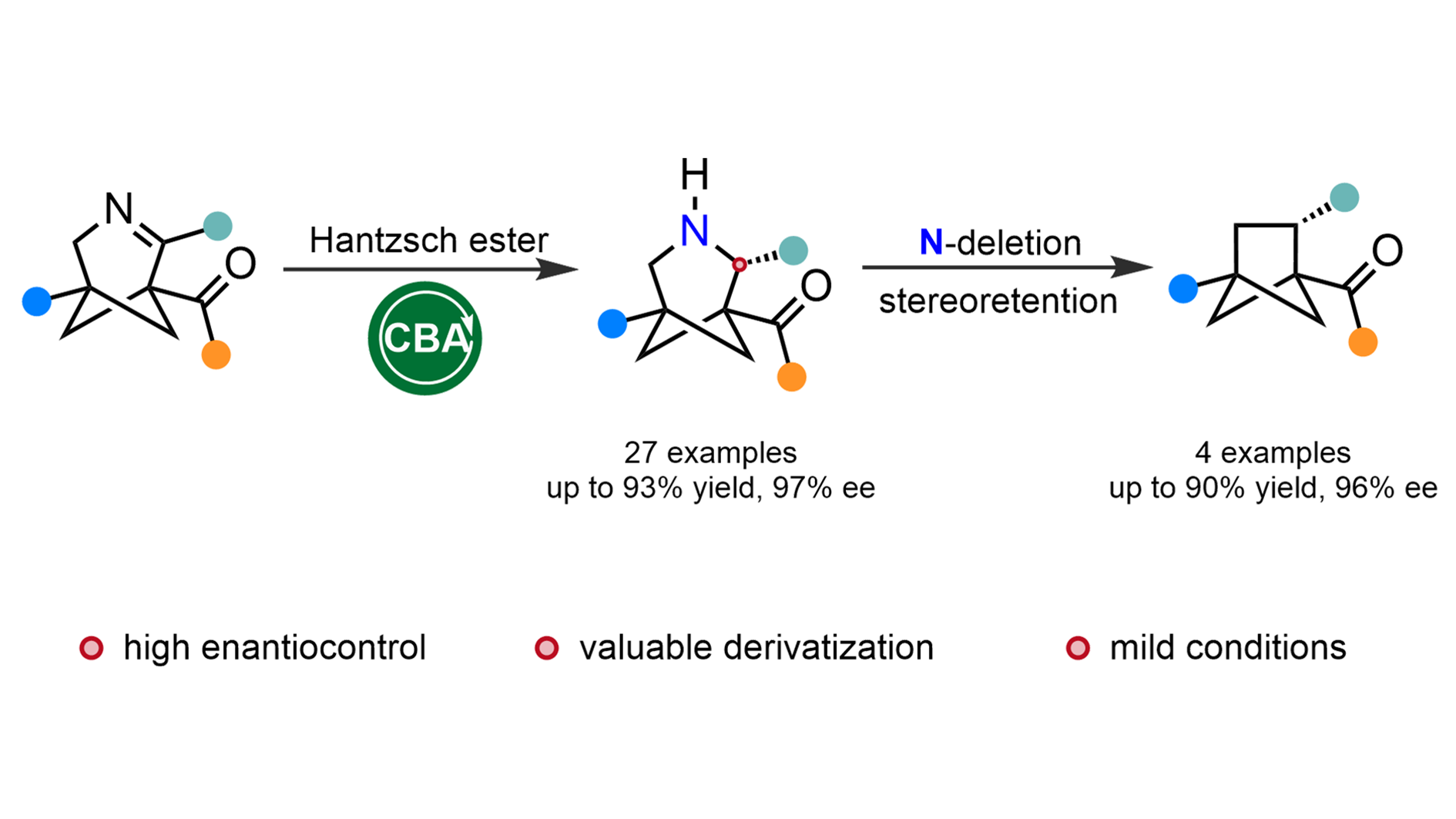
Although significant progress has been made in constructing three-dimensional, C(sp3)-rich bioisosteres for pyridines, the development of catalytic enantioselective approaches to access chiral nitrogen-containing bridged scaffolds remains limited and challenging. Herein, we report a chiral Brønsted acid-catalyzed enantioselective reduction of imines harnessing Hantzsch ester as the hydrogen source under mild conditions, delivering structurally diverse chiral 3-azabicyclo[3.1.1]heptanes (27 examples) in generally good yields with high enantiocontrol (up to 93% yield, 97% ee). The reaction can be scaled up to 2 mmol with full preservation of the excellent outcomes. These saturated heterocycles serve as versatile precursors, as demonstrated by conversion to bicyclo[2.1.1]hexanes via a facile nitrogen-deletion strategy with complete retention of enantiopurity. Notably, the enantioenriched 3-aza-BCHep can serve as a secondary amine organocatalyst, promoting the asymmetric Friedel–Crafts alkylation of indole with an α,β-unsaturated aldehyde in excellent yield and promising stereoinduction. This work establishes a practical route to access enantiopure saturated heterocyclic scaffolds, offering new three-dimensional candidates as potential pyridine isosteres in drug discovery and asymmetric catalysis.
Graphical Abstract
Keywords
Chiral Brønsted acid, asymmetric transfer hydrogenation, 3-azabicyclo[3.1.1]heptane, bicyclo[2.1.1]hexane
1. Introduction
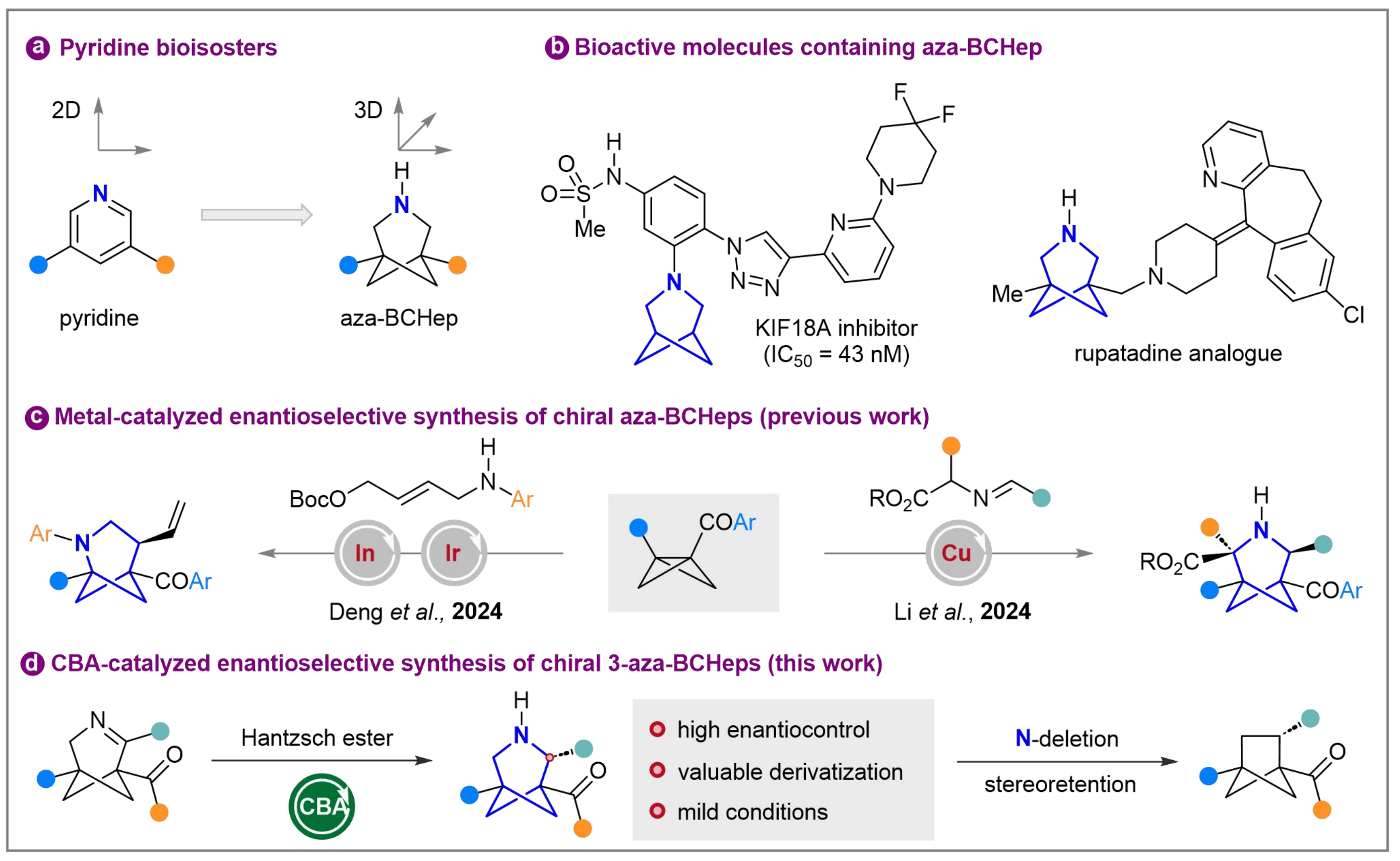
Nitrogen-containing heterocycles, especially pyridine and its derivatives, are among the most essential building blocks in medicinal chemistry and are found in many approved drugs[1,2]. According to the “Escape from Flatland” concept proposed by Lovering and coworkers[3,4], increasing molecular saturation can improve its physical properties, make it more selective for its target, and increase its chances of success in clinical trials[5,6]. Over the past decade, bridged bicyclic scaffolds, particularly bicyclo[1.1.1]pentanes, bicyclo[2.1.1]hexanes (BCHs), and bicyclo[3.1.1]heptanes (BCHeps), have emerged as privileged three-dimensional, C(sp3)-enriched bioisosteres for planar aromatic rings[7-10]. Nevertheless, the rational design of three-dimensional bioisosteres that can effectively mimic the properties of pyridine remains a significant challenge. Building on the success of using BCHeps to replace benzene rings[11], Mykhailiuk and coworkers proposed aza-BCHep as a promising bioisostere for pyridine (Figure 1a)[12]. Supporting this hypothesis, several bioactive molecules incorporating the aza-BCHep scaffold have exhibited potent biological activity or superior physicochemical profiles (Figure 1b)[13]. Consequently, the development and application of aza-BCHeps as 3D bioisosteres have gained substantial momentum, underscoring their growing importance in drug discovery[14-16].
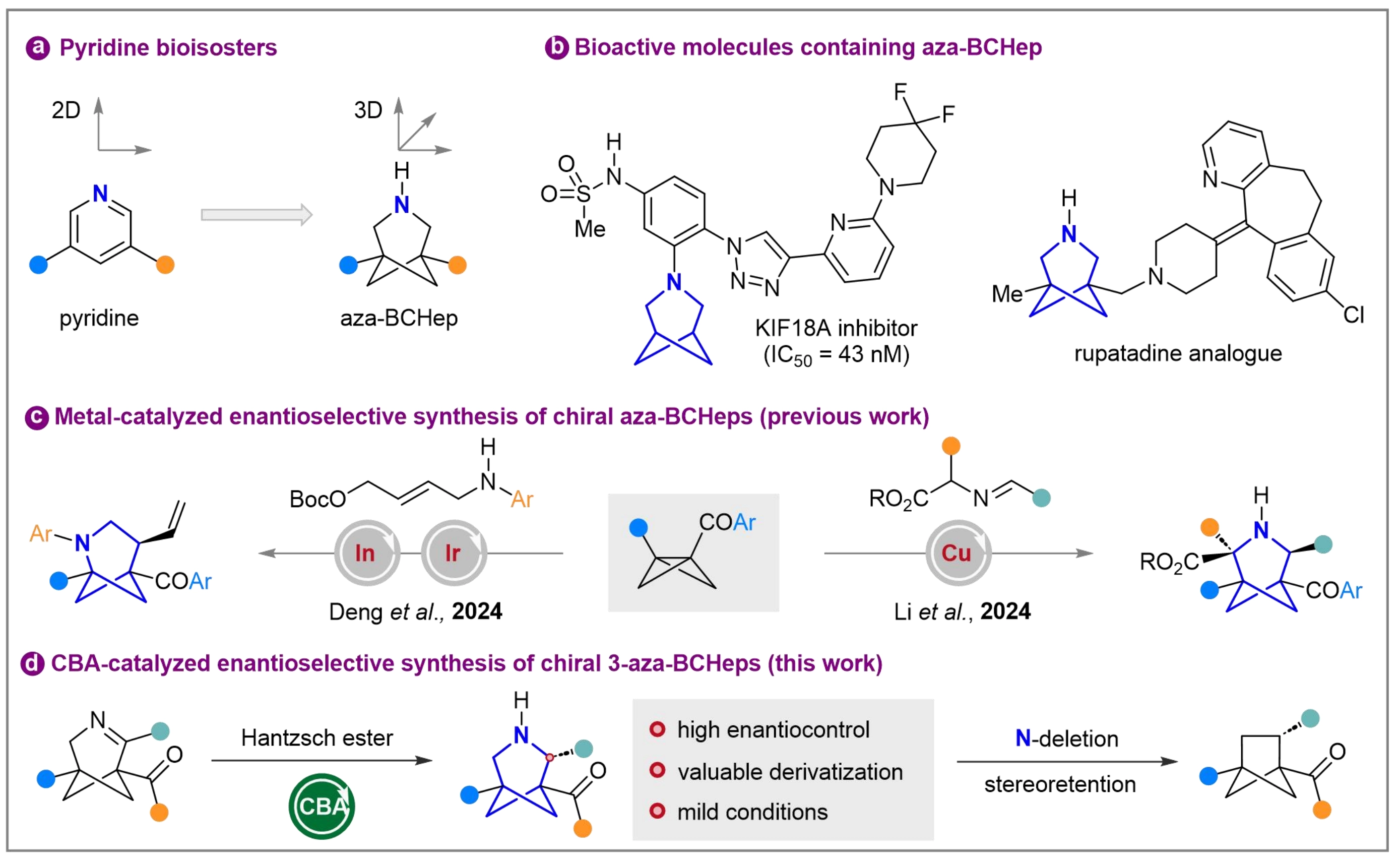
Figure 1. Background and design of the present work. CBA: chiral Brønsted acid; BCHeps: bicyclo[3.1.1]heptanes.
Intramolecular cycloadditions have long served as a primary route for synthesizing aza-BCHeps[17-21]. Among the earliest examples, Schieweck et al. reported a thermal [2+2] cycloaddition of N-acryloylacrylimides to afford 3-aza-BCHepdiones[19]. For intermolecular variants, several strategies have been developed, including radical pathways[22-26], Lewis acid-mediated substrate activation[27-35], and transition-metal-catalyzed transformations for constructing polysubstituted aza-BCHeps[36], with additional complementary approaches also reported[37,38]. Beyond cycloadditions, cyclization strategies represent another major synthetic avenue to aza-BCHeps[12,39-44].
Despite these achievements, developing general, efficient, and catalytic asymmetric methods for enantioenriched aza-BCHeps remains a considerable challenge. Among the limited successful strategies, two main approaches have emerged. The first relies on chiral transfer from enantiopure starting materials: Hari’s photoredox-catalyzed decarboxylation of chiral redox-active esters generates alkyl radicals that couple with bicyclo[1.1.0]butanes (BCBs)[45], while Studer’s Lewis acid-catalyzed formal [2σ+2σ] cycloaddition employs chiral aziridines with BCBs[46]. The second approach involves catalytic asymmetric construction. Deng’s In(OTf)3/iridium relay catalysis produces 2-aza-BCHeps[47], wherein In(OTf)3 promotes BCB ring-opening followed by chiral iridium-catalyzed ring-closure. Separately, Li’s copper-catalyzed asymmetric [4π+2σ] cycloaddition of BCBs with azomethine ylides provides access to enantioenriched 3-aza-BCHeps (Figure 1c)[48]. Although these pioneering studies offer valuable routes to specific chiral frameworks, a broadly applicable Brønsted acid-catalyzed asymmetric hydrogenation strategy for saturated, enantioenriched aza-BCHeps has yet to be developed.
To address this gap, we sought to develop a catalytic asymmetric transfer hydrogenation protocol employing azabicyclo[3.1.1]heptene as the starting material, a substrate elegantly synthesized by Zheng and co-workers[23]. Chiral Brønsted acids (CBA), renowned for their bifunctional activation mode in stereoselective transformations[49-54], provide a particularly attractive platform. While enantioselective Brønsted acid-catalyzed transfer hydrogenation has been well established for diverse imine substrates[55-59], the asymmetric reduction of imines embedded in conformationally rigid and strained aza-bicyclic frameworks, such as those found in 3-aza-BCHeps, remains unexplored. This unique structural environment poses a distinct challenge for efficient stereocontrol. Herein, we report a CBA-catalyzed asymmetric transfer hydrogenation of imines derived from unsaturated 3-aza-BCHeps, employing Hantzsch ester (HE) as the hydrogen source (Figure 1d). This method enables the synthesis of a broad range of highly enantioenriched 3-aza-BCHeps in generally good yields under mild reaction conditions, with excellent functional group tolerance.
2. Methods
2.1 Typical procedure for enantioselective synthesis chiral 3-aza-BCHeps
An oven-dried 25 mL Schlenk tube equipped with a magnetic stir bar was charged with imine 1 (0.2 mmol, 1.0 equiv.), HE (0.5 mmol, 2.5 equiv.), and C7 (10 mol%). The tube was evacuated and backfilled with argon three times. Mesitylene (4 mL) was then added, and the mixture was stirred at 50 °C for 72 h. After cooling to room temperature, chloranil (0.2 mmol, 1.0 equiv.) was added, and the mixture was stirred for an additional 20 min. The reaction was quenched with saturated aqueous NaHCO3. The mixture was washed with aqueous NaOH (2 M, 2 × 10 mL), the aqueous phase was extracted with CH2Cl2 (3 × 10 mL), and the combined organic layers were dried over Na2SO4, filtered, and concentrated under reduced pressure. The residue was purified by column chromatography on silica gel basified with triethylamine to give product 2. Further details are provided in the Supplementary materials.
3. Results and Discussion
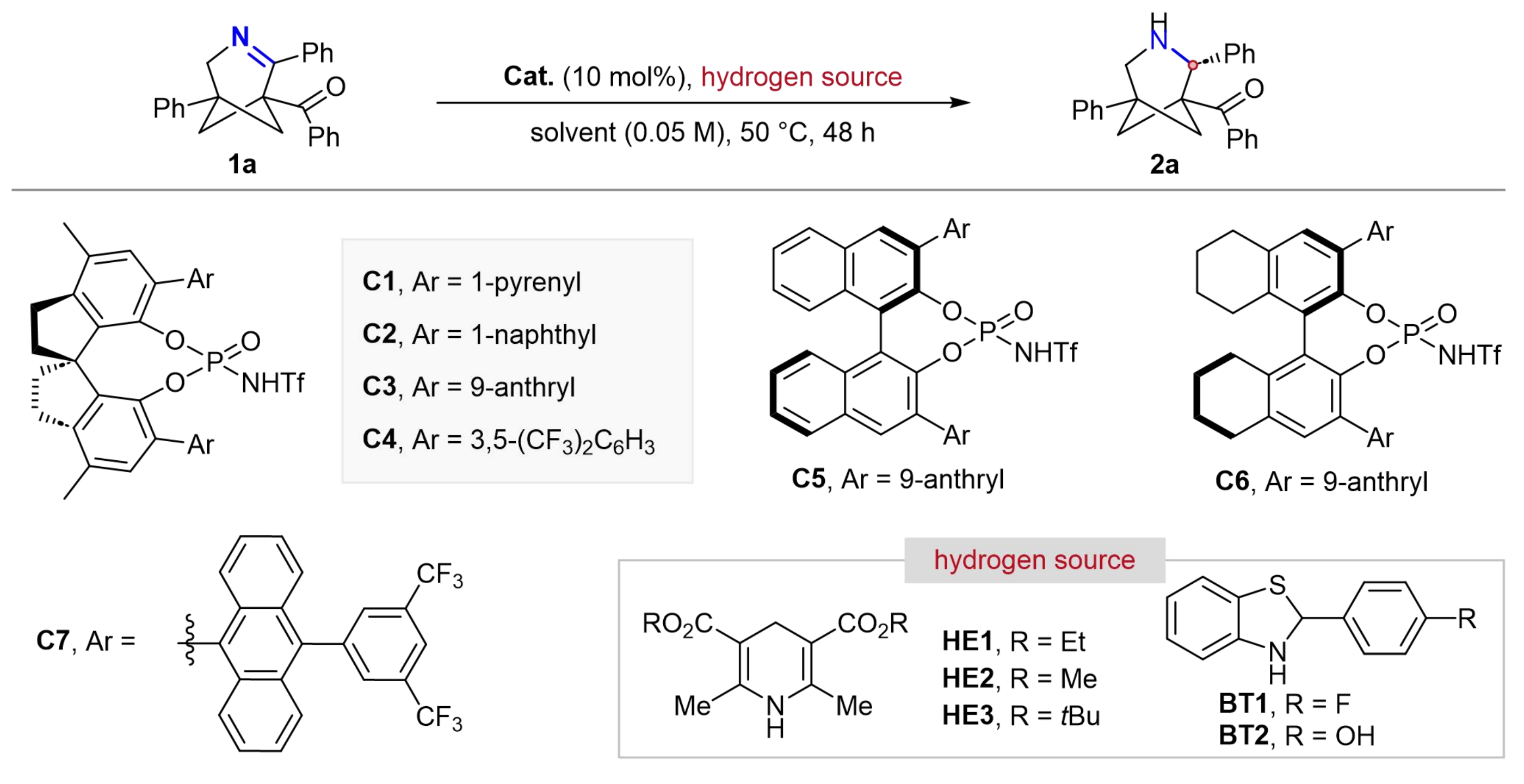
To develop an efficient asymmetric synthesis of 3-aza-BCHeps, we investigated the CBA-catalyzed transfer hydrogenation of unsaturated imine 1a using HE as the hydrogen source. Initial experiments showed that the reaction was sluggish at room temperature. Optimization began with imine 1a (0.05 mmol), HE1 (3.0 equiv.), and catalyst C1 (10 mol%) in mesitylene at 50 °C, affording product 2a in 49% yield with 70% ee (Table 1, entry 1). We next evaluated CBAs of different atropisomeric backbones and varied substituents to identify the superior catalyst (Table 1, entries 2-6). The catalyst C3, which features a 4,4’-dimethyl substituted 1,1’-spirobiindane-7,7’-diol (Me-SPINOL) backbone and 9-anthryl groups at the 6,6’-positions, delivered the best performance in terms of enantioselectivity (90% ee). Given the most promising performance of 9-anthryl-derived catalyst (C3, entry 3), the substituent effect at the C10-position was evaluated (entry 7). Pleasingly, the installation of a 3,5-bis(trifluoromethyl)phenyl group at the C10-position of the anthryl ring further boosted both yield and enantioselectivity, furnishing 2a in 78% yield with 94% ee (entry 7). Subsequent optimization of reaction parameters was carried out using C7. Evaluation of alternative reductants, including differently substituted HEs and benzothiazolines (BTs), proved less effective (entries 8-11). Reducing the loading of the original HE1 to 2.5 equiv. maintained high reaction efficiency (81% yield, 94% ee, entry 12). A solvent survey identified mesitylene as optimal; aromatic solvents generally provided higher enantioselectivity than chlorinated or ethereal solvents (entries 13-17), suggesting that the aromatic environment plays a beneficial role in the stereodetermining step. While raising the temperature to 60 °C slightly decreased the enantioselectivity (92% ee, entry 18), extending the reaction time to 72 hours provided the optimal outcome, yielding 2a in 89% isolated yield with 94% ee (entry 19).
Table 1. Screening reaction conditionsa.
| entry | Cat. | solvent | hydrogen source | yield (%)b | ee (%)c |
| 1 | C1 | mesitylene | HE1 | 49 | 70 |
| 2 | C2 | mesitylene | HE1 | 82 | 76 |
| 3 | C3 | mesitylene | HE1 | 74 | 90 |
| 4 | C4 | mesitylene | HE1 | 85 | 77 |
| 5 | C5 | mesitylene | HE1 | 66 | -28 |
| 6 | C6 | mesitylene | HE1 | 50 | -8 |
| 7 | C7 | mesitylene | HE1 | 78 | 94 |
| 8 | C7 | mesitylene | HE2 | 66 | 93 |
| 9 | C7 | mesitylene | HE3 | 62 | 72 |
| 10 | C7 | mesitylene | BT1 | 8 | 6 |
| 11 | C7 | mesitylene | BT2 | 45 | 46 |
| 12d | C7 | mesitylene | HE1 | 81 | 94 |
| 13d | C7 | PhCF3 | HE1 | 81 | 90 |
| 14d | C7 | toluene | HE1 | 78 | 92 |
| 15d | C7 | EtOAc | HE1 | 45 | 84 |
| 16d | C7 | THF | HE1 | 39 | 84 |
| 17d | C7 | CH2Cl2 | HE1 | 62 | 86 |
| 18d,e | C7 | mesitylene | HE1 | 80 | 92 |
| 19d,f | C7 | mesitylene | HE1 | 94 (89) | 94 |
a: Unless otherwise indicated, all reactions were performed with 1a (0.05 mmol) and hydrogen source (0.15 mmol) in the presence of catalyst (10 mol%) in solvent (1.0 mL) at 50 °C under argon atmosphere for 48 h; b: The yields were determined by 1H NMR spectra using triphenylmethane as an internal standard; c: The ee values were determined by chiral HPLC analysis; d: 2.5 equiv. of HE1 was used; e: At 60 ℃; f: For 72 h, isolated yield was provided in parentheses. HE: Hantzsch ester.
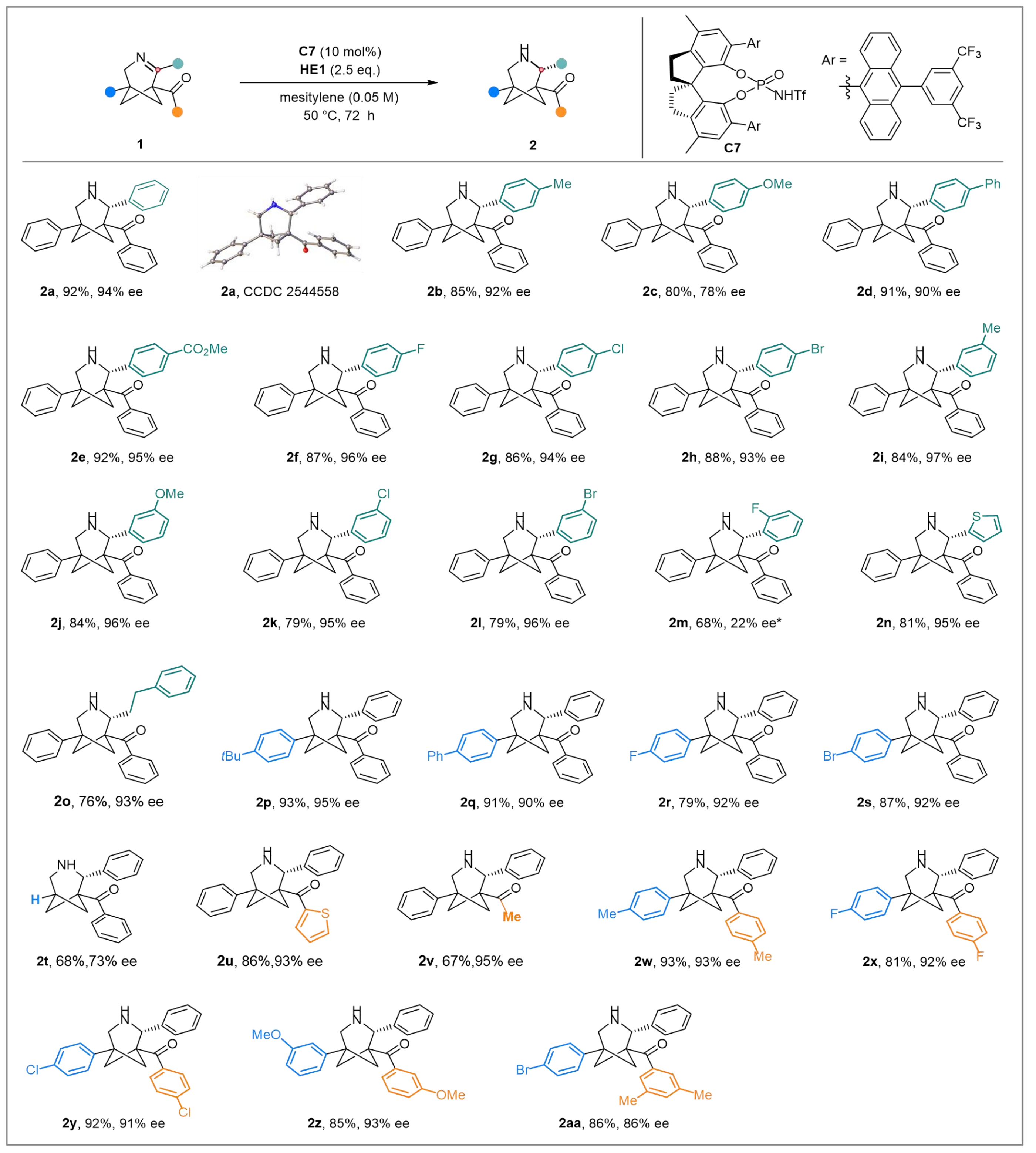
With the optimized reaction conditions in hand, we evaluated the substrate scope of this asymmetric transfer hydrogenation. As depicted in Figure 2, the model reaction of substrate 1a proceeded smoothly on a 0.2 mmol scale, providing 2a in improved isolated yield with excellent enantioselectivity. We then examined a broad range of substituted 3-aza-BCHeps to test the robustness and generality of the protocol. First, variations at the para, meta and ortho-positions of the aryl group attached to the imine were explored. Installation of an electron-donating (2b), electron-neutral (2d), or electron-withdrawing (2e-2h) group at the para-position of the aromatic ring had minimal impact on the reaction outcome, affording the corresponding chiral 3-aza-BCHeps in 85-92% yields with 90-96% ee; a slight erosion in enantioselectivity was observed only with the para-methoxy group (2c). meta-substituted hydrogenation products (2i-2l) exhibited comparable efficiency and enhanced enantiocontrol, whereas ortho-substitution led to a significant decrease in both reactivity and stereoselectivity (2m), likely due to steric hindrance. Replacement of the phenyl ring with a 2-thienyl group or alkyl chain also proved viable (2n-2o). Subsequently, the substituent effect of the bridgehead aryl group was investigated. The electronic nature of the para-substituent exerted negligible influence on the transformation, with the corresponding products (2p-2s) obtained in 79-93% yields with 90-95% ee. However, removal of this aryl group caused a significant erosion in both yield and enantioselectivity (2t). Furthermore, replacement of the benzoyl group at the other bridgehead with 2-thenoyl or acetyl groups afforded products (2u-2v) with excellent stereoselectivity. Finally, substrates decorated with two substituted aryl moieties were examined in this transformation. Functional groups including methyl, fluoro, chloro, and methoxy, regardless of the para- or meta-position on the phenyl ring, were well accommodated with no obvious influence on the efficacy (2w-2aa). The absolute configuration of product 2a was determined by X-ray crystallographic analysis, and those of other products in Figure 2 were assigned by analogy. In summary, the protocol demonstrates a broad substrate scope, accommodating diverse electronic and steric profiles with generally high yields and excellent enantiocontrol, highlighting its synthetic utility for accessing enantioenriched 3-aza-BCHeps.
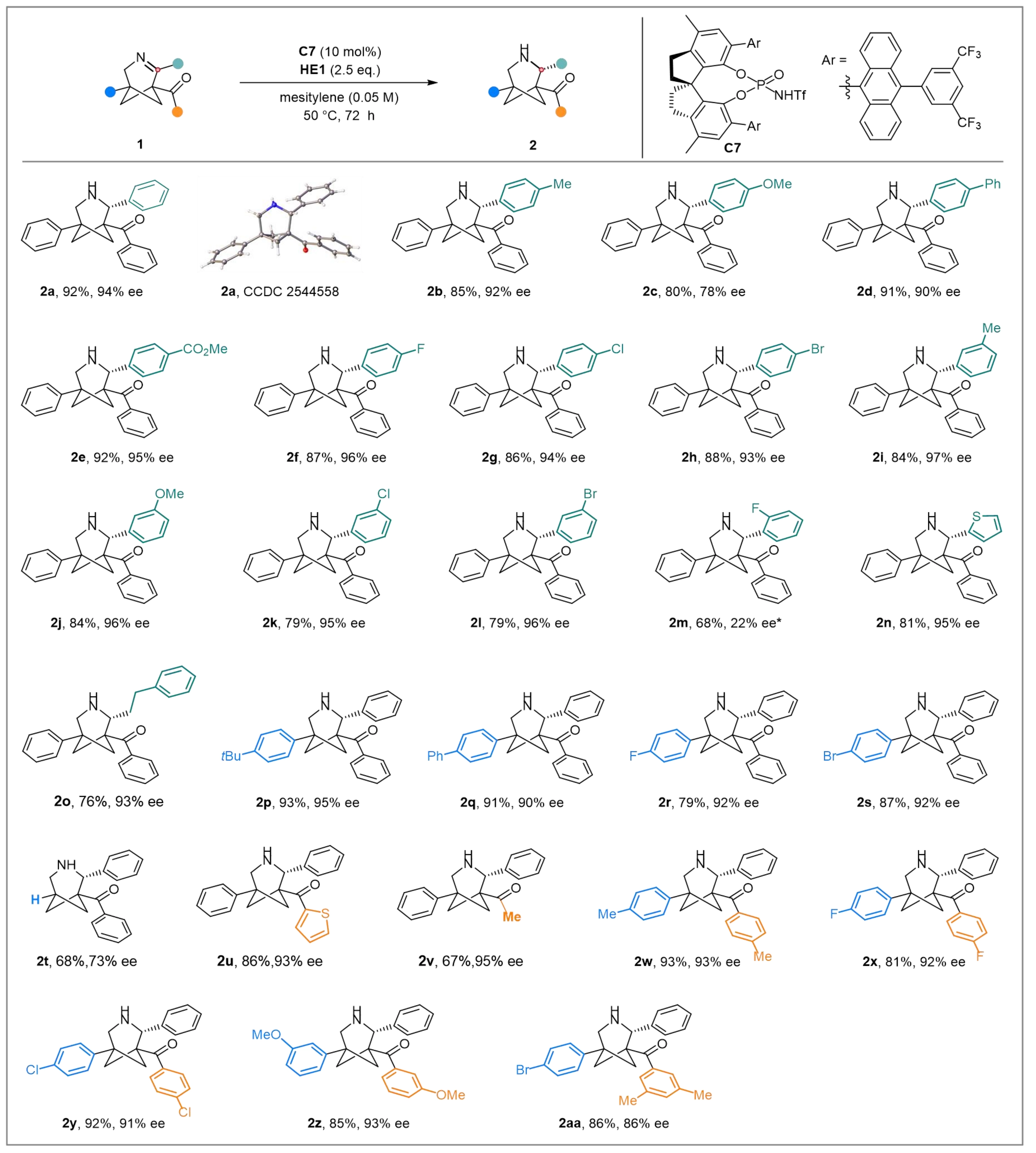
Figure 2. Substrate scope of 3-aza-BCHeps. All reactions were performed with 1 (0.2 mmol), HE1 (0.5 mmol) and C7 (10 mol%) in mesitylene (4.0 mL) at 50 °C under argon atmosphere. Isolated yields are shown. *Reaction was conducted for 168 hours. BCHeps: bicyclo[3.1.1]heptanes; HE: Hantzsch ester.
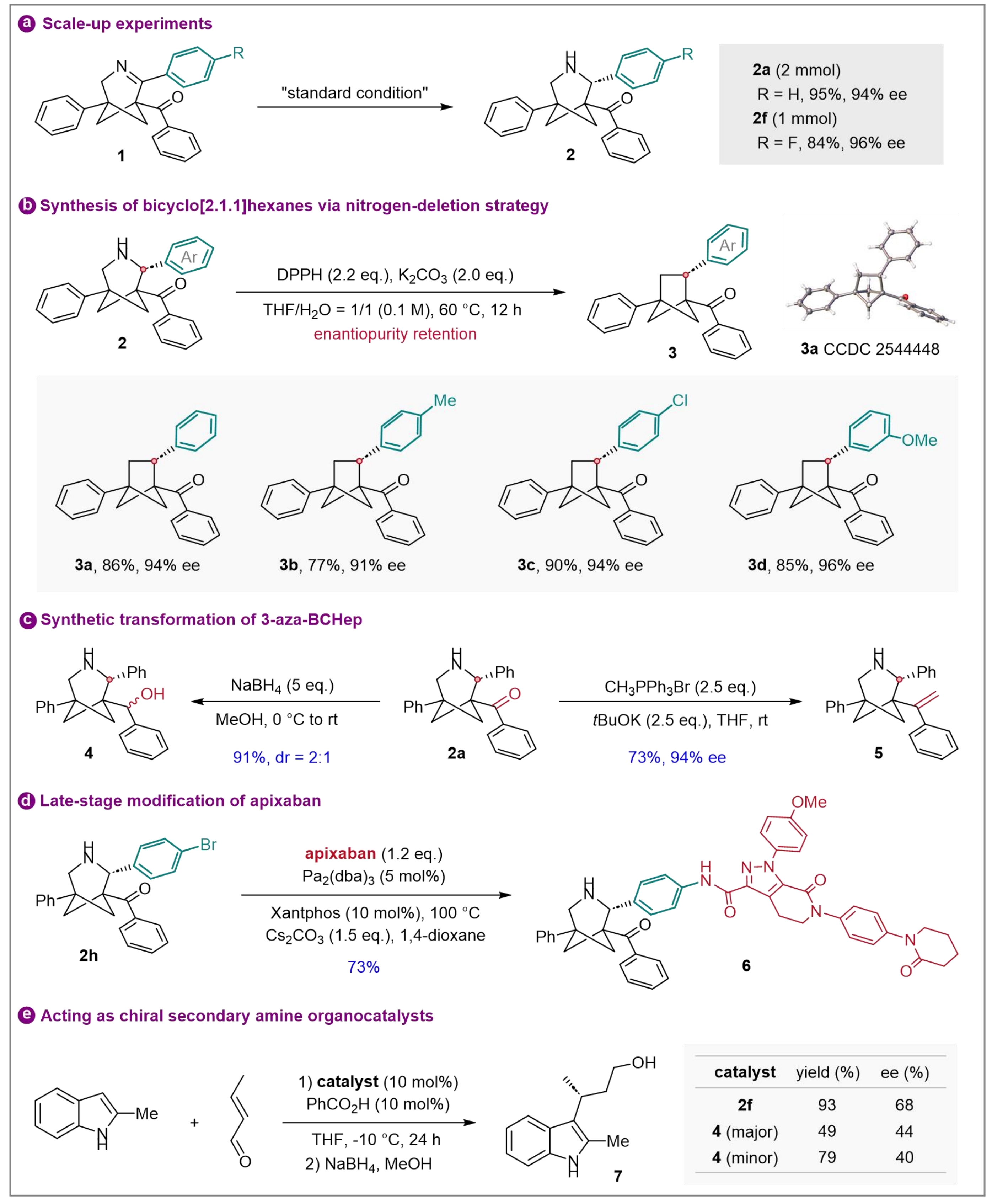
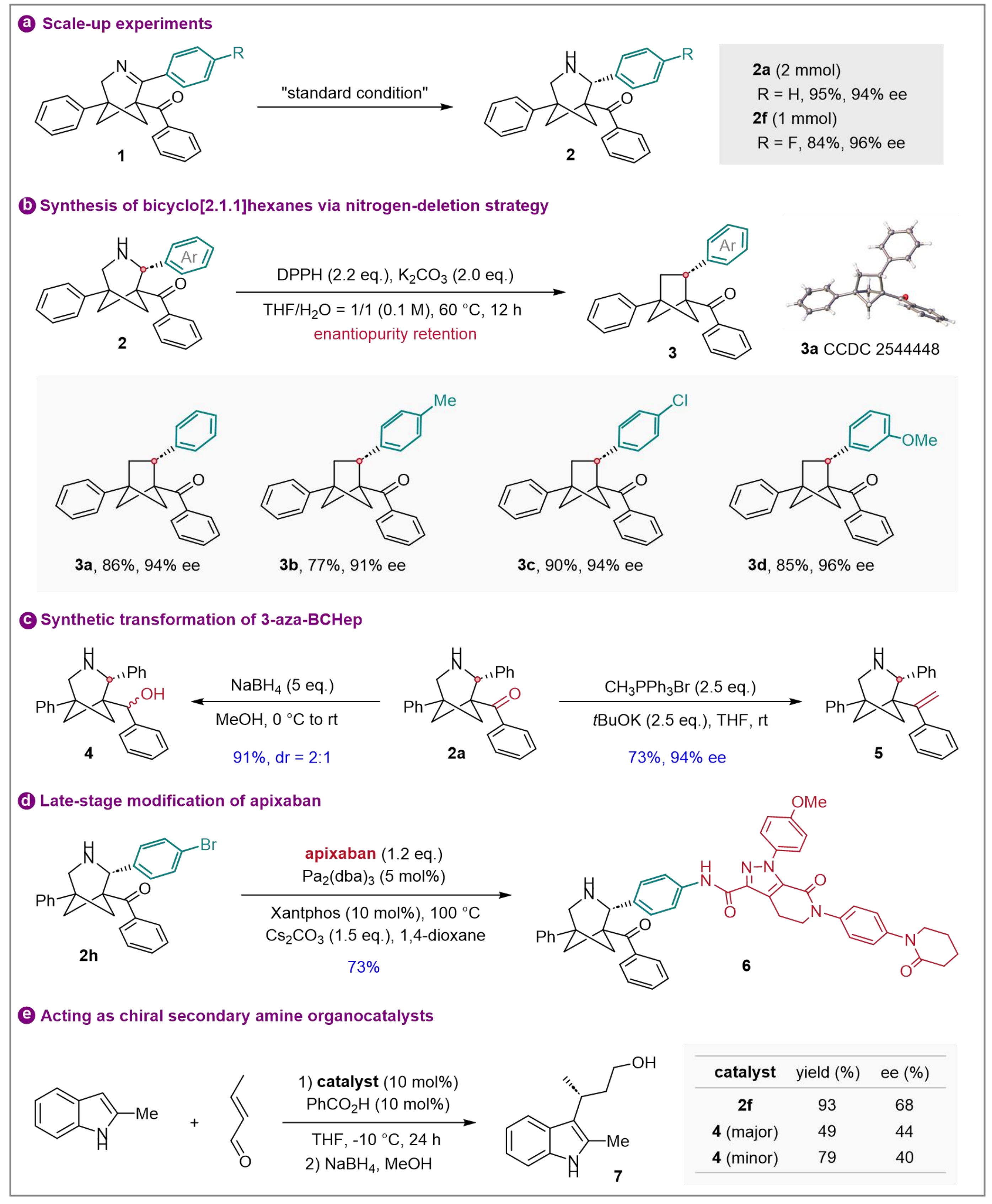
To demonstrate the practical utility of our method, we first evaluated its scalability. Under the standard conditions, a scale-up reaction of substrate 1a (2 mmol) provided 3-aza-BCHep 2a in 95% yield with 94% ee. Similarly, 2f was synthesized efficiently on scale (1 mmol), affording the product in 84% yield with 96% ee (Figure 3a). With sufficient quantities of these chiral building blocks available, a series of synthetic transformations were performed. Treatment of 2a with O-(diphenylphosphinyl)hydroxylamine (DPPH) under nitrogen-deletion conditions afforded the saturated BCH 3a in 86% yield[60-62], with complete preservation of enantioselectivity (94% ee) (Figure 3b), and the configuration of 3a was confirmed by single crystal X-ray diffraction analysis. The same strategy was successfully applied to substrates 2b, 2g, and 2j, affording the corresponding products in good yields with full enantiopurity retention, demonstrating the reliability of this scaffold as a precursor to other high-value bridged systems. Subsequent transformations of 2a gave alcohol 4 (91%) as a pair of diastereoisomers upon reduction with NaBH4, and afforded terminal alkene 5 (73%) via Wittig olefination (Figure 3c). Moreover, 2h underwent late-stage derivatization via a Buchwald–Hartwig coupling with apixaban, furnishing the drug-conjugated product 6 in 73% yield (Figure 3d). To further explore the catalytic potential of these scaffolds, we evaluated 3-aza-BCHeps 2f and 4 as novel chiral secondary amine organocatalysts. In the asymmetric Friedel–Crafts alkylation of indoles with an α,β-unsaturated aldehyde, these catalysts delivered the desired product 7 in up to 93% yield with 68% ee (Figure 3e). Collectively, these results validate the 3-aza-BCHep framework as a promising new entry for asymmetric organocatalysis. Collectively, these developments in scalable synthesis, strategic skeletal editing, derivatization, and catalytic application validate 3-aza-BCHeps as highly versatile three-dimensional molecular building blocks for synthetic and medicinal chemistry.
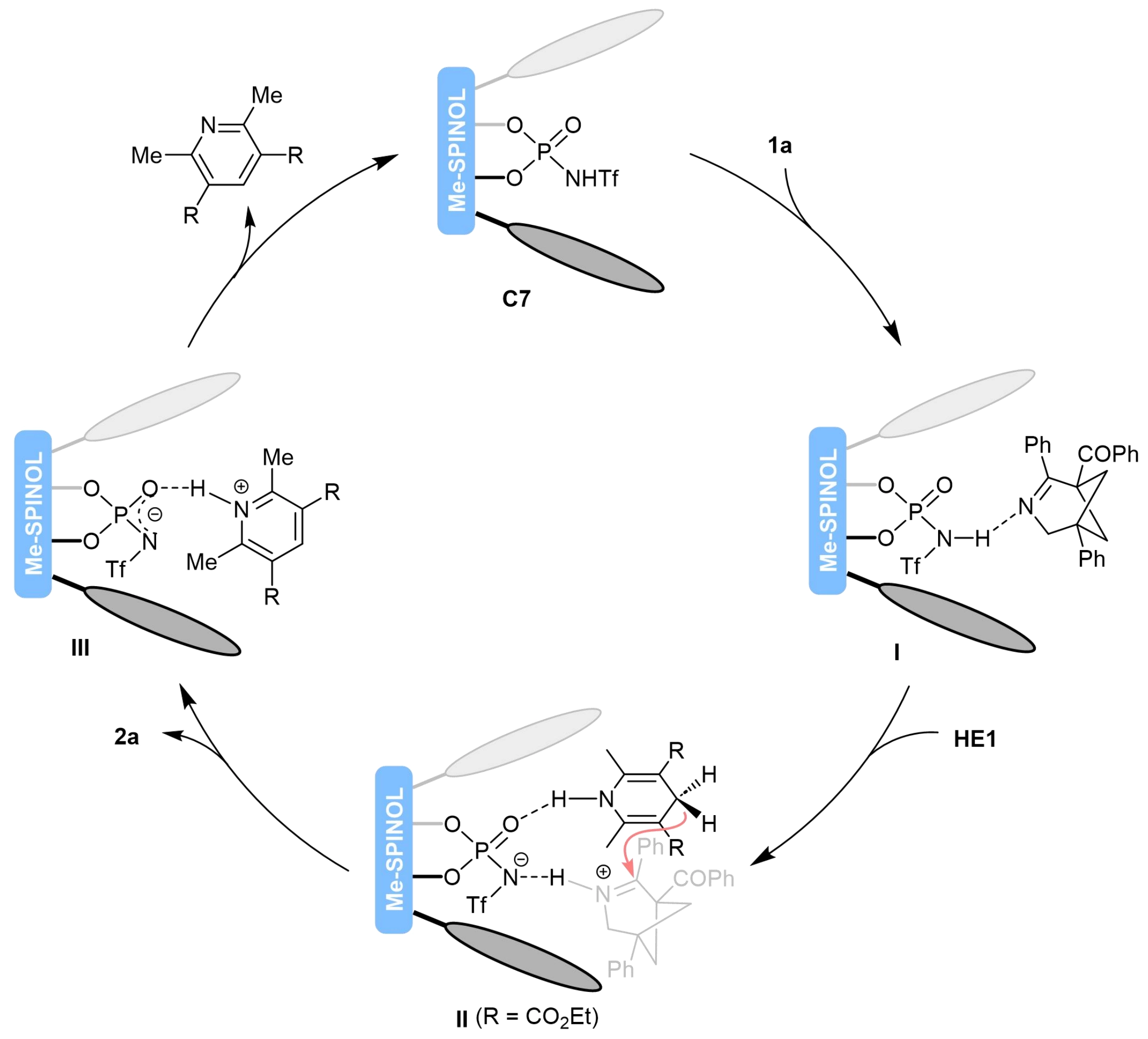
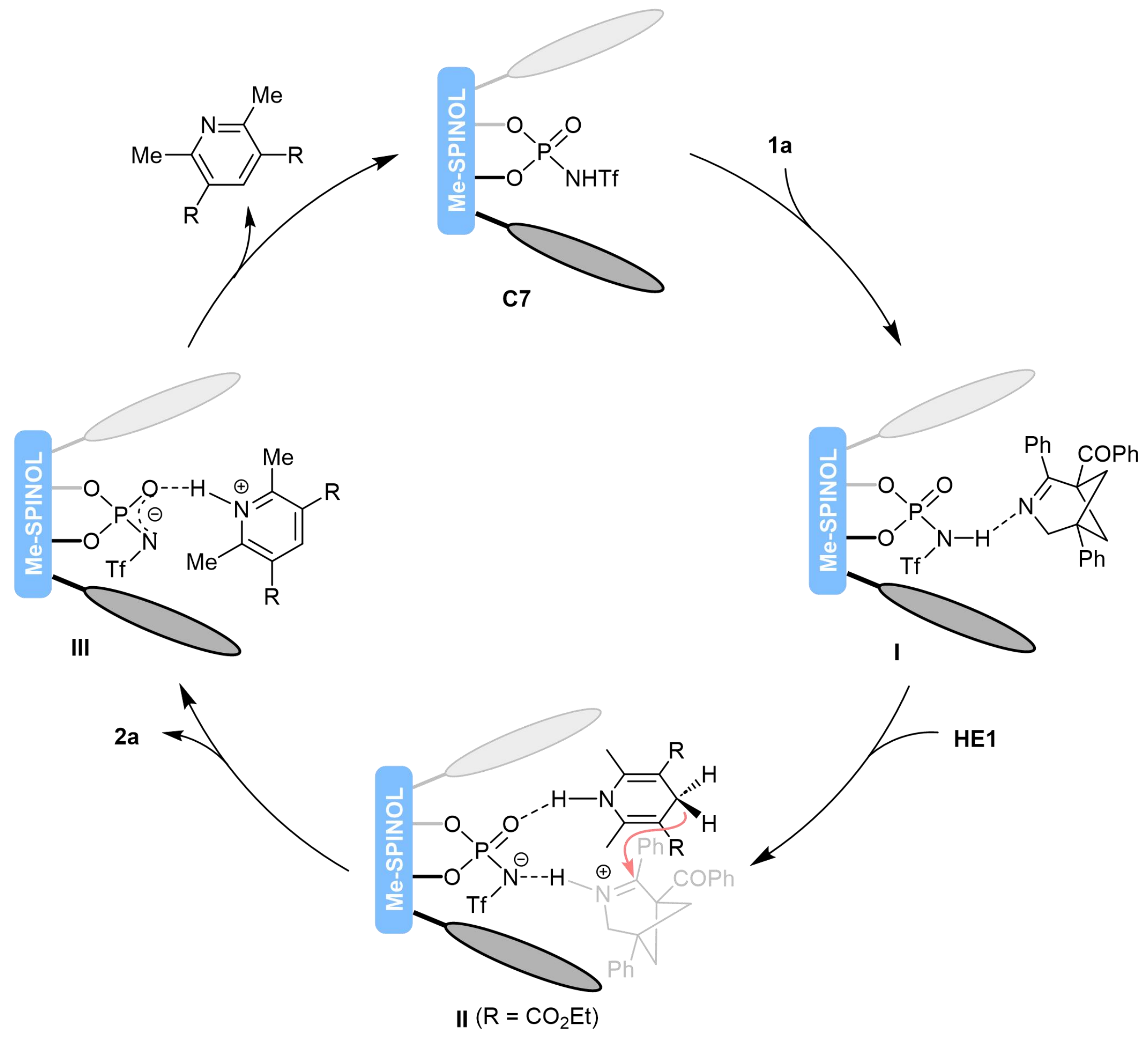
Based on experimental observations and precedents in CBA catalysis[63-69], we propose a plausible mechanism for the asymmetric transfer hydrogenation (Figure 4). The imine substrate 1a is first activated by catalyst C7 through hydrogen bonding, generating intermediate I. The stereoselective hydride transfer then proceeds via a proposed transition state II, which assembles the activated iminium ion, the HE, and the catalyst in a well-organized network of non-covalent interactions. This key step facilitates the facial-selective reduction, delivering the enantioenriched amine 2a and generating the Brønsted acid–pyridine complex III. Finally, a proton transfer event releases the pyridine byproduct and regenerates the active CBA catalyst, thereby closing the catalytic cycle.
4. Conclusion
In summary, we have developed a practical and efficient Brønsted acid-catalyzed asymmetric transfer hydrogenation for the synthesis of enantioenriched 3-aza-BCHeps. This method facilitates the transformation of readily accessible unsaturated precursors into chiral saturated architectures under mild conditions, characterized by a broad substrate scope and exceptional enantioselectivity. The high degree of stereocontrol is rationalized by a proposed mechanism involving a well-defined non-covalent interaction network. The synthetic utility of the resulting aza-BCHeps is highlighted by their stereospecific conversion into BCHs via nitrogen deletion, their diverse downstream functionalization, and their successful application as a novel class of chiral secondary amine organocatalysts. Overall, this work provides a robust and step-economical route to an important class of three-dimensional, sp3-rich bioisosteres, thereby expanding the synthetic toolkit for both drug discovery and asymmetric catalysis.
Supplementary materials
The supplementary material for this article is available at: Supplementary materials.
Acknowledgements
We appreciate the assistance of SUSTech Core Research Facilities. Additionally, we would like to acknowledge the AI language models DeepSeek-V3.2 and Doubao Seed 2.0 (March 2026 releases) for their valuable assistance with linguistic revision of this manuscript. The authors take full responsibility for the integrity, originality, and accuracy of the work.
Authors contribution
Tan B, Ding WY: Conceptualization, supervision, writing-original draft.
Deng MX: Investigation, data curation, writing-original draft.
Liu HH: Investigation, formal analysis.
Xiang SH: writing-original draft.
Conflicts of interest
Bin Tan is an Editorial Board Member of Chiral Chemistry. The other authors declare no conflicts of interest.
Ethical approval
Not applicable.
Consent to participate
Not applicable.
Consent for publication
Not applicable.
Availability of data and materials
The data reported in this paper are available in the main text or supplementary information, including methods, NMR data, HRMS data, HPLC spectra Crystal data and NMR spectra. Crystallographic data for the structures reported in this article have been deposited at the Cambridge Crystallographic Data Centre, under deposition numbers CCDC 2544558 (2a) and CCDC 2544448 (3a).
Funding
This work was supported by the National Natural Science Foundation of China (Grant No. 22301125 to Wei-Yi Ding, Nos. 22425011 and 22231004 to Bin Tan, and No. 22271135 to Shao-Hua Xiang), National Key R&D Program of China (Grant No. 2022YFA15 03703 to Bin Tan), Guangdong Basic and Applied Basic Research Foundation (Grant No. 2026A1515011280 to Wei-Yi Ding and No. 2024B1515020055 to Shao-Hua Xiang), Shenzhen Science and Technology Program (Grant No. KQTD20210811090112004 to Bin Tan) and High Level of Special Funds (Grant No. G03050K003 to Bin Tan).
Copyright
© The Author(s) 2026.
References
-
2. Marshall CM, Federice JG, Bell CN, Cox PB, Njardarson JT. An update on the nitrogen heterocycle compositions and properties of U.S. FDA-approved pharmaceuticals (2013-2023). J Med Chem. 2024;67(14):11622-11655.[DOI]
-
4. Lovering F. Escape from flatland 2: Complexity and promiscuity. MedChemComm. 2013;4(3):515.[DOI]
-
5. Stepan AF, Subramanyam C, Efremov IV, Dutra JK, O’Sullivan TJ, DiRico KJ, et al. Application of the bicyclo[1.1.1]pentane motif as a nonclassical phenyl ring bioisostere in the design of a potent and orally active γ-secretase inhibitor. J Med Chem. 2012;55(7):3414-3424.[DOI]
-
6. Subbaiah MAM, Meanwell NA. Bioisosteres of the phenyl ring: Recent strategic applications in lead optimization and drug design. J Med Chem. 2021;64(19):14046-14128.[DOI]
-
7. Tsien J, Hu C, Merchant RR, Qin T. Three-dimensional saturated C(sp3)-rich bioisosteres for benzene. Nat Rev Chem. 2024;8(8):605-627.[DOI]
-
9. Li Y, Gu X, Wei Y, Shi M. Intramolecular dearomative [2π + 2σ] photocycloadditions of bicyclo[1.1.0]butanes with (benzo)furans and (benzo)thiophenes initiated by energy transfer or single electron transfer. Sci China Chem. 2025;68(10):4959-4972.[DOI]
-
10. Koo Y, Jeong J, Hong S. Recent advances in catalytic asymmetric transformations of bicyclobutane: A versatile building block for enantiopure bioisosteric molecules. ACS Catal. 2025;15(10):8078-8093.[DOI]
-
11. Kleinmans R, Pinkert T, Dutta S, Paulisch TO, Keum H, Daniliuc CG, et al. Intermolecular [2π+2σ]-photocycloaddition enabled by triplet energy transfer. Nature. 2022;605(7910):477-482.[DOI]
-
12. Dibchak D, Snisarenko M, Mishuk A, Shablykin O, Bortnichuk L, Klymenko-Ulianov O, et al. General synthesis of 3-azabicyclo[3.1.1]heptanes and evaluation of their properties as saturated isosteres. Angew Chem Int Ed. 2023;62(39):e202304246.[DOI]
-
14. Xiao Y, Tang L, Yang XC, Wang NY, Zhang J, Deng WP, et al. Catalytic asymmetric strategies for bicyclo[1.1.0]butane transformations: Advances and applications. CCS Chem. 2025;7(7):1903-1934.[DOI]
-
18. Kim KH, Lim JW, Lee J, Go MJ, Kim JN. Thermal intramolecular [2+2] Cycloaddition: Synthesis of 3-azabicyclo[3.1.1]heptanes from Morita–Baylis–Hillman adduct-derived 4,4-diaryl-1,3-dienes. Adv Synth Catal. 2014;356(16):3363-3369.[DOI]
-
20. Nada T, Yoneshige Y, Yasuhiro , Matsumoto T, Fujioka H, Shuto S, et al. Nonmetathesis heterocycle formation by ruthenium-catalyzed intramolecular [2+2] cycloaddition of allenamide-enes to azabicyclo[3.1.1]heptanes. ACS Catal. 2016;6(5):3168-3171.[DOI]
-
21. Ahuja S, Iyer A, Kandappa SK, Sivaguru J. Photo-auxiliary approach to control excited state reactivity: Cross [2+2]-photocycloaddition of oxazolidinone based hydrazides. J Photochem Photobiol A Chem. 2019;382:111883.[DOI]
-
22. Chintawar CC, Laskar R, Rana D, Schäfer F, Van Wyngaerden N, Dutta S, et al. Photoredox-catalysed amidyl radical insertion to bicyclo[1.1.0]butanes. Nat Catal. 2024;7(11):1232-1242.[DOI]
-
24. Liu Y, Lin S, Ding Z, Li Y, Tang YJ, Xue JH, et al. Pyridine-boryl radical-catalyzed [3π+2σ] cycloaddition for the synthesis of pyridine isosteres. Chem. 2024;10(12):3699-3708.[DOI]
-
26. Revie RI, Dasgupta A, Biddick Y, Christensen KE, Smith RC, Anderson EA. Hetero[3.1.1]propellanes. Nat Chem. 2026;18(3):502-508.[DOI]
-
28. Wu WB, Xu B, Yang XC, Wu F, He HX, Zhang X, et al. Enantioselective formal (3 + 3) cycloaddition of bicyclobutanes with nitrones enabled by asymmetric Lewis acid catalysis. Nat Commun. 2024;15:8005.[DOI]
-
34. Jiang Q, Dong J, Zhou X, Liao H, Zhou J, Xue D. Lewis-acid-catalyzed dearomative [4π+2σ] cycloaddition of bicyclobutanes with isoquinolinium methylides for the synthesis of ring-fused azabicyclo[3.1.1]heptanes. Org Lett. 2024;26(43):9311-9315.[DOI]
-
38. Revie RI, Whitaker BJ, Paul B, Smith RC, Anderson EA. Synthesis of heterocycle-substituted bicyclo[3.1.1]heptanes and aza-bicyclo[3.1.1]heptanes via photocatalytic minisci reaction. Org Lett. 2024;26(14):2843-2846.[DOI]
-
41. He S, Hao J, Ashley ER, Chobanian HR, Pio B, Colletti SL, et al. Synthesis of novel 2-azabicyclo[3.1.1]heptane-5-carboxylic acid. Tetrahedron Lett. 2016;57(11):1268-1269.[DOI]
-
42. Zhao J, Zhao XJ, Cao P, Liu JK, Wu B. Polycyclic azetidines and pyrrolidines via palladium-catalyzed intramolecular amination of unactivated C(sp3)–H bonds. Org Lett. 2017;19(18):4880-4883.[DOI]
-
44. Wood DP, Hernandez N, Newman JA, Johnson RE. Scalable transannular bromocyclization approach to functionalized bis-heterobicyclo[3.n.1]anes. Org Lett. 2025;27(42):11890-11895.[DOI]
-
47. Zhang J, Su JY, Zheng H, Li H, Deng WP. In(OTf)3-catalyzed (3 + 3) dipolar cyclization of bicyclo[1.1.0]butanes with N-nucleophilic 1,3-dipoles: Access to 2,3-diazabicyclo[3.1.1]heptanes, 2,3-diazabicyclo[3.1.1]heptenes, and enantiopure 2-azabicyclo[3.1.1]heptanes. ACS Catal. 2024;14(23):17837-17849.[DOI]
-
51. Wang NY, Gao S, Shu ZD, Cheng BB, Ma C, Zhang YC, et al. Catalytic atroposelective synthesis of indolyl quinazolinones bearing N–N/C–C diaxes. Sci China Chem. 2025;68(7):3130-3137.[DOI]
-
52. Han Z, Xu H, Hu X, Liu S, Bai Y, Wang J, et al. Organocatalytic synthesis of chiral tetraarylmethanes from 7-indolylmethanols with thioether as directing group. Chin J Chem. 2025;43(24):3373-3378.[DOI]
-
53. Akiyama T. Stronger Brønsted acids. Chem Rev. 2007;107(12):5744-5758.[DOI]
-
54. Betinol IO, Kuang Y, Mulley BP, Reid JP. Controlling stereoselectivity with noncovalent interactions in chiral phosphoric acid organocatalysis. Chem Rev. 2025;125(8):4184-4286.[DOI]
-
59. List B, Wakchaure V, Nicoletti M, Ratjen L. Towards a practical Brønsted acid catalyzed and Hantzsch ester mediated asymmetric reductive amination of ketones with benzylamine. Synlett. 2010;2010(18):2708-2710.[DOI]
-
60. Xu YA, Xiang SH, Che JT, Wang YB, Tan B. Skeletal editing of cyclic molecules using nitrenes. Chin J Chem. 2024;42(21):2656-2667.[DOI]
-
61. Guo T, Li J, Cui Z, Wang Z, Lu H. C(sp3)–C(sp3) bond formation through nitrogen deletion of secondary amines using O-diphenylphosphinylhydroxylamine. Nat Synth. 2024;3(7):913-921.[DOI]
-
63. Zhang J, Yu P, Li SY, Sun H, Xiang SH, Wang JJ, et al. Asymmetric phosphoric acid–catalyzed four-component Ugi reaction. Science. 2018;361(6407):eaas8707.[DOI]
-
64. Wang ZH, Zhu H, Liu RX, Liu YX, Liu XC, Lin TY. Chiral phosphoric acid-catalyzed atroposelective synthesis of axially chiral aminophosphines. Chin J Chem. 2025;43(22):2929-2934.[DOI]
-
65. Lu Q, Bi M, Wang YB, Yang L, Liu HH, Xiang SH, et al. Chiral phosphoric acid-catalyzed atroposelective oxidative coupling of carbazoles. Sci China Chem. 2025;68(10):4973-4983.[DOI]
-
66. Simón L, Goodman JM. Theoretical study of the mechanism of Hantzsch ester hydrogenation of imines catalyzed by chiral BINOL-phosphoric acids. J Am Chem Soc. 2008;130(27):8741-8747.[DOI]
-
68. Reid JP, Simón L, Goodman JM. A practical guide for predicting the stereochemistry of bifunctional phosphoric acid catalyzed reactions of imines. Acc Chem Res. 2016;49(5):1029-1041.[DOI]
Copyright
© The Author(s) 2026. This is an Open Access article licensed under a Creative Commons Attribution 4.0 International License (https://creativecommons.org/licenses/by/4.0/), which permits unrestricted use, sharing, adaptation, distribution and reproduction in any medium or format, for any purpose, even commercially, as long as you give appropriate credit to the original author(s) and the source, provide a link to the Creative Commons license, and indicate if changes were made.
Publisher’s Note
Science Exploration remains a neutral stance on jurisdictional claims in published
maps
and institutional affiliations. The views expressed in this article are solely those
of
the author(s) and do not reflect the opinions of the Editors or the publisher.
Share And Cite


Science Exploration Style
Deng M, Liu HH, Ding WY, Xiang SH, Tan B. Chiral Brønsted acid-catalyzed enantioselective synthesis of 3-azabicyclo[3.1.1]heptanes. Chiral Chem. 2026;3:202624. https://doi.org/10.70401/cc.2026.0034
Tips
Copy completed.
Submit a Manuscript
Author Instructions
Cite this Article
Article Metrics
0
View
0
Download
Cited
Article Updates

 Get citation
Science Exploration Style

Deng M, Liu HH, Ding WY, Xiang SH, Tan B. Chiral Brønsted acid-catalyzed enantioselective synthesis of 3-azabicyclo[3.1.1]heptanes. Chiral Chem. 2026;3:202624. https://doi.org/10.70401/cc.2026.0034
copy
Share Link
copy
Subscribe