Unraveling the origins of selectivities in an N-heterocyclic carbene-catalyzed Friedel-Crafts alkylation/annulation cascade reaction

Yang Wang
1,*

,
Yu-Nuo Wang
1
,
Donghui Wei
2,*
*Correspondence to:
Yang Wang, Department of Material and Chemical Engineering, Zhengzhou University of Light Industry, Zhengzhou 450001, Henan, China.
E-mail: wangyang@zzli.edu.cn
Donghui Wei, College of Chemistry, Zhengzhou University, Zhengzhou 450001, Henan, China. E-mail: donghuiwei@zzu.edu.cn
Donghui Wei, College of Chemistry, Zhengzhou University, Zhengzhou 450001, Henan, China. E-mail: donghuiwei@zzu.edu.cn
Chiral Chem. 2026;3:202634. 10.70401/cc.2026.0039
Received: July 21, 2026Accepted: September 14, 2026Published: September 15, 2026
Abstract
N-heterocyclic carbene (NHC) organocatalysis enables umpolung activation of enals to deliver chiral α,β-unsaturated acylazolium electrophiles, realizing a highly selective cascade Friedel-Crafts (F-C) alkylation/lactamization of 4-aminoindoles with regioselective C5-site functionalization and excellent enantioselectivity. Nevertheless, the underlying mechanism and origins of selectivities remain poorly understood. Herein, we report a comprehensive density functional theory (DFT) investigation to fully characterize the complete catalytic cycle of this cascade transformation. The computational results indicate that the electrophilic addition of 4-aminoindole to the α,β-unsaturated acylazolium intermediate governs the stereoselectivity and regioselectivity. Activation-strain model (ASM) and energy decomposition analysis (EDA) reveal that electrostatic interactions and dispersion forces constitute the dominant stabilizing factors for the energetically favorable S-configured transition state. For regioselectivity, projection of orbital coefficient vector (POCV) analysis quantifies intrinsic atomic reactivity of different indole carbon sites, verifying that higher atomic reactivity at C5 position accounts for the preferential C5-functionalization. This work establishes a full mechanistic map of NHC-catalyzed asymmetric F-C reaction of indole and provides quantitative theoretical tools (ASM, EDA, POCV) to predict and rationalize stereo- and regioselectivity, offering guidance for rational design of NHC catalytic systems for indole functionalization.
Graphical Abstract
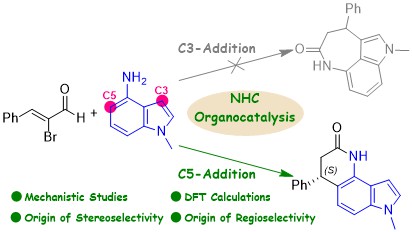
Keywords
Density functional theory calculation, reaction mechanism, N-heterocyclic carbene, organocatalysis
1. Introduction
Chiral benzene-fused indole skeletons represent privileged core structural motifs commonly encountered in natural alkaloids, drug candidates, and agrochemicals[1-7]. Among these architectures, benzo-fused chiral indoles exhibit distinctive biological activities and broad synthetic utility, making them highly attractive targets for asymmetric catalysis. While numerous methodologies have been developed for C2/C3 C-H functionalization of indole heterocycles[8-14], precise regio- and enantioselective modification at the remote benzenoid carbocyclic ring remains a formidable synthetic challenge. The inherently low reactivity and unpredictable site selectivity of aromatic C-H bonds on the benzene moiety severely restrict the efficient assembly of fused chiral indole frameworks. Accordingly, advanced catalytic strategies for the asymmetric functionalization of indoles are urgently needed to streamline the synthesis of indole-derived bioactive molecules and fine chemicals.
Friedel-Crafts (F-C) alkylation constitutes one of the most robust and versatile strategies for constructing aromatic C-C bonds[15-20], enabling efficient derivatization of electron-rich arenes including indoles. Conventionally, asymmetric F-C transformations of indoles rely predominantly on chiral Brønsted or Lewis acid catalysis[21-25], which typically favor functionalization at the C2 and C3 positions of the pyrrole ring. In sharp contrast, remote C-H functionalization on the benzene ring generally requires pre-installed directing groups; such established catalytic systems frequently suffer from narrow substrate scope and insufficient stereochemical control. Furthermore, nearly all documented protocols rely on hydrogen-bond-driven asymmetric induction, whereas alternative activation modes for enantioselective F-C reactions of indole remain largely underexplored.
As a powerful complement to conventional acid catalysis, N-heterocyclic carbene (NHC) organocatalysis has emerged as a prominent platform in modern asymmetric synthesis[26-33], owing to its exceptional capacity to achieve umpolung reactivity of carbonyl substrates. Under mild and facile conditions, NHC catalysts efficiently activate α-bromoenal to generate α,β-unsaturated acylazolium intermediates[34-41]. These versatile electrophilic synthons participate in diverse cascade alkylation and annulation processes, enabling modular construction of structurally complex chiral heterocycles with outstanding stereoselectivity.
Taking advantage of these unique catalytic features, a recent experimental study reported an elegant NHC-catalyzed cascade reaction merging F-C alkylation and lactamization, achieving regio- and enantioselective annulation between 4-aminoindoles and α-bromoenals (Scheme 1)[42]. This protocol delivers highly selective C5-functionalization of 4-aminoindole and provides facile access to benzene-fused chiral indole derivatives with excellent enantioselectivity. Notably, Li[43] demonstrated that F-C alkylation of 4-aminoindole can alternatively furnish C7-substituted products with high regio- and enantioselectivity under related organocatalytic conditions. Despite these remarkable experimental advances, the mechanism of this cascade transformation, the origin of C5 regioselectivity, and the key factors governing enantioselective induction have not been systematically elucidated. For computational purposes, the full catalyst structure was modeled throughout the calculations, and the substituent abbreviated as R in the following figures and schemes was truncated for clarity.
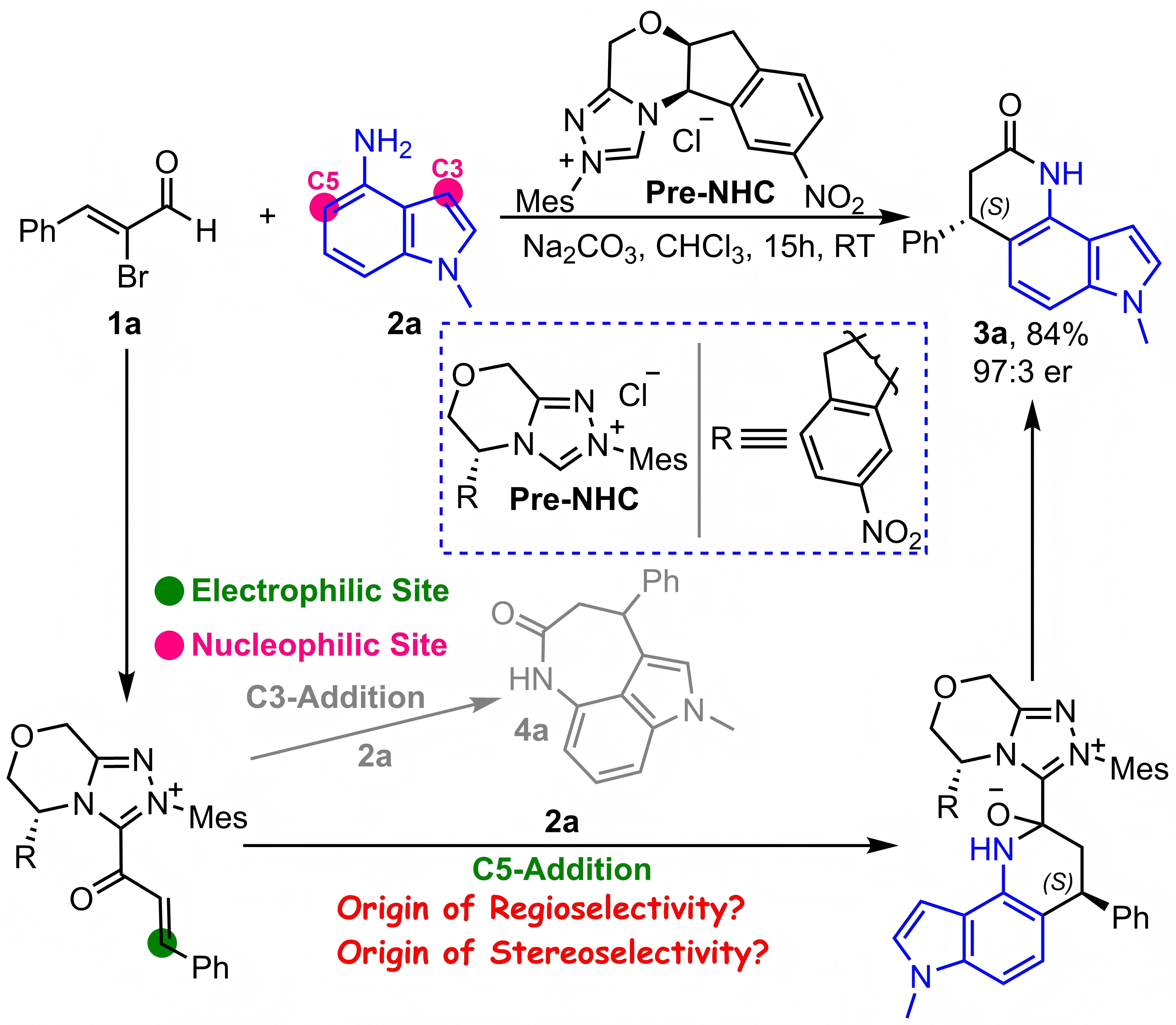
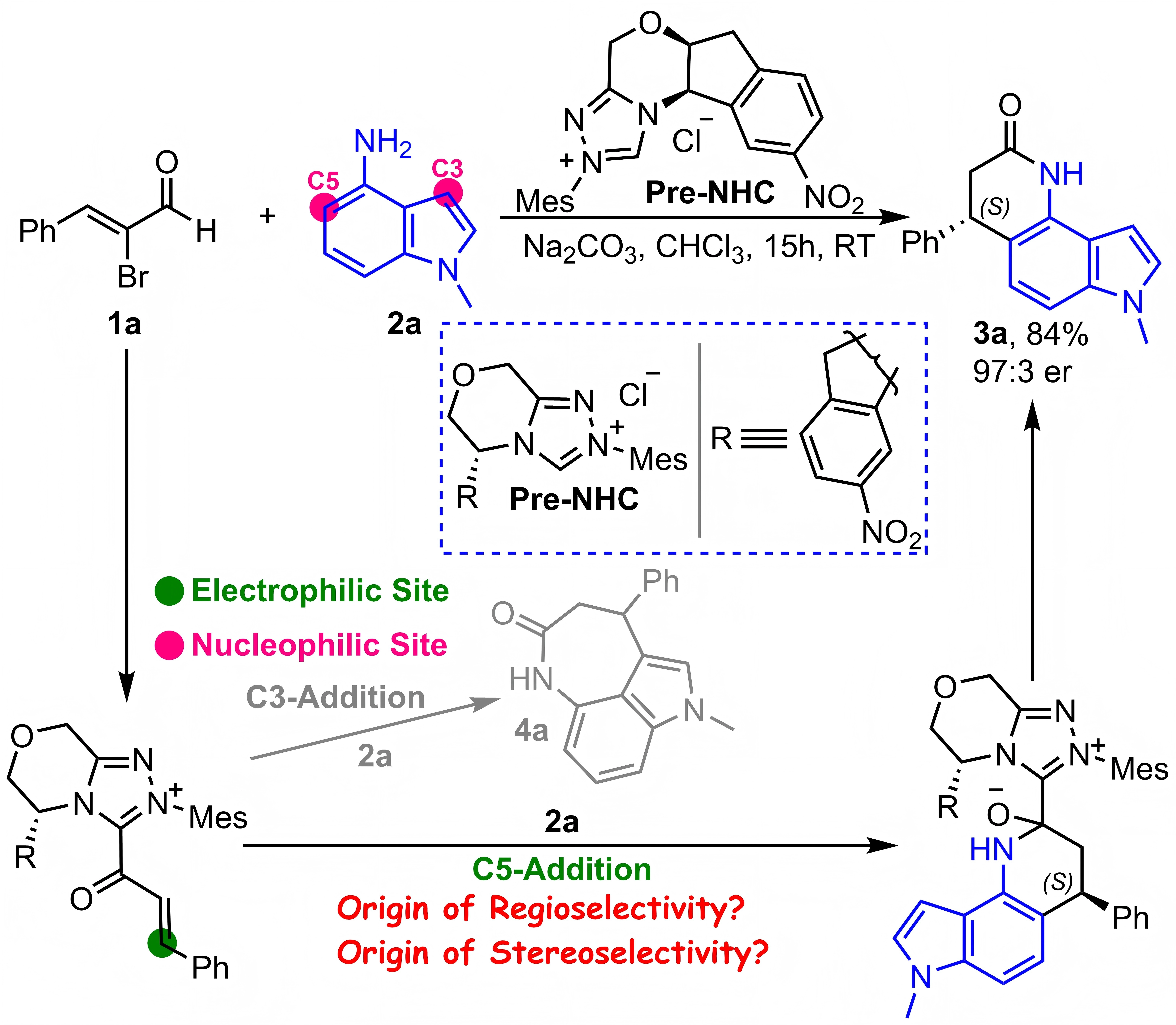
Scheme 1. NHC-catalyzed F-C alkylation/annulation reaction. NHC: N-heterocyclic carbene; F-C: Friedel-Crafts.
Against this backdrop, density functional theory (DFT) calculations have become an indispensable theoretical tool for probing organocatalytic[44-48] and organometallic reaction mechanisms[49-52], allowing precise clarification of complex catalytic pathways and identification of the origins of regio- and stereoselectivity. In the present work, we selected a model reaction of NHC-catalyzed F-C alkylation/annulation cascade reaction between α-bromoenal (1a) and 4-aminoindole (2a) to clarify the reaction mechanism and the origins of regio- and stereoselectivity. According to experimental observations, the α,β-unsaturated acylazolium intermediate can undergo C3-, C5-, or C7-addition, yet the reaction regioselectively affords the C5-functionalized product 3a as the major isomer. The reaction exhibits excellent enantioselectivity (97:3 er, Scheme 1), which attracted our attention and warranted theoretical exploration. As a continuation of our ongoing efforts to understand mechanistic aspects of asymmetric catalysis[53-56], we herein report DFT calculations for this NHC-catalyzed F-C reaction. We map the complete mechanistic pathway and disclose the origins of both regio- and stereoselectivity.
2. Methods
All quantum-chemical calculations were performed using the Gaussian 09 program package[57]. Geometry optimizations of all stationary points, including reactants, key intermediates, transition states, and products, were carried out at the M06-2X[58]/6-31G(d,p)[59,60] level of theory. The M06-2X density functional was chosen for its well-documented performance for main-group thermochemistry, weak noncovalent interactions, and organocatalytic processes, based on its successful previous applications to related catalytic systems[61-64]. To reproduce experimental reaction conditions, solvent effects for chloroform were incorporated during geometry optimizations via the solvation model based on density (SMD)[65]. Frequency calculations were performed at the same computational level to characterize each optimized stationary point. Intrinsic reaction coordinate (IRC) calculations were conducted for representative transition states to confirm connectivity between the corresponding reactant and product species (Figure S1). All minimum-energy intermediates were confirmed to possess zero imaginary frequencies, whereas each transition state exhibited exactly one imaginary frequency corresponding to the relevant elementary reaction coordinate. Thermal corrections to Gibbs free energy were calculated at 298.15 K and 1 atm for all species. To obtain more accurate energetic parameters, high-level single-point energy calculations were performed at the M06-2X/6-311++G(d,p)//SMD(chloroform) level using the optimized geometries. Final Gibbs free energies used for pathway analysis were obtained by combining these single-point energies with thermal corrections derived from frequency calculations. A standard-state correction of RT(cs/cg) (1.89 kcal/mol) was added to all species to convert Gibbs free energies from the gas-phase standard state to the solution-phase standard state; here cs is the standard molar concentration in solution (1 mol/L), cg is the standard molar concentration in the gas phase (0.0446 mol/L), and R is the gas constant.
To rationalize the origin of stereoselectivity in this asymmetric cascade transformation, the activation strain model (ASM)[66] and energy decomposition analysis (EDA)[67] were applied to key stereoselective transition states to identify dominant factors governing stereoselectivity. Furthermore, the projection of orbital coefficient vector (POCV) method[68] was employed to elucidate the origin of the C5-regioselectivity observed in the F-C alkylation of 4-aminoindole.
To validate the results obtained at the M06-2X/6-31G(d, p)//SMD(chloroform) level, transition states for the stereoselectivity-determining step were reoptimized using the B3LYP[69], B3PW91[70], CAM-B3LYP[71], mPW1PW91[72], and ωB97X-D[73] functionals. Computational results are summarized in Table S1 of the Supplementary materials. Compared with the M06-2X results, those obtained with other functionals showed only slight differences while maintaining the same trends. Accordingly, the mechanistic conclusions derived from M06-2X calculations are reliable.
3. Results and Discussion
3.1 Reaction mechanism
On the basis of prior experimental observations, we proposed a mechanism for the NHC-catalyzed F-C alkylation/annulation cascade reaction. In the presence of the carbonate base Na2CO3, triazolium pre-NHC undergoes deprotonation to generate the active free NHC catalyst and NaHCO3. As presented in Scheme 2, the entire catalytic cycle comprises eight elementary steps: (i) nucleophilic addition of NHC to the enal to furnish zwitterionic intermediate Int-A; (ii) intramolecular [1,2]-proton transfer to generate Breslow intermediate Int-B; (iii) C-Br bond cleavage to deliver the key α,β-unsaturated acylazolium intermediate Int-C; (iv) enantioselective electrophilic addition of the α,β-unsaturated acylazolium intermediate at the C5 atom of 4-aminoindole to form intermediate Int-D; (v) α-protonation of Int-D to yield acyl intermediate Int-E; (vi) intramolecular ring closure to produce intermediate Int-F; (vii) deprotonation of Int-F to afford Int-G; and finally, (viii) dissociation of NHC to release the desired product 3a and regenerate the active NHC catalyst for the subsequent catalytic cycle.
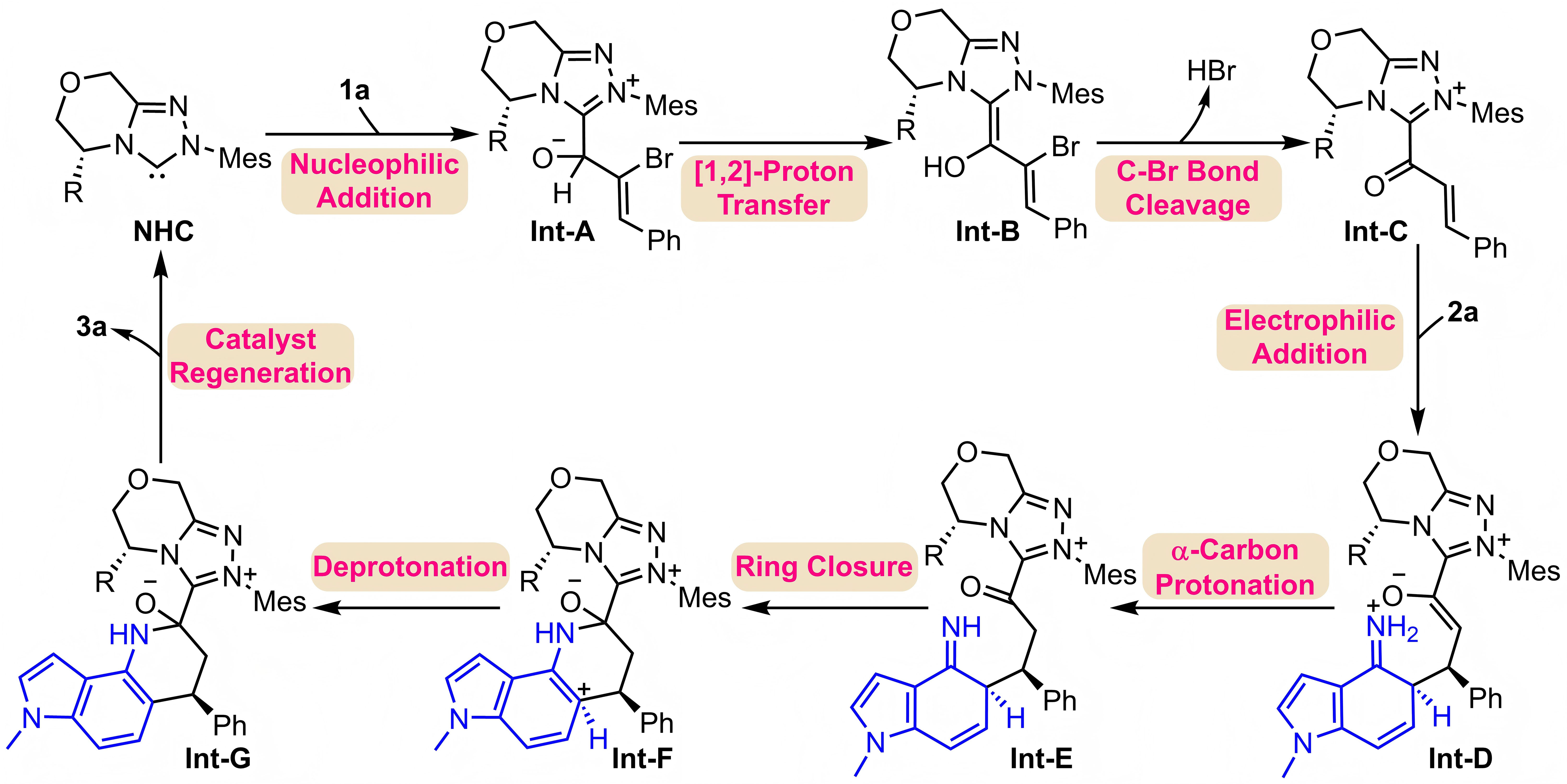
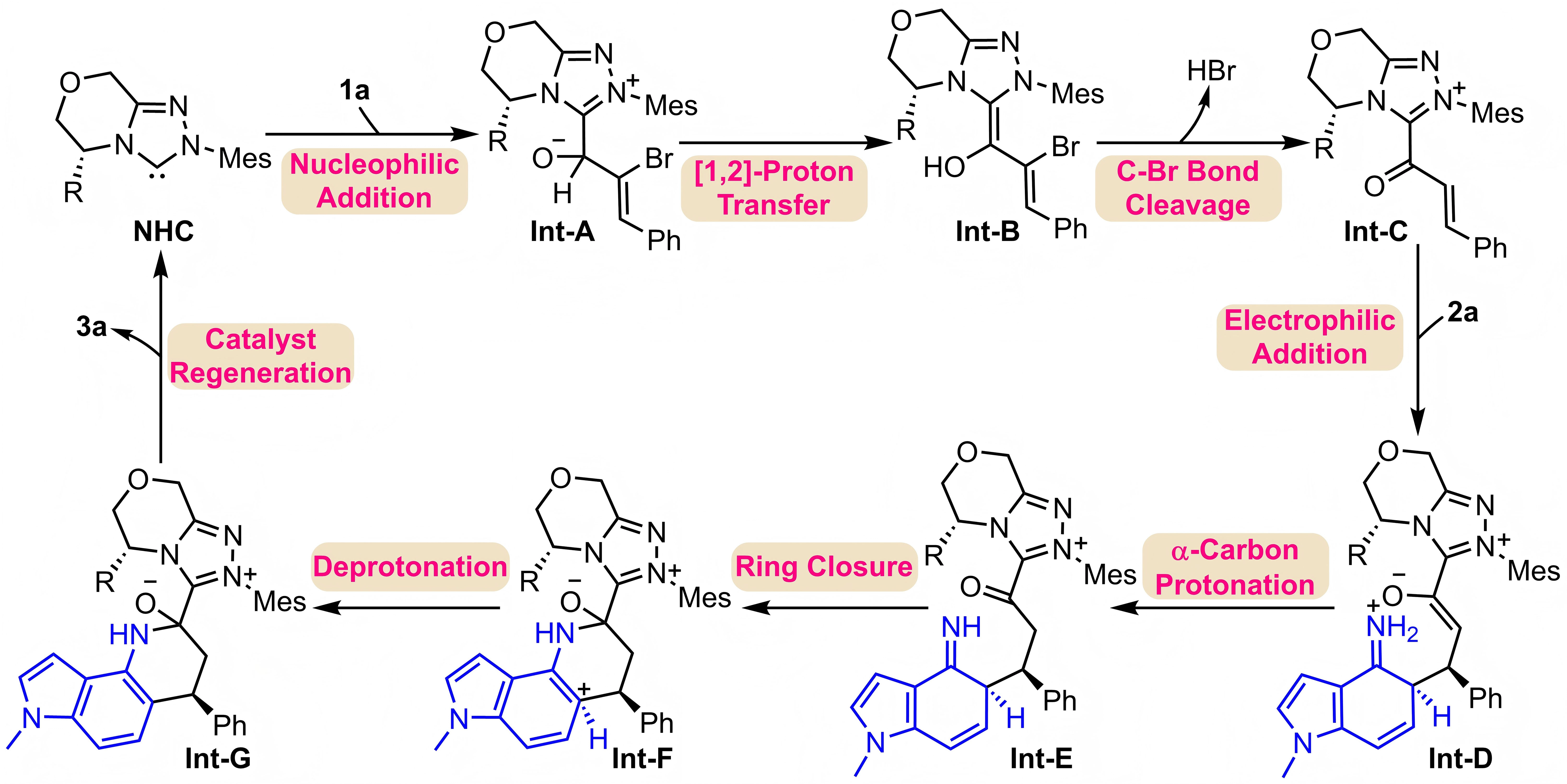
Scheme 2. Proposed reaction mechanism for the NHC-catalyzed F-C alkylation/annulation cascade reaction. NHC: N-heterocyclic carbene; F-C: Friedel-Crafts.
3.1.1 Formation of α,β-unsaturated acylazolium
Our computational investigation began with nucleophilic addition of the NHC catalyst at the carbonyl carbon of substrate 1a. Given the geometry of 1a, NHC can approach either the Re-face or Si-face of the carbonyl group, generating zwitterionic intermediates Re-M1 or Si-M1 via transition states Re-TS1 or Si-TS1, respectively. The relative Gibbs free energy profile describing formation of α,β-unsaturated acylazolium from NHC and 1a is presented in Figure 1. The energy barrier for the Re-face addition via Re-TS1 to form Re-M1 is 10.2 kcal/mol, confirming that this nucleophilic addition step is kinetically accessible under experimental conditions. By contrast, the energy barrier for Si-face addition via Si-TS1 to generate Si-M1 reaches 11.0 kcal/mol (Scheme S1), which is marginally higher than that for the Re-face pathway.
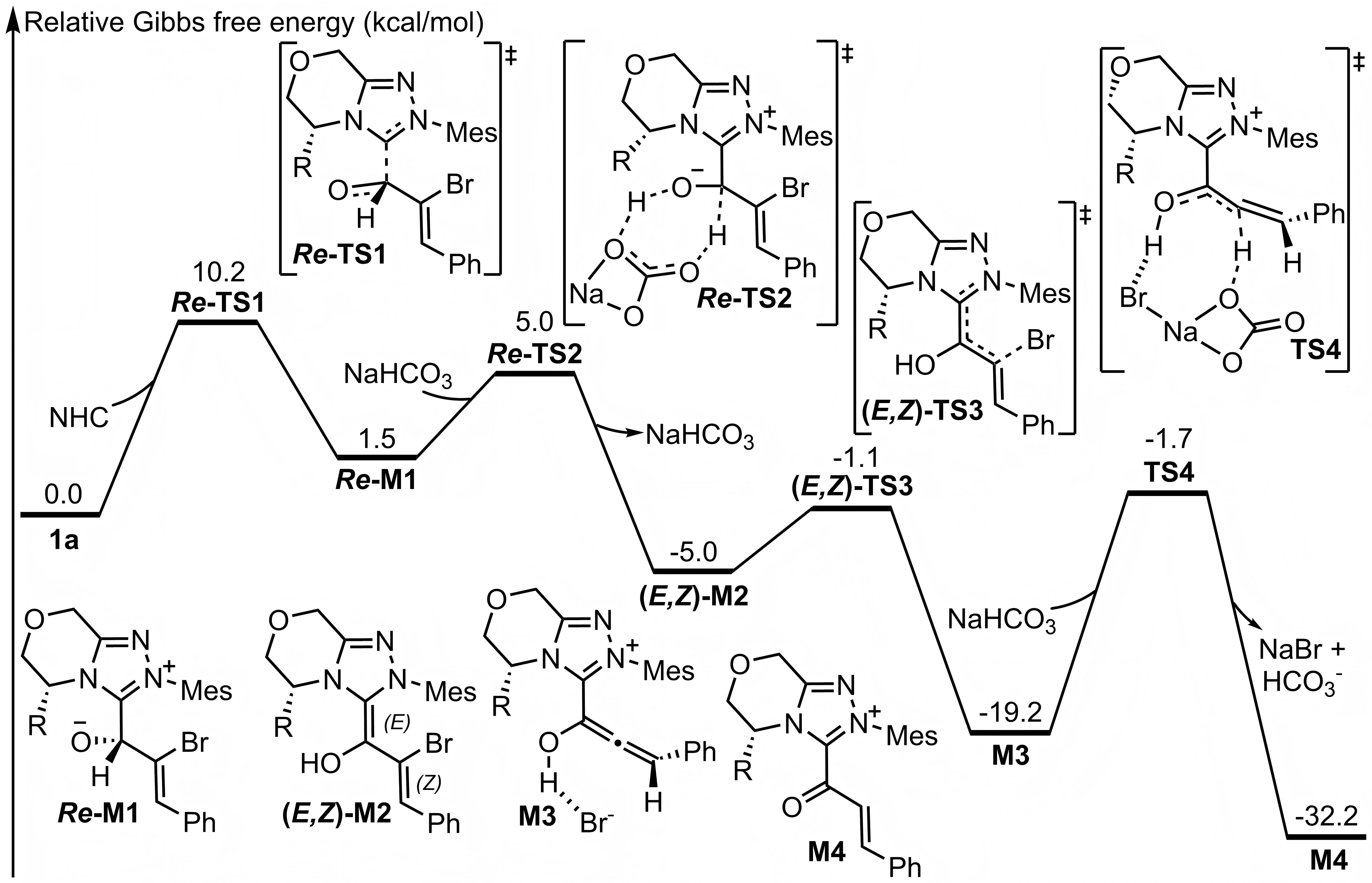
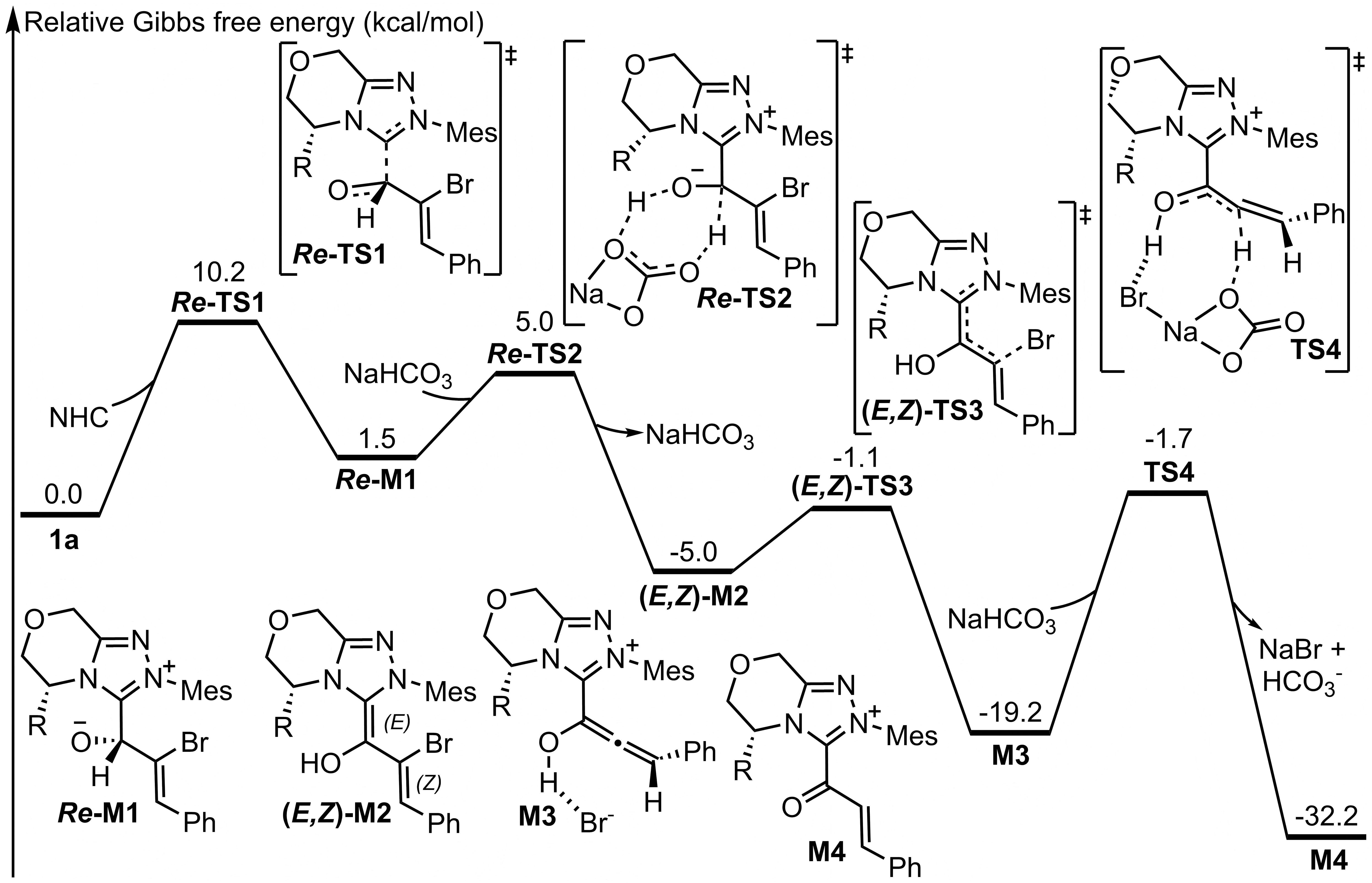
Figure 1. Relative Gibbs free energy profile for the formation of key α,β-unsaturated acylazolium intermediate.
Subsequently, intermediates Re-M1 and Si-M1 undergo [1,2]-proton transfer to furnish Breslow intermediates (E,Z)-M2 and (Z,Z)-M2 via transition states Re-TS2 or Si-TS2, respectively. Two distinct proton-transfer pathways mediated by different proton sources (i.e., NaHCO3, HCO3-) were calculated and systematically compared. As shown in Scheme 3, the energy barriers for HCO3- and NaHCO3-assisted proton transfer along the Re-face pathway are 12.2 and 5.0 kcal/mol via transition states Re-TS2C and Re-TS2, respectively. For the Si-face addition pathway, the corresponding barriers associated with transition states Si-TS2C and Si-TS2 are 20.0 and 8.6 kcal/mol (Scheme S1 of the Supplementary materials). Comparative calculations unambiguously demonstrate that the NaHCO3-assisted proton transfer pathway is kinetically favored.
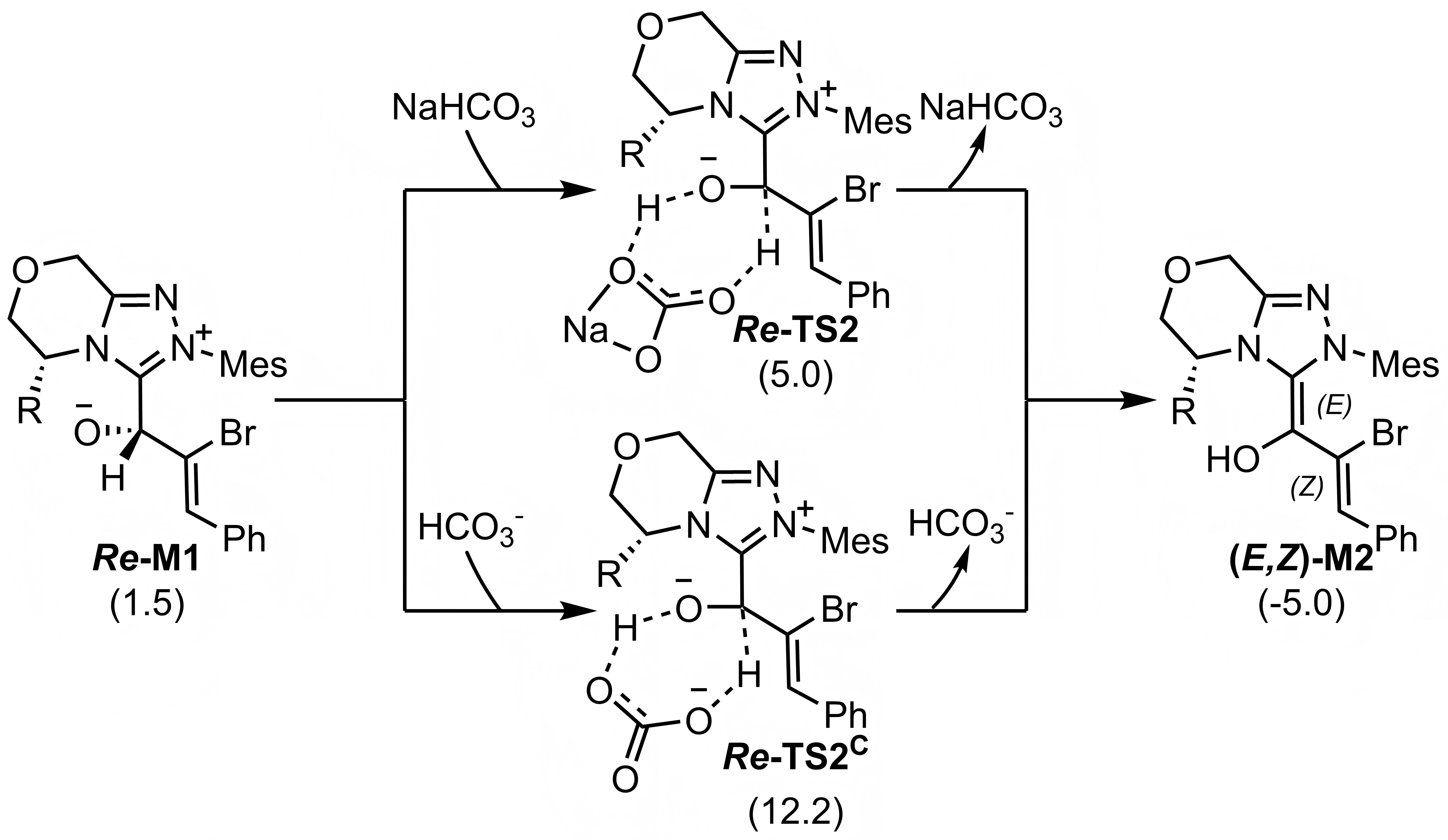
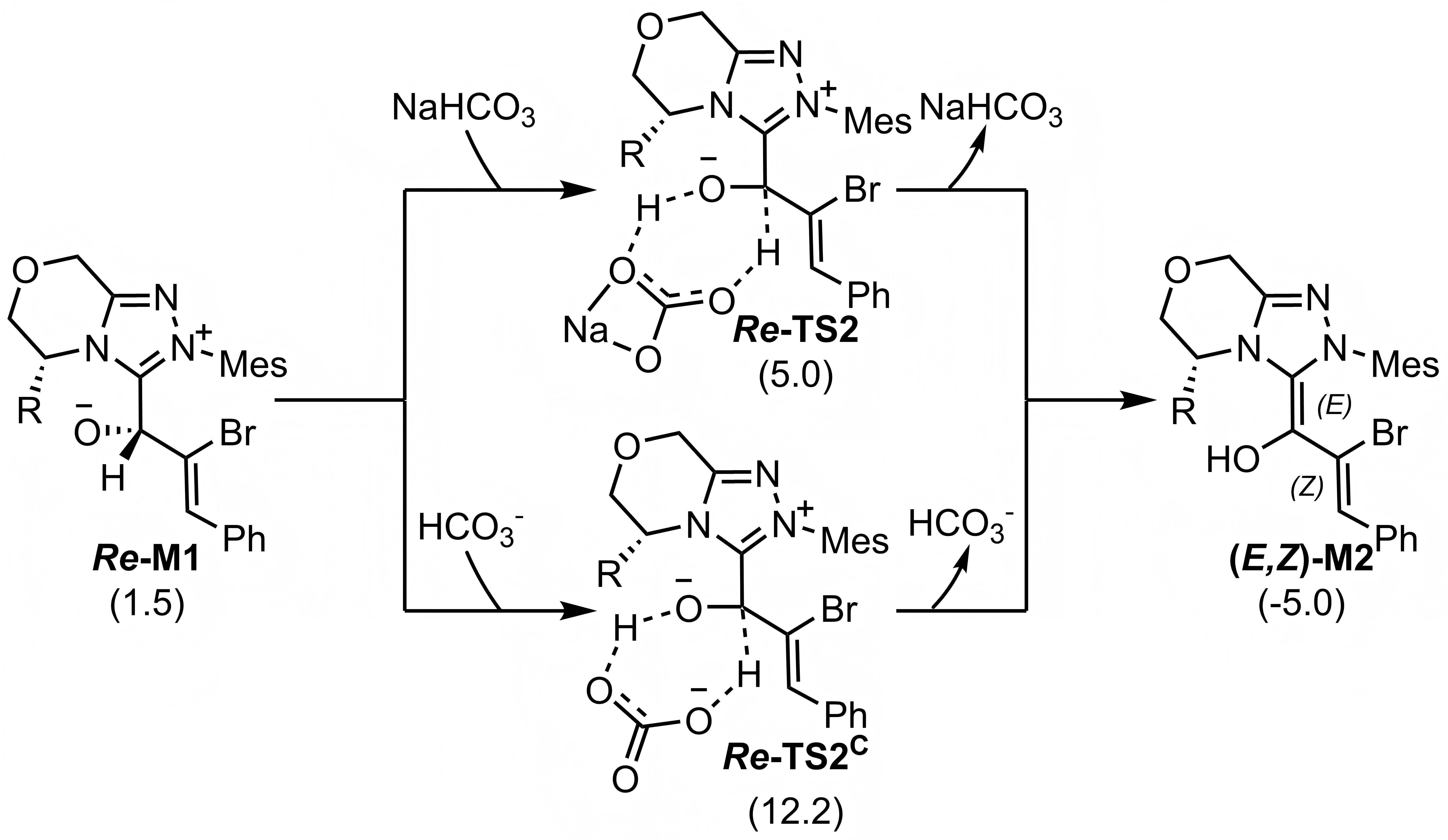
Scheme 3. Comparative energy barriers for HCO3- and NaHCO3-assisted proton transfer pathways.
With the assistance of NaHCO3, Breslow intermediates (E,Z)-M2 and (Z,Z)-Si-M2 are readily generated with energy barriers of 5.0 and 8.6 kcal/mol via the transition states Re-TS2 and Si-TS2, respectively. These data confirm that the Re-face addition pathway is more energetically favorable; accordingly, only the Re-face pathway is discussed in the following steps. The Breslow intermediate (E,Z)-M2 rapidly undergoes C-Br bond cleavage via transition state (E,Z)-TS3 to form allenol intermediate M3. Subsequent α-protonation proceeds through TS4 with an energy barrier of 17.5 kcal/mol to yield the key electrophilic α,β-unsaturated acylazolium intermediate M4, representing a feasible transformation under experimental conditions.
3.1.2 Transformation of α,β-unsaturated acylazolium intermediate
Electrophilic intermediate M4 reacts with substrate 2a to deliver the desired F-C product 3a-S via selective C5-addition; the corresponding relative Gibbs free energy profile is presented in Figure 2. Computational results reveal that electrophilic addition of M4 to 4-aminoindole 2a proceeds through transition state TS5S to form the S-configured intermediate M5S with an energy barrier of 14.3 kcal/mol. In contrast, formation of the enantiomeric R-configured intermediate M5R via transition state TS5R exhibits a higher energy barrier of 16.4 kcal/mol (Figure S2). This energetic difference establishes that the S-configured pathway is kinetically favored; therefore, subsequent mechanistic discussion focuses on the S-configured pathway. Moreover, we further performed conformational searches for transition states of the stereoselectivity-determining step to confirm the reliability of the calculated results. Starting from the original TS5R and TS5S, the dihedral angle Φ1(C1-C2-C3-C4) was rotated in 90° increments over 0 ~ 360° to generate eight initial transition structures; the 3D structures are presented in Figure S3 of the revised manuscript. As an important note, the initial structures by rotating the dihedral Φ1 with 90° would lead to the same conformations of those with Φ1(C1-C2-C3-C4) = 0°/360° after the structural optimizations. The relative Gibbs free energies depicted in Table S2 of the Supplementary materials confirm that the original transition state conformers possess the lowest energies among all conformers, justifying our focus on TS5R and TS5S in the main text.
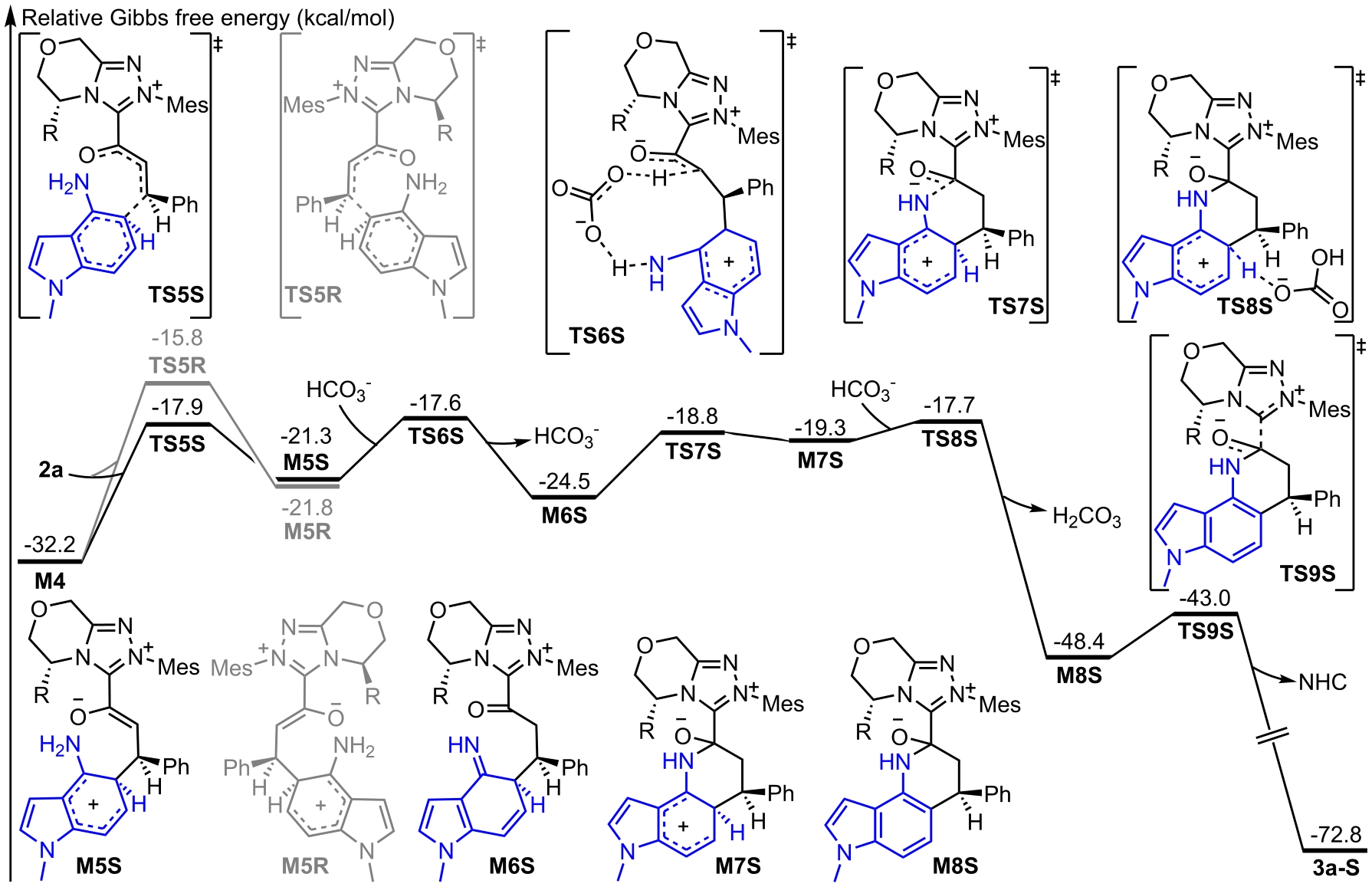
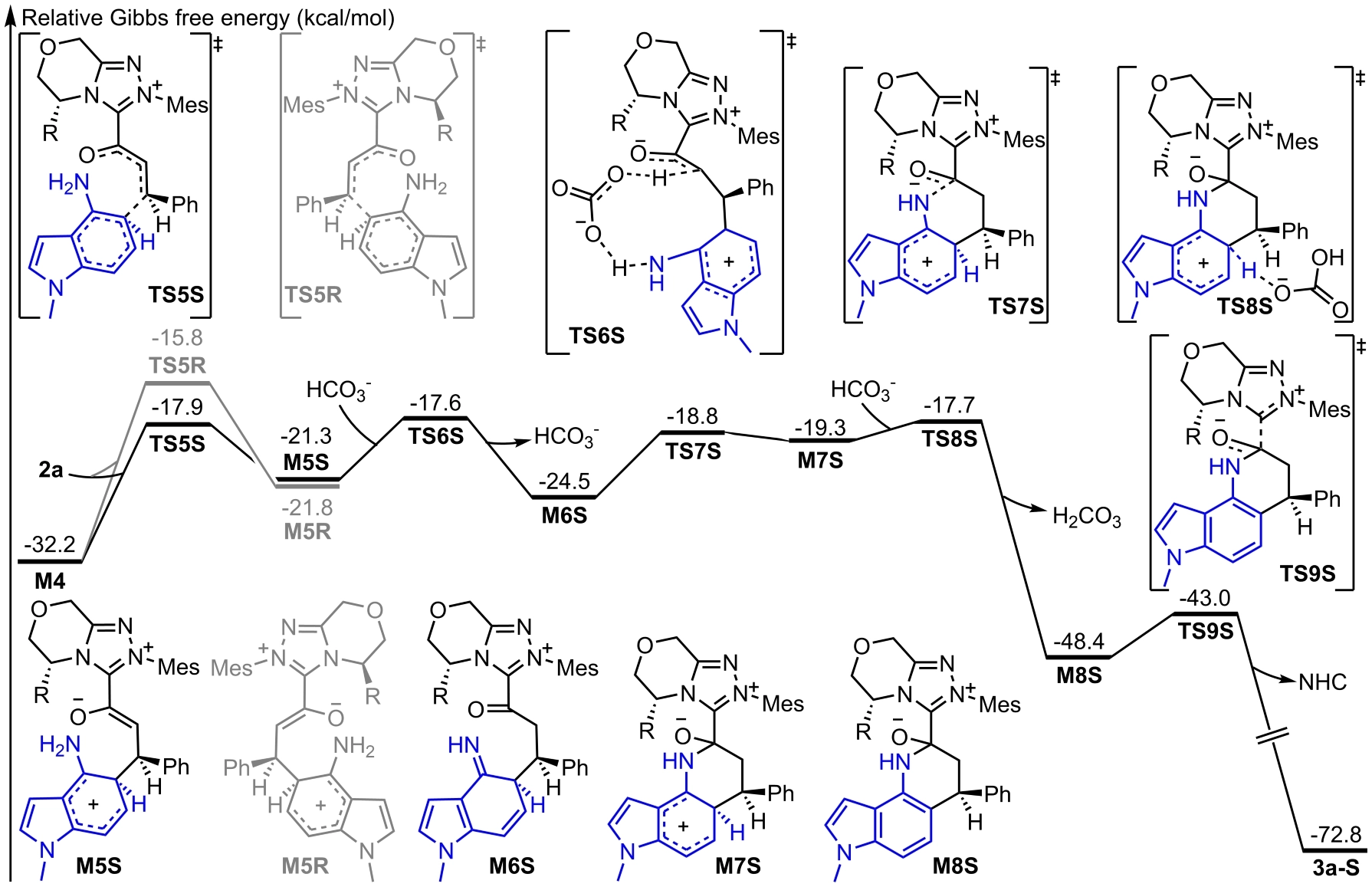
Figure 2. Relative Gibbs free energy profile for the transformation of α,β-acylazolium intermediate. NHC: N-heterocyclic carbene.
Intermediate M5S undergoes α-protonation to generate acylazolium species M6S. Three possible pathways were evaluated (Figure S4), among which bicarbonate anion-promoted proton transfer exhibits the lowest energy barrier. Intermediate M6S is formed via transition state TS6S with an energy barrier of 14.6 kcal/mol. Next, M6S undergoes intramolecular ring closure via transition state TS7S to furnish intermediate M7S, with an energy barrier of 13.4 kcal/mol, indicating that the process is feasible under the experimental conditions. The intermediate rapidly rearranges via transition state TS8S to afford thermodynamically stabilized intermediate M8S with a relative Gibbs free energy of -44.6 kcal/mol. Finally, dissociation of the NHC catalyst occurs via transition state TS9S to release the desired product 3a-S. The energy barrier for catalyst dissociation is only 5.4 kcal/mol, indicating efficient catalyst turnover and facile regeneration of the active NHC throughout the catalytic cycle.
3.2 Origins of Selectivities
3.2.1 Origin of Stereoselectivity
Based on the computational results, the highest point on the R-configured pathway is TS6R with an energy barrier of 16.8 kcal/mol. The highest energy barrier along the S-configured pathway is 14.6 kcal/mol, which is 2.2 kcal/mol lower than that of the R-configured pathway. Consequently, formation of the S-configured isomer is more energetically favorable, in agreement with the experimental results. Thus, the C-C bond formation and α-protonation steps are likely the stereoselectivity-determining processes. Furthermore, the nucleophilic addition of 4-aminoindole to the Re or Si faces of the α,β-unsaturated acylazolium intermediate would lead to the formation of two enantiomers, and the chirality at the β-carbon is preserved during the subsequent transformations. Therefore, the transition states involved in the C-C bond formation step are analyzed to elucidate the key factors that control the stereoselectivity. The 2.1 kcal/mol energy gap between the major and minor transition states predicts an enantioselective ratio (e.r.) of 97.25:2.75, which closely matches the experimentally measured er value of 97:3. To quantitatively rationalize the stereoselective outcome, ASM and EDA were performed for the stereoselective transition states TS5R and TS5S.
ASM was first employed to dissect the energetic differences between stereodivergent transition states. As summarized in Table 1, TS5S has a lower activation energy (EAct = 2.6 kcal/mol) relative to TS5R (EAct = 3.4 kcal/mol), rendering the S-configured pathway kinetically favorable. The distortion energy (EDist) indicates that the strain discrepancy between the two transition states mainly originates from the α,β-unsaturated acylazolium moiety M4. Formation of TS5S requires substantial geometric distortion of the α,β-unsaturated acylazolium moiety (21.0 kcal/mol), which is larger than the corresponding distortion for TS5R (17.2 kcal/mol). Nevertheless, the interaction energy (EInt) term provides a strong stabilizing effect within TS5S, which effectively counterbalances its larger distortion penalty. Collectively, stereoselectivity in this reaction is governed by the magnitude of intermolecular interaction energy between the two reacting fragments.
Table 1. Activation strain model for regio- and stereoselective transition states TS5R, TS5S, and TS5SC3.
| TS | EAct | EDist | EInt | |
| M4 | 2a | |||
| TS5R | 3.4 | 17.2 | 8.2 | -22.0 |
| TS5S | 2.6 | 21.0 | 7.9 | -26.3 |
| TS5SC3 | 8.1 | 19.2 | 9.7 | -20.7 |
EDA was further employed to identify the dominant energetic contributions to the interaction energy. Total interaction energy (Eint) is decomposed into electrostatic interaction (Eelstat), orbital interaction (Eorb), Coulomb correlation (EC), and exchange-Pauli repulsion (Eex-Pauli) components. As shown in Figure 3, TS5S delivers a more favorable interaction energy, reflecting stronger stabilizing effects in the S-configured transition state. Although TS5R features more favorable electrostatic and orbital interactions, with energies of -65.6 and -68.6 kcal/mol, these values provide considerably stronger stabilization than the corresponding values of -51.7 and -63.3 kcal/mol calculated for TS5S. The Coulomb correlation (EC) term also contributes appreciable stabilization (-43.4 kcal/mol for TS5R vs -37.7 kcal/mol for TS5S, Figure 3). The exchange-Pauli repulsion term EPauli describes destabilizing steric repulsion originating from filled-orbital overlap; this repulsive term reaches 145.0 kcal/mol for TS5R but decreases to 129.4 kcal/mol for TS5S. Therefore, the R-configured transition state suffers from severe steric congestion and larger filled-orbital repulsion, whereas the S-configuration effectively alleviates intermolecular Pauli repulsion. In summary, transition state stability arises from a delicate balance between attractive interactions and exchange-Pauli repulsion, making the S-configured transition state geometry kinetically preferred.
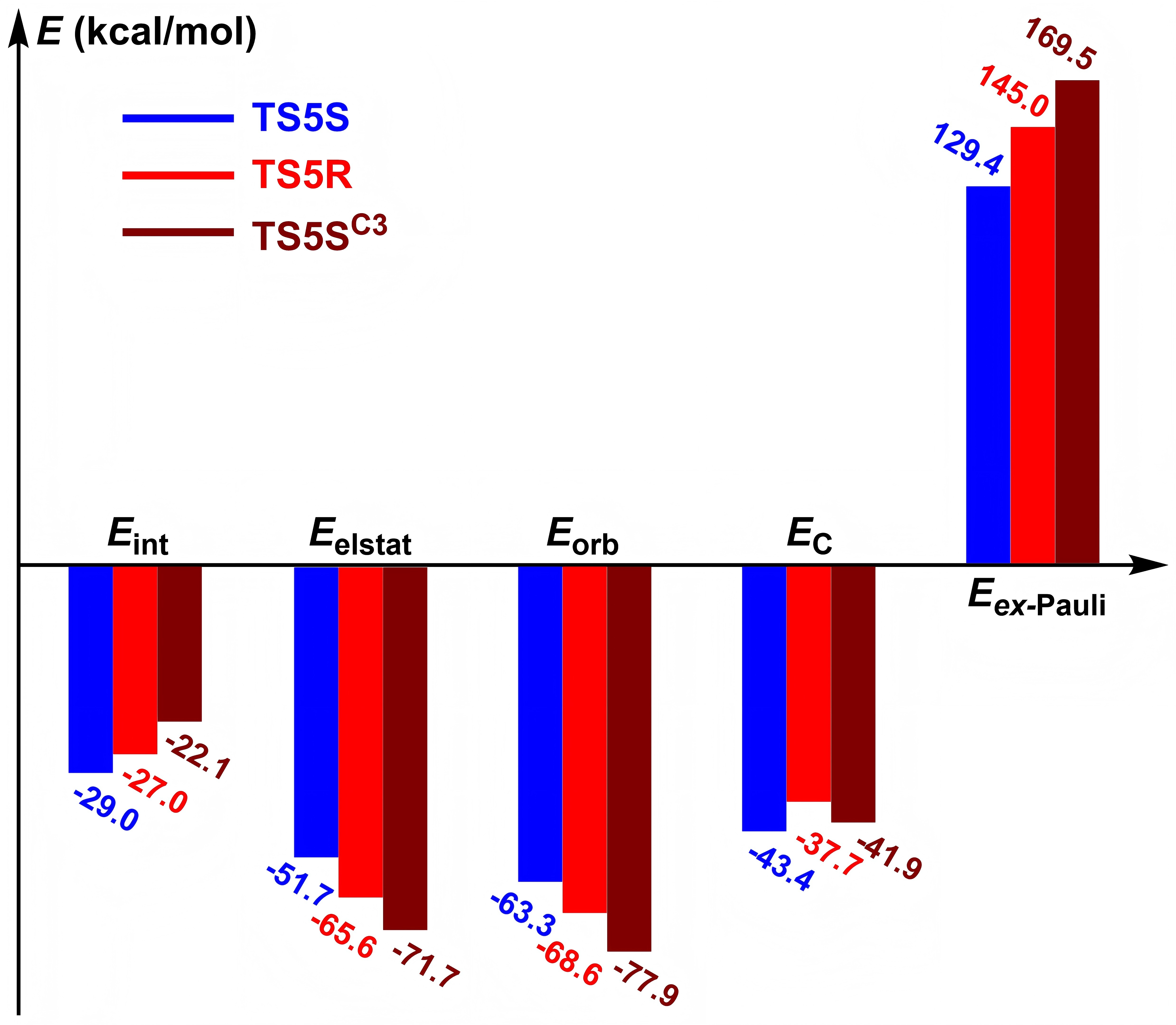
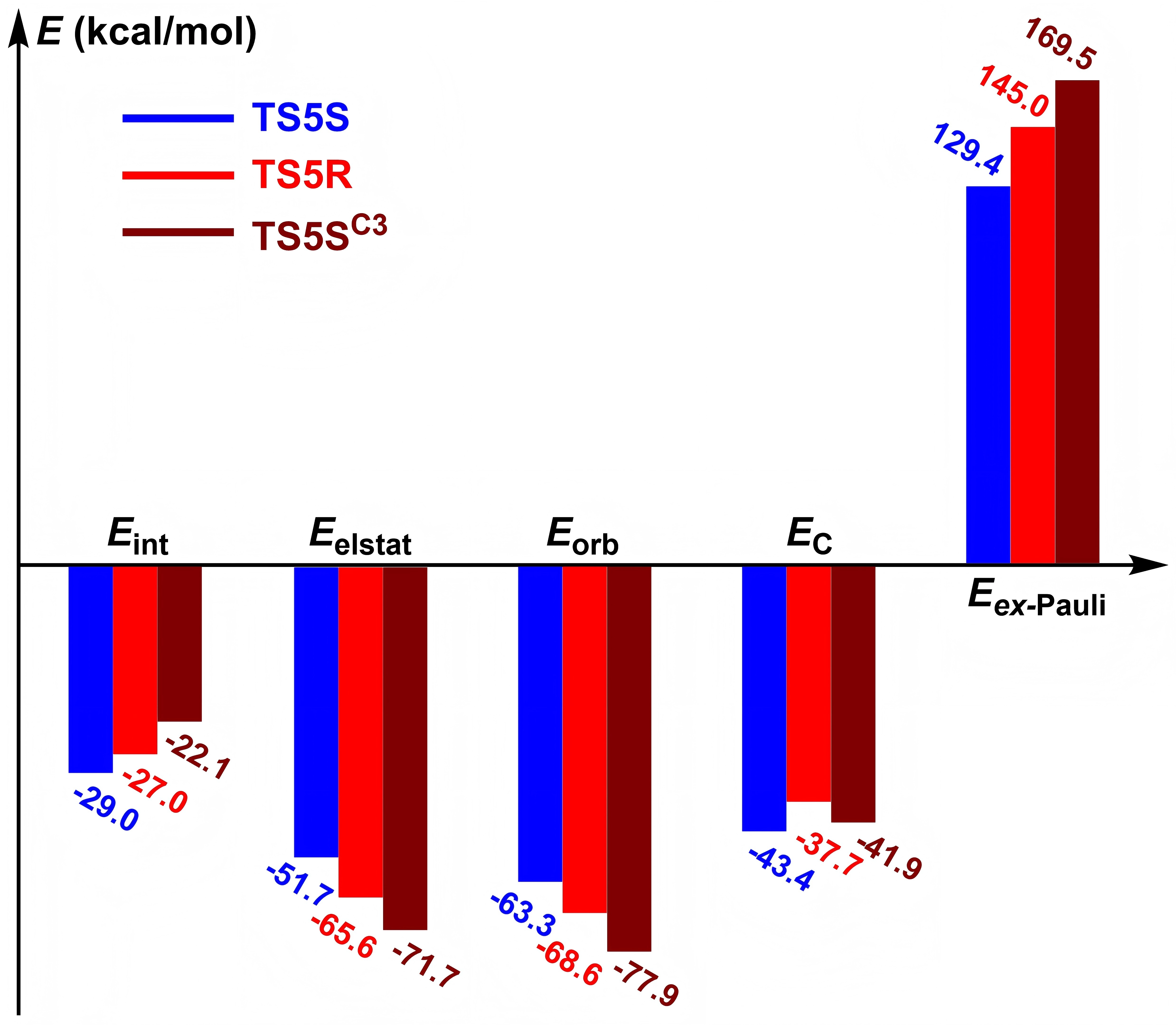
Figure 3. EDA analysis for stereoselective and regioselective transition states. EDA: energy decomposition analysis.
3.2.2 Origin of regioselectivity
Experimentally, preferential C5 F-C functionalization is observed under NHC catalysis. To elucidate the regioselectivity, we calculated and compared the energy barriers for acylazolium addition at the C3, C5, C6, and C7 positions of 4-aminoindole. As shown in Table 2, the energy barriers for addition of M4 to N-methyl 4-aminoindole 2a at C3, C5, C6, and C7 were 23.6, 14.3, 34.5, and 21.2 kcal/mol, respectively. These values confirm that the C5-addition pathway is kinetically most favorable under the experimental conditions. To gain deeper insight into regioselective trends, we also examined the reaction between M4 and unprotected 4-aminoindole 2b. For the reaction between 2b and M4, computed barriers for C3-, C5-, C6-, and C7-addition pathways are 25.4, 18.6, 36.0, and 20.5 kcal/mol, respectively, again identifying C5-addition as the lowest-energy pathway. The computational trends are consistent with the experimental regioselectivity, implying that the intrinsic reactivity of aromatic carbon atoms is one of the key factors governing regioselectivity.
Table 2. Comparison of POCV atomic reactivity vectors and energy barriers for different sites in 4-aminoindole.
| Substituent | C5 | C3 | C6 | C7 | ||||
| ΔG≠ | ΔG≠ | ΔG≠ | ΔG≠ | |||||
| R = Me | 1.21 | 14.3 | 1.16 | 23.6 | 1.15 | 34.5 | 1.20 | 21.2 |
| R = H | 1.21 | 18.6 | 1.16 | 25.4 | 1.14 | 36.0 | 1.20 | 20.5 |
POCV: projection of orbital coefficient vector.
POCV analysis was applied to test whether regioselectivity is governed by intrinsic reactivity at different carbon sites. Within the POCV framework, the local atomic reactivity is quantified by the magnitude of the atomic reactivity vector
4. Conclusion
Systematic DFT calculations have fully deciphered the mechanism and origins of regio- and stereoselectivity for the NHC-catalyzed F-C alkylation/annulation cascade reaction between 4-aminoindole and α-bromoenal. The entire catalytic cycle consists of eight elementary steps, in which carbonate base-assisted proton transfer facilitates efficient construction of the key α,β-unsaturated acylazolium intermediate. The electrophilic addition of the α,β-unsaturated acylazolium intermediate to 4-aminoindole is unambiguously identified as the stereoselectivity-determining step, and the computed energy difference between the two stereoselective transition states quantitatively reproduces the experimentally observed high enantioselectivity. Combined ASM and EDA analyses quantitatively demonstrate that electrostatic interactions and dispersion forces constitute the dominant stabilizing factors for the energetically favorable S-configured transition state, alleviating Pauli steric repulsion and driving stereochemical differentiation. From a regioselective perspective, the POCV method directly correlates with the intrinsic atomic reactivity of indole, offering a clear explanation for the predominant C5-site selectivity. This study validates the combined use of ASM, EDA, and POCV as robust theoretical tools to dissect stereo- and regioselectivity in organocatalytic asymmetric transformations. Overall, this study provides in-depth mechanistic insights into NHC-catalyzed asymmetric F-C functionalization of indole and offers reliable theoretical guidance for the rational design of stereoselective organocatalytic systems.
Supplementary materials
The supplementary material for this article is available at: Supplementary materials.
Acknowledgements
The authors declare that Doubao was used solely for language polishing during the manuscript preparation process. All research content, including study design, data analysis, interpretations, figures, and tables, is original and was not generated using AI tools. The authors reviewed, revised, and approved the final manuscript and take full responsibility for its content.
Authors contribution
Wang YN: Data curation, formal analysis.
Wang Y: Conceptualization, writing-review & editing.
Wei D: Software, writing-review & editing.
Conflicts of interest
The authors declare no conflicts of interest.
Ethical approval
Not applicable.
Consent to participate
Not applicable.
Consent for publication
Not applicable.
Availability of data and materials
The data and materials could be obtained from the corresponding author.
Funding
We acknowledge financial support from the Outstanding Youth Science Foundation Project of Henan Province (Grant No. 252300421039), the Key Project of the Joint Fund for Science and Technology Research and Development in Henan Province (Grant No. 232301420008), the National Natural Science Fund of China (Grant Nos. 22473100 and 21903072), the Key Scientific Research Projects of Higher Education Institutions in Henan Province (Grant No. 25A310007), and Zhengzhou University’s Key Faculty Development Program (Grant No. 2023ZDGGJS033).
Copyright
© The Author(s) 2026.
References
-
1. Sun P, Huang Y, Chen S, Ma X, Yang Z, Wu J. Indole derivatives as agrochemicals: An overview. Chin Chem Lett. 2024;35(7):109005.[DOI]
-
5. Garg V, Maurya RK, Thanikachalam PV, Bansal G, Monga V. An insight into the medicinal perspective of synthetic analogs of indole: A review. Eur J Med Chem. 2019;180:562-612.[DOI]
-
8. Arockiaraj M, Nayak R, Rajeshkumar V. Halogen-mediated C2/C3 functionalization of indoles: A concise overview. Org Biomol Chem. 2026;24(23):4782-4815.[DOI]
-
9. Sandtorv AH. Transition metal-catalyzed C-H activation of indoles. Adv Synth Catal. 2015;357(11):2403-2435.[DOI]
-
10. Huang J, Ai X, Zhou S, Li Z, Qi M, You Y, et al. Pd(II)/Cu(I) co-catalyzed dual C-H functionalization of indoles at C2 and C3 positions using bifunctional arylsulfonyl reagents. Org Lett. 2025;27(21):5440-5445.[DOI]
-
11. Sun Y, Zhang W, Liu Y, Zhang Z, Hu M, Liu X, et al. Regioselective one-step C2-H methylation of free (N-H) indoles enabled by Pd(ii)/norbornene cooperative catalysis. Org Chem Front. 2025;12(23):6415-6422.[DOI]
-
16. Heravi MM, Zadsirjan V, Heydari M, Masoumi B. Organocatalyzed asymmetric Friedel-Crafts reactions: An update. Chem Rec. 2019;19(11):2236-2340.[DOI]
-
18. Deng J, Zhang S, Ding P, Jiang H, Wang W, Li J. Facile creation of 3-indolyl-3-hydroxy-2-oxindoles by an organocatalytic enantioselective Friedel-Crafts reaction of indoles with isatins. Adv Synth Catal. 2010;352(5):833-838.[DOI]
-
19. Ibáñez I, Kaneko M, Kamei Y, Tsutsumi R, Yamanaka M, Akiyama T. Enantioselective Friedel-Crafts alkylation reaction of indoles with α-trifluoromethylated β-nitrostyrenes catalyzed by chiral BINOL metal phosphate. ACS Catal. 2019;9(8):6903-6909.[DOI]
-
20. Deng J, Li W, Zhou C, Li Z, Zhou H, Yan J, et al. A catalytic atroposelective Friedel-Crafts alkylation to access axially chiral C2-arylindoles via dynamic kinetic resolutions. Org Chem Front. 2025;12(2):584-590.[DOI]
-
23. Itoh J, Fuchibe K, Akiyama T. Chiral phosphoric acid catalyzed enantioselective Friedel-Crafts alkylation of indoles with nitroalkenes: Cooperative effect of 3 Å molecular sieves. Angew Chem Int Ed. 2008;47(21):4016-4018.[DOI]
-
24. Zeng M, Kang Q, He QL, You SL. Highly enantioselective Friedel-Crafts reaction of 4, 7-dihydroindoles with β,γ-unsaturated α-keto esters by chiral Brønsted acids. Adv Synth Catal. 2008;350(14-15):2169-2173.[DOI]
-
26. Chen P, Wang J, Chen L, Jin Z. Asymmetric construction of non-central chiral compounds with N-heterocyclic carbenes organocatalysis. Chiral Chem. 2025;1(1):202506.[DOI]
-
29. Liu K, Schwenzer M, Studer A. Radical NHC catalysis. ACS Catal. 2022;12(19):11984-11999.[DOI]
-
30. Wang Y, Wei D, Zhang W. Recent advances on computational investigations of N-heterocyclic carbene catalyzed cycloaddition/annulation reactions: Mechanism and origin of selectivities. ChemCatChem. 2018;10(2):338-360.[DOI]
-
31. Ohmiya H. N-heterocyclic carbene-based catalysis enabling cross-coupling reactions. ACS Catal. 2020;10(12):6862-6869.[DOI]
-
33. Singh A, Aashish , Narula AK, Althagafi I, Pratap R. N-heterocyclic carbenes (NHCs): An emerging efficient catalyst in amide bond formation. Adv Synth Catal. 2025;367(17):e70036.[DOI]
-
35. Cao SB, Wang Y. Mechanistic investigation on an NHC-catalyzed [3+3] annulation of 2-bromoenals with β-oxodithioester: Mechanism, origins of stereoselectivity. Adv Synth Catal. 2025;367(23):e70143.[DOI]
-
37. Liang P, Shi D, Wang Y. Disclosing the mechanism and origin of stereoselectivity of the NHC-catalyzed transformation reaction of enals with acyl azolium as a key intermediate. Catal Sci Technol. 2024;14(15):4302-4310.[DOI]
-
39. Zhang M, Zhang Z, Li Y. Mechanisms and origins of regio- and stereoselectivities in NHC-catalyzed [3 + 3] annulation of α-bromoenals and 5-aminoisoxazoles: A DFT study. J Org Chem. 2024;89(15):10748-10759.[DOI]
-
40. Li Z, Chen Y, Xu X, Xiao Z, Peng J, An J, et al. Enantioselective carbene-catalyzed tandem reaction for the efficient synthesis of pyrroloindolone and pyrrolidine derivatives with four consecutive stereocenters. J Catal. 2025;450:116279.[DOI]
-
41. Zhou Y, Li S. Mechanistic exploration of Rauhut-Currier reactions between bromoenal and nitrovinylindole via NHC/sulfinate cooperative catalysis. Mol Catal. 2026;600:116085.[DOI]
-
45. Zheng L, Wang Y. Mechanistic investigation on NHC-catalyzed switchable annulation reactions: Polarity controlled chemoselective pathways. Asian J Org Chem. 2026;15(3):e70347.[DOI]
-
48. Liu C, Han P, Hou X, Ge S, Wei D. A general mechanistic map of organocatalytic hydroboration of alkynes: Polarity controlled switchable selective pathways. Org Chem Front. 2024;11(14):3952-3961.[DOI]
-
49. Wang YN, Cao SB, Wang Y. Unraveling the mechanism and probing the origins of stereocontrol in a cobalt-catalyzed carboamination reaction. Org Chem Front. 2026;13(10):3189-3197.[DOI]
-
50. You XX, Meng LQ, Xu XC, Wang JS, Su ZM, Zhong RL. Unraveling the origin of boron reagent-dependent regioselectivity in Co-catalyzed C(sp2)-H borylations: Mechanistic insights and ligand prediction. Org Chem Front. 2026;13(16):5255-5267.[DOI]
-
51. Cui YK, Cao SB, Wang Y. A comprehensive mechanistic scenario for asymmetric cross-coupling reaction of diazoacetate and terminal alkyne under copper catalysis. Inorg Chem. 2025;64(49):24012-24019.[DOI]
-
52. Zhang Y, Wang Y. Elucidating the mechanism and origin of diastereoselectivity in scandium-catalyzed β-C(sp3)-H activation and transformation of an aliphatic aldimine. Org Chem Front. 2024;11(16):4391-4401.[DOI]
-
55. Liu HJ, Wang Y. Elucidating the mechanism and origin of stereoselectivity in C-C bond formation under isothiourea and amine cooperative catalysis. Org Chem Front. 2025;12(21):5851-5861.[DOI]
-
57. Frisch MJ, Trucks GW, Schlegel HB, Scuseria GE, Robb MA, Cheeseman JR, et al. Gaussian 09, Revision D.01. Wallingford (CT): Gaussian, Inc.; 2013. Available from: https://gaussian.com/g09citation
-
58. Zhao Y, Truhlar DG. The M06 suite of density functionals for main group thermochemistry, thermochemical kinetics, noncovalent interactions, excited states, and transition elements: Two new functionals and systematic testing of four M06-class functionals and 12 other functionals. Theor Chem Acc. 2008;120(1):215-241.[DOI]
-
59. Hehre WJ, Ditchfield R, Pople JA. Self-consistent molecular orbital methods. XII. J Chem Phys. 1972;56:2257-2261.[DOI]
-
60. Ditchfield R, Hehre WJ, Pople JA. Self-consistent molecular-orbital methods. IX. J Chem Phys. 1971;54:724-728.[DOI]
-
66. Bickelhaupt FM, Houk KN. Analyzing reaction rates with the distortion/interaction-activation strain model. Angew Chem Int Ed. 2017;56(34):10070-10086.[DOI]
-
69. Becke AD. Density-functional thermochemistry. III. J Chem Phys. 1993;98(7):5648-5652.[DOI]
-
71. Yanai T, Tew DP, Handy NC. A new hybrid exchange-correlation functional using the Coulomb-attenuating method (CAM-B3LYP). Chem Phys Lett. 2004;393(1-3):51-57.[DOI]
-
72. Adamo C, Barone V. Exchange functionals with improved long-range behavior and adiabatic connection methods without adjustable parameters: The mPW and mPW1PW models. J Chem Phys. 1998;108(2):664-675.[DOI]
Copyright
© The Author(s) 2026. This is an Open Access article licensed under a Creative Commons Attribution 4.0 International License (https://creativecommons.org/licenses/by/4.0/), which permits unrestricted use, sharing, adaptation, distribution and reproduction in any medium or format, for any purpose, even commercially, as long as you give appropriate credit to the original author(s) and the source, provide a link to the Creative Commons license, and indicate if changes were made.
Publisher’s Note
Science Exploration remains a neutral stance on jurisdictional claims in published
maps
and institutional affiliations. The views expressed in this article are solely those
of
the author(s) and do not reflect the opinions of the Editors or the publisher.
Share And Cite


Science Exploration Style
Wang Y, Wang YN, Wei D. Unraveling the origins of selectivities in an N-heterocyclic carbene-catalyzed Friedel-Crafts alkylation/annulation cascade reaction. Chiral Chem. 2026;3:202634. https://doi.org/10.70401/cc.2026.0039
Tips
Copy completed.
Submit a Manuscript
Author Instructions
Cite this Article
Article Metrics
0
View
0
Download
Cited
Article Updates

 Get citation
Science Exploration Style

Wang Y, Wang YN, Wei D. Unraveling the origins of selectivities in an N-heterocyclic carbene-catalyzed Friedel-Crafts alkylation/annulation cascade reaction. Chiral Chem. 2026;3:202634. https://doi.org/10.70401/cc.2026.0039
copy
Share Link
copy