
Deorphanizing the Secretome: A Crossroads of Biochemistry, Genetics, and Al
Published On: 02 Jul 2026
Views: 851
Subscribe
Speaker(s)
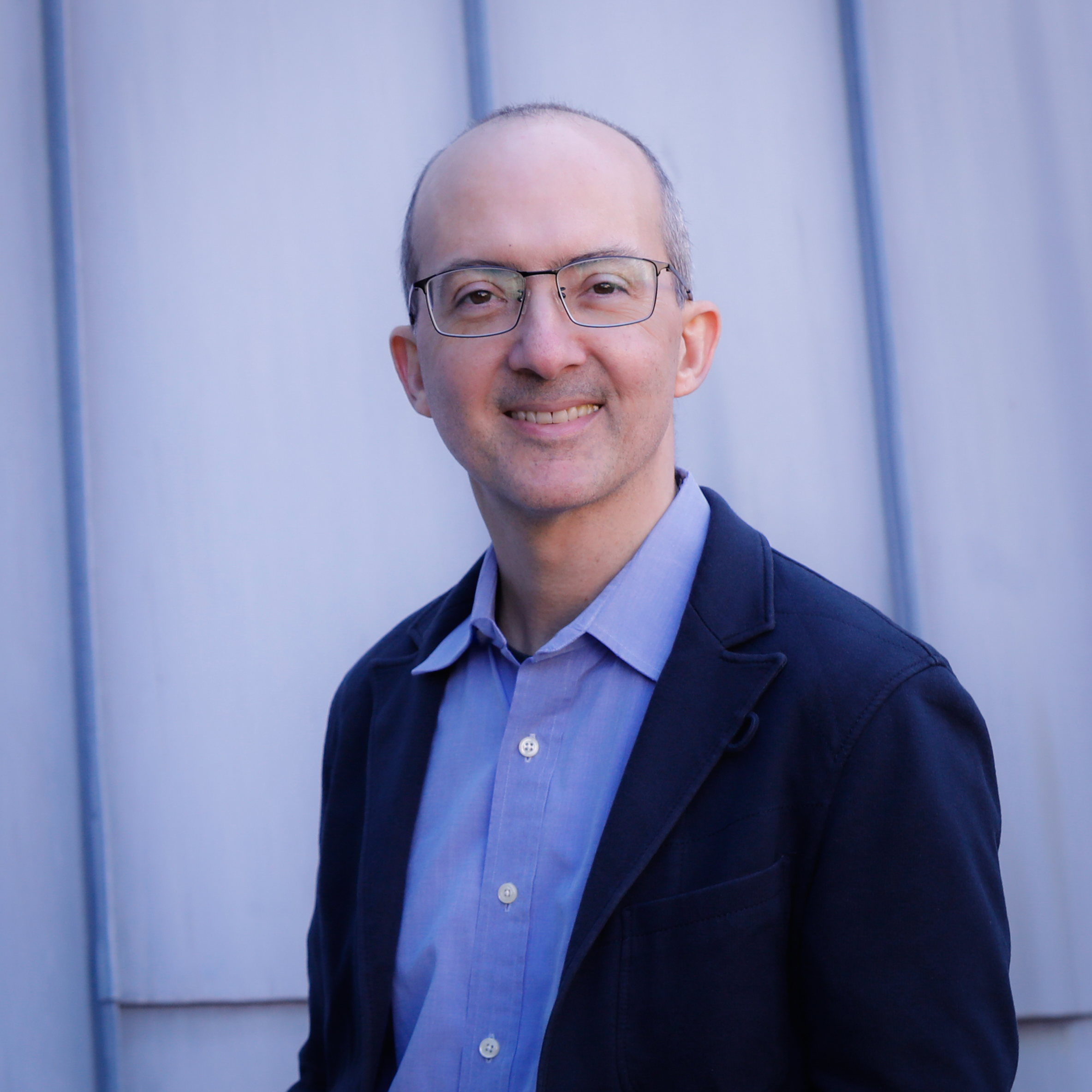
Prof. Brent R. Stockwell
Department of Biological Sciences, Department of Chemistry, Department of Pathology and Cell Biology, Columbia University, New York, NY, USA.
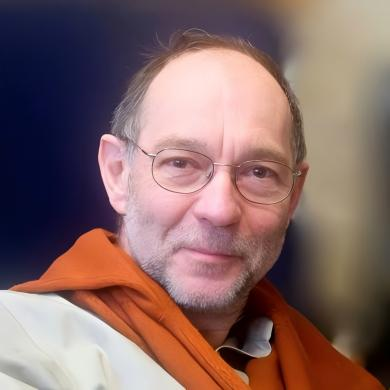
Prof. Norbert Perrimon
Department of Genetics, Blavatnik Institute, Harvard Medical School, Boston, MA, USA.
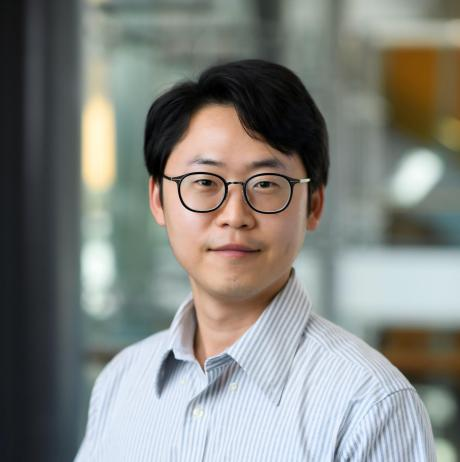
Dr. Myeonghoon Han
Department of Genetics, Blavatnik Institute, Harvard Medical School, Boston, MA, USA.
Introduction
In this episode of EXO Chats, host Prof. Brent Stockwell speaks with Prof. Norbert Perrimon and Dr. Myeonghoon Han from Harvard Medical School about their article Approaches to deorphanize secretome: Classical, computational, and next generation strategies to reveal ligand-receptor networks published in EXO – Beyond the Cell.
Secreted proteins serve as essential messengers between cells and tissues, yet a large fraction of secreted factors remain poorly understood because their corresponding receptors are unknown. The conversation explores the major challenges in identifying ligand-receptor interactions and highlights how biochemical approaches, genetic screening, AI-based prediction, and single-cell technologies are converging to build systematic maps of intercellular communication.
Prof. Perrimon and Dr. Han discuss how integrating experimental and computational strategies could accelerate the discovery of orphan ligand receptors, improve our understanding of tissue communication, and create new opportunities for therapeutic development.
Related article published in EXO: Approaches to deorphanize secretome: Classical, computational, and next generation strategies to reveal ligand-receptor networks
Full Transcript
Speaker 1 (Prof. Brent Stockwell, Editor-in-Chief, Host)
There are potentially thousands of secreted factors circulating in your blood. For a huge fraction of them, we have no idea what they bind to. That gap, a ligand with no receptor, is one of the bottlenecks in physiology. Today, two people who've thought hard about how to solve that problem.
Welcome to EXO Chats, the podcast of EXO - Beyond the Cell, the journal from Science Exploration Press, dedicated to everything happening outside the cell. I'm Brent Stockwell, editor-in-chief. In each episode, we sit down with researchers who are drawing the maps of the world that cells live in. If you want to read the papers that we discuss, they're all freely available at the website EXO - Beyond the Cell.
Secreted proteins are how cells and tissues talk to each other. Hormones, cytokines, growth factors, peptides, and metabolites move between cells and organs to keep the body functioning and integrated. Cataloging these factors and knowing what they do are two very different things. The limiting step is always the same question - what's the receptor? Our guests today have written the definitive map of how we attack that problem. Norbert Perrimon is a professor of genetics at Harvard Medical School and a HHMI investigator, and his lab has spent years building the tools and the biology of interorgan communication. And Dr. Myeonghoon Han is the first author of this review and a member of Professor Perrimon's lab. Professor Perrimon and Dr. Han, welcome.
Speaker 2 (Prof. Norbert Perrimon, Editorial Board member, Author)
Thank you. Glad to be here.
Speaker 3 (Dr. Myeonghoon Han, Author)
Thank you for having us.
Speaker 1: Great. Okay. So, let me start with the big picture. So, the catalog of circulating factors has really grown enormously, but the receptor annotation has lagged behind. For our listeners who don't live in this world that you're in, how big is that gap? And why is closing that gap important for what we want to do downstream and understand these secreted factors? So perhaps we'll start with Professor Perrimon.
Speaker 2: Yes, this is really a fascinating question. Work in our lab and many other labs in the field have identified a number of important secreted proteins that are acting across tissues and cells. And we have a very good understanding about the function of a number of them. But there is really a major knowledge gap in term of the complexity of secretomes and the receptors that they bind to.
So just to give you a sense. If you just estimate computationally the complexity of the secretome, the various estimates are about maybe 2500 or so potentially secreted factors, but those are computational predictions. We don't really know exactly how many of those are real. Our lab has actually performed a number of experiments to try to identify the secretome using proximity labeling where we simply expressed a biotin ligase, which is going to biotinylate all the secreted factors. We accomplish this by expressing a protein enzyme, called TurboID or BioID in the endoplasmic reticulum, such that all the secreted factors become biotinylated, and then we use mass spectrometry to identify the biotinylated factors in the blood. Using an approach like this, we have in a recent paper identified 535 secreted factors. So in flies, there are hundreds of proteins which have been validated as being secreted and there are probably a thousand which are predicted.
That's about the scope of the secretome in the fly. Interestingly enough, in humans, in mammalian systems, the number is actually quite similar. So, if you do computational predictions, I think the number is about between 3,000 to 5,000 potentially secreted factors. And then again there's been some extensive proteomics experiments performed which have identified about 700 or so secreted proteins. So, the secretome in flies and humans is about in the order of, let's say 500 to 700. And what we need to understand is what the function of those secreted proteins. For some of those, we know very well what they do which is the result of many studies in the field, like for example you have factors like the WNT proteins, the EGF proteins, TGF betas and so on, where we know very well they act as the receptors, their signaling pathways are known. But for many of the newly discovered proteins, we don't really know what the receptors are. So, it's really very important to identify the receptors of those orphan ligands to characterize their function. This is really what we've been trying to address, to develop methods which would allow us to identify the receptors of putative secreted proteins or orphan ligands. So, this is what really inspired this review.
And Hoon in the lab, a postdoc in the lab, has been taking the lead on this. It’s actually a good fit that we decided to write this review because he is trying to develop methods to allow us to identify the receptors of secreted ligands. And over the past few years, he's been going through a number of different approaches of this very challenging problem as he can explain a little bit further - there are biochemical approaches, which can allow you to identify maybe the receptor of one or a few ligands during a postdoc time of three or four years or so. But the challenge when Hoon joined the lab was to try to see if he could develop a method that is scalable where we could identify, let's say, the receptors of maybe 50 or so putative secreted proteins. This is a very ambitious project that he started and he's made some progress on this. But here, the idea of this review was that - since he has spent much time trying to evaluate all the different approaches - was really to put his work in the context of the body of knowledge of the different approaches. So that would also help him to present better his work. We saw it as an opportunity because there was really not such a review out there.
Speaker 1: Yeah, that's a perfect foundation I think for the details of what's in the review and these new methods to do this kind of mapping systematically.
So let me follow up on that, Dr. Han, there's a bit of a paradox in my view as I'm reading the paper. So the properties that make the interactions between these secreted proteins and their receptors interesting is that - they could be transient or weak or tunable also make them hard to capture systematically if we think about how to do that. So can you explain to the listeners more about that point of why it's difficult to identify receptors for ligands using affinity purification mass spectrometry for example. Where is that successful and where is that difficult?
Speaker 3: Yeah, that's quite important point in this review because like everybody knows that the affinity pull-down has been extensively used to explore the protein-protein interactions, not only just the extracellular protein-protein interactions but also the intracellular as well. But the tricky part of this affinity pull-down is we need to optimize the binding conditions to preserve the protein-protein interactions of interest. But the most interesting characteristics of the extracellular protein-protein interactions, it could be transient and also somehow it could be weak because it has wide, wide range of the binding affinity from the nanomolar to the micromolar range. So because instead there's an absence of the knowledge of the ligand-receptor pair, it’s really tricky to get the optimal binding condition and also we need to prepare the certain physiological condition that ligand and the corresponding receptor exist at the same time. So, because of these current limitations, we started to think about the new approaches.
Speaker 1: Let me follow up on that because one of the points you made in the review is that glycosylation is often important in terms of receptor-ligand interactions, and so tell me a little more about that. I think a lot of people don't think about that. So, where is that helpful and where is that making it more difficult to identify these receptors?
Speaker 3: Yeah sure. So, another interesting feature of the secreted proteins or extracellular proteins - that they undergo the post-translation modification, such as the glycosylation and disulfide bond formation and also palmitoylation. So, because of these diverse post-translational modifications, it's difficult to predict the actual protein structures.
And also, I mentioned that part in the AI-based approaches. So, current AI-based approaches only allow us to input the actual amino acid sequence, but more advanced version, they allow us to submit the glycosylation as well. But the patterns of the glycosylation and the combination of the post-translational modification is quite diverse and very complex. So, it's practically hard to trace it with the current in silico prediction tools. So, it's quite challenging. So, we need to prepare in actual biological samples that resembles the real biology. So, that's the caveat we need to think about.
Speaker 1: Do you think computation will get there one day or is this something where experiment has always reigned supreme? You just have to do the biochemistry and figure it out.
Speaker 3: That's really interesting question. I don't know actually. The development of the AI era is really so quickly and so fast. So, a lot of scientists already jump into this AI-based prediction program. So someday maybe we can use that tool to cover every other combination. But at this moment when I wrote this review paper, I think the best way is to combine the AI tools and the biochemical approaches at the same time. I think that's what I can say.
Speaker 1: Okay. Professor Perrimon, go ahead.
Speaker 2: Yeah, with the regard to the AI and the PTM, I think it's not clear at all how well this is going to work. I mean if you just think about glycosylation with glycosaminoglycan chains, the lengths of the GAG chains can be very variable. So, I'm not sure how AI models would account for the variability because we don't even know actually in vivo what is the actual length of those GAG chains. I think this is a very concerning issue. Because you may be able to do some modeling with some type of PTM, but for specific ones where there is a lot of variability, this may not be so simple.
Speaker 1: I think it's a great point. People forget that everything is not DNA and protein. There are other things that are important, like sugars and lipids that are hugely complex, and still we need the basic biochemistry.
So let me turn to some of the other approaches you talked about for mapping these ligand-receptor interactions in the paper. So, Professor Perrimon you built your lab in many ways on sort of genetic screening and model organisms and the power that can bring to understand physiology and interorgan communication. So, how is that going to be useful or how has it been useful for ligand-receptor discovery? Can you bring the genetic tools into the picture here?
Speaker 2: Well, I think some of the power of the genetics is to validate some of those biochemical interactions, right? One type of experiments we can do in flies, let's say, if we have a putative receptor identified by some kind of binding assay, either biochemical or from other type of approaches that we discuss in the review, what you can do going back into an in vivo system is that you can generate situations where if you think that a specific ligand is coming from a tissue A and is acting on the tissue B, you might expect to see the same phenotype if you overexpress the ligand or if you activate the pathway downstream of the receptors. Then in flies what we can do quite easily are genetic epistatic experiments, where for example we could suppress the effect of an overexpressed a ligand by removing the receptor in the target tissue. So, I think the two really go together and for us the approach that we are trying to take is to try to do either biochemical screening or CRISPR type activation screening that we described in the review, make a set of predictions and then go back directly in vivo and use the genetics tool that we have to validate precisely these interactions.
Speaker 1: How promiscuous, as I was thinking about that reading the review, I thought there's one issue of like promiscuity of receptor-ligand interactions, like one receptor can bind to many different ligands or one ligand could bind to many receptors, so do genetic approaches help us address that in the way you're talking about with complementation?
Speaker 2: Well it does I think. First of all, the different ligands that are usually in the same family may have very different functions. For example, we study quite a bit the ligands of the JAK STAT pathway. There is one receptor for the different JAK STAT ligands of the pathway, but there are three different ligands and they're expressed at different times during development, and each of them actually have their own specific roles. So, they all signal through the same receptor in different tissues, but if you mutate the ligands, you can see that one of them is going to affect embryonic development, another one is going to be acting like an hormone, like leptin and so on. Another one is going to be involved more in proliferation. So, we can really dissect the effect of each of those ligands by removing the receptor at the specific time points where those ligands are required, and then we can visualize the effect of the removal of the receptor in the target tissues at that specific time point. So, you're correct that all those different ligands could be very complicated because they all act through the same receptor, but in general, at least in the fly, those different ligands are not really acting at the same time. So, because we have ways to control very precisely when and where we can remove, let's say the receptor activity, we can really visualize the phenotypes which correspond to the specific ligand.
Speaker 1: Got it. Okay. That's very helpful.
Dr. Han, let's turn back to the question of AI and computation and how that fits in. You talk about some of the strengths and limitations of that approach. So maybe we talked about one limitation in terms of glycosylation, but how about the strengths like where do you see AlphaFold and other structure prediction programs fitting into your workflow to map these ligand-receptor networks?
Speaker 3: Yeah, although I mentioned there’s some kind of limitation of AI tools, I think it is still most powerful approaches to solve these questions. Let's say for instance, if I perform the affinity pull-down mass spectrometry, I'd like to proceed with in vivo validation. But before going on that, I think I can apply the AlphaFold screening, so with the hit identified from the affinity pull-down and just to quickly check the binding score between the protein of interest and the candidates, and I can prioritize a few proteins to be tested in the vivo screening. So, I think still already there are a lot of binding biological findings that have already published using the AlphaFold, especially in the extracellular protein-protein interaction field. So that is a really powerful tool still. Yeah, I agree with that.
Speaker 1: Okay, that's great. And I guess on the same vein, Professor Perrimon, you published the FlyPhoneDB2 from your group which used Alphafold predicted protein-protein interactions integrated with, if I got it right, single cell data. So how should we think about that? Is integrating structure, computation, expression and spatial data really the future of this field?
Speaker 2: Yeah. So that's really another amazing tool, actually. The advances in single-cell RNAseq, especially in the flies, are incredibly powerful because we can phenotype the entire fly by simply sequencing 20,000 to 40,000 cells. In fact, in the fly, we don't do single cell; we do single-nucleus RNA-seq because there are a lot of cells that are multi-nucleated.
But what we do is that if we are interested in trying to characterize a phenotype, in the past we would actually use a lot of different antibodies to look at different pathway activities and so on. But here, simply in one sequencing reaction, we can get the transcriptome of the entire body of the fly. And so we are able to build clusters that reflect where all the genes expressed in the different tissues are. And then we can use, as you described, FlyPhone, which is basically a fly version of a number of different tools like CellChat and CellPhone. You can simply use those types of tools to try to make predictions about which ligand is expressed in which tissue, and where receptors and some of the downstream targets are expressed. So, you can hypothesize that this ligand may be acting on that tissue.
So, we're able to build now a framework about all the potential ligand-receptor interactions, assuming again that we know which receptor corresponds to which ligand, and then we can use that as a way for discovery. You can test; you can try to validate some of those interactions. It’s really the way where we're going now with this - it's by having tools to predict all the potential receptors of different ligands using AlphaFold-Multimer, and then combined with more experimental approaches to identify binders of specific ligands and receptors, together with gene expression and the spatial information using maps that you can generate with single-nucleus RNAseq. Then you can really pretty quickly come up with a number of different ligand-receptor interactions that you can validate in vivo using the tools that we have in flies to control spatial-temporal activation or knockdown of all the different components.
Because also one thing people need to realize in flies is that we have genome-wide libraries of transgenic RNAi lines, which allow us to manipulate every gene anywhere based on GAL4/UAS system. We also have libraries of genes targeted by CRISPR and the fly stocks are available in stock centers to allow those kind of experiments for in vivo validation. This is really the power of the fly - that we can use those kinds of very large-scale approaches, integrate them, and then select maybe 100 or 200 or so different putative interactions that we can validate using available tools for doing them in vivo analysis.
Speaker 1: That's hugely powerful! That's fantastic, I can see that integrating these different data sets is a great opportunity for computational biologists and just immensely powerful. So let me ask a different topic about translating these results to new medicines. A lot of listeners will be interested in drug discovery and therapeutics and new medicines for some of these really intractable diseases. So, Dr. Han, let me ask you. When you think about deorphanizing these secreted proteins, where is the payoff in terms of drug discovery? Is it therapeutics directly? Is it target discovery? Or is it maybe understanding better the mechanisms for existing drugs or drugs already in development?
Speaker 3: I'll say this review is focusing on identifying the receptors of the certain secreted proteins at this moment. But eventually when we think about the FDA approved drugs, more than 70% of the drugs are targeting the GPCRs and extracellular proteins. So in that moment, in that case, I think adding the another ligand-receptor pair onto that catalog is not just identifying the ligand-receptors but it is rather just expand the market of the biopharma or the drug targeting thing. And also nowadays, a lot of the biomedical scientists are interested in the identifying the biomarkers of the certain disease. So not only just the disease in an aging condition, and also the recent paper published, a lot of secreted proteins have changed dramatically. So there could be something beyond that biology as well. But still we don't know what the changes of the secreted protein does in the aged conditions. So, by doing the identifying the potential receptors of the novel secreted proteins in certain disease conditions or physiological conditions can expand our understanding the underlying biology as well, not only just a drug.
Speaker 1: Right, that's a great point, absolutely.
All right, let's wrap up with one more question for both of you, we'll go in turn. Thinking about students getting involved in secretome biology, what advice would you have for a new graduate student or postdoc, a trainee interested in this area? What's the one thing that you would recommend that they do to have a kind of high impact in this field? Dr. Han, perhaps we'll start with you.
Speaker 3: I think I'm also a trainee. So, but I'll say if I advise to myself like back in four years when I was a fresh postdoc, I'll say just jump into the challenging project to solve the big questions. So, I do the science that can impact more values. So, for instance I was thinking initially when I joined the Perrimon lab, I was thinking to just pick the one of the secreted proteins and explore their unknown functions, but at that time I came to know that the tools to identify the protein-protein interactions is quite underdeveloped. So that's why I jump into this challenging project. I think I do have some progress, but it's still quite a slow progress. But I'm still confident to work on that and I believe that is making some huge impact on the field. And also my idea is written in this review paper, especially in the ligand-receptor field, that's the most biggest question and biggest thing we need to take on right now.
Speaker 1: Okay, that's great. Perfect! And Professor Perrimon, do you have any words of wisdom for students interested in this area?
Speaker 2: Yeah, well, I think what's important is to keep in mind the biological question eventually that you want to address.
Because here what we are doing is to try to develop a method because we saw a knowledge gap in the way we are doing things. But eventually, I keep asking Hoon what would you focus on in term of the biological question that you're going to be asking using the technology that you developed.
And I think this is important to keep asking the question: whether or not it's going to be, for example, interaction between the fly, liver or muscle. Because it really helps focus eventually the space of experiments as you can do a lot of different things. So you really need to eventually be able to say, “Oh, I'm interested in, for example, identifying new ligands for GPCRs”.
So again, my advice is not to lose sight of the biological question that you would address using the technology that you develop.
Speaker 1: That's great advice from one of the leading biologists of our time - it’s always remember the biological question. That's perfect.
So, Professor Perrimon, Dr. Han, this has been a really insightful conversation. One of the things I take away is that we may finally be at a point where this deorphanization stops being a one-off as we talked about in the beginning and it really does become more systematic, telling us all what it means to be a living animal. So, thank you both for your fantastic paper and for your research and for being here.
Speaker 2: Thank you for the opportunity.
Speaker 3: Thank you so much for this.
Speaker 1: Great. The paper is called Approaches to Deorphanize Secretome by Myeonghoon Han and Norbert Perrimon. As a reminder, there's no cost to publish or read the articles in EXO - Beyond the Cell. Thanks for listening to EXO Chats.


Subscribe
