Conference Collaborations

EMBO | EMBL Symposium-DNA replication and genome maintenance: from basic biology to human health

Date: October 20-23, 2026 | Venue: EMBL Heidelberg and Virtual

Recent progress has advanced our understanding of eukaryotic DNA replication, but key questions remain regarding replisome structure, origin firing, and coordination with chromatin, transcription, and chromosome segregation. Accurate replication is essential for genome stability, and replication stress contributes to diseases such as cancer. This symposium brings together experts to discuss DNA replication mechanisms, stress responses, and their impact on development, aging, and disease, promoting further insights into both fundamental biology and therapeutic applications.
Website:

https://www.embl.org/about/info/course-and-conference-office/events/EES26-13/

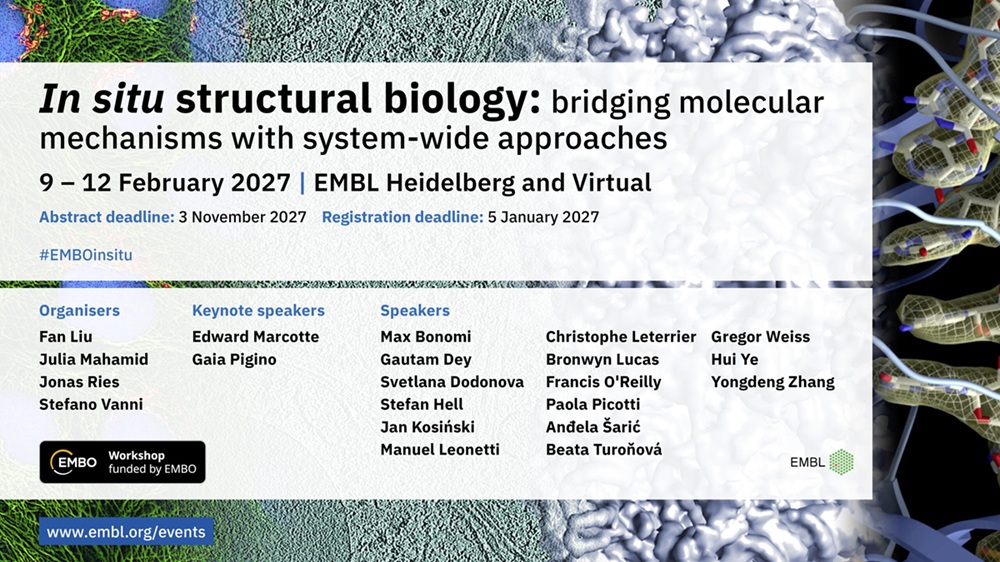
In situ structural biology: bridging molecular mechanisms with system-wide approaches

Date: February 9-12, 2027 | Venue: EMBL Heidelberg and Virtual

This event will bring together experts from cryo-electron and fluorescence microscopy, mass spectrometry and computational modeling to focus on data integration across different methods towards understanding protein structures and interactions in situ.
This edition will have additional focus on system-wide approaches, showcasing recent technological and methodological advances and promoting their integration with other methodologies as powerful tools for cell biology across multiple scales.

Website:

https://www.embl.org/about/info/course-and-conference-office/events/ISS27-01/?utm_source=scieExpress&utm_medium=mpreferral&utm_id=ISS27-01

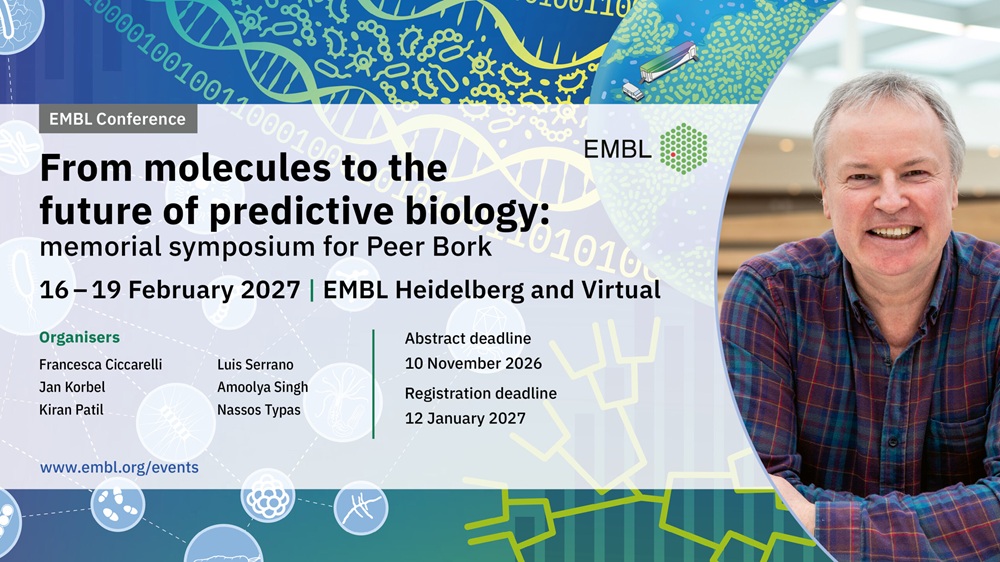
From molecules to the future of predictive biology: memorial symposium for Peer Bork

Date: February 16-19, 2027 | Venue: EMBL Heidelberg and Virtual

A little over a year later, we aim to celebrate Peer’s life and scientific legacy with a memorial symposium held in his honour. Open to all, the symposium aims to bring together scientists from across the international community to hear invited talks spanning the many fields in which Peer was active and influential throughout his career.
The programme will reflect on past achievements as well as explore the future directions of fields such as protein biology, the human microbiome, and more.

Website:

https://www.embl.org/about/info/course-and-conference-office/events/PBS27-01/?utm_source=scieExpress&utm_medium=mpreferral&utm_id=PBS27-01

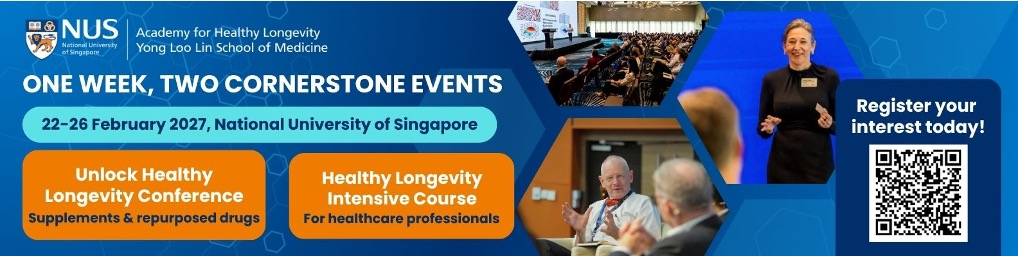
Geromedicine: Unlock Healthy Longevity Conference Singapore 2027

Date: February 25-26, 2027 | Venue: Shaw Foundation Alumni House, 11 Kent Ridge Dr, #01-02, Singapore 119244

The Unlock Healthy Longevity Conference aims to advance precision geromedicine by bringing together researchers, clinicians, regulators, industry leaders and educators to translate discoveries about aging into evidence-based, accessible interventions that extend healthspan. Its scope spans aging biology, clinical applications, regulation, research translation, innovation and cross-disciplinary collaboration in healthy longevity.

Website:

https://geromedicine.sg/

The expanding world of RBPs: from posttranscriptional control to riboregulation

Date: March 15-18, 2027 | Venue: EMBL Heidelberg and Virtual

This meeting brings together leaders in RNA-binding proteins (RBPs) to explore their biological functions, from posttranscriptional regulation of RNA expression to the riboregulation of protein functions.
Building on the first edition, this second meeting will expand knowledge of classical and newly discovered RBPs, highlighting advances enabled by emerging experimental and data-analysis tools. It will also explore the dynamic cellular processes involving RBPs and the role of RNA structural plasticity in shaping interactions with canonical and non-canonical RBPs.

Website:

https://www.embl.org/about/info/course-and-conference-office/events/RBP27-01/?utm_source=scieExpress&utm_medium=mpreferral&utm_id=RBP27-01

Chromatin and epigenetics

Date: April 27-29, 2027 | Venue: EMBL Heidelberg and Virtual

Epigenetics refers to heritable changes in gene expression that do not involve changes to the underlying DNA sequence. At least three systems, including DNA methylation, histone modifications, and non-coding RNAs (ncRNA), are considered to play fundamental roles in epigenetic regulation. This established conference provides an international forum for cutting-edge research in chromatin and epigenetics. It provides the ‘focal hub’ for scientists to present their research and exchange ideas. Renowned speakers will cover the latest advances in the field.

Website:

https://www.embl.org/about/info/course-and-conference-office/events/CHR27-01/?utm_source=scieExpress&utm_medium=mpreferral&utm_id=CHR27-01

AI and biology

Date: May 11-14, 2027 | Venue: EMBL Heidelberg and Virtual

The aim of this symposium is to catalyse synergistic interactions between AI researchers in different subfields of biology and biomedicine by exploring shared theoretical approaches, cross-domain experiments, foundation models, and data integration, as well as shared topics in dissemination of tools, agent-based workflows and collaboration with experimental labs. Furthermore, we will look into the future and discuss how the concerted actions of AI and life science communities can enable both fields to exploit the full potential of the ongoing data deluge and find new application areas ripe for disruption by AI.
The onsite meeting will take a new, multi-track direction for the first day with selected workshops and tutorials. Days 2, 3 and 4 follow the hybrid symposium format, packed as before with invited and selected speakers and poster sessions.

Website:

https://www.embl.org/about/info/course-and-conference-office/events/EES27-12/?utm_source=scieExpress&utm_medium=mpreferral&utm_id=EES27-12

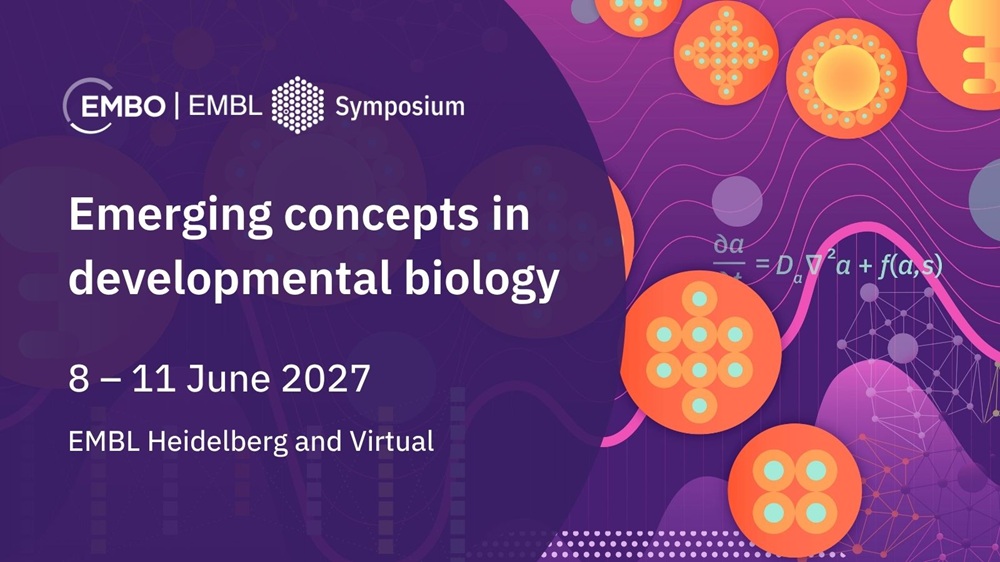
Emerging concepts in developmental biology

Date: June 8-11, 2027 | Venue: EMBL Heidelberg and Virtual

The meeting will explore the dynamic interface of developmental biology with emerging technologies and transformative concepts to tackle fundamental questions on patterning, morphogenesis, cell differentiation, growth, organogenesis, regeneration, and evolution. It will spotlight state-of-the-art methodologies, including multi-modal imaging, synthetic developmental biology, AI-driven insights, advances in genetic engineering, and high-throughput genotype-to-phenotype platforms. By bridging in vivo and ex vivo systems—such as gastruloids and organoids—with non-model organisms, we aim to uncover new conceptual frameworks to understand developmental complexity.
The symposium will feature researchers at the forefront of the field, addressing processes in physiological contexts (e.g., in-utero development, oogenesis) and through theoretical lenses (e.g., information propagation, dynamical systems), fostering a holistic perspective on development in its full biological and conceptual richness. This meeting will connect a wide community of researchers interested in developmental processes, seeding a reference meeting on modern developmental biology.

Website:

https://www.embl.org/about/info/course-and-conference-office/events/EES27-02/?utm_source=scieExpress&utm_medium=mpreferral&utm_id=EES27-02

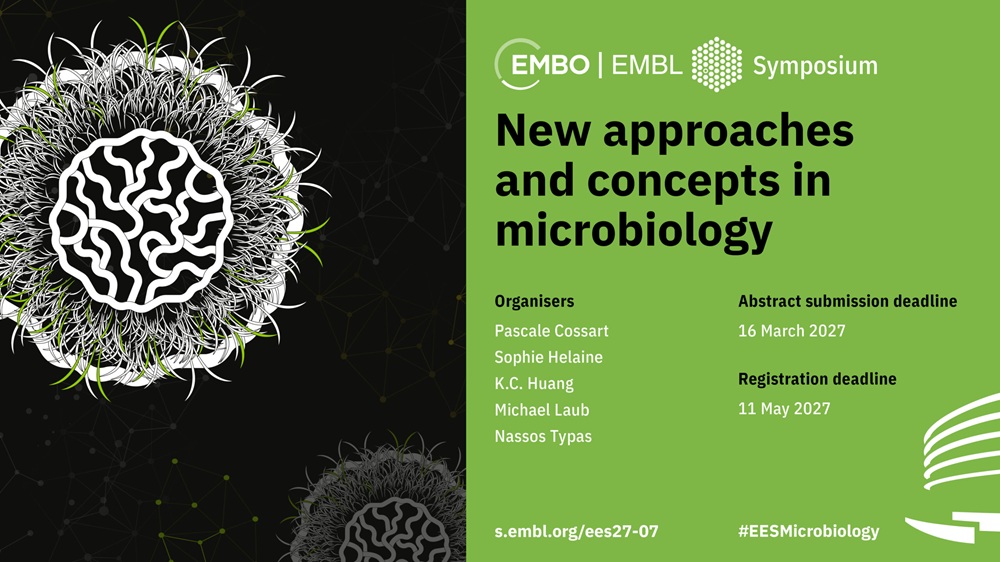
New approaches and concepts in microbiology

Date: June 22-25, 2027 | Venue: EMBL Heidelberg and Virtual

This long-standing symposium will cover a broad range of topics in microbiology, featuring diverse research on bacterial physiology, bacterial communities and microbiomes, bacterial–host and –phage interactions, and bacteria in their natural ecological contexts. In the 8th edition of the successful biennial series, emphasis will be placed on novel approaches and technologies from systems-based to single-cell, that drive each field or have the potential to revolutionise future research in microbiology. It has become a must-attend event for scientists working with bacteria and new technologies.
The aim is to bridge the gap between traditional microbiology and novel technologies, by exposing microbiologists to new ways of addressing their hypotheses, and emerge systems or technology experts to the important questions in the field.

Website:

https://www.embl.org/about/info/course-and-conference-office/events/EES27-07/?utm_source=scieExpress&utm_medium=mpreferral&utm_id=EES27-07

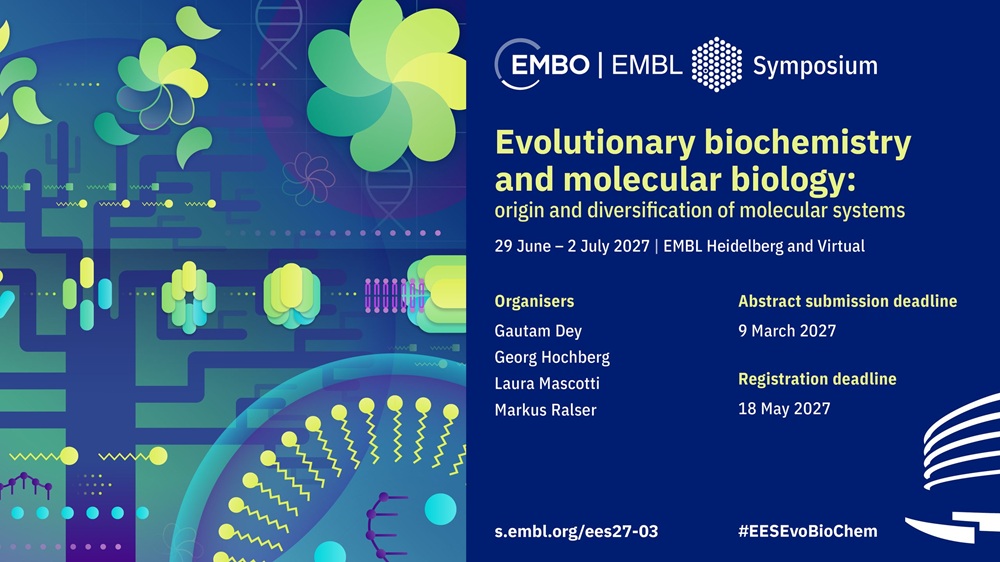
Evolutionary biochemistry and molecular biology: origin and diversification of molecular systems

Date: June 29-July 2, 2027 | Venue: EMBL Heidelberg and Virtual

Evolutionary biochemistry is emerging as a transformative field. Advances in genomics, AI-enabled protein analysis, structural biology, and ancestral sequence reconstruction now allow researchers to investigate the origins of proteins, metabolism, and cells with unprecedented precision, making this an ideal moment to unite the field. This symposium will explore how the molecular systems of modern cells originated, evolved, and gave rise to biological complexity. By bringing together researchers in chemistry, biochemistry, evolutionary biology, and computational science, this meeting will foster collaborations, establish shared approaches, and help define the future directions of evolutionary biochemistry.

Website:

https://www.embl.org/about/info/course-and-conference-office/events/EES27-03/?utm_source=scieExpress&utm_medium=mpreferral&utm_id=EES27-03

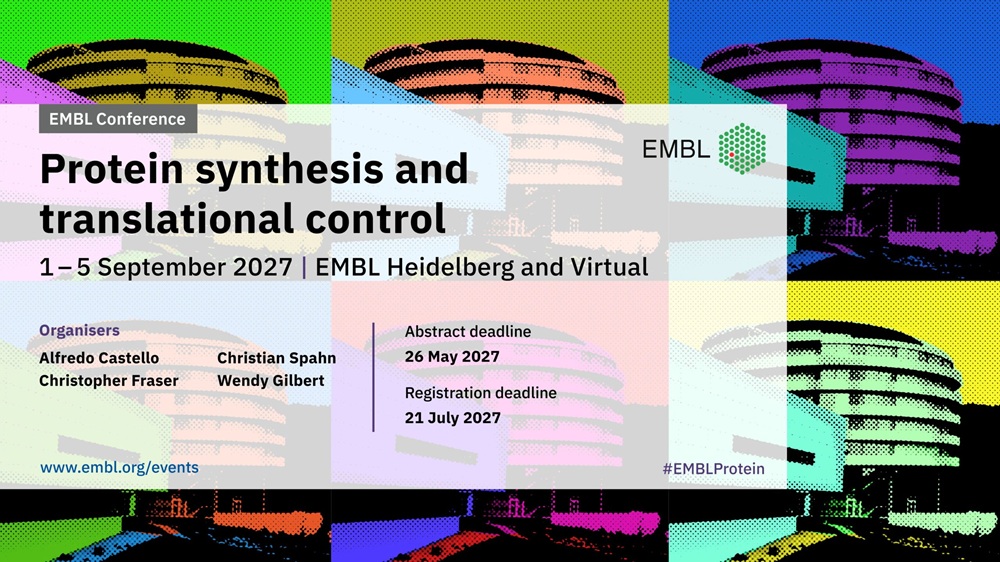
Protein synthesis and translational control

Date: Septemeber 1-5, 2027 | Venue: EMBL Heidelberg and Virtual

Mechanisms that shape cellular proteomes are critical for life. This conference focuses on the process of protein synthesis, from the molecular and structural understanding of the translational machinery to its regulation, its implications in cell and organismal biology, and its alteration in disease. Advances in these aspects of mRNA translation will be featured, as well as new insights into translation regulation in physiology and disease.

Website:

https://www.embl.org/about/info/course-and-conference-office/events/TRC27-01/?utm_source=scieExpress&utm_medium=mpreferral&utm_id=TRC27-01

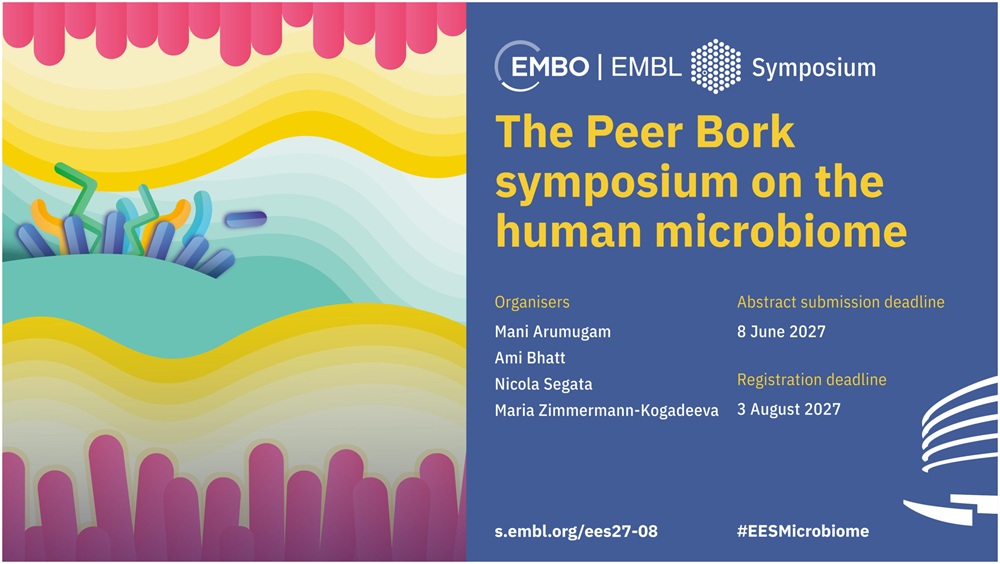
The Peer Bork symposium on the human microbiome

Date: September 14-17, 2027 | Venue: EMBL Heidelberg and Virtual

Various initiatives are underway around the world to survey the human microbiota at several body sites, characterise them, understand their interactions with the human hosts, elucidate their role in diseases, and design possible therapeutic or dietary interventions. Recent efforts have started mining the human microbiome data to discover bioactive compounds, detect interactions between microbes and molecules, and design novel interventions.
The return of this established meeting will bring together the community for a timely and large symposium picking up on developments across the field since the last edition. The symposium is dedicated to the memory of Professor Peer Bork, who shaped this meeting from the beginning as a member of the organising committee of the inaugural ‘The Human Microbiome’ in 2018.

Website:

https://www.embl.org/about/info/course-and-conference-office/events/EES27-08/?utm_source=scieExpress&utm_medium=mpreferral&utm_id=EES27-08

EMBO | EMBL Symposium-Mechanobiology across the tree of life

Date: June 9-12, 2026 | Venue: EMBL Heidelberg and Virtual

Cells and tissues actively adjust physical and chemical properties to shape, interact with their environment, and maintain function. Understanding these mechanisms requires integrating biology, physics, and engineering, and comparing systems across evolution.
This symposium gathers diverse researchers to advance knowledge of cell walls, cytoskeletons, and membranes through cutting-edge imaging, biophysical tools, and computational methods. Emphasising early-career scientists, it aims to foster collaboration and deepen insight into mechanobiology from molecules to organisms.

Website:

https://www.embl.org/about/info/course-and-conference-office/events/ees26-06/

EMBO | EMBL Symposium-Sex differences in health and disease

Date: April 27-30, 2026 | Venue: EMBL Heidelberg and Virtual

This symposium examines how genetics, hormones, and environment drive sex differences in physiology, immunity, ageing, and disease. It will highlight mechanisms underlying distinct phenotypes and variable susceptibility or treatment responses in metabolic, infectious, cancer, cardiovascular, and neurological conditions. Bringing together multidisciplinary experts and advanced model systems, the meeting aims to advance understanding of sex-based biology to improve health outcomes.

Website:

https://www.embl.org/about/info/course-and-conference-office/events/EES26-07/

EMBO Workshop-Brain (epi)genome

Date: April 21-24, 2026 | Venue: EMBL Heidelberg and Virtual

The brain’s remarkable cellular diversity — encompassing hundreds of distinct neuronal and glial cell types — emerges from a single genome through sophisticated regulatory mechanisms.
This EMBO Workshop unites experts in genomics, neuroscience, and epigenetics to explore how gene regulation and chromatin architecture generate neural diversity and shape brain function. Leveraging advances in single-cell, spatial, and 3D genomics, it will address mechanisms underlying neuronal identity, connectivity, plasticity, and disease.
By integrating insights from human and model systems, the meeting aims to accelerate discovery and strengthen the neurogenomics community.

Website:

https://www.embl.org/about/info/course-and-conference-office/events/brg26-01/

Unlock Healthy Longevity Conference 2026

Date: February 26-27, 2026 | Venue: Singapore

The Unlock Healthy Longevity Conference is a globally recognized scientific meeting dedicated exclusively to supplements and repurposed drugs as geroprotective interventions. It brings together leading clinicians, regulators, investors, and industry innovators to collectively shape the future of evidence-based and optimized longevity care.
Hosted in Singapore, the conference series is among the most anticipated scientific events in Asia in the field of healthy longevity. It provides a high-level interdisciplinary platform for researchers, clinicians, policymakers, and industry professionals, with a shared mission to accelerate the translation of geroscience into practical, accessible interventions that meaningfully extend healthspan.

Website:

https://geromedicine.sg/

EMBL Conference-The new cardiobiology: engineering, vascular, and molecular insights

Date: February 16-19, 2026 | Venue: EMBL Heidelberg and Virtual

Cardiovascular disease remains the leading cause of death, with many disease-driving mechanisms still unclear. Building on the successful 2024 inaugural meeting, this conference will gather experts in cardiac and vascular biology, tissue engineering, and systems biology to explore emerging insights into molecular pathways, gene–environment interactions, and multi-organ influences. By fostering interdisciplinary exchange, it aims to accelerate breakthroughs in understanding and treating cardiovascular disease.

Website:

https://www.embl.org/about/info/course-and-conference-office/events/ncb26-01/

5th Interventions in Aging Conference

Date: 04 Oct 2025 - 07 Oct 2025 | Venue: St. Julian's, Malta

The conference will discuss cutting-edge work on several mechanisms of aging and the promise and challenges of translating them into interventions to improve human health during aging. Important current challenges in the field are (1) to assess the roles of somatic mutation and impaired gene expression, (2) to understand the origins of the highly damaging age-related increase in inflammation, (3) to specify the multiple interactions between organs that combine to produce age-related impairments, (4) to better understand interactions within cells that lead to decline in their function, (5) to evaluate the promise and challenges of regenerative interventions and cellular reprogramming. This fifth meeting will explore these topics, with particular emphasis on new knowledge and its potential for translation into benefits to human health during aging.

Website:

https://www.fusion-conferences.com/conference/181

12th Aging Research and Drug Discovery Meeting (ARDD)

Date: August 25-29, 2025 | Venue: University of Copenhagen, Denmark

The Aging Research for Drug Discovery (ARDD) conference brings together leaders in aging, longevity, and drug discovery to explore the latest advancements in understanding the molecular, cellular, and organismal basis of aging, as well as the search for potential interventions. This year, the conference will feature an exceptional lineup of speakers, including two Nobel Prize winners, and will gather top industry leaders from prominent pharmaceutical companies. The event will continue to spotlight key topics in aging research, with our signature startup pitch session, an Emerging Tech workshop, and a Physics in Aging workshop. Additionally, we will host our stellar Longevity Medicine track, focused specifically on physicians, where cutting-edge clinical interventions for healthy longevity will be presented. ARDD aims to bridge clinical, academic, and industry research to foster collaborations that will lead to practical solutions for one of humanity's most pressing challenges: aging. In line with this mission, the conference will also offer travel grants and short talk opportunities for early-career academic researchers. ARDD remains committed to advancing the knowledge and technologies that can extend the healthy lifespan of people worldwide.

Website:

https://agingpharma.org/

EMBO | EMBL Symposium - The ageing genome: from mechanisms to disease

Date: Jun 10-13, 2025 | Venue: EMBL Heidelberg and Virtual

Ageing is often considered a complex phenotype that affects multiple organs and tissues in a time-dependent manner. This may result in the aged population consuming a myriad of medications, each aimed to treat, but not cure, the affected tissue.
This symposium explores the core molecular mechanisms - known as the Primary Hallmarks of Ageing - that drive aging across tissues, aiming to simplify our understanding of age-related diseases. The 2025 edition will highlight chromatin changes and telomere dysfunction, linking them to DNA damage and repair. With a new global speaker lineup, the event will bridge chromosome biology and aging science, addressing the rising interest in anti-aging interventions through mechanistic insights and relevant aging models.

Website:

https://www.embl.org/about/info/course-and-conference-office/events/EES25-05