Scenario dependent optical-thermal performance of stimuli-responsive smart windows across chamber and building measurements

Shuangdui Wu
1,2

,
Borong Lin
2
,
Yucan Peng
1,*
*Correspondence to:
Yucan Peng, Department of Energy and Resources Engineering, School of Mechanics and Engineering Science, Peking University, Beijing 100871, China.
E-mail: yucan.peng@pku.edu.cn
Smart Mater Devices. 2026;2:202640. 10.70401/smd.2026.0044
Received: July 15, 2026Accepted: August 26, 2026Published: August 26, 2026
This article belongs to the Special lssue Smart Windows with Stimuli-Responsive Properties
Abstract
Smart windows are expected to improve building energy efficiency and indoor environmental quality, yet material-level optical modulation alone does not directly predict room-level optical and thermal responses. This study investigates the scenario-dependent performance of commercial stimuli-responsive smart windows through controlled chamber tests, outdoor chamber tests, full-scale office measurements, and a large-area skylight field case. Thermochromic windows (TCWs), electrochromic windows (ECWs), and polymer-dispersed liquid crystal (PDLC) dimming films were evaluated in terms of spectral modulation, illuminance response, temperature variation, and spatial distribution. Controlled chamber tests showed that TCW transition depended jointly on transition temperature and radiation intensity, while ECW coloration was governed by driving voltage and radiation-induced surface heating. Outdoor chamber tests further revealed that side-window modulation and skylight transmittance jointly shaped indoor daylight and heat gain. In the two tested south-facing office rooms, the passively operated TCW room exhibited longer daylight availability and a more spatially distributed illuminance profile through diffuse transmission, together with higher indoor temperatures. The ECW room, maintained at the fixed T2 state, showed lower indoor temperatures but limited daylight during most occupied periods. The large-area skylight case showed that PDLC visual dimming reduced illuminance but provided limited thermal regulation because near-infrared transmittance remained high. These results show that the measured optical and temperature responses were jointly shaped by material response, building configuration, solar exposure, and operation strategy. Scenario-specific spectral design and adaptive control are important for aligning optical and thermal responses in building-envelope applications.
Keywords
Stimuli-responsive smart windows, thermochromic windows, electrochromic windows, PDLC dimming film, optical-thermal performance, building field measurements
1. Introduction
Buildings and construction account for approximately 28% of global energy consumption and 37% of global CO2 emissions[1], and improving building envelopes remains an important pathway toward low-carbon operation and indoor environmental quality. Among envelope components, windows are particularly difficult to optimize because they simultaneously regulate daylight admission, solar heat gain, view, glare, and heat exchange[2-5]. Stimuli-responsive smart windows have been widely studied as a promising solution[6,7]. In terms of the working mechanism, thermochromic windows (TCWs) can employ different active materials and temperature-responsive switching mechanisms. In the widely studied VO2 system, heating through the transition temperature induces a reversible monoclinic semiconducting/insulating-to-rutile metallic phase transition, producing a pronounced change in the electronic structure and near-infrared optical response[8]. In contrast, the thermochromic response of the hydrogel-based TCW used in this study is based on temperature-triggered dehydration and phase separation of the thermoresponsive hydrogel, which generate domains with refractive-index contrast, increase internal light scattering, and thereby reduce optical transmittance without external energy input[9,10]. Electrochromic windows (ECWs) operate through voltage-driven insertion and extraction of ions and electrons among the transparent-conductor, electrochromic, ion-storage, and electrolyte layers. The resulting change in the electronic state of the electrochromic material modulates optical absorption[11,12]. In the polymer-dispersed liquid crystal (PDLC) glazing, the orientation of the liquid crystal droplets is random in the voltage off state but become aligned under electric field causing increased transmission[13,14]. The distinct switching mechanisms are schematically summarized in Figure 1.
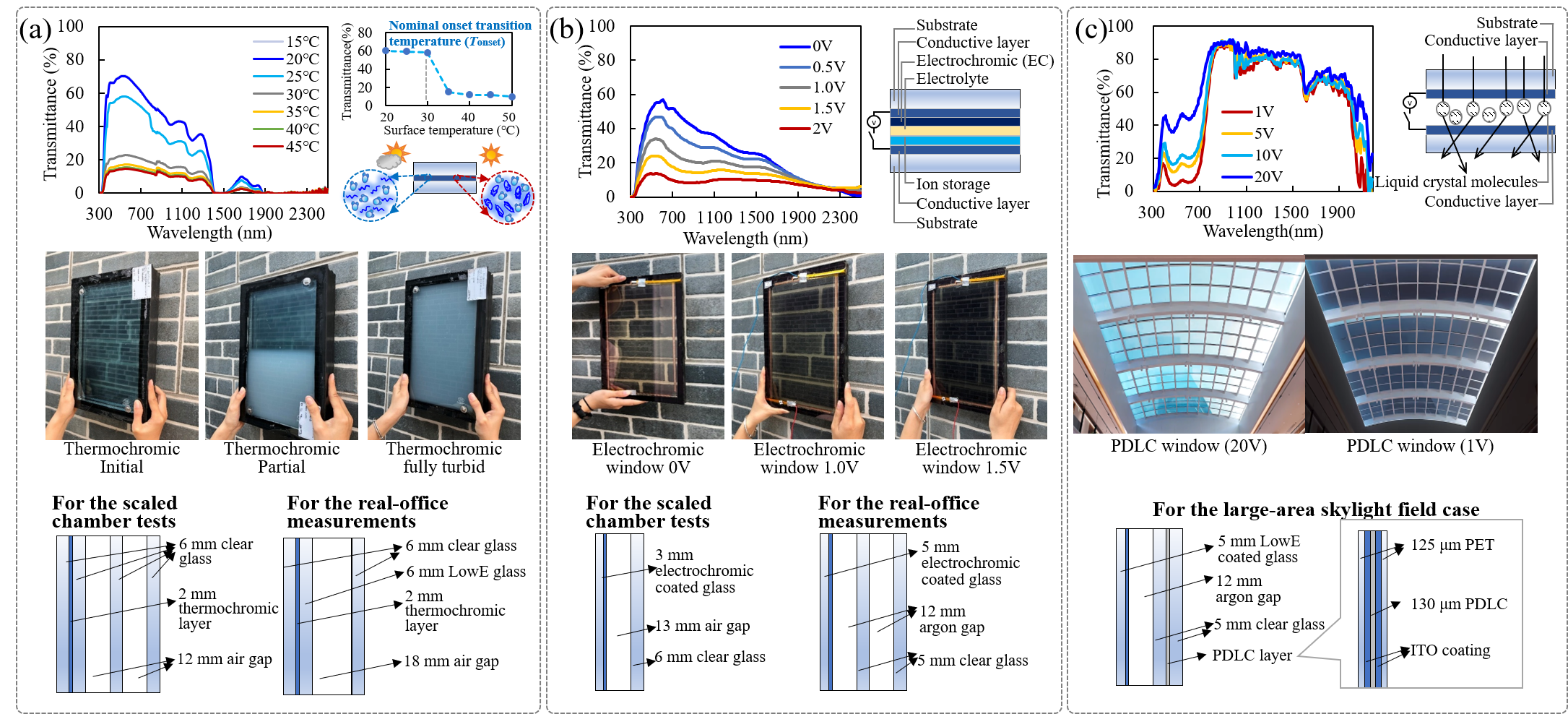
Figure 1. Optical spectra, switching mechanisms, visual states, and glazing structures of (a) TCWs; (b) ECWs; (c) PDLC window systems. TCWs: thermochromic windows; ECWs: electrochromic windows; PDLC: polymer-dispersed liquid crystal; PET: polyethylene terephthalate; ITO: indium tin oxide.
These technologies have advanced rapidly in terms of material design, device fabrication, optical modulation range, switching response, durability, and multifunctional optical-thermal integration[15-18]. Most existing studies, however, still evaluate smart windows primarily from material or device-level optical metrics[19-22]. Common indicators such as visible transmittance, solar transmittance, modulation depth, response time, and luminous or solar modulation ability are necessary for characterizing the intrinsic performance of smart-window systems[23,24]. These metrics do not necessarily govern the indoor illuminance, air temperature, thermal comfort, or consequences for cooling and lighting within an actual room[25-27]. The connection between spectral modulation and performance at the room level cannot be considered one-to-one[28-31].
A second gap lies between controlled experimental testing and real building deployment[32,33]. Scaled chamber tests are useful because they provide repeatable boundary conditions and allow material parameters or control states to be compared systematically[20,34-36]. They are particularly valuable for identifying the response of TCWs to transition temperature and radiation intensity, or the response of ECWs to driving voltage and surface temperature. However, chamber experiments cannot fully represent the spatial and operational complexity of real buildings[37,38]. In full-scale rooms, transmitted solar radiation is redistributed by reflection and scattering, near-window and room-center conditions can differ substantially, and the effective transmittance of the same glazing may vary with solar altitude and incidence angle. These factors can change the practical value of a smart window even when the material or device property remains the same[32,39]. Independent studies that have been carried out recently have increasingly employed application representative platforms, including long-term TCW tests in actual sized rooms and special test buildings, big ECW climate chambers, and behavior informed mock offices, alongside real room and office PDLC measurements[40-42].
A third gap concerns the scenario dependence of smart-window applications. In real buildings, smart-window performance is affected not only by the glazing itself, but also by architectural configuration and operational context[25,43]. Side windows and skylights introduce different solar paths and heat-gain mechanisms. A window suitable for a small office may not be suitable for a high atrium or a large-area skylight. A passive thermochromic transition may be beneficial for stabilizing daylight in some orientations; more advanced concepts now combine solar-thermal dual-band electrochromic modulation, thermochromic radiative-cooling assemblies, and chromic windows with sensible heat storage[44-46]. The practical benefit of these additional functions nevertheless remains dependent on climate, orientation, building configuration, and operating conditions. A fixed dark state of an electrochromic window may reduce cooling demand but can also suppress daylight for most of the occupied period[47]. For switchable dimming films, visual darkening may improve perceived brightness control but fail to provide meaningful thermal regulation if near-infrared transmittance remains high[48]. These examples indicate that the practical evaluation of smart windows must consider material response, building geometry, solar exposure, spatial distribution, and operation strategy together[33,49].
To address these gaps, this study investigates the scenario-oriented optical and thermal performance of commercial stimuli-responsive smart windows through a multi-scenario experimental framework. The central question is how smart windows perform when their material-level optical modulation is examined across controlled chamber benchmarks, outdoor chamber conditions, real office rooms, and large-area field deployment. Rather than treating optical spectra as the final performance indicator[4,19], this work compares the indoor illuminance and temperature responses of TCW, ECW, and PDLC systems under these distinct application conditions.
The study first uses controlled chamber tests to identify the basic response mechanisms of TCWs and ECWs under prescribed radiation intensities, transition temperatures, and driving voltages. Outdoor chamber tests are then conducted to introduce real solar radiation and semi-transparent photovoltaic skylight configurations, allowing the coupled effects of material state and building aperture configuration to be examined. Full-scale office measurements are further performed in two comparable south-facing rooms equipped with TCW and ECW, respectively, to evaluate how solar incidence, room depth, window size, and spatially non-uniform light and heat distribution reshape smart-window performance. Finally, a large-area skylight field case with a voltage-controlled PDLC dimming film is included as a complementary field case to compare visible-light dimming and thermal regulation in a real public building.
Across these complementary experimental platforms, the present study aims to provide an application-oriented understanding of smart-window performance under different test and application conditions. The contribution of the work is threefold. First, it establishes a multi-scenario evaluation framework that examines material-level optical modulation together with room-level and building-scale optical and thermal responses. Second, it compares the regulation logics and measured responses of the tested TCW and ECW systems across controlled and realistic conditions, highlighting their scenario-dependent trade-off between daylight availability and solar heat control. Third, it uses a large-area skylight case to show the importance of spectral selectivity beyond visible dimming, especially in high solar-gain applications. These findings are intended to support scenario-specific selection, design, and operation of smart windows based on their measured optical and local temperature responses.
2. Methods
2.1 Smart window samples and spectral characterization
Commercially sourced and custom-fabricated stimuli-responsive smart windows were used in this study. The controlled and outdoor chamber tests used TCW (Figure 1a) and ECW (Figure 1b) samples as side windows, while the full-scale office tests used products with comparable optical performance from the same suppliers but with different glazing assemblies. The large-area skylight case used a voltage-controlled PDLC dimming film, which differs from TCWs and ECWs in both switching mechanism and spectral selectivity. The optical spectra of all window systems were characterized to determine visible transmittance, solar transmittance, and state-dependent modulation behavior, providing the material basis for interpreting indoor illuminance, air temperature, and solar radiation responses. The summary of suppliers, customization status, dimensions, glazing/film assemblies, operating conditions, and role in experiment is provided in Table 1. All systems under investigation were custom-designed for experimental dimensions or project installation.
Table 1. Suppliers, dimensions, assemblies, and experimental use of the investigated window systems.
| System and use | Supplier (location) | Product and scale | construction |
| TCW (Scaled chamber experiments) | Chongqing Hewei Technology Co., Ltd. (Chongqing, China) | Custom; 200 × 300 mm; Tonset = 20, 30, or 40 °C | 6 mm clear glass/2 mm thermochromic layer/6 mm clear glass/12 mm air/6 mm clear glass/12 mm air/6 mm clear glass |
| TCW (Full-scale office experiments) | Custom; 2.3 × 2.3 m installed window; Tonset = 30 °C | 6 mm clear glass/2 mm thermochromic hydrogel/6 mm LowE glass/18 mm air/6 mm clear glass | |
| ECW (Scaled chamber experiments) | Shandong Zhongjian Building Materials Co., Ltd. (Shandong, China) | Custom; 200 × 300 mm | 3 mm electrochromic film-coated glass/13 mm air/6 mm clear glass |
| ECW (Full-scale office experiments) | Custom; 2.3 × 2.3 m installed window | 5 mm electrochromic film-coated glass/12 mm argon/5 mm clear glass/12 mm argon/5 mm clear glass | |
| CdTe PV (Scaled chamber experiments) | Longyan Energy Technology Co., Ltd. (Hangzhou, China) | Custom; 200 × 300 mm; regular non-colored type; geometric transparent-area fraction = 20%, 40%, or 60% | 5 mm clear glass/1.5 mm PVB/3.2 mm CdTe-coated glass/1.5 mm PVB/5 mm clear glass/12 mm air/5 mm clear glass |
| PDLC (Large-area skylight field measurements) | Shenzhen Wicue Co., Ltd. (Shenzhen, China) | Custom; ≈ 1.1 m2 per unit; 218 m2 total | Retained 5 mm LowE coated glass/12 mm argon/5 mm clear glass/PDLC layer/5 mm clear glass |
TCWs: thermochromic windows; ECWs: electrochromic windows; CdTe: cadmium telluride; PVB: polyvinyl butyra.
For the scaled chamber tests, three thermochromic samples with nominal onset transition temperatures (Tonset) of 20 °C, 30 °C, and 40 °C were supplied by Chongqing Hewei Technology Co., Ltd. (Chongqing, China). The thermochromic layer in these samples was a hydrogel-based thermoresponsive system rather than a VO2 coating. During fabrication, the liquid thermoresponsive hydrogel formulation was injected into the approximately 2 mm interlayer cavity formed between two glass panes. Two diagonally opposed ports at the upper-left and lower-right corners of one pane were reserved for filling and venting, allowing trapped air to escape and helping ensure complete and uniform filling. After the interlayer was fully filled, both ports were sealed to form a closed sandwich-type thermochromic layer. This encapsulated construction is relevant to long-term stability because retention of the water-containing active layer depends on preventing leakage and drying. The thermochromic layer was prepared through a solution-based process and integrated into a triple-glazing structure. All three samples used the same thermoresponsive material system. According to the supplier’s formulation information, Tonset was tuned by adjusting the surfactant content and the relative proportions of the thermoresponsive components. Thus, the principal designed difference among the samples was the nominal onset temperature. Tonset is the temperature at which clouding is observed alongside a significant drop in optical transparency as the glass surface is heated. Once clouding sets in, there is further temperature range of 8-10 °C at which the optical transition takes place up to almost complete turbidity. Figure 1a shows the temperature-dependent transmission spectra for a thermoresponsive sample. Accordingly, the labels TCW-20 °C, TCW-30 °C, and TCW-40 °C in this article denote the customized nominal onset transition temperatures. From the outdoor side to the indoor side, the window consisted of 6 mm clear glass, a 2 mm thermochromic layer, 6 mm clear glass, a 12 mm air gap, 6 mm clear glass, a 12 mm air gap, and 6 mm clear glass. As the surface temperature increased, the thermochromic layer changed from a transparent state to a translucent scattering state, thereby reducing both visible and solar transmittance. The present experimental program focused on optical-thermal response and did not independently repeat the manufacturer’s long-term accelerated-aging tests. The electrochromic sample used in the scaled chamber tests was supplied by Shandong Zhongjian Building Materials Co., Ltd. (Shandong, China) and adopted a double-glazing structure, consisting of 3 mm glass coated with an electrochromic film, a 13 mm air gap, and 6 mm clear glass. A driving voltage below 2.5 V was applied through a control unit to regulate the coloring state. The visible and near-infrared transmittance decreased simultaneously with increasing voltage. Specifically, the visible transmittance decreased from 54.91% at 0 V to 9.25% at 2.0 V, while the solar transmittance decreased from 43.17% to 7.48%. In addition to the side-window samples, semi-transparent photovoltaic glass with visible transmittances of 20%, 40%, and 60% was used as skylight components.
For the real-office measurements, two full-scale smart windows were deployed, both were custom-fabricated by the same respective suppliers listed in Table 1. The TCW consisted of 6 mm clear glass, a 2 mm thermochromic hydrogel layer, 6 mm LowE glass, an 18 mm air gap, and 6 mm clear glass from the outdoor side to the indoor side. It began changing from a transparent state to a translucent state near its Tonset of 30 °C. The ECW consisted of 5 mm glass coated with an electrochromic film, a 12 mm argon gap, 5 mm clear glass, a 12 mm argon gap, and 5 mm clear glass. It was equipped with a wireless controller and a control panel for active transmittance adjustment.
For the large-area skylight field case, the original insulating LowE glass was retained, and an additional laminated PDLC glazing layer supplied by Shenzhen Wicue Co., Ltd. (Shenzhen, China) was installed on the exterior side (Figure 1c). Each glazing unit covered approximately 1.1 m2, and the total treated skylight area was 218 m2. The laminated layer consisted of a glass pane, a polyvinyl butyral (PVB) interlayer, a PDLC film, another PVB interlayer, and a glass pane. Unlike the ECW, which became darker with increasing voltage, the PDLC film became more transparent at higher voltage. The power consumption was 0 W in the dark state and approximately 1.5 W/m2 in the transparent state, with a response time of about 0.1 s. At 20 V, the film reached its most transparent state, with a visible transmittance of approximately 40%. The voltage mainly modulated the visible range, whereas the near-infrared transmittance changed little and remained at a high level.
2.2 Scaled chamber experiments
The scaled chamber tests were conducted in Beijing from May 20 to June 10 using three geometrically identical chamber models, each measuring 70 cm × 55 cm × 50 cm (Figure 2a). Each chamber was designed with a side-window opening and a roof opening, corresponding to a 25% side-window ratio and a 20% skylight ratio. In the combined configurations, TCWs with different nominal onset transition temperatures or ECWs with different voltage states were installed as side windows, while semi-transparent photovoltaic (PV) glass with designed geometric transparent-area fractions of 20%, 40%, or 60% was installed as the skylight. This setup enabled evaluation of the coupled effects of side-window modulation and skylight solar admission on indoor optical-thermal environments. The PV skylight samples with semi-transparency were customized cadmium telluride (CdTe) thin film insulated glazing panels provided by Longyan Energy Technology Co., Ltd. (Hangzhou, China). Dimensions of each sample were 200 × 300 mm with total nominal thickness of 33.2 mm. The CdTe-coated areas were optically opaque; the semi-transparency was created by laser-etched transparent areas in the CdTe coating. Three samples with nominal PV transmittance levels, associated with specified manufacturer’s PV material etching ratio, of 20%, 40%, and 60% were considered. Higher nominal transmittance means lower CdTe area coverage and larger transparent aperture area. Except for CdTe coverage pattern, dimensions, materials, and insulated glazing structure were the same for all samples. The recorded luminous transmittances (Tlum) of the PV-Regular laminate structure (3.2 mm CdTe PV glass + 0.76 mm PVB + 3.2 mm inner glass) for the 20%, 40%, and 60% configurations were 0.06, 0.27, and 0.39, respectively, and the recorded solar transmittances (Tsol) for the 20%, 40%, and 60% configurations were 0.08, 0.27, and 0.38[50]. Since the samples in this work were fabricated to construct thicker insulating units, these data have been included as optical properties of the PV-Regular laminate rather than as direct measurements of the complete insulating glazing units.
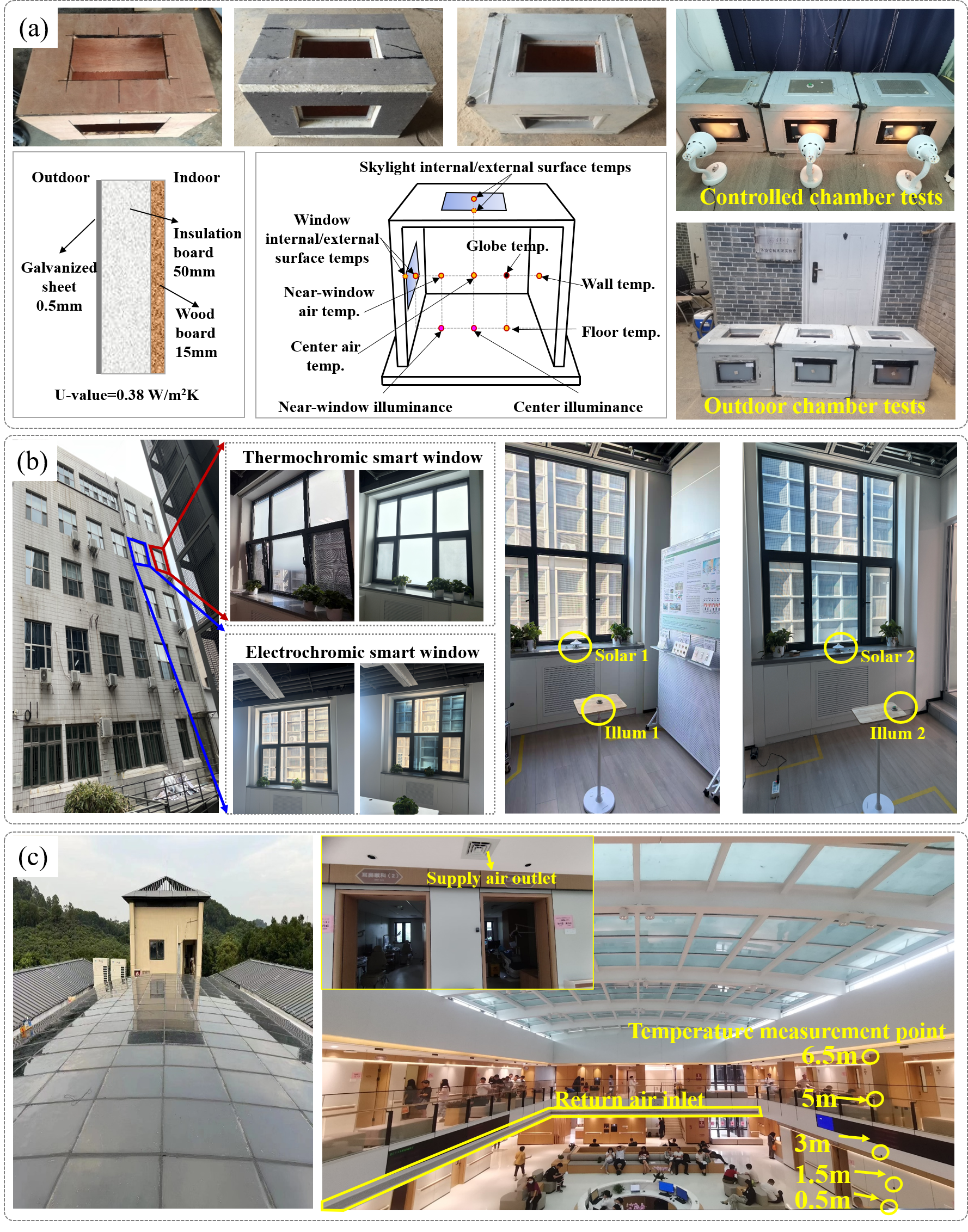
Figure 2. Experimental platforms and field measurement configurations. (a) Scaled chamber experiments, including chamber construction, envelope structure, sensor layout, controlled indoor tests, and outdoor chamber tests; (b) Full-scale office experiments with thermochromic and electrochromic windows installed in two comparable south-facing rooms, with solar radiation and illuminance measurement positions; (c) Large-area skylight field measurements in a public building atrium, showing the switchable dimming film skylight, air-conditioning inlet and outlet locations, and vertical temperature measurement points.
Unlike simplified test boxes made from wood boards or foam panels, from the exterior to the interior, the chamber envelope consisted of a 0.5 mm galvanized sheet, a 50-60 mm rigid polyurethane insulation layer and a 15 mm solid wood board (Figure 2a). The inner surface was made up of wood panels having a natural wood color and a non-glossy appearence, hence no extra coating was needed inside. The surface reflectivity of untreated medium toned wood is about 0.40. The same interior materials, colors, surface finishes and construction method were used in all three test chambers. Interior surface color and reflectivity determine the amount of solar radiation absorbed and subsequent multiple reflections, hence influencing the absolute temperature and illumination inside each test chamber. This potential source of error was avoided by having consistent interior finishes in all three test chambers. The thickness and thermophysical properties of each layer were selected and calculated to obtain an overall heat transfer coefficient of 0.38 W/(m2·K), which satisfies the envelope thermal-performance limits for cold and severe-cold regions with reference to the thermal requirements of public building energy-efficiency and building thermal-design standards[51].
Both indoor controlled tests and outdoor dynamic-climate tests were performed. In the indoor tests, a near-infrared lamp was used to simulate incident solar radiation (300, 600, 900W/m2) under controlled boundary conditions, allowing the basic response of TCWs to nominal onset transition temperature and ECWs to driving voltage to be identified. The outdoor tests relied on real weather variations, including solar radiation, outdoor air temperature, and sky conditions, to evaluate smart window performance under dynamic environmental disturbances.
2.3 Full-scale office experiments
Field measurements were conducted from May 31 to June 5, 2025 in Beijing. Two comparable office rooms were selected for side-by-side testing (Figure 2b). Each room had a plan dimension of 3 m × 3 m, and the envelope properties were kept identical to minimize the influence of non-window factors. A TCW and an ECW were separately installed on the south-facing façade of the two rooms. The window size in both rooms was 2.3 m × 2.3 m.
2.4 Large-area skylight field measurements
A large-area skylight field case was included to extend the chamber and office measurements to a deployment-scale application (Figure 2c). The case was conducted in a three-story public healthcare building in Shenzhen in June and August 2024. A voltage-controlled PDLC switchable dimming film was installed on the roof skylight above a 7.5 m-high atrium, with a total skylight area of 218 m2. This case was used to compare the visible-light and thermal responses of the PDLC system under large-area skylight operation.
2.5 Data acquisition and performance metrics
High-precision data acquisition systems and self-recording sensors were used to monitor indoor air temperature, inner surface temperature, illuminance, and solar radiation in the scaled chambers, real office rooms and large-area skylight case. The specifications, measurement ranges, and accuracies of the instruments are summarized in Table 2. For air temperature in the chamber, self-recording temperature data loggers with small tubular platinum resistance probes were employed. The sensing head was about 30 mm in length and 4 mm in diameter, and had a metal housing. Since an unshielded probe may receive incident short-wave radiation and register higher than the actual air temperature, each sensing head was protected by a thin and highly reflective aluminum-foil coating to minimize its absorptance of solar radiation and radiative heating. In all chambers, the same type of logger, same probe design, same foil coating, mounting position, distance from the glazing, and orientation were employed. A small residual radiative bias may remain; however, the identical probe treatment and placement improve comparability among chambers.
Table 2. Experimental instruments and sampling parameters.
| Image | Experimental instruments | Measurement content | Unit | Accuracy |
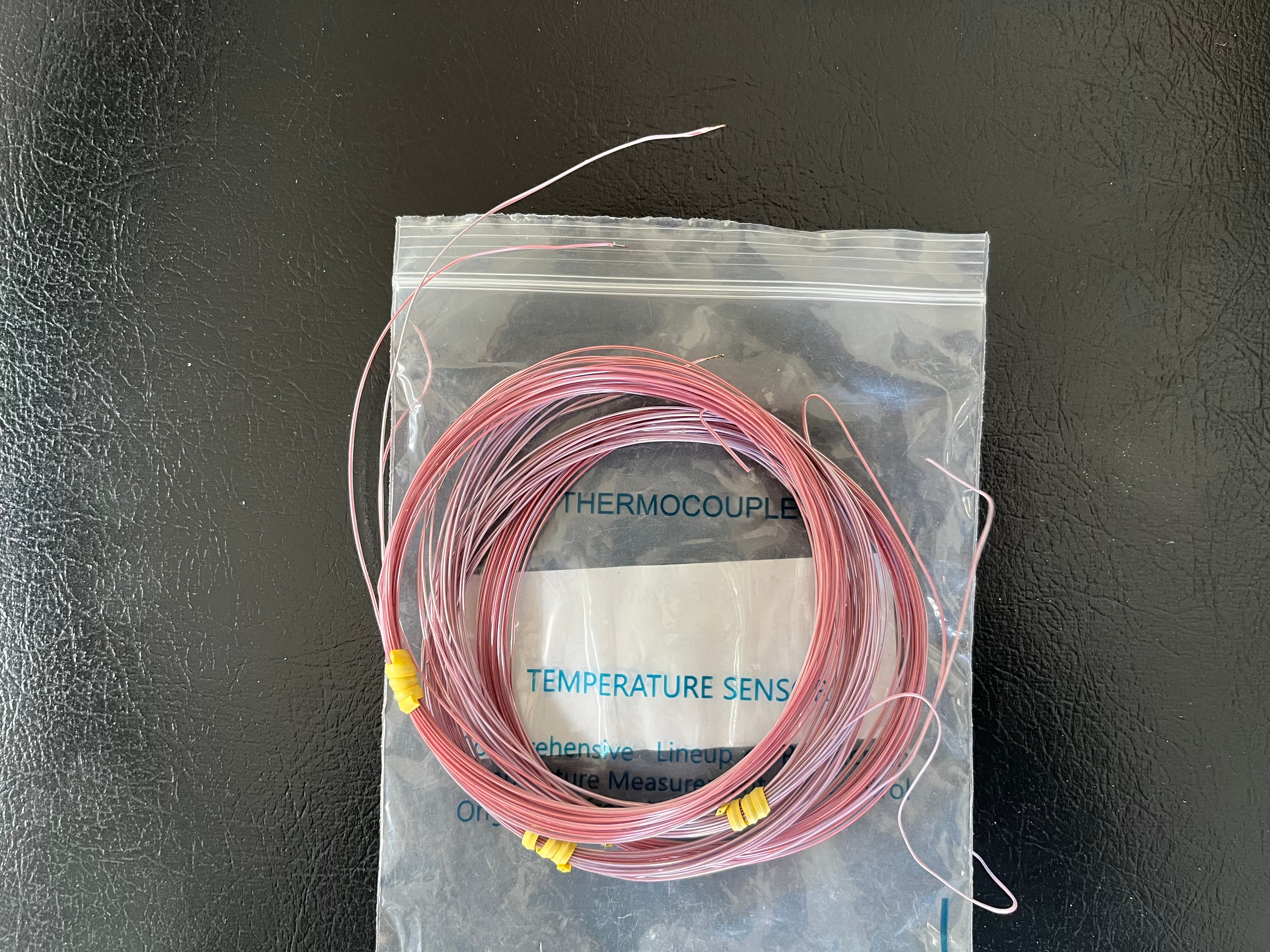 | T-type thermocouple | Environmental and surface temperature | °C | ± 0.5 |
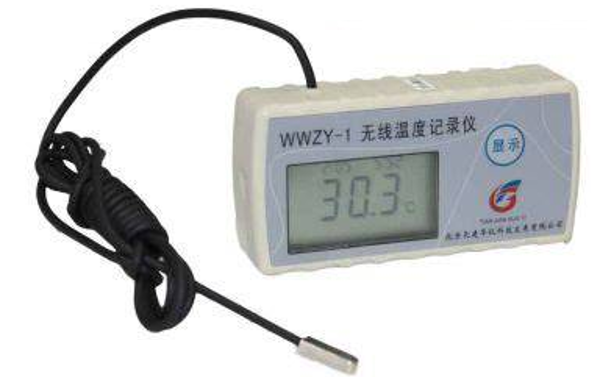 | Self-recording temperature data logger (tubular platinum-resistance probe, approximately 30 mm × Φ4 mm) | Environmental temperature | °C | ± 0.5 |
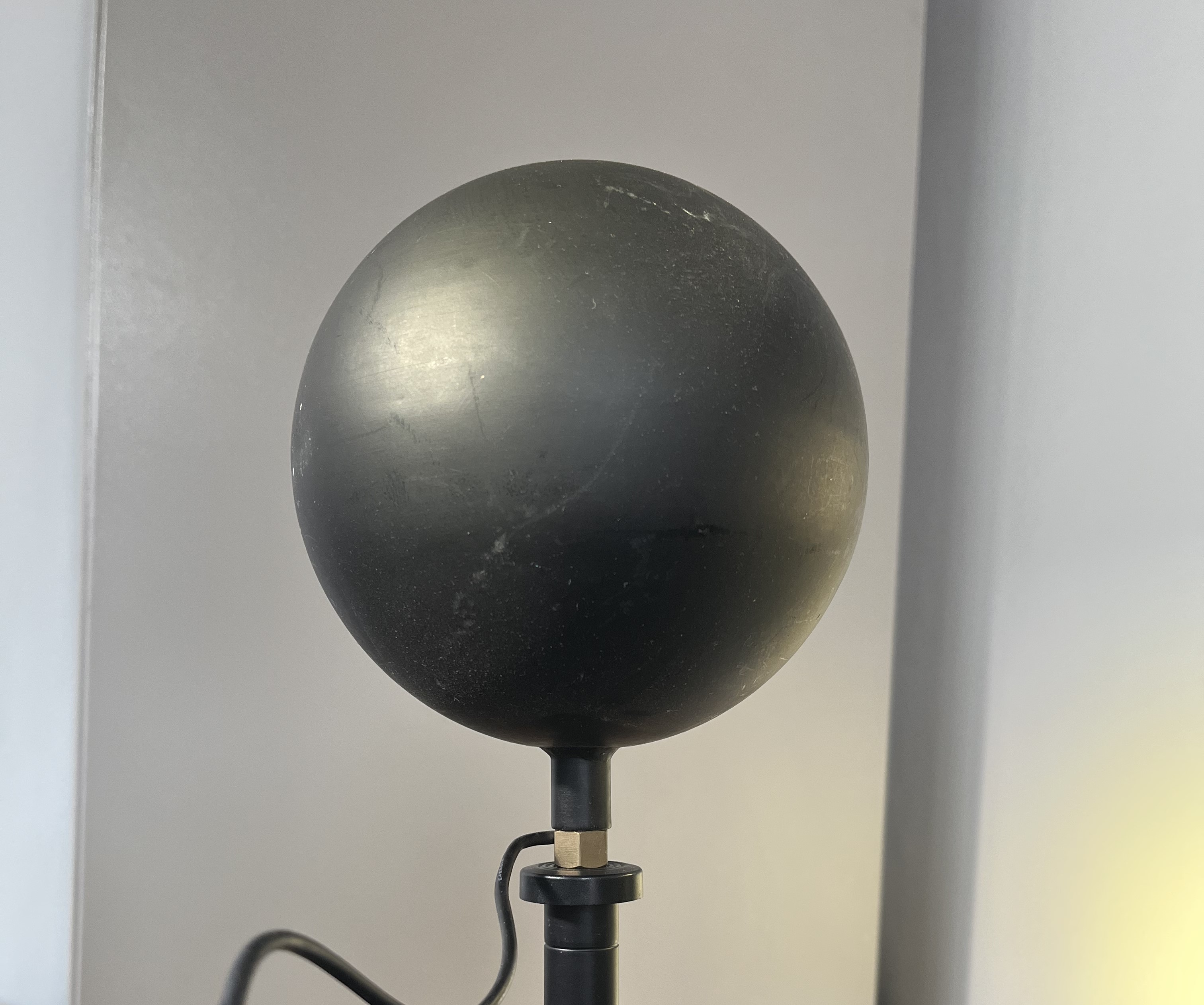 | Black ball thermometer | Black ball temperature | °C | ± 0.3 |
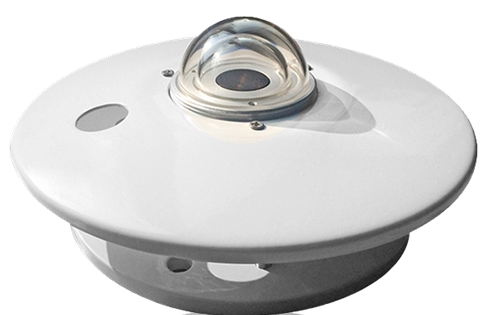 | Solar total radiation Meter | Solar radiation | W/m2 | ± 1.0 |
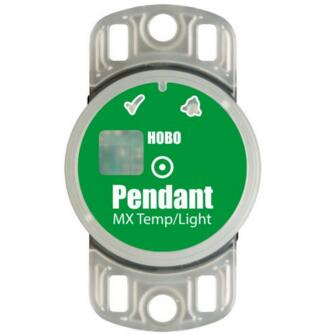 | Illuminance meter | Environmental illuminance | lx | ± 1.0 |
For the chamber tests, specific indicators included thermochromic transition time under different nominal onset transition temperatures and radiation conditions, as well as ECW response under different driving voltages and surface temperatures. For the real-office measurements, the analysis further considered the spatial difference between the near-window position and the room center 1.5 m from the window. For the large-area skylight case, the indicators included the work-plane illuminance and vertical air-temperature response within the atrium.
3. Results and Discussion
3.1 Controlled chamber tests of TCWs and ECWs
Indoor chamber tests were conducted under controlled conditions to compare the response of TCWs and ECWs without interference from wind, fluctuating outdoor temperature, or natural solar variation. A 250 W near-infrared heating lamp was used to provide incident radiation levels of 300, 600, and 900 W/m2. In each test, the lamp was switched on for 1 h and then turned off for 1 h, while the window response and indoor optical-thermal parameters were recorded. The 1 h irradiation period was selected to encompass the full optical response of all tested samples. In particular, the slowest sample (TCW-40 °C at 300 W/m2) needed about 50 min to achieve completion of its optical transition, as can be seen in Figure 3a. The subsequent 1-hour cooling process is designed to evaluate the cooling behavior of the sample and restore the window and chamber to their initial state, in order to minimize residual effects in the subsequent tests. Hour-scale irradiation and post-illumination cooling monitoring have also been adopted in previous smart window prototype and model chamber studies[29,52].
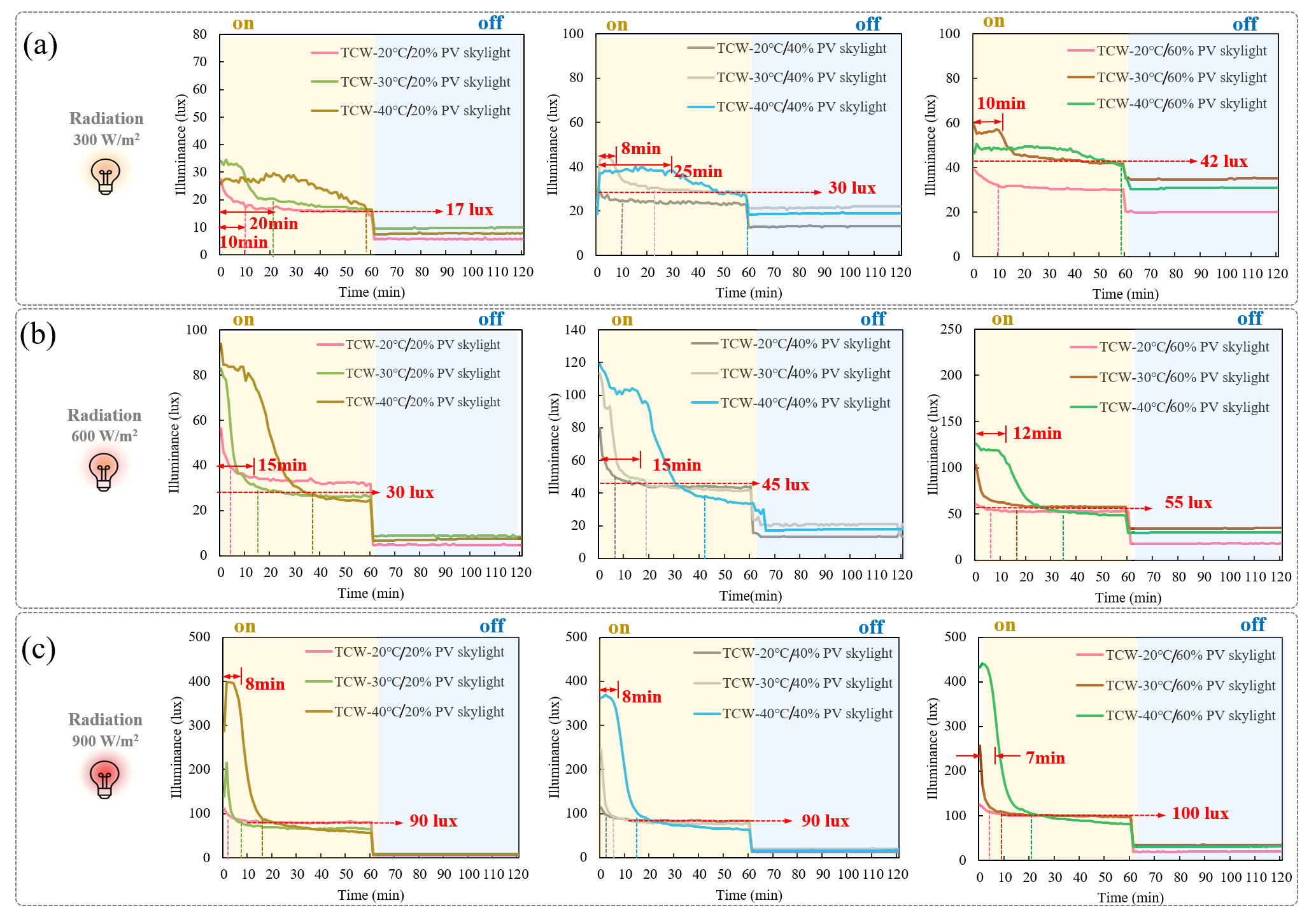
Figure 3. Illuminance response of thermochromic side windows combined with semi-transparent PV skylights under controlled chamber conditions. (a-c) Indoor illuminance variations under incident radiation intensities of (a) 300 W/m2; (b) 600 W/m2; (c) 900 W/m2. TCW-20 °C, TCW-30 °C, and TCW-40 °C denote thermochromic side-window samples with customized nominal onset transition temperatures of 20, 30, and 40 °C, respectively. A label such as ‘TCW-20 °C/20% PV skylight’ denotes a 20 °C thermochromic side window combined using a semi-transparent PV skylight with a 20% geometric transparent-area fraction. TCWs: thermochromic windows; PV: photovoltaic.
3.1.1 Controlled chamber tests of TCWs
For TCWs, the transition rate was strongly affected by both nominal onset transition temperature and radiation intensity (Figure 3). Under 300 W/m2, the TCW samples with nominal onset transition temperatures of 20 °C, 30 °C, and 40 °C completed the optical transition in approximately 10, 20, and 50 min, respectively. When the radiation intensity increased to 900 W/m2, the transition time decreased to about 2, 5, and 15 min.
The indoor illuminance curves show that differences among TCWs with different nominal onset transition temperatures mainly occurred during the transient switching stage. After full coloration, the steady illuminance became similar under the same radiation level and skylight configuration. For example, using a semi-transparent PV skylight with a 20% geometric transparent-area fraction, the stabilized illuminance was approximately 15 lx under 300 W/m2 (Figure 3a), 30 lx under 600 W/m2 (Figure 3b), and 90 lx under 900 W/m2 (Figure 3c) for all three TCW samples. The PV skylight had a more direct influence on the final illuminance. At 300 W/m2, the stabilized illuminance increased from about 17 to 30 and 42 lx as the PV skylight transparent-area fraction increased from 20% to 40% and 60%. This transparent-area effect became weaker under higher radiation, where the post-transition illuminance tended to converge near 90-100 lx. Therefore, TCW performance in the chamber was determined not only by nominal onset transition temperature, but also by incident radiation and skylight configuration.
3.1.2 Controlled chamber tests of ECWs
For ECWs, the response was mainly controlled by the applied voltage (Figure 4). Increasing the voltage from 0.5 to 1.5 V reduced the transmitted illuminance and shortened the coloring time. At 1.5 V, the complete coloring time decreased from approximately 10 min under 300 W/m2 (Figure 4a) to 8 min under 600 W/m2 (Figure 4b) and 5 min under 900 W/m2 (Figure 4c). The shorter coloration time under stronger radiation may be partly associated with radiation-induced heating of the glazing, as elevated temperature has been reported to increase Li+ diffusion kinetics in tungsten-oxide-based electrochromic films[53].
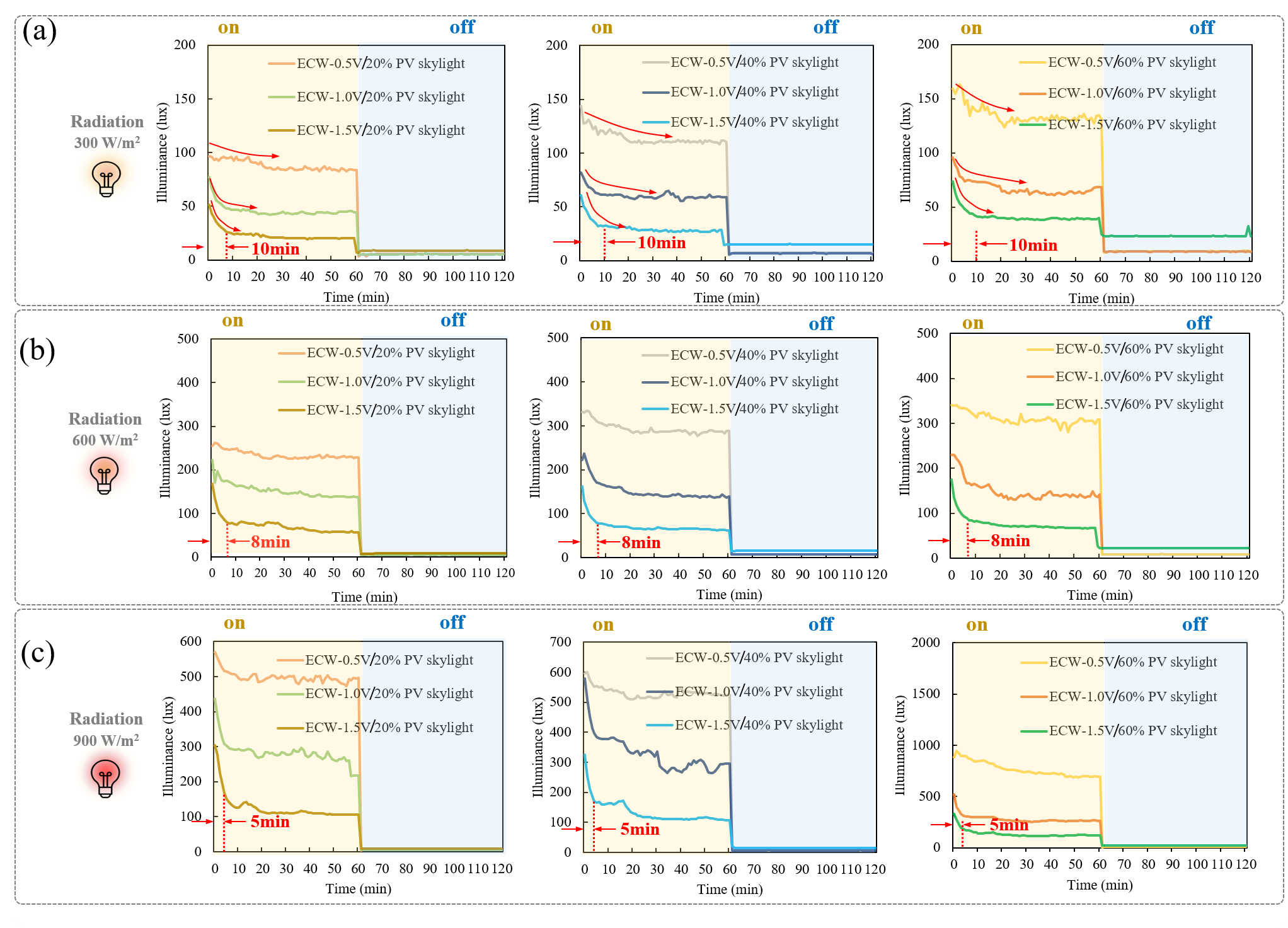
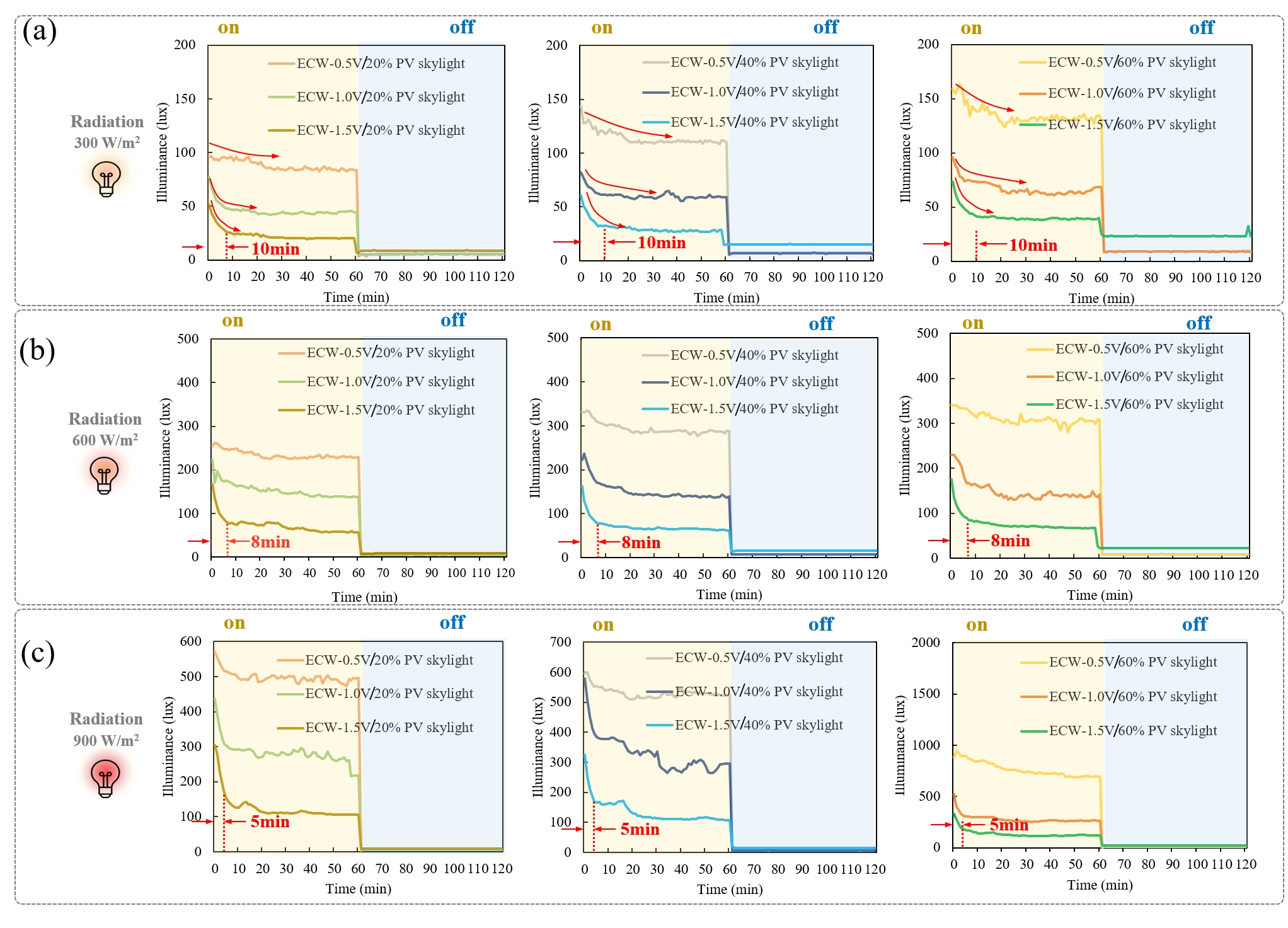
Figure 4. Illuminance response of electrochromic side windows combined with semi-transparent PV skylights under controlled chamber conditions. (a-c) Indoor illuminance variations under incident radiation intensities of (a) 300 W/m2; (b) 600 W/m2; (c) 900 W/m2. ECW-0.5 V, ECW-1.0 V, and ECW-1.5 V denote electrochromic side windows driven at 0.5, 1.0, and 1.5 V, respectively. A label such as ‘ECW-1.5 V/20% PV skylight’ denotes an electrochromic side window driven at 1.5 V combined using a semi-transparent PV skylight with a 20% geometric transparent-area fraction. PV: photovoltaic; ECWs: electrochromic windows.
The ECW results also show that voltage control and PV skylight transparent-area fraction jointly affected the indoor light level. A higher voltage effectively suppressed side-window transmission, whereas a PV skylight with a larger transparent-area fraction still increased indoor illuminance, particularly under strong radiation. Overall, the controlled chamber tests show that TCWs and ECWs follow different response mechanisms, but both require coordinated evaluation of material state, radiation condition, and window-skylight configuration.
3.2 Outdoor tests of TCWs and ECWs
3.2.1 Illuminance regulation by TCWs
Outdoor chamber tests were conducted to examine the daylight regulation of TCWs under real solar conditions. The indoor illuminance followed the variation in outdoor solar radiation, while the nominal onset transition temperature of the TCW further affected the timing and magnitude of the illuminance response.
For the TCW-20 °C cases, the lower transition temperature allowed the window to enter the translucent state earlier in the morning. This early transition reduced the influence of direct solar radiation before the radiation peak and smoothed the illuminance differences caused by different PV skylight transparent-area fractions (Figure 5a). In contrast, TCW-30 °C (Figure 5b) and TCW-40 °C (Figure 5c) showed delayed transition behavior and were more likely to produce high illuminance peaks when combined with a 60% PV skylight, especially near noon. These results suggest that TCWs with a lower nominal onset temperature can be advantageous for spaces that require stable daylighting and reduced illuminance fluctuation. However, the appropriate transition temperature should be determined together with building orientation, PV skylight transparent-area fraction, and occupancy schedule, rather than being optimized as an isolated material parameter.
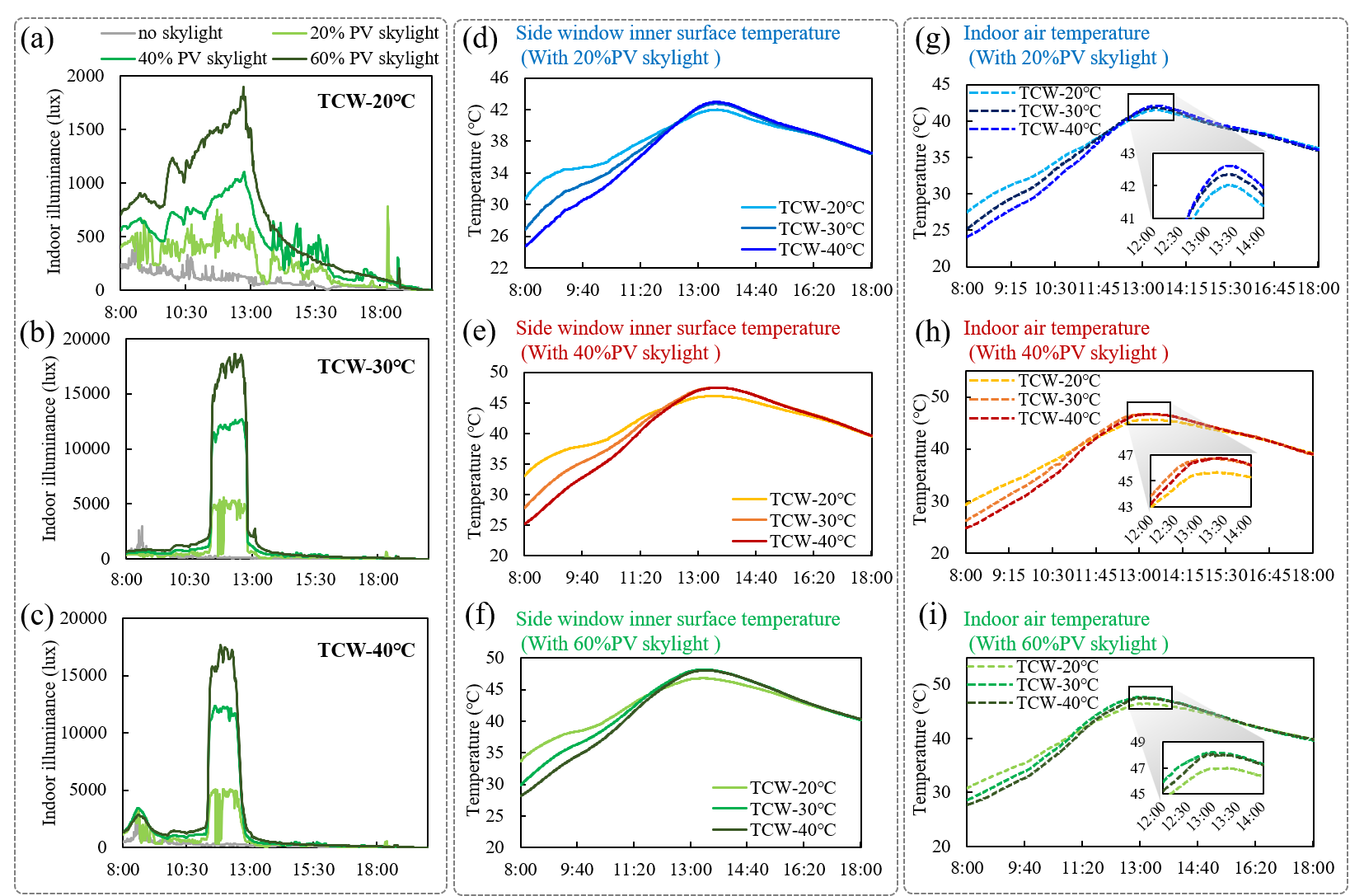
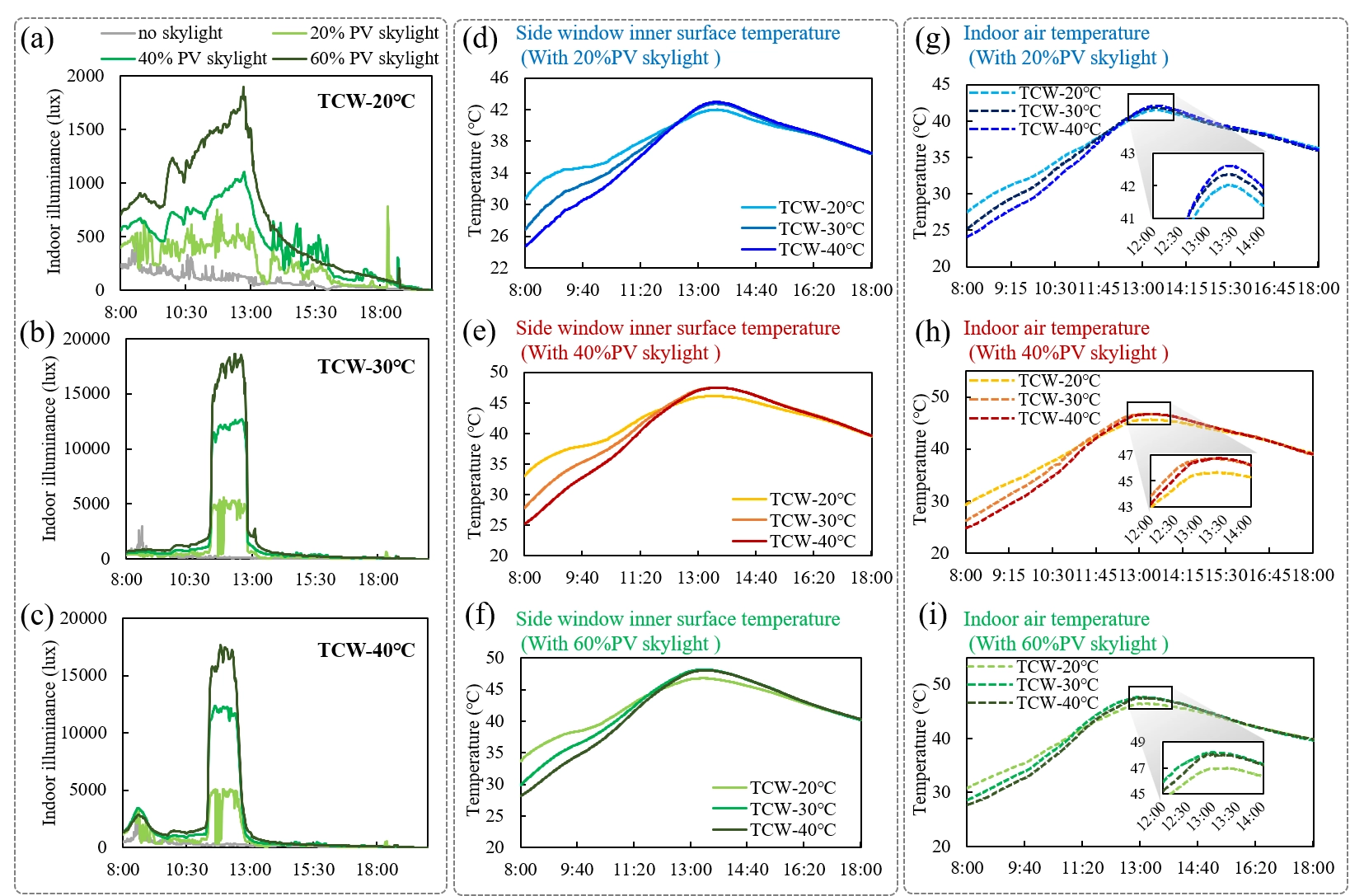
Figure 5. Outdoor chamber performance of thermochromic windows coupled with semi-transparent PV skylights. (a-c) Indoor illuminance variations for TCW-20 °C, TCW-30 °C, and TCW-40 °C under different PV skylight transparent-area fractions; (d-f) Inner surface temperature of TCW used as side windows; (g-i) Indoor air temperature. TCWs: thermochromic windows; PV: photovoltaic.
3.2.2 Thermal behavior of TCWs
The temperature results of thermochromic windows show that the influence of nominal onset transition temperature on the indoor thermal environment has a significant time lag. From 8:00 to 12:00, the chamber with TCW-20 °C generally showed a higher indoor air temperature than those with TCW-30 °C and TCW-40 °C, but its temperature rise rate was lower (Table 3). By contrast, TCW-40 °C exhibited the fastest morning temperature increase and exceeded the other cases after approximately 13:00, maintaining a higher temperature during the afternoon (Figure 5d,e,f,g,h,i).
Table 3. Temperature rise rate of indoor air from 8:00 to 12:00 for TCWs under different PV-skylight transparent area fractions.
| PV-skylight transparent area fraction | TCW-20 °C (°C/h) | TCW-30 °C (°C/h) | TCW-40 °C (°C/h) |
| No skylight | 1.6 | 1.8 | 1.8 |
| 20% | 2.7 | 3.3 | 3.5 |
| 40% | 3.4 | 4.4 | 4.6 |
| 60% | 3.3 | 4.2 | 4.3 |
PV: photovoltaic; TCWs: thermochromic windows.
This result suggests that a lower nominal onset transition temperature does not necessarily produce a lower chamber-temperature response. The early transition of TCW-20 °C reduces transmittance sooner, but the subsequent temperature response may also reflect thermal inertia associated with temporary storage and release of absorbed heat in the hydrogel-containing glazing. For TCW-40 °C, the delayed transition permits greater solar admission in the morning, which, together with this thermal inertia, may contribute to the higher afternoon temperature[45,54]. The PV skylight further amplified the measured temperature response. As PV skylight transparent-area fraction increased, both indoor air temperature and inner surface temperature increased, and the morning temperature rise became faster. For example, the 8:00-12:00 temperature rise rates of TCW-20 °C, TCW-30 °C, and TCW-40 °C were 1.6, 1.8, and 1.8 °C/h without a skylight, but increased to 3.4, 4.4, and 4.6 °C/h with a 40% PV skylight (Table 3). These results show that the TCW chamber-temperature response was governed by onset-transition timing, thermal inertia, and skylight solar admission under the tested conditions.
3.2.3 ECW illuminance
The outdoor ECW tests compared active electrochromic control with passive LowE glazing under the same skylight configurations (Figure 6a,b). For the LowE cases, indoor illuminance was directly affected by outdoor solar radiation and PV skylight transparent-area fraction. When the PV skylight transparent-area fraction increased from 20% to 60%, the illuminance peak during 11:00-13:00 increased substantially, and the 60% PV skylight case exceeded 14,000 lx. Short-term cloud cover also caused abrupt illuminance fluctuations, indicating that passive glazing had limited ability to moderate outdoor radiation variations.
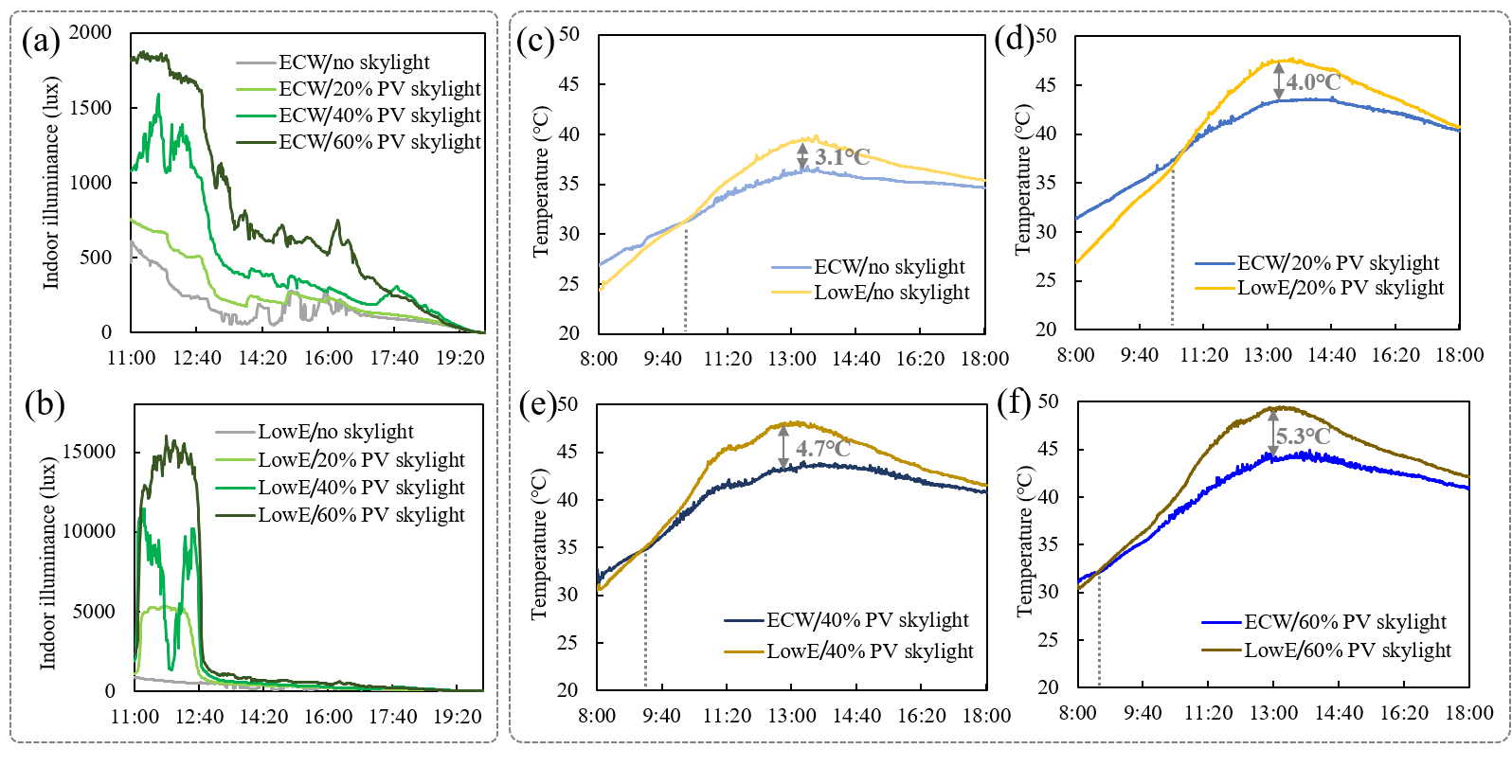
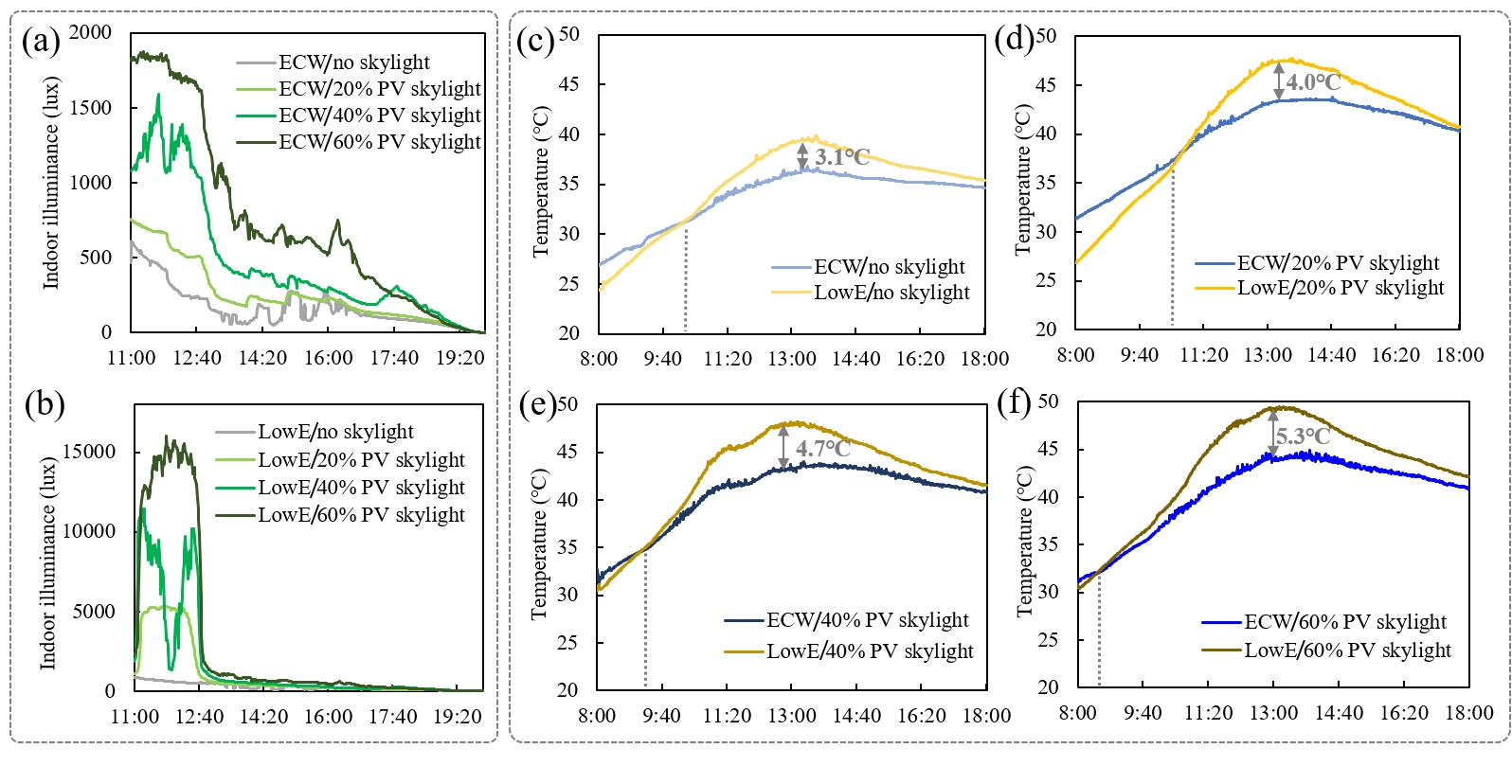
Figure 6. Outdoor illuminance and temperature responses of ECW and LowE side windows with semi-transparent PV skylights. (a,b) Indoor illuminance responses of chambers with (a) ECW and (b) LowE side windows; (c-f) Indoor air temperature of ECW and LowE chambers under (c) no skylight; (d) 20%; (e) 40%; (f) 60% PV skylight configurations. ECWs: electrochromic windows; PV: photovoltaic.
The ECW reduced these fluctuations through time-dependent voltage control. By adjusting the applied voltage from 0 to 1.5 V according to the daytime radiation level, the ECW limited the indoor illuminance peak to approximately 2,000 lx and reduced the difference among different PV skylight transparent-area fractions. This result indicates that the practical daylighting benefit of ECW comes not only from their low-transmittance colored state, but also from the ability to adapt transmittance to changing solar conditions. For spaces with skylights or high solar admission, ECW performance should therefore be assessed together with its control strategy.
3.2.4 ECW temperature
The temperature results further show how active ECW control was associated with the chamber-temperature response (Table 4). Before 11:00, no voltage was applied to the ECW so the window remained in a relatively transparent state. As a result, the ECW chamber admitted more transmitted solar radiation and showed a higher indoor temperature than the LowE chamber during the early period. After voltage was applied, the ECW transmittance decreased, and the indoor temperature rise slowed.
Table 4. Dynamic control strategy for ECW in outdoor chamber experiments.
| Time | 8:00~11:00 | 11:00~12:00 | 12:00~13:00 | 13:00~14:00 | 14:00~15:00 | 15:00~16:00 | 16:00~20:00 |
| Voltage | 0 V | 0.5 V | 1.0 V | 1.5 V | 1.0 V | 0.5 V | 0 V |
ECWs: electrochromic windows.
Across all skylight configurations, the ECW produced lower peak indoor temperatures than the LowE glazing (Figure 6c,d,e,f). The temperature difference became larger as the PV skylight transparent-area fractions increased. The peak temperature difference between the ECW and LowE cases was approximately 3.1 °C without a skylight and increased to approximately 5.3 °C with a 60% PV skylight. Meanwhile, the peak temperature of the LowE chamber increased from about 38 °C without a skylight to about 48 °C with a 60% PV skylight, whereas the ECW chamber increased from about 35 °C to about 43 °C. These results suggest that active electrochromic control can reduce the thermal penalty caused by PV skylights with large transparent-area fractions. They also indicate that the timing of voltage control is important. Earlier or predictive control may further reduce morning heat accumulation and subsequent temperature peaks.
3.3 Field tests in a real office
Field measurements in two south-facing office rooms were used to compare the optical and thermal responses of the installed TCW and ECW glazing assemblies under real building conditions. The two rooms had the same dimensions and comparable non-window envelope properties, while the glazing assembly and operating mode differed between the rooms. During the test period, the TCW operated passively according to outdoor solar radiation and surface temperature, whereas the ECW was maintained at the fixed T2 state with a solar transmittance of approximately 18%.
3.3.1 Daylight performance
The ECW room showed a highly non-uniform daylight response (Figure 7a). At the near-window position, illuminance increased sharply only during the 11:00 to 13:00 period and reached a peak of approximately 2,000 lx around noon. Outside this period, the near-window illuminance was generally below 80 lx, and the room-center illuminance at 1.5 m from the window remained below 80 lx throughout the day. This behavior indicates that a fixed low-transmittance ECW state can strongly reduce daylight admission during most operating hours. The short noon-time illuminance peak was mainly caused by the change in solar incidence angle. Around noon, the direct solar beam approached a more favorable incidence angle on the south-facing façade, reducing reflection losses and increasing the effective transmittance. In the morning and afternoon, the larger incidence angles led to stronger reflection and much lower transmitted daylight.
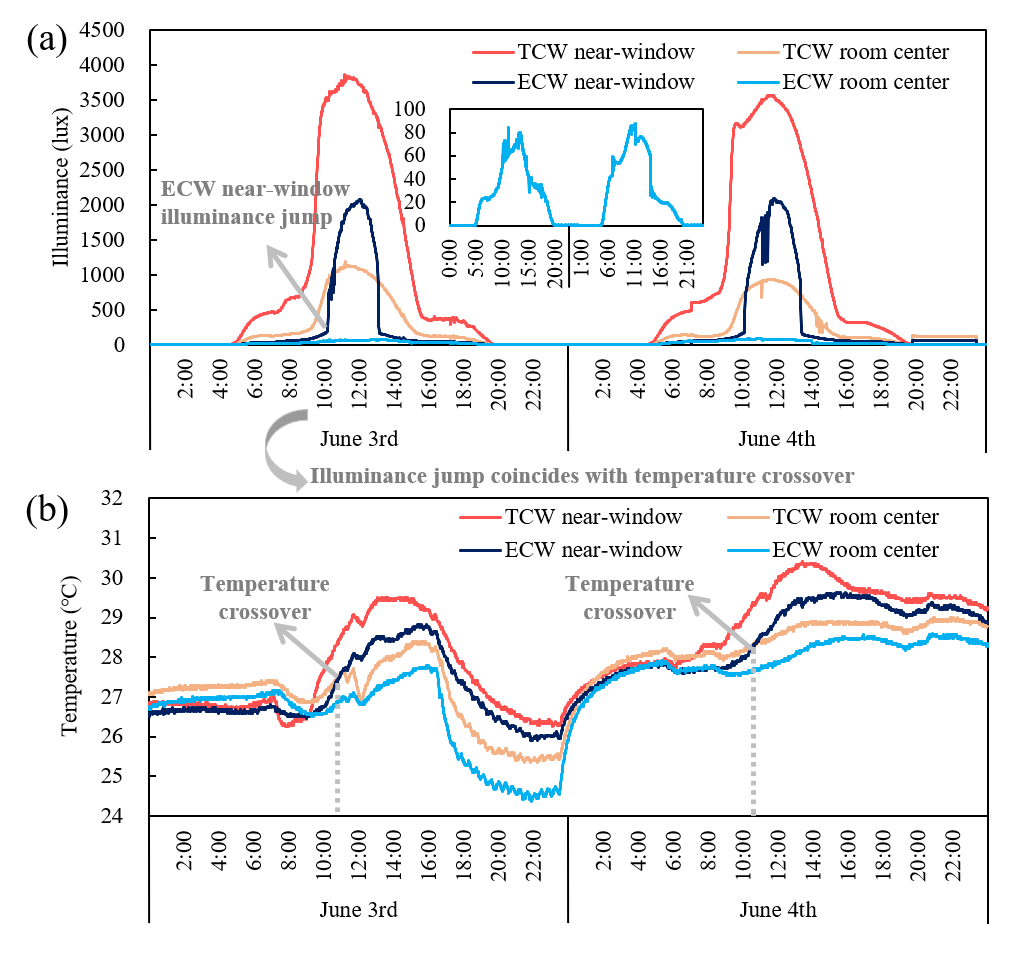
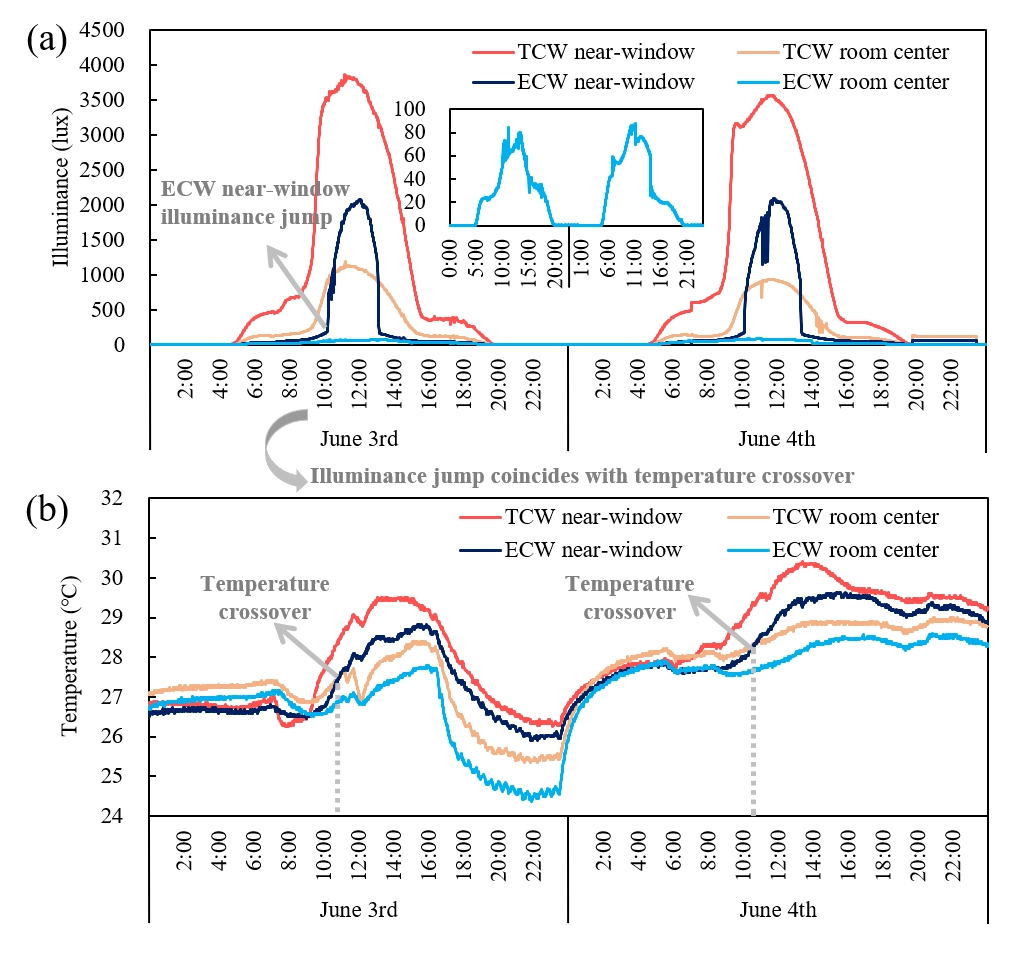
Figure 7. Field-measured illuminance and temperature responses of TCW and ECW in real office rooms. (a) Indoor illuminance and (b) indoor air temperature at the near-window and room-center positions. TCWs: thermochromic windows; ECWs: electrochromic windows.
The TCW room showed a smoother daylight profile. The near-window illuminance reached a peak of nearly 3,500 lx around noon, while the room-center illuminance reached approximately 1,000 lx. In the two tested south-facing office rooms, the passively operated TCW room maintained usable daylight for a longer period than the ECW room maintained at the fixed T2 state. After phase transition, the hydrogel layer changed into a translucent state and produced more diffuse transmitted light. This diffused light was less concentrated near the window and could be redistributed through indoor reflection, which improved the illuminance level in the deeper part of the room. Under these selected operating modes, the TCW room therefore exhibited longer daylight availability and a more spatially distributed illuminance profile.
3.3.2 Thermal performance
The temperature measurements showed clear differences between the two window types. Under typical summer daytime conditions and the selected passive TCW and fixed-T2 ECW operating modes, the overall temperature ranking was TCW near-window position, ECW near-window position, TCW room center, and ECW room center (Figure 7b). The higher temperature near the TCW glazing can be explained by its higher daylight and solar admission before and during the transition process. In contrast, the ECW glazing remained in the fixed T2 state, which reduced transmitted solar radiation and resulted in lower indoor temperatures in the tested ECW room, especially at the room center.
A horizontal temperature gradient was observed in both rooms. The near-window temperature was generally 1 to 1.5 °C higher than the room-center temperature. This difference suggests that, even in a small office room, solar heat gain through the window produced a localized thermal effect near the façade. The temperature distribution therefore depended not only on the total solar transmittance of the window, but also on the spatial concentration of transmitted radiation.
A notable temperature crossing occurred at approximately 10:30 on the typical test days. Before this point, the TCW room-center temperature was higher than the ECW near-window temperature. After this point, the ECW near-window temperature exceeded the TCW room-center temperature. This change was associated with the combined effect of solar incidence angle and window optical behavior. In the morning, the TCW allowed more solar energy into the room before fully stabilizing in the translucent state, which caused the room-center temperature to rise. The ECW, however, had very low effective transmittance under oblique solar incidence, so its early temperature increase was limited. Around 10:50, the solar altitude increased and the direct beam became more effectively transmitted through the ECW, causing a rapid rise in illuminance and short-wave radiation near the ECW window. As a result, the ECW near-window temperature increased quickly and became higher than the TCW room-center temperature during the noon period.
3.3.3 Coupled optical and thermal behavior
The combined illuminance, temperature, and radiation measurements reveal distinct optical-thermal responses of the two tested glazing assemblies under the selected operating modes. In the south-facing office fitted with the passively operated TCW, diffuse transmission from the translucent state was associated with longer daylight availability and a more spatially distributed illuminance profile. This room also showed higher temperatures at both the near-window and room-center positions, consistent with greater solar admission under the tested conditions. In the office fitted with the ECW maintained at the fixed T2 state, lower indoor temperatures were observed, while daylight remained limited for most of the day. The available daylight was largely confined to a short noon period near the window, indicating that the selected fixed low-transmittance setting would require adjustment when daylight utilization and thermal control are considered together.
Overall, the office measurements show that solar incidence angle, room depth, glazing construction, scattering behavior, and control state jointly shaped the measured optical and thermal responses. For the tested glazing assemblies, the passive TCW configuration maintained longer daylight availability, whereas the fixed-T2 ECW configuration limited solar admission and indoor temperature more strongly. The relative outcomes may vary with glazing construction, orientation, climate, and control strategy.
3.4 Visual-thermal mismatch in a large-area skylight
The chamber and office measurements showed that smart-window performance is strongly affected by radiation intensity, incidence angle, spatial distribution, and control state. To examine the same optical-thermal interaction under a larger exposed area and more complex building operation, a large-area skylight case was analyzed as a complementary field case. The case involved a voltage-controlled PDLC dimming film installed on a 218 m2 skylight above a 7.5 m-high atrium in a public healthcare building. The monitoring covered both thermal stratification under air-conditioning operation and daylight variation under bright and dark states.
The June measurements first showed that the atrium thermal environment was strongly governed by air-conditioning operation, even when the dimming film remained in the dark state (Figure 8a). During working hours, air conditioning maintained the indoor temperature at approximately 22-25 °C, and the vertical temperature difference was relatively small. The 5 m position, located near the supply air outlet, showed the lowest temperature and a clear W-shaped variation associated with the on-off operation of the air-conditioning system. After the system was turned off, the indoor temperature increased rapidly and approached 28-30 °C within two days. By June 11, the overall temperature and vertical temperature difference were both higher than those on June 7, which was associated with stronger solar radiation and heat accumulation after about two and a half days without air conditioning. This result indicates that the dark state alone could not prevent heat build-up in the large skylight atrium.
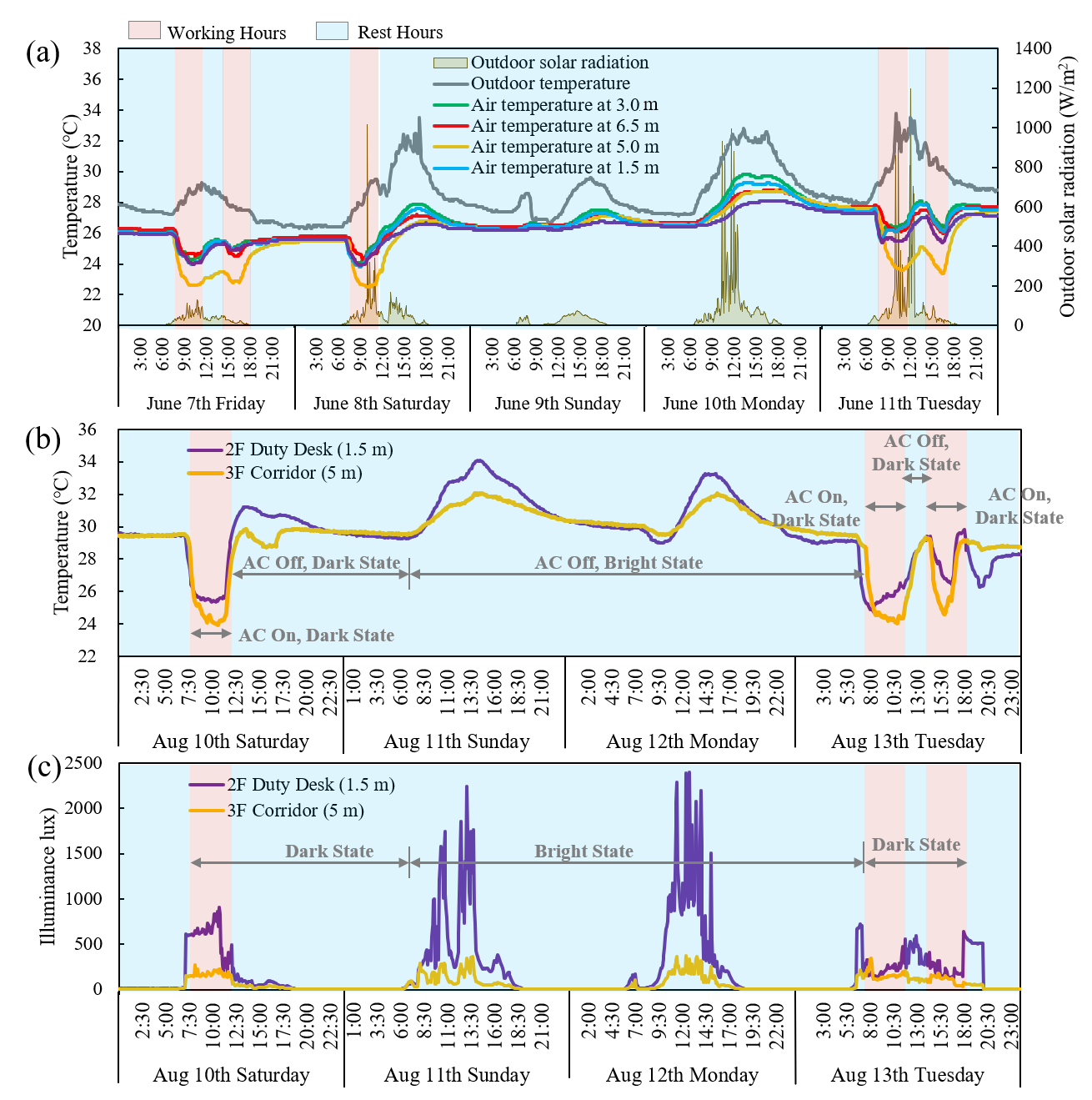
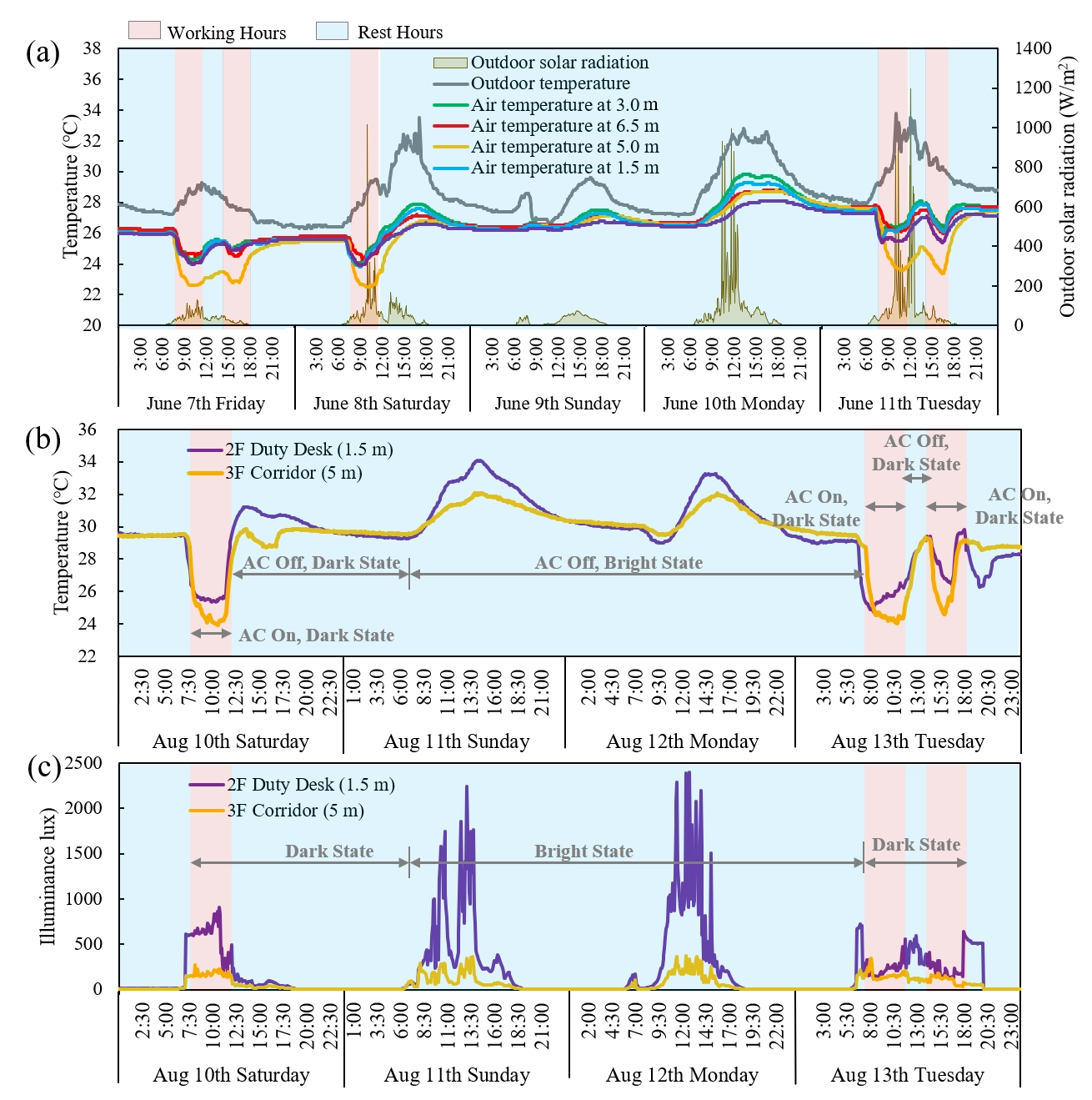
Figure 8. Field-measured thermal and daylight responses of a large-area PDLC skylight. (a) Vertical air-temperature profiles in June under the dark state; (b) Air-temperature variations in August under bright and dark states; (c) Corresponding illuminance variations in August. The dark state reduced visible light admission but provided limited suppression of heat accumulation. PDLC: polymer-dispersed liquid crystal.
The August measurements further clarified the coupled influence of film state and air-conditioning schedule (Figure 8b). On the morning of August 10, the combination of air-conditioning operation and dark-state dimming kept the indoor temperature relatively low. After air conditioning was turned off in the afternoon, the indoor temperature increased above 30 °C even though the film remained dark. On August 12, a clear W-shaped temperature profile appeared again, showing that the indoor environment was still primarily controlled by air-conditioning operation. The dark state slowed heat accumulation compared with the bright state, but it did not provide sufficient thermal protection by itself.
The illuminance results in August showed a different trend (Figure 8c). Under the dark state, the duty-desk illuminance was maintained at approximately 300-500 lx, suggesting a lower risk of excessive illuminance at this measurement point. Under the bright state, the duty-desk illuminance could exceed 2,000 lx, indicating a high-illuminance condition that warrants evaluation using standardized glare metrics. These measurements show that the PDLC film altered visible-light admission under the monitored conditions. However, spectral measurements showed that the near-infrared transmittance remained high in different voltage states, with infrared blocking ratios of only 18.7%, 17.8%, and 17.0% at 1, 10, and 20 V, respectively. The measured response therefore indicates strong visible-light attenuation but limited near-infrared attenuation.
3.5 Scenario-dependent implications for smart-window deployment
The results show that smart-window performance varies across material, component, room, and building-operation contexts. At the material level, the optical state of a smart window is not a fixed property under use conditions. The TCW transition depended on both nominal onset transition temperature and incident radiation, while the ECW response was affected by applied voltage and radiation-induced surface heating. Therefore, nominal spectral properties and switching states should be interpreted together with the thermal and radiative boundary conditions under which the window operates.
At the building-component level, the same material response can lead to different indoor outcomes when combined with different envelope configurations. The chamber tests with side windows and PV skylights showed that skylight solar admission changed both the measured illuminance and temperature responses. For TCWs, early transition reduced direct daylight fluctuation but did not necessarily minimize indoor temperature because thermal inertia and absorbed heat also contributed to the later temperature response. For ECWs, active voltage control limited excessive illuminance and was associated with lower measured temperature peaks, but the response depended on the timing of control and the amount of solar admission from the skylight.
At the room and building scale, spatial effects and system operation became more important. In the two tested south-facing office rooms, the glazing assemblies and selected passive-TCW and fixed-T2 ECW operating modes, together with solar incidence angle and room depth, shaped the distribution of transmitted light and heat and produced different near-window and room-center responses. In the large skylight case, the PDLC film produced clear visible-light modulation, while the monitored temperature response remained strongly influenced by near-infrared transmission and air-conditioning operation. These findings indicate that smart-window deployment should consider spectral selectivity, building geometry, solar exposure, occupancy schedule, and heating, ventilation, and air conditioning (HVAC) operation together.
Another important practical consideration for water-based TCWs is their long-term durability, which largely depends on whether the water-containing active layer can be retained within the sealed glass chamber. Leakage and drying are regarded as the main failure issues[45]. The commercial Hewei TCW evaluated here uses an encapsulated sandwich structure, the liquid hydrogel is injected between two glass panes through diagonally opposed filling and venting ports, which are sealed after complete filling. This design is consistent with T/CABEE 087-2024[55], which specifies dual-sealing and dedicated protection requirements for hydrogel-based windows. The same product family has also been deployed in multiple building projects in Southwest China for several years, providing practical field-use experience.
3.6 Comparison with independent experimental studies
In order to put these present measurements into a building performance perspective, Table 5 places the present measurements alongside representative independent experiments. The comparison retains the original test scale, reference glazing, control mode, and reported metric because these factors strongly influence absolute illuminance and temperature values.
Table 5. Quantitative comparison of the present measurements with representative independent experimental studies.
| System | Experimental scale and operation | Spectral performance | Switching response | Illuminance response | Temperature response |
| TCW, present study | Controlled and outdoor chambers; passively operated south-facing office | Temperature-dependent broadband scattering spectra | 2-50 min across 20-40 °C nominal onset temperatures | Office: ~3,500 lx near window and ~1,000 lx at room center around noon | Near-window air temperature ~1-1.5 °C above room center; outdoor rise rates 1.6-4.6 °C/h |
| Thermotropic glazing, Hong et al. 2025[56] | One-year field test in two full-size south-facing residential rooms | Tlum = 0.651 (15 °C) Tlum = 0.11 (55 °C) Tsol = 0.622 (15 °C) Tsol = 0.073 (55 °C) | Not reported | UDI300-3,000 lx increased by 7.71-18.43% by season | Seasonal mean room air temperature lower by 0.51-0.74 °C than clear glazing |
| HPC/PAA TCW, Zhang et al. 2021[52] | Lamp-heated model house; hydrogel window versus double glazing | Tlum 90.1%; ΔTsol 47.5% | 1.4 min response; 3.0 min recovery | Not reported as room illuminance | After 60 min, model-house air temperature 9.1 °C below double glazing |
| ECW, present study | Controlled and outdoor chambers with dynamic voltage; office maintained at fixed T2 | Tlum = 54.91 (0V) Tlum = 9.25% (2V) Tsol = 43.17(0V) Tsol = 7.48% (2V) | 5-10 min at 1.5 V, depending on irradiation | Outdoor peak limited to ~2,000 lx; fixed-T2 office < 80 lx most periods and ~2,000 lx near window at noon | Peak chamber air temperature 3.1-5.3 °C below LowE cases |
| ECW, Lee et al. 2000[57] | 62 cm × 173 cm lower ECW and 62 cm × 43 cm upper ECW | Tlum = 11-38% | 9-26 min | Adaptive switching reduced a direct-sun peak from 17,185 to 3,500 lx; whole-room peak remained ~8,110 lx in another clear-sky case | Cooling/temperature not measured |
| Full-scale gray ECW, Li et al. 2023[58] | Two large rooftop climate chambers in Singapore; clear and tinted states | Fully tinted Tlum 0.1% and SHGC 0.04 reported | < 3 min between clear and tinted states | Bleached state provided the most favorable visual condition for 39% of daytime | Interior surface temperature 3.0 °C lower in clear state and 4.4 °C lower in tinted state than single glass |
| PDLC, present study | 218 m2 skylight above a 7.5 m atrium; bright/dark states | Tlum ~40% at 20 V | ~0.1 s | Dark state 300-500 lx; bright state > 2,000 lx at the duty desk | Indoor temperature exceeded 30 °C after air-conditioning shutdown; limited state-dependent moderation |
| PDLC, Hemaida et al. 2020[48] | Small test cell under 400-1,000 W/m2 simulated radiation14.2 cm × 15cm PDLC window | Translucent-state NIR transmittance 44%; SHGC 0.68/0.63 (transparent/translucent) | Not reported | Not reported | At 1,000 W/m2, test-cell temperatures 51.22/53.91 °C (transparent/translucent) |
| PDLC, Qahtan and Almawgani 2022[60] | 1:5 chamber with dynamic insulated glazing; separate real-room west-window measurement | Tlum = 27-71% Tsol = 23-41% (Single glazing) | ~0.1 s | Illuminance increased with transparency; real-room daylight distribution changed with solar elevation | At 800 W/m2, transparent/colored outer surface temperature are 60.3 and 60.9 °C, respectively. |
TCWs: thermochromic windows; PDLC: polymer-dispersed liquid crystal; NIR: near-infrared; SHGC: solar heat gain coefficient.
For TCWs, the transition times of 2-50 minutes in this experiment cover a wider range than 1.4 min transition time of a well-designed HPC/PAA hydrogel window operating in a lamp heated model house[52]. But under the maximum irradiance, the 2-5 min responses of TCW-20 °C and TCW-30 °C got closer to the minute scale response of that device. At field scale, Hong et al. found the mean room temperatures were about 0.51-0.74 °C lower in rooms with thermotropic glazing, along with 7.71-18.43% higher UDI300-3,000 lx[56].
For ECWs, the present 5-10 min coloration time is faster than the 9-26 min reported for an early full-scale office testbed[57], but slower than the less-than-3-min transition of recent full-scale EC glazing in tropical climate chambers[58]. In the outdoor chambers, dynamic ECW control limited the illuminance peak to about 2,000 lx and lowered peak air temperature by 3.1-5.3 °C relative to LowE glazing. The latter is of the same order as the 3.0-4.4 °C reduction in interior surface temperature reported for full-scale EC glazing relative to single glass in Singapore[59]. In the office testbed of Lee et al., adaptive switching reduced a direct-sun work-plane peak from 17,185 to 3,500 lx, although switching delay remained a limitation[57]. Therefore, the fixed T2 operation used in the present office produced less than 80 lx for most monitored periods, its daylight outcome was weaker than that of adaptively controlled EC systems.
PDLC switching took place within 0.1 s, substantially faster than both TCWs and ECWs. However, spectral performance was rather poor, because at 20 V visible transmittance was 40%, but near-infrared blockage only amounted to 17.0-18.7%. Spectral tests with PDLC test-cells also revealed that there were significant levels of solar transmission, such as NIR-transmittance of 44% in the translucent state and SHGC of 0.68 and 0.63 in the transparent and translucent states, respectively[48]. The differences between transparency and coloration for PDLC glazing at 800 W/m2 amounted to just 0.6 °C for Qahtan and Almawgani[60]. Against this background, the reduction from more than 2,000 lx in the bright state to 300-500 lx in the dark state in the present 218 m2 skylight represents strong visible-light control, whereas the limited temperature moderation is comparable with the modest state-dependent thermal differences in prior PDLC experiments.
In general, the current data are within the large experimental ranges found for all three technologies, but their relative strengths differ by metric. The TCW system achieves field-consistent diffuse daylight distribution with more variation in switching performance; the ECW system is characterized by mid-level switching and temperature moderating capabilities equivalent in scale to recent full-scale experiments, but needs adaptive control to prevent underlighting; and the PDLC system achieves fast switching performance, but poor near-infrared selectivity. These comparisons support a scenario-dependent interpretation of the measured responses.
4. Conclusion
This study evaluated the optical and temperature responses of stimuli-responsive smart windows using controlled chamber tests, outdoor chamber tests, full-scale office measurements, and a large-area skylight field case. The objective was to compare how material-level optical modulation was associated with indoor optical and thermal responses under distinct test and application conditions. Because the experimental platforms differed in glazing assembly, control mode, geometry, and environmental boundary conditions, the findings are interpreted as complementary scenario-specific evidence.
The controlled chamber tests showed that TCW and ECW responses are strongly affected by operating conditions. TCW transition became faster with lower nominal onset transition temperature and higher radiation intensity, while ECW coloration was accelerated by higher voltage and stronger radiation-induced heating. Outdoor chamber tests further showed that the measured responses depended on the combined effects of material state and building configuration. The TCW chamber-temperature response was affected by transition timing, thermal inertia, and skylight solar admission, whereas ECW dynamic control limited illuminance peaks and was associated with lower chamber temperatures than LowE glazing under the tested control schedule.
The full-scale office tests showed that real building conditions and operating choices reshape the balance between daylight and heat control. In the two tested south-facing rooms, the passively operated TCW configuration exhibited longer daylight availability and a more spatially distributed illuminance profile, together with higher solar admission and indoor temperatures. The ECW configuration maintained at the fixed T2 state showed lower indoor temperatures but limited daylight for most of the day. These observations apply to the tested glazing assemblies and operating modes and may vary with glazing construction, orientation, climate, and control strategy. The large-area skylight case further showed that visible dimming by the PDLC film was accompanied by only limited temperature moderation when near-infrared transmittance remained high.
Overall, this work shows that smart-window responses cannot be interpreted from optical modulation alone. Their building-scale implications depend on the match among material spectral response, building scenario, and operation strategy. Future smart-window design should therefore emphasize visible and near-infrared split-band regulation, adaptive control, and scenario-specific integration with building-envelope and HVAC operation. Future work should connect these short-term optical and temperature responses with annual lighting and HVAC energy analyses and standardized glare and thermal-comfort metrics, and should further provide independent long-term field monitoring and accelerated-aging validation of hydrogel TCW durability under building-relevant service conditions.
Acknowledgements
The authors used ChatGPT (OpenAI) solely for language polishing and grammatical correction to improve clarity, readability, and writing style. All research content, including the study design, experimental procedures, original data, data processing and analysis, interpretation of results, conclusions, figures, and tables, was independently produced and verified by the authors and was not generated using AI tools. The authors reviewed, revised, and approved the final manuscript and take full responsibility for its content.
Authors contribution
Wu S: Conceptualization, data curation, formal analysis, funding acquisition, visualization, writing-original draft.
Lin B: Conceptualization, funding acquisition, project administration, writing-review & editing.
Peng Y: Conceptualization, resources, funding acquisition, project administration, writing-review & editing.
Conflicts of interest
The authors declare no conflicts of interest.
Ethical approval
Not applicable.
Consent to participate
Not applicable.
Consent for publication
Not applicable.
Availability of data and materials
The data and materials could be obtained from the corresponding author upon request.
Funding
The study was supported by the National Natural Science Foundation of China (Grant Nos. 524B2112, 22475007, and 52425801), the Postdoctoral Fellowship Program and China Postdoctoral Science Foundation under Grant No. BX2026251, and the Shenzhen Municipal Key Industrial Research and Development Program (Grant No. ZDCY20250904161859001).
Copyright
© The Author(s) 2026.
References
-
1. United Nations Environment Programme. Building fast. Falling short. As climate risks rise and cities grow, we must rethink how we build to create better lives for all—Global Status Report for Buildings and Construction 2025-2026. Paris: United Nations Environment Programme;2026:[DOI]
-
2. Rezaei SD, Shannigrahi S, Ramakrishna S. A review of conventional, advanced, and smart glazing technologies and materials for improving indoor environment. Sol Energy Mater Sol Cells. 2017;159:26-51.[DOI]
-
3. Jelle BP, Hynd A, Gustavsen A, Arasteh D, Goudey H, Hart R. Fenestration of today and tomorrow: A state-of-the-art review and future research opportunities. Sol Energy Mater Sol Cells. 2012;96:1-28.[DOI]
-
4. Baetens R, Jelle BP, Gustavsen A. Properties, requirements and possibilities of smart windows for dynamic daylight and solar energy control in buildings: A state-of-the-art review. Sol Energy Mater Sol Cells. 2010;94(2):87-105.[DOI]
-
5. Huang Y, Wu S, Zhao S, Guo Z, Zhao Z, Wu X, et al. A novel liquid flow electrochromic smart window for all-year-round dynamic photothermal regulation. Energy Environ Sci. 2025;18(4):1824-1834.[DOI]
-
6. Wang Y, Liang Z, Shi S, Tang G, Peng Y. Radiative thermal management material for net-zero buildings. Cell Rep Phys Sci. 2025;6(10):102903.[DOI]
-
7. Wu S, Peng Y, Lin B. Reorienting smart window innovation: From material-centric metrics to grid-interactive flexibility. Energy Use. 2026;2(2):100047.[DOI]
-
8. Jiang C, He L, Xuan Q, Liao Y, Dai JG, Lei D. Phase-change VO2-based thermochromic smart windows. Light Sci Appl. 2024;13:255.[DOI]
-
11. Huang Y, Wang B, Chen F, Han Y, Zhang W, Wu X, et al. Electrochromic materials based on ions insertion and extraction. Adv Opt Mater. 2022;10(4):2101783.[DOI]
-
13. Shen W, Li G. Recent progress in liquid crystal-based smart windows: Materials, structures, and design. Laser Photonics Rev. 2023;17:2200207.[DOI]
-
14. Deng Y, Yang Y, Xiao Y, Xie HL, Lan R, Zhang L, et al. Ultrafast switchable passive radiative cooling smart windows with synergistic optical modulation. Adv Funct Mater. 2023;33(35):2301319.[DOI]
-
15. Zhao S, Wang B, Zhu N, Huang Y, Wang F, Li R, et al. Dual-band electrochromic materials for energy-saving smart windows. Carbon Neutral. 2023;2(1):4-27.[DOI]
-
16. Hu Z, Tan Y, Yao K, Sun J, Wei H, Zhao Y, et al. Scalable hydrogel smart windows with moisture retention and low-emissivity for sustainable buildings. Appl Energy. 2026;410:127511.[DOI]
-
17. Zeng H, Zhang L, Han K, Xue Y, Gao Y. Multilayer thermochromic radiative cooling smart window for building thermal regulation. Energy Build. 2026;363:117603.[DOI]
-
19. Tällberg R, Jelle BP, Loonen R, Gao T, Hamdy M. Comparison of the energy saving potential of adaptive and controllable smart windows: A state-of-the-art review and simulation studies of thermochromic, photochromic and electrochromic technologies. Sol Energy Mater Sol Cells. 2019;200:109828.[DOI]
-
20. Aburas M, Soebarto V, Williamson T, Liang R, Ebendorff-Heidepriem H, Wu Y. Thermochromic smart window technologies for building application: A review. Appl Energy. 2019;255:113522.[DOI]
-
22. Wu S, Sun H, Duan M, Mao H, Wu Y, Zhao H, et al. Applications of thermochromic and electrochromic smart windows: Materials to buildings. Cell Rep Phys Sci. 2023;4(5):101370.[DOI]
-
23. Huang Y, Wang B, Lyu P, Zhao S, Wu X, Zhang S, et al. Oxygen-deficient tungsten oxide nanoflowers for dynamically tunable near-infrared light transmittance of smart windows. Nano Res. 2023;16(10):12165-12172.[DOI]
-
24. Wang B, Huang Y, Zhao S, Li R, Gao D, Jiang H, et al. Novel self-assembled porous yolk-shell NiO nanospheres with excellent electrochromic performance for smart windows. Particuology. 2024;84:72-80.[DOI]
-
25. Lee ES, Tavil A. Energy and visual comfort performance of electrochromic windows with overhangs. Build Environ. 2007;42(6):2439-2449.[DOI]
-
26. Xing W, Hao J, Ma W, Gong G, Nizami AS, Song Y. Energy performance of buildings using electrochromic smart windows with different window-wall ratios. J Green Build. 2022;17(1):3-20.[DOI]
-
27. Budaiwi IM, Abdul Fasi M. Assessing the energy-saving potential and visual comfort of electrochromic smart windows in office buildings: A case study in Dhahran, Saudi Arabia. Sustainability. 2023;15(12):9632.[DOI]
-
28. Llordés A, Garcia G, Gazquez J, Milliron DJ. Tunable near-infrared and visible-light transmittance in nanocrystal-in-glass composites. Nature. 2013;500(7462):323-326.[DOI]
-
30. Cao S, Zhang S, Zhang T, Yao Q, Lee JY. A visible light-near-infrared dual-band smart window with internal energy storage. Joule. 2019;3(4):1152-1162.[DOI]
-
31. Zhang S, Cao S, Zhang T, Fisher A, Lee JY. Al3+ intercalation/de-intercalation-enabled dual-band electrochromic smart windows with a high optical modulation, quick response and long cycle life. Energy Environ Sci. 2018;11(10):2884-2892.[DOI]
-
32. Wu S, Sun J, Duan Z, Li X, Xiao J, Sun H, et al. Building-tailored hierarchical electrochromism with optimized control strategies. Adv Sci. 2025;12(47):e13530.[DOI]
-
33. Wu S, Sun H, Song J, Liu S, Shi S, Tso C, et al. Comprehensive analysis on building performance enhancement based on selective split-band modulated adaptive thermochromic windows. Appl Energy. 2024;372:123754.[DOI]
-
34. Cui Y, Ke Y, Liu C, Chen Z, Wang N, Zhang L, et al. Thermochromic VO2 for energy-efficient smart windows. Joule. 2018;2(9):1707-1746.[DOI]
-
36. Cannavale A, Ayr U, Fiorito F, Martellotta F. Smart electrochromic windows to enhance building energy efficiency and visual comfort. Energies. 2020;13(6):1449.[DOI]
-
37. Fan Z, Yang Z, Yang L. Daylight performance assessment of atrium skylight with integrated semi-transparent photovoltaic for different climate zones in China. Build Environ. 2021;190:107299.[DOI]
-
38. Khalifeeh R, Alrashidi H, Sellami N, Mallick T, Issa W. State-of-the-art review on the energy performance of semi-transparent building integrated photovoltaic across a range of different climatic and environmental conditions. Energies. 2021;14(12):3412.[DOI]
-
39. Ding Y, Mei Z, Zhang W, Wu X, Zhang Y, Gao D, et al. Intelligent electrochromic photothermal regulation for integrated building energy saving. Energy Environ Sci. 2025;18(23):10088-10101.[DOI]
-
40. van Geijn R, van Zandvoort R, Leufkens L, Hupperetz J, Out D, Aninat R, et al. Full-year monitoring of the real-life performance of a thermochromic smart window in a tailored test building. Energy Build. 2026;368:117881.[DOI]
-
41. Zhong Y, Peng J, Luo Y, Tan Y, Yang X, Yang L. Behavior-informed split-pane electrochromic window control: Laboratory experiment, comfort threshold extraction, and strategy validation. Build Environ. 2026;296:114495.[DOI]
-
42. Sun N, Yang H. Analysis of temperature and humidity control of PDLC smart windows in office building applications. Buildings. 2026;16(3):542.[DOI]
-
43. Li DHW, Lam TNT, Cheung KL. Energy and cost studies of semi-transparent photovoltaic skylight. Energy Convers Manag. 2009;50(8):1981-1990.[DOI]
-
45. Zhou Y, Wang S, Peng J, Tan Y, Li C, Boey FYC, et al. Liquid thermo-responsive smart window derived from hydrogel. Joule. 2020;4(11):2458-2474.[DOI]
-
46. Peng H, Fu R, Wang H, Liu Z, Gu Y, Yang Q, et al. On-demand electro-/thermo-chromic smart windows with self-adaptive sensible heat storage for multimode synergistic building energy conservation. Appl Energy. 2026;405:127222.[DOI]
-
47. Zhao F, Wang B, Huang B, Zhang W, Chen J, Liu L, et al. Inorganic electrochromic smart windows for advancing building energy efficiency. Nat Rev Clean Technol. 2025;1(6):396-412.[DOI]
-
48. Hemaida A, Ghosh A, Sundaram S, Mallick TK. Evaluation of thermal performance for a smart switchable adaptive polymer dispersed liquid crystal (PDLC) glazing. Sol Energy. 2020;195:185-193.[DOI]
-
49. Gao Y, Jonsson JC, Curcija DC, Vidanovic S, Hong T. Global and regional perspectives on optimizing thermo-responsive dynamic windows for energy-efficient buildings. Nat Commun. 2025;16:199.[DOI]
-
50. Shi S, Zhu N, Wu S, Song Y. Evaluation and analysis of transmitted daylight color quality for different colored semi-transparent PV glazing. Renew Energy. 2024;222:119826.[DOI]
-
51. Ministry of Housing and Urban-Rural Development of the People’s Republic of China. Code for thermal design of civil building (GB 50176-2016). Beijing: China Architecture & Building Press; 2016. Chinese. Available from: https://ebook.chinabuilding.com.cn/zbooklib/bookpdf/probation?SiteID=1&bookID=74305
-
52. Zhang L, Xia H, Xia F, Du Y, Wu Y, Gao Y. Energy-saving smart windows with HPC/PAA hybrid hydrogels as thermochromic materials. ACS Appl Energy Mater. 2021;4(9):9783-9791.[DOI]
-
53. Matthews JP, Bell JM, Skryabin IL. Effect of temperature on electrochromic device switching voltages. Electrochim Acta. 1999;44(18):3245-3250.[DOI]
-
54. Zhang X, Yuan J, Han Y, Kong X. Thermochromic hydrogel couple energy storage integrated smart window with adjustable temperature point and thermochromic temperature zone. Energy Build. 2024;324:114891.[DOI]
-
55. China Association of Building Energy Efficiency. Technical specification for application of thermochromic insulating glass (T/CABEE 087-2024). Beijing: China Association of Building Energy Efficiency; 2024. Available from: https://www.cabee.org/site/content/25219.html
-
56. Hong X, Yang F, Huang Y, Shi F. A one-year field-scale experiment on the daylighting and building thermal performance of thermotropic window in subtropical area. J Build Eng. 2025;109:113050.[DOI]
-
57. Lee ES, DiBartolomeo DL, Selkowitz SE. Electrochromic windows for commercial buildings: Monitored results from a full-scale testbed. In: Proceedings of the ACEEE 2000 Summer Study on Energy Efficiency in Buildings; 2000 Aug 20-25; Pacific Grove, USA. Berkeley: Lawrence Berkeley National Laboratory; 2000. p. 241-252. Available from: https://escholarship.org/content/qt1k03447h/qt1k03447h.pdf
-
58. Li W, Shah KW, Li Y. Effects of electrochromic glass window on energy efficiency, thermal and visual performances under tropical climate. Energy Sustain Dev. 2023;76:101300.[DOI]
-
59. Li Y, Shah KW, Li W, Xiong T. Experimental investigation on indoor thermal environment improvement and energy-saving of electrochromic window under Singapore’s tropical climate. J Build Eng. 2023;73:106779.[DOI]
-
60. Qahtan AM, Almawgani AHM. Experimental evaluation of thermal and lighting performance using double dynamic insulated glazing. Buildings. 2022;12(8):1249.[DOI]
Copyright
© The Author(s) 2026. This is an Open Access article licensed under a Creative Commons Attribution 4.0 International License (https://creativecommons.org/licenses/by/4.0/), which permits unrestricted use, sharing, adaptation, distribution and reproduction in any medium or format, for any purpose, even commercially, as long as you give appropriate credit to the original author(s) and the source, provide a link to the Creative Commons license, and indicate if changes were made.
Publisher’s Note
Science Exploration remains a neutral stance on jurisdictional claims in published
maps
and institutional affiliations. The views expressed in this article are solely those
of
the author(s) and do not reflect the opinions of the Editors or the publisher.
Share And Cite


Science Exploration Style
Wu S, Lin B, Peng Y. Scenario dependent optical-thermal performance of stimuli-responsive smart windows across chamber and building measurements. Smart Mater Devices. 2026;2:202640. https://doi.org/10.70401/smd.2026.0044
Tips
Copy completed.
Submit a Manuscript
Author Instructions
Cite this Article
Article Metrics
0
View
0
Download
Cited
Article Updates

 Get citation
Science Exploration Style

Wu S, Lin B, Peng Y. Scenario dependent optical-thermal performance of stimuli-responsive smart windows across chamber and building measurements. Smart Mater Devices. 2026;2:202640. https://doi.org/10.70401/smd.2026.0044
copy
Share Link
copy