
Carbonization of Seaweed Polysaccharides for Biomedical Applications
Time
3:00 PM, March 6, 2026 (Beijing)Contact Us
Email: bmehjournal@sciexplor.comSpeaker
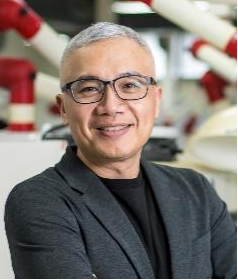
Prof. Chih-Ching Huang
Department of Bioscience and Biotechnology, National Taiwan Ocean University, Keelung, Taiwan.
Prof. Chih-Ching Huang is a Professor in the Department of Bioscience and Biotechnology at National Taiwan Ocean University, with a joint appointment at the School of Pharmacy, Kaohsiung Medical University. His research focuses on antimicrobial materials, biomimetic self-assembled materials, drug delivery, nanozymes, and nano-immunotherapy. Over the past five years, he has published numerous high-impact papers in journals such as Biomaterials, ACS Nano, and Small. Prof. Huang serves on the Editorial Boards of Applied Sciences, Journal of Analytical Methods in Chemistry, Journal of the Chinese Chemical Society, and Physchem. He is also an Associate Editor for Frontiers in Drug Delivery and Cardiovascular Drug Delivery. He also reviews for leading journals including ACS Nano, Biomaterials, Anal. Chem., and Biosens. Bioelectron. He has received numerous prestigious awards, including the Ta-You Wu Memorial Award and the Outstanding Research Award from Taiwan’s National Science and Technology Council, and is widely recognized for his contributions to nanomaterials-enabled biomedical applications and disease diagnosis.
Hosts
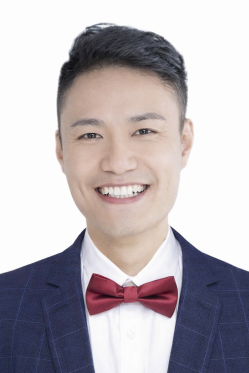
Prof. Wenliang Song
School of Materials and Chemistry, University of Shanghai for Science and Technology, Shanghai, China.
Prof. Wenliang Song received his Ph.D. from the BK21 PLUS Center for Advanced Chemical Technology in the Department of Polymer Science and Engineering at Pusan National University. He also pursued postdoctoral research at the Korea Advanced Institute of Science and Technology (KAIST) and the University of California, Riverside (UCR). In 2020, he joined the University of Shanghai for Science and Technology (USST). His research focuses on the application of green methodologies to control the morphologies, optimize the performances, and explore potential applications of porous organic fiber polymers.
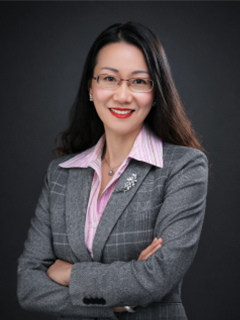
Prof. Guozhen Liu
School of Medicine, The Chinese University of Hong Kong, Shenzhen, Guangdong, China.
Prof Guozhen Liu is a Professor of Biomedical Engineering in the School of Medicine, and Associate Dean of Graduate School, The Chinese University of Hong Kong, Shenzhen, focusing on interdisciplinary and translational research on biosensors, point-of-care diagnostics, wearables, and medical devices for chronic diseases. Prof Liu is a Fellow of the Royal Society of Chemistry (FRSC), a Fellow of the Institute of Physics and Engineering in Medicine (FIPEM), and a Distinguished Lecturer of IEEE Sensor Council (2026-2028). She is listed among world's top 2% scientists and in ScholarGPS2025 as a top 0.05% highly ranked scholar in biosensors. Prof Liu’s research career has alternated between industrial and academic research. Her industrial experience includes over 4 years as R&D Manager at AgaMatrix Inc., developing medical devices for diabetes. She is the co-founder of Bio-Sens Tech Pty Ltd, a startup company in Sydney, and has closely engaged with many international biotechnology companies, such as AstraZeneca. Currently, Prof Liu serves as an Associate Editor of ACS Sensors, and on the Editor Board for several journals, including Trends in Biotechnology.
Introduction
This presentation will introduce recent advances in the development of functional carbonized nanomaterials derived from renewable seaweed polysaccharides, and will present a solvent-free, thermally driven carbonization strategy integrated with dehydration and hyperpolymerization chemistry. Through this approach, diverse marine polysaccharides are transformed into water-dispersible carbonized nanogels featuring programmable edge and surface functionalities. By rationally tuning precursor selection, chemical modification, and carbonization conditions, these materials can be optimized for multivalent biomolecular interactions and exhibit broad bioactivities, including antioxidative, anti-inflammatory, antimicrobial, anticoagulant/antithrombotic, antiviral, and antitumor/anti-metastatic effects. Representative case studies demonstrate their potential in oral antithrombotic therapy, influenza virus inhibition, targeted suppression of triple-negative breast cancer metastasis, and intraocular anti-angiogenic treatment. In addition, this presentation will explore how “edge-state–programmed” surfaces enable enzyme-specific binding and release for antibody-free hot-start PCR–based molecular diagnostics, and will discuss key translational considerations such as safety, reproducibility, and scalable manufacturing.
Presentation
Presentation
21
Free_Discussion
2


