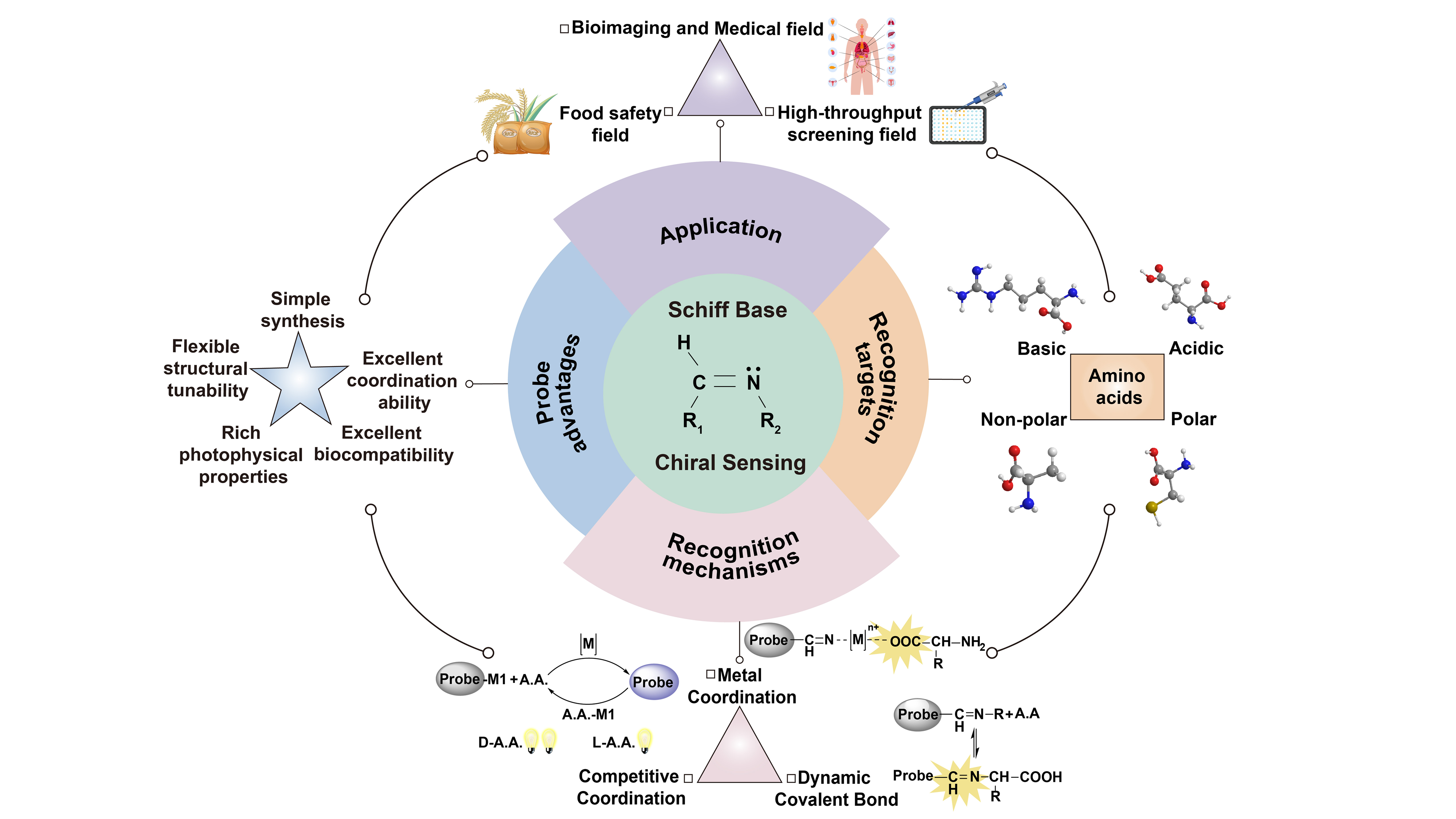
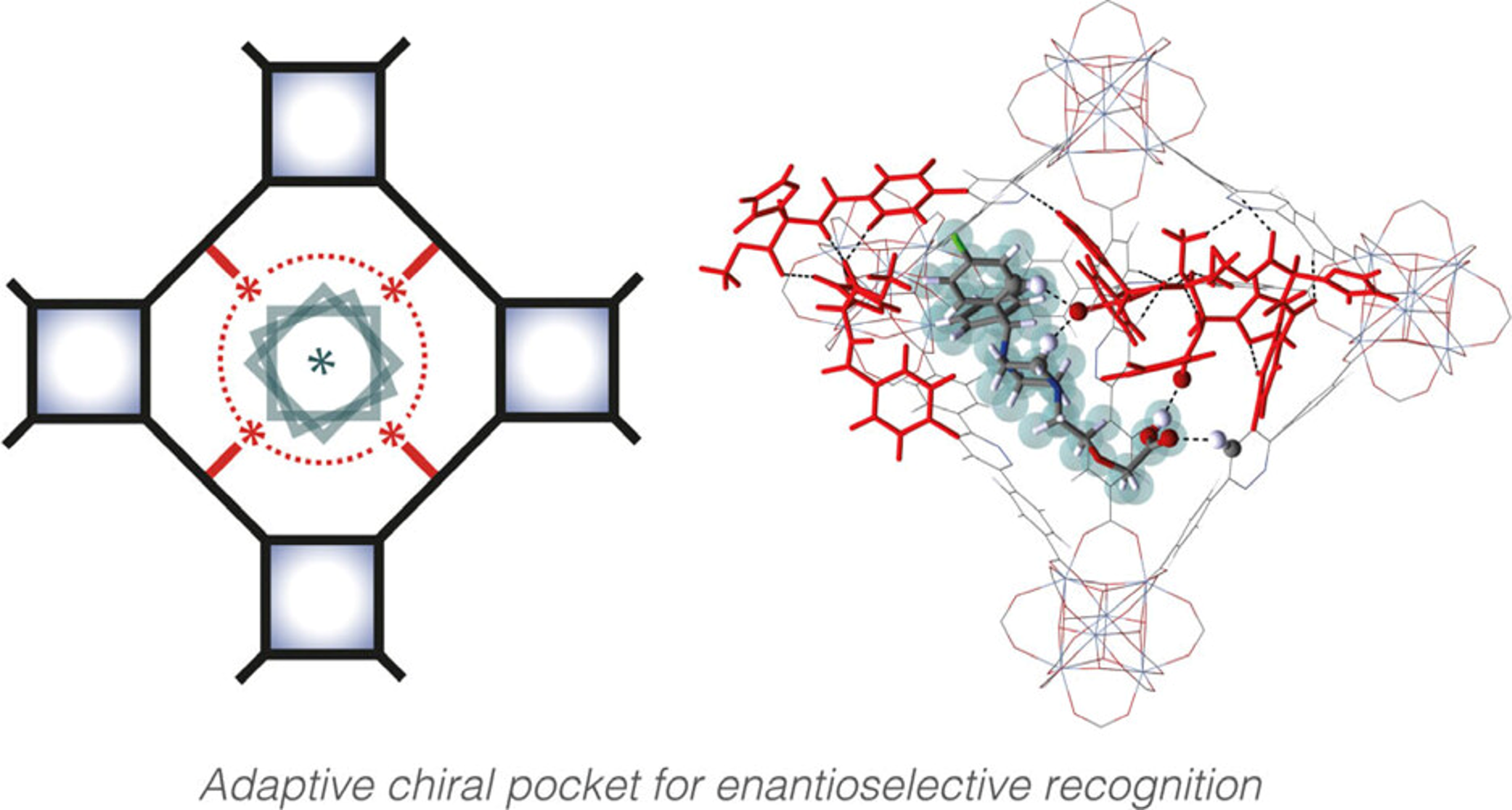
Amino acids are typical naturally occurring chiral compounds, whose enantiomeric pairs show distinct biological functions and markedly different application prospects. The precise chiral recognition of amino acid enantiomers is of great significance ...
More.
Amino acids are typical naturally occurring chiral compounds, whose enantiomeric pairs show distinct biological functions and markedly different application prospects. The precise chiral recognition of amino acid enantiomers is of great significance in diverse fields including life sciences, medical diagnosis, and pharmaceutical development. Over the past decade, chiral fluorescent probes toward amino acids have gained considerable attention for enantiomer recognition. Among these probes, Schiff base chiral fluorescent probes have emerged as a powerful class of sensors for achieving high enantioselective recognition of amino acids, owing to their advantages of facile synthesis, tunable structure, facile functionalization, and excellent photophysical and coordination properties. This review systematically summarizes the research progress of such probes in the enantiomer recognition of different types of amino acids, including acidic, basic, non-polar, and polar amino acids. It focuses on discussing probe design strategies, enantioselective recognition, interaction mechanisms, and application developments. In addition, this paper also highlights and outlines the major challenges existing in this field and the difficult issues that need to be addressed in the future.
Less.
Jinyu Wei, ... Shuangxi Gu