Table of Contents
Chiral assemblies for enantioselective nano-bio interactions and therapeutic translation
Living systems possess intrinsic homochirality, yet this stereochemical characteristic is frequently neglected in conventional nanomedicine design. Chiral assemblies are capable of regulating nano-bio interactions in an enantioselective fashion, ...
More.Living systems possess intrinsic homochirality, yet this stereochemical characteristic is frequently neglected in conventional nanomedicine design. Chiral assemblies are capable of regulating nano-bio interactions in an enantioselective fashion, offering a promising strategy to boost anticancer therapeutic efficacy. This review systematically outlines recent progress in chiral assemblies, with a core focus on the enantioselective modulation of nano-bio interfacial affinity across three key aspects: biomolecule recognition, protein adsorption, cellular uptake and subcellular organelle targeting. We further summarize chirality-dependent anticancer modalities, including catalytic therapy, chemotherapy, phototherapy, and immunotherapy. Overall, the discussed studies illustrate how interfacial stereochemical effects can influence therapeutic outcomes, while also highlighting the remaining challenges in translating these concepts into practical nanomedicine.
Less.Qianyun Ye, ... Jie Han
DOI:https://doi.org/10.70401/cc.2026.0048 - November 04, 2026
Emerging catalytic strategies for the stereochemical control of nitrogen centers
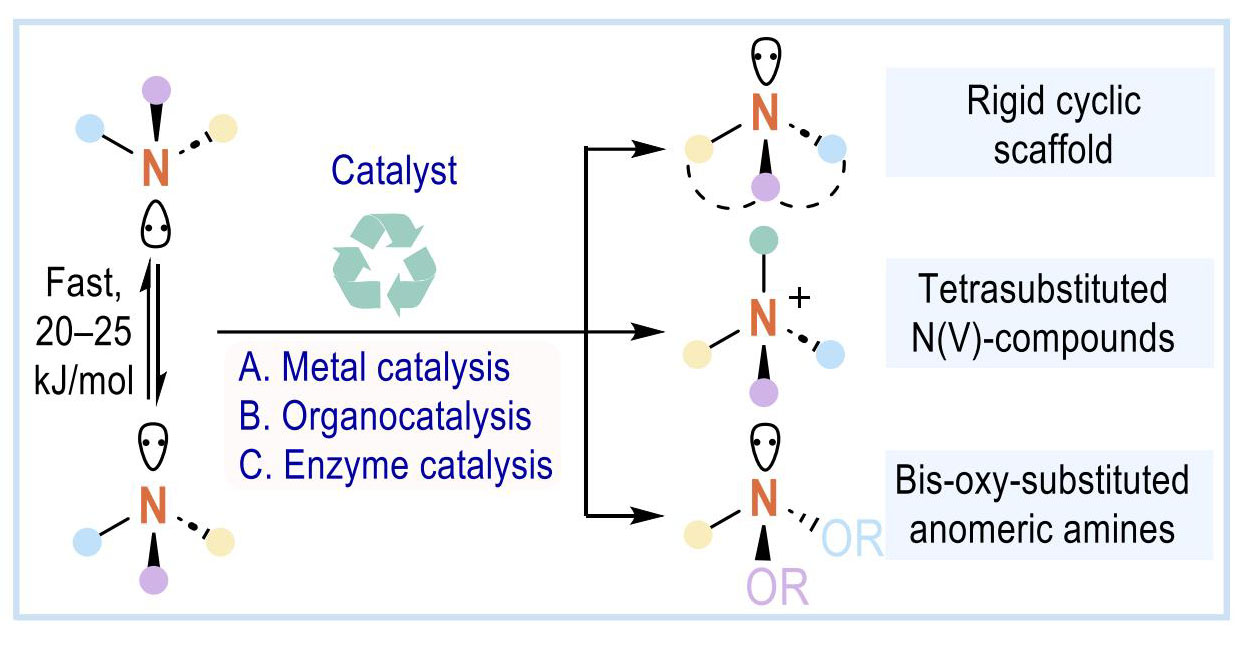
The catalytic asymmetric construction of heteroatom-centered stereogenic units has significantly expanded the scope of modern asymmetric catalysis beyond carbon-centered chirality. In stark contrast to sulfur-, phosphorus-, and silicon-stereogenic ...
More.The catalytic asymmetric construction of heteroatom-centered stereogenic units has significantly expanded the scope of modern asymmetric catalysis beyond carbon-centered chirality. In stark contrast to sulfur-, phosphorus-, and silicon-stereogenic frameworks, the enantioselective formation of nitrogen-centered chirality remains one of the most fundamental and unresolved challenges in synthetic catalysis, wherein broadly applicable catalyst-controlled strategies for their asymmetric synthesis are still scarce. This Review provides a comprehensive overview of recent advances in the catalytic asymmetric construction of nitrogen-centered chiral compounds. Emphasis is placed on catalyst design, modes of activation, mechanistic principles, and stereochemical control. The discussion is organized by catalyst class, encompassing transition-metal catalysis, organocatalysis, and bio-catalysis, and further classified by the structural nature of the nitrogen stereogenic unit, including chiral tertiary amines, N(V)-chiral N-oxides, and chiral ammonium ions. This Review aims to establish a unified framework for understanding nitrogen-centered stereochemistry and to stimulate future methodological innovations in this
Zhongfu Luo, ... Xingxing Wu
DOI:https://doi.org/10.70401/cc.2026.0047 - November 03, 2026
Recent advances in the construction of C-N axial chirality via asymmetric C-H activation
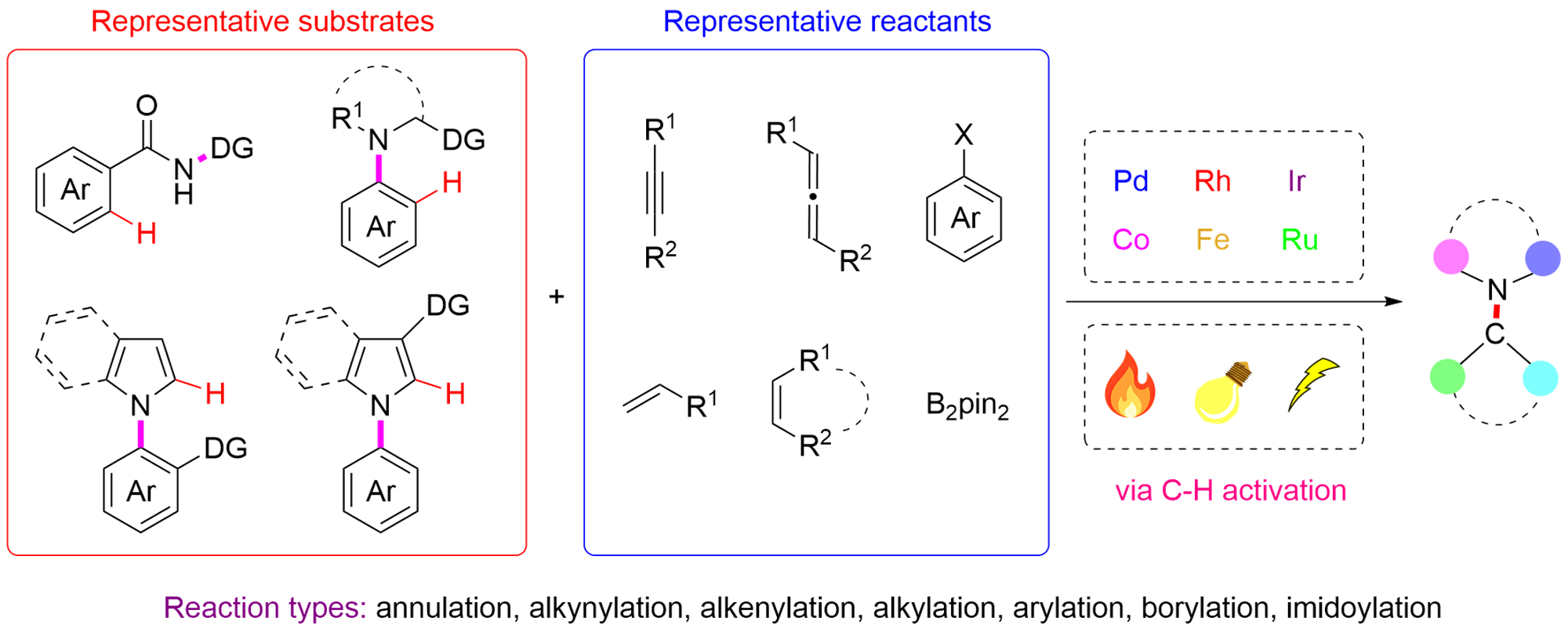
C-N chiral axes are prevalent in natural products, bioactive molecules, and chiral ligands. The development of synthetic methodologies for constructing C-N chiral axes has attracted considerable interest among chemists. Herein, we review advances in the ...
More.C-N chiral axes are prevalent in natural products, bioactive molecules, and chiral ligands. The development of synthetic methodologies for constructing C-N chiral axes has attracted considerable interest among chemists. Herein, we review advances in the construction of C-N axial chirality via asymmetric C-H activation, a strategy with high atom- and step-economy. This review covers the literature from 2019 to 2026, categorizing the transformations into annulation, alkynylation, alkenylation, alkylation, arylation, borylation and imidoylation. The representative products, reaction mechanisms, and the application of products are demonstrated. We hope this review will serve as a useful guide for chemists interested in this field and stimulate further progress in this area.
Less.Junlian Ji, Jun Wang
DOI:https://doi.org/10.70401/cc.2026.0046 - October 28, 2026
Recent advances in the synthesis of chiral organosilanes via transition-metal-catalyzed asymmetric reactions of silacyclobutanes
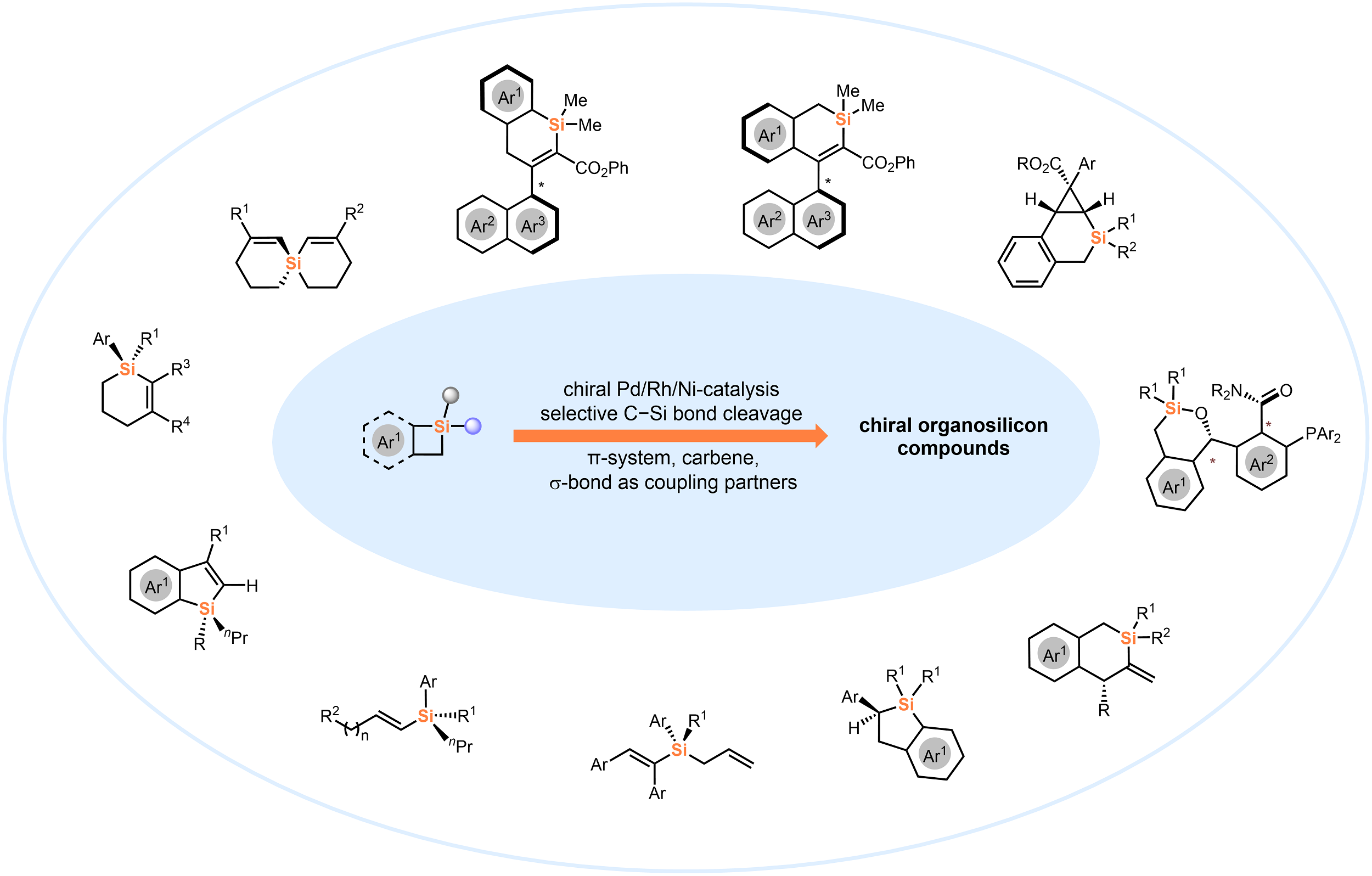
Chiral organosilicon compounds are widely applied in frontier fields including synthetic chemistry, materials science, and pharmaceutical research. Thus, the design of green, operationally simple, and chemoselective strategies for the assembly of structurally ...
More.Chiral organosilicon compounds are widely applied in frontier fields including synthetic chemistry, materials science, and pharmaceutical research. Thus, the design of green, operationally simple, and chemoselective strategies for the assembly of structurally sophisticated organosilicon frameworks is of paramount significance and continues to attract considerable attention. Silacyclobutanes (SCBs), a class of small-ring compounds with unique structural features, exhibit excellent reactivity due to their inherent ring strain. During the past decade, the transition-metal-catalyzed (Rh, Pd, Ni) regio- and enantioselective C-Si bond cleavage of silacyclobutanes has emerged as a powerful and complementary synthetic tool for accessing structurally diverse, functionalized chiral organosilanes. This review systematically surveys recent advances in transition-metal-catalyzed asymmetric cleavage of C-Si bonds in silacyclobutanes with various coupling partners, such as alkenes, alkynes, allenes, and carbonyls, for the construction of chiral functionalized organosilanes featuring carbon-centered, silicon-centered, or axially chiral stereogenic units. We also briefly discuss the associated reaction mechanisms, strategic modulation of reactivity and enantioselectivity, and prospective developments.
Less.Jusong Yang, ... Yidong Wang
DOI:https://doi.org/10.70401/cc.2026.0045 - October 23, 2026
Advances in the catalytic asymmetric synthesis of chiral sulfur compounds bearing S=N bonds
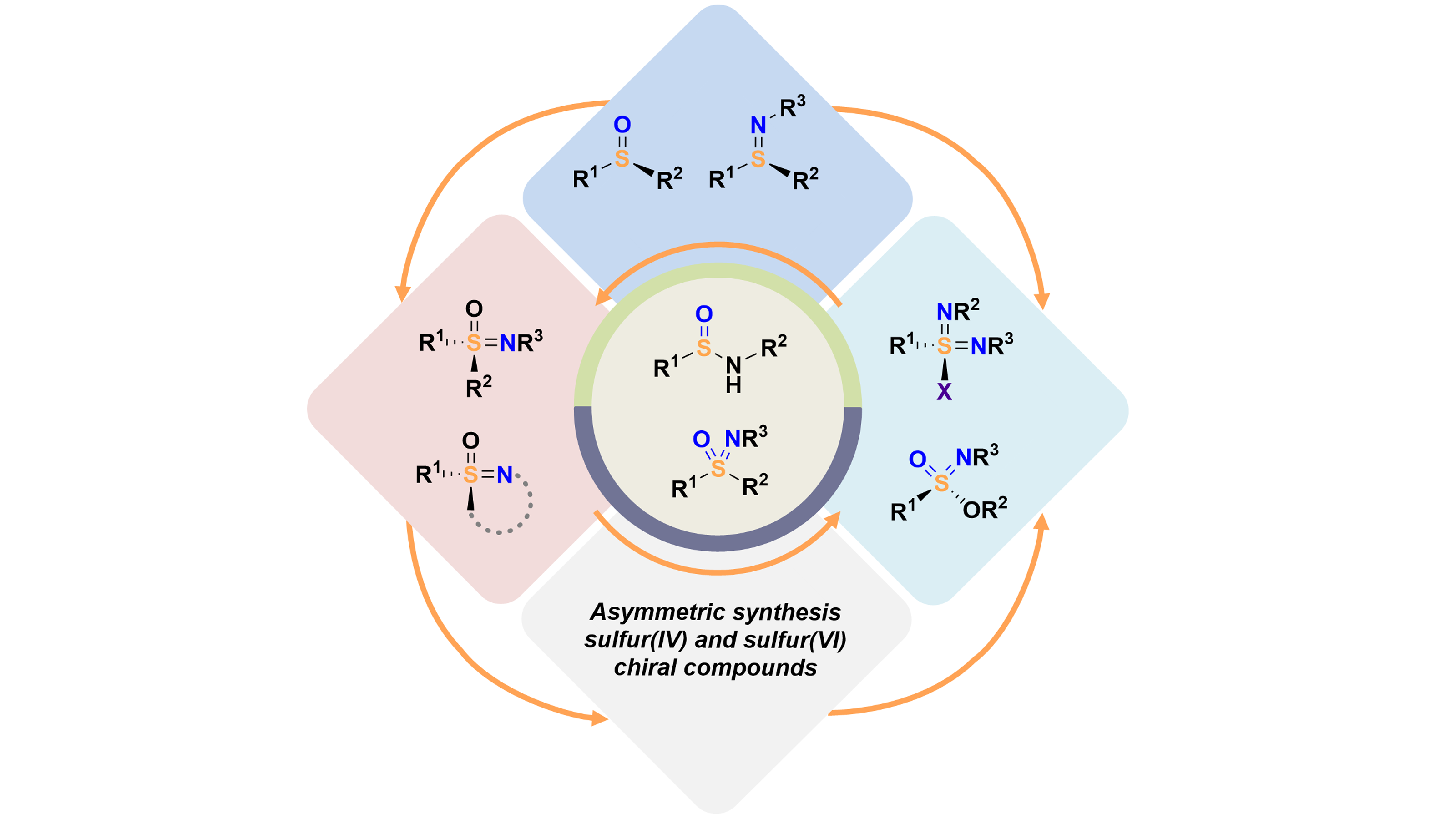
Chiral sulfur(IV) and sulfur(VI) compounds bearing S=N bonds are important structural units in drug discovery, materials science, and asymmetric catalysis. The presence of a stereogenic sulfur atom increases the three-dimensional complexity of molecules, ...
More.Chiral sulfur(IV) and sulfur(VI) compounds bearing S=N bonds are important structural units in drug discovery, materials science, and asymmetric catalysis. The presence of a stereogenic sulfur atom increases the three-dimensional complexity of molecules, allowing for the precise tuning of their physicochemical properties and biological target-binding affinities. However, the highly stereoselective construction of these high-valent sulfur centers has long been a significant synthetic challenge. This review summarizes recent progress, primarily covering literature from 2020 to 2026, in the catalytic asymmetric synthesis of chiral sulfur compounds bearing S=N bonds. For S(IV) motifs including sulfilimines, sulfinamidines, and sulfinimidate esters, we examine advances in transition-metal catalysis and organocatalysis, highlighting recent breakthroughs in radical cross-coupling and direct asymmetric amination. For S(VI) frameworks including sulfoximines, sulfonimidamides, sulfonimidate esters, and sulfonimidoyl fluorides, the discussion covers asymmetric C–H functionalization, dynamic kinetic asymmetric transformations (DyKAT), and stereospecific oxidative transfers from enantioenriched S(IV) precursors. We highlight stereocontrol strategies, reaction mechanisms, and substrate scopes. We also discuss current limitations and suggest possible directions for future work, with an emphasis on more sustainable catalytic methods and modular strategies for building new functional molecules.
Less.Guofeng Zhao, ... Zhan-Ming Zhang
DOI:https://doi.org/10.70401/cc.2026.0044 - October 22, 2026
Enantioselective assembly of chiral α-perfluoroalkyl boranes bearing vicinal boron/carbon stereogenic centers via copper catalysis
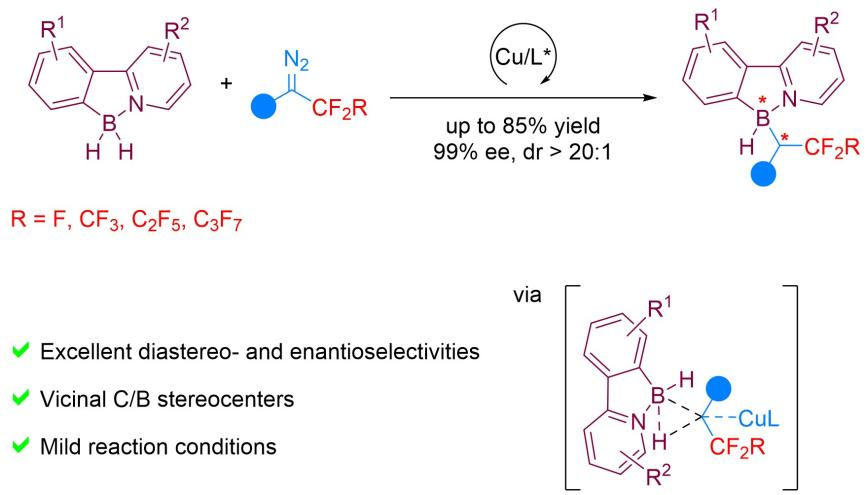
Enantioselective assembly of chiral α-perfluoroalkylated organoboron compounds is a significant challenge in synthetic chemistry. Herein, a copper-catalyzed asymmetric B-H insertion reaction was employed to couple 2-arylpyridine-boranes with α-aryl-α-perfluoroalkyl ...
More.Enantioselective assembly of chiral α-perfluoroalkylated organoboron compounds is a significant challenge in synthetic chemistry. Herein, a copper-catalyzed asymmetric B-H insertion reaction was employed to couple 2-arylpyridine-boranes with α-aryl-α-perfluoroalkyl diazomethanes, delivering over 40 novel chiral α-perfluoroalkylated organoboron compounds bearing boron/carbon vicinal stereogenic centers. This protocol accommodates a range of perfluoroalkyl substituents, including CF3, C2F5, C3F7, and C4F9. The reaction affords products in up to 85% yield, 99% ee, and dr > 20:1 for longer-chain perfluoroalkyl substrates. Mechanistic insights are provided by deuterium-labeling and KIE experiments, together with reference to previous related precedents. The scalability and further transformations of the reaction products demonstrate their potential usefulness in the synthetic community.
Less.Xinping Cai, ... Qiuling Song
DOI:https://doi.org/10.70401/cc.2026.0043 - October 15, 2026
Advances in chiral carbon-rich molecules incorporating five-membered carbocycles since 2019: Fullerenes, nanographenes, and non-fully conjugated PAHs
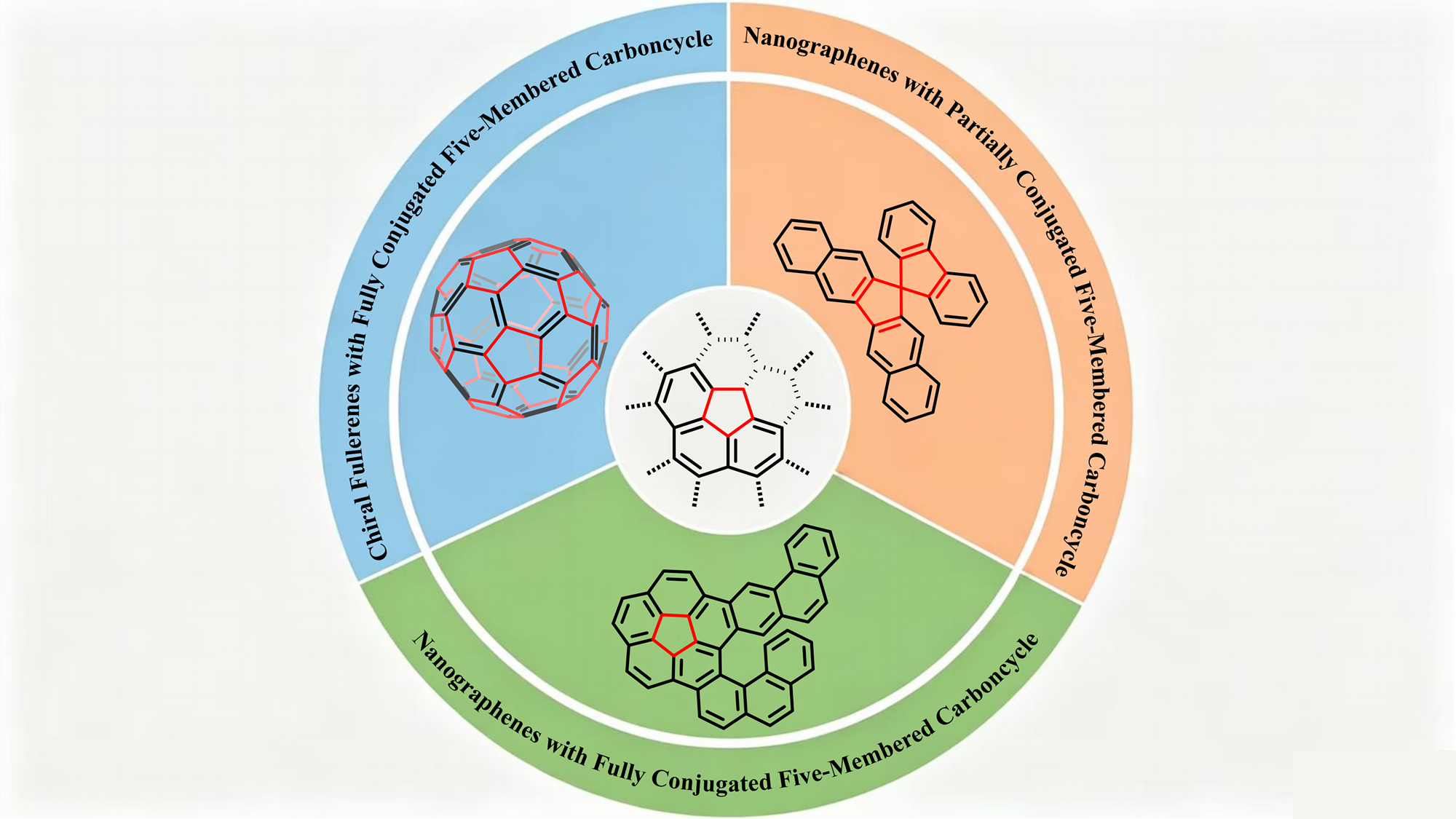
Chiral carbon-rich molecules have attracted increasing attention because they integrate extended π-conjugation with stereochemical complexity, thereby giving rise to circularly polarized luminescence, chiral charge/spin transport, molecular recognition, ...
More.Chiral carbon-rich molecules have attracted increasing attention because they integrate extended π-conjugation with stereochemical complexity, thereby giving rise to circularly polarized luminescence, chiral charge/spin transport, molecular recognition, and unconventional open-shell electronic structures. Among the structural elements available for their construction, five-membered carbon rings occupy a particularly important position. This review provides an overview of recent progress in chiral carbon-rich molecules incorporating five-membered carbocyclic motifs, including chiral fullerenes, nonbenzenoid and bowl-shaped nanographenes, helically distorted open-shell systems, and chiral polycyclic aromatic hydrocarbons (PAHs) with interrupted π-conjugation. We emphasize the dual and complementary roles of five-membered carbocycles. In fully conjugated frameworks, pentagons introduce curvature, non-benzenoid topology, perturbed aromaticity, and unusual spin/electronic distributions, thereby enabling diverse chiral fullerene and nanographene architectures with distinctive optical, magnetic, and supramolecular properties. In frameworks with interrupted π-conjugation, five-membered rings incorporated into spiro-, indane-, or cyclophane-type motifs can rigidify three-dimensional architectures, mediate chirality transfer, attenuate through-bond π-conjugation, and enhance through-space electronic coupling, thereby offering effective design strategies for high-performance chiroptical and optoelectronic systems. By comparing these two regimes, we highlight how five-membered carbocycles have emerged since 2019 as versatile design elements for modulating chirality, topology, and function in carbon-rich molecules, and we discuss current synthetic limitations, unresolved mechanistic questions, and potential future opportunities in photonic, spintronic, and molecular electronic applications.
Less.Zhan-Hao Wu, ... Han-Yuan Gong
DOI:https://doi.org/10.70401/cc.2026.0042 - October 14, 2026
Kinetic resolution of bromonitroalkenes atropisomers enabling divergent access to multi-stereogenic molecules
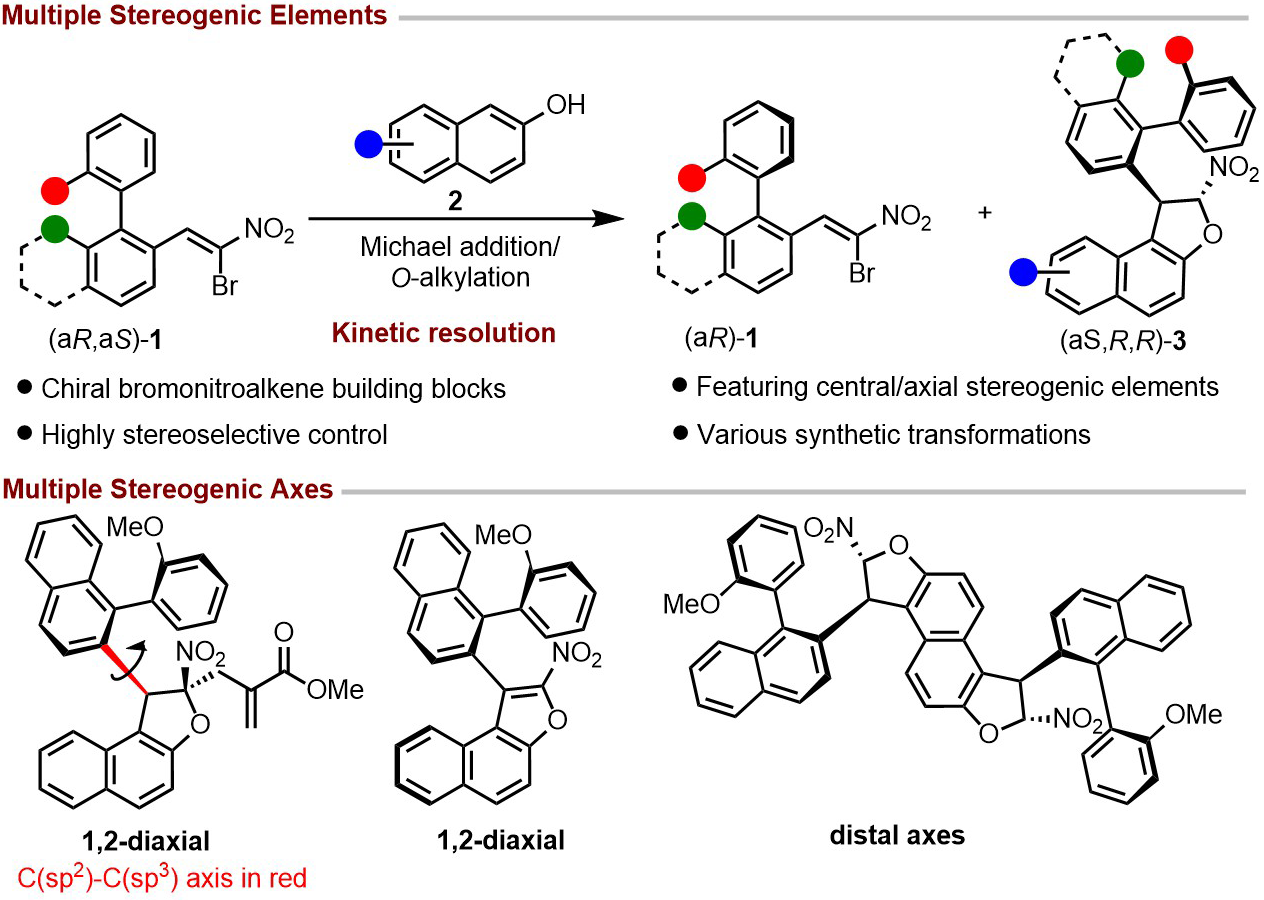
The incorporation of multiple stereogenic elements into a single molecule can profoundly influence its biological and physical properties. However, the direct enantioselective synthesis of atropisomers bearing both axial and central chirality remains ...
More.The incorporation of multiple stereogenic elements into a single molecule can profoundly influence its biological and physical properties. However, the direct enantioselective synthesis of atropisomers bearing both axial and central chirality remains a significant challenge. Herein, we report an efficient kinetic resolution strategy based on a Michael addition/O-alkylation cascade between racemic bromonitroalkenes and 2-naphthols. This methodology enables the simultaneous synthesis of atropisomers featuring multiple stereogenic elements while recovering axially chiral bromonitroalkene building blocks with excellent stereoselectivities (up to 98% ee and > 20:1 dr, with a selectivity factor S up to 259). The reaction accommodates a broad range of electronic and steric substituents on both the nitroalkene and the naphthol components, as well as variation of the fused aromatic ring system. The synthetic utility of the approach was further demonstrated through gram-scale synthesis, parallel resolution, and the transformation of the recovered (aR)-bromonitroalkene into diverse atropisomeric architectures and the construction of various bis-axially chiral atropisomers via central-to-axial chirality transfer. A plausible transition-state model was proposed to rationalize both the stereochemical outcomes and the role of DABCO as a co-catalyst. This work provides a practical and versatile platform for accessing structurally complex molecules with multiple stereogenic elements and expands the synthetic toolbox for constructing chiral molecular architectures.
Less.Guishun Bai, ... Xiaoze Bao
DOI:https://doi.org/10.70401/cc.2026.0041 - September 20, 2026