
Ferroptosis and BRCA: New Mechanisms in Cancer Biology
Published On: 06 May 2026
Views: 621
Subscribe
Speaker(s)
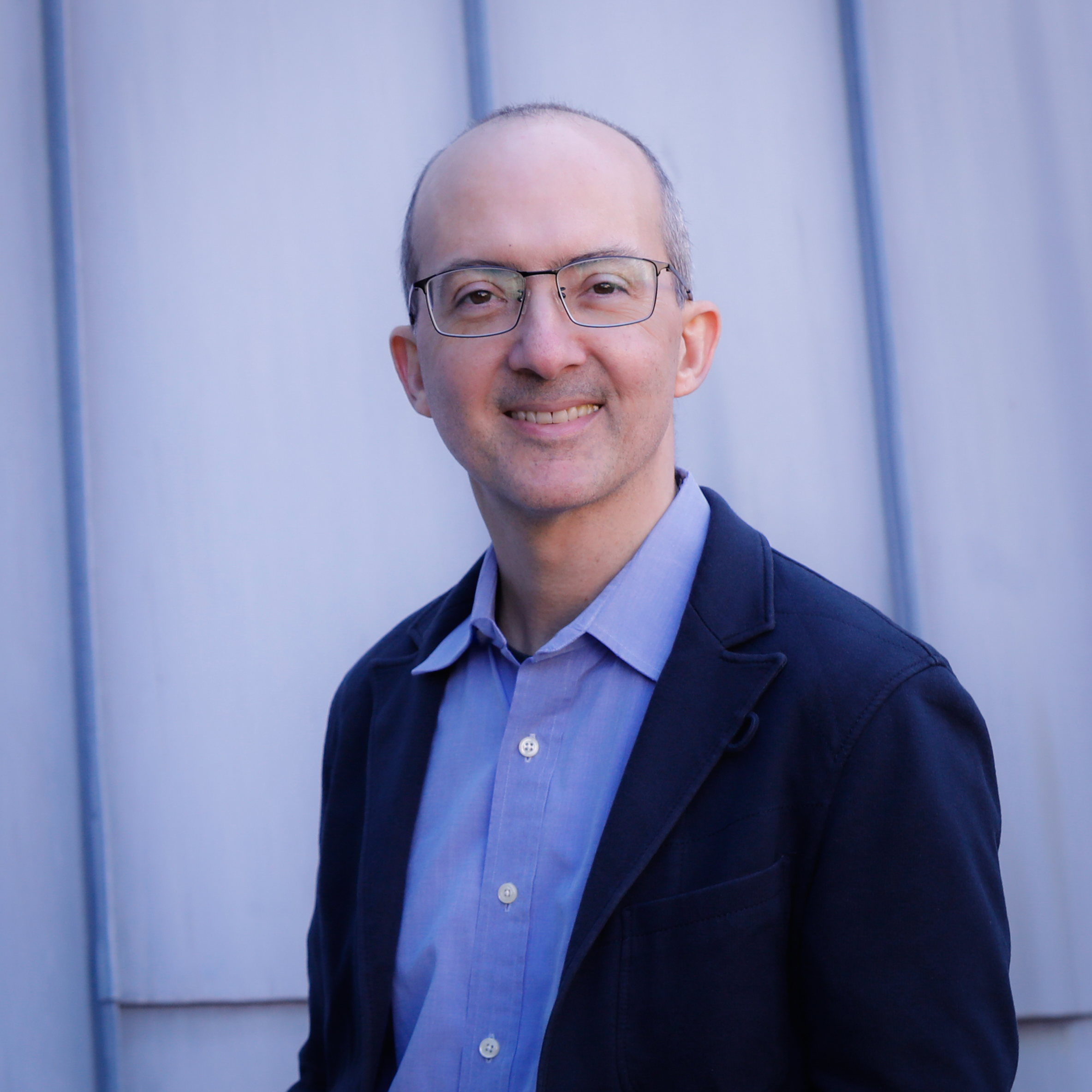
Prof. Brent R. Stockwell
Department of Biological Sciences, Department of Chemistry, Department of Pathology and Cell Biology, Columbia University, New York, NY, USA.
Prof. Shinya Toyokuni
Department of Pathology and Biological Responses, Nagoya University Graduate School of Medicine, Nagoya, Japan.

Dr. Yingyi Kong
Department of Pathology and Biological Responses, Nagoya University Graduate School of Medicine, Nagoya, Japan.
Introduction
In the inaugural episode of the EXO Chats, Prof. Brent R. Stockwell speaks with Professor Shinya Toyokuni and Dr. Yingyi Kong from Nagoya University about their recent work exploring the relationship between ferroptosis, BRCA-associated disorders, and extracellular vesicles. The conversation examines how iron metabolism and oxidative stress contribute to carcinogenesis, why BRCA1 and BRCA2 mutations may differently influence ferroptosis sensitivity, and how extracellular vesicles could propagate ferroptotic stress between cells. The discussion also highlights the role of iron in asbestos-induced mesothelial carcinogenesis, evolutionary perspectives on BRCA mutations, and emerging therapeutic opportunities targeting ferroptosis and iron-associated pathways in cancer.
Related article published in EXO: Ferroptosis in BRCA-associated disorders: Extracellular vesicles as potential messengers beyond the cell
Full Transcript
Speaker 1 (Brent R. Stockwell, Editor-in-Chief, Host)
Welcome to EXO - Beyond the Cell's podcast. We're here to explore the frontiers of cell communication - how cells interact with each other, and the biology beyond the boundaries of the cell. I'm Brent Stockwell, Editor-in-Chief of EXO - Beyond the Cell.
The journal focuses on publishing high-impact research on cells interacting with their environment and that spans extracellular biology, spatial omics, and the complex dynamics of tissue environment. In this podcast, I'm speaking directly with our authors about the ideas shaping their research and their discoveries that are driving this field forward.
For today's episode, I'm joined by Professor Shinya Toyokuni and Dr. Yingyi Kong from Nagoya University. They've spent years studying oxidative stress and cancer, and how iron and environmental exposures like asbestos can drive disease.
Today we're going to talk about their recent article in EXO entitled Ferroptosis in BRCA-associated disorders: Extracellular vesicles as potential messengers beyond the cell. This article tackles a fascinating question: can ferroptosis spread from one cell to another? And if so, how? Their work looks at how extracellular vesicles carry these signals, shaping how cell death affects tissues more broadly. Professor Toyokuni and Dr. Kong, it's a true pleasure to have both of you with us today. Thank you for coming.
Speaker 2 (Shinya Toyokuni, Author, Guest)
We are very honored to be invited for this interview.
Speaker 3 (Yingyi Kong, Author, Guest)
Thank you for this invitation.
Speaker 1
Thank you. So let's get into talking about your paper. Most people know BRCA genes are linked to cancer risk, but what's new idea that your paper introduces about these genes and how they can affect cells?
Speaker 2
It's a great honor to talk to you. You coined the word ferroptosis. And actually we have been working on this iron-excess-induced carcinogenesis for more than 30 years, there was not much study to see the relation between ferroptosis and any genetic diseases. Like 10 years ago, we decided to tackle with a certain genetic diseases, so we have chosen BRCA1 and 2 genetic disease - because this is very closely associated with carcinogenesis, and also has certain social impact.
However, of course these genes were discovered in the 1990s, and many mice models were produced starting from that time. But, after 10 or 20 years, it was found that mice models are actually knockout mice, do not show the phenotype of human. So we decided to do another animal model: namely, rats. This model shows very interesting results. This model - maybe later Ms. Kong will talk about more details. In BRCA1 knockout rats, iron-induced carcinogenesis is significantly promoted. The important point we found is that, in both BRCA1 and BRCA2 knockout rats, iron metabolism is impaired - at least in renal cells. That's quite interesting. That's even in the normal status mitochondrial activity and also morphology is gradually impaired in those hetero knockout rats and that caused the disregulation of iron. This has not been pointed out that far, and it is quite interesting we think.
Speaker 1
That's great. There are a couple of very interesting things you said there. Let me ask about rats versus mice. Why do you think you get different effects in rats versus mice when you regulate BRCA genes differently?
Speaker 2
It's a little difficult to answer. Of course that's the species difference, and their lifetime length is different. We have to search it in the near future, but there is certain difference. So far we know that the events of carcinogenesis is quite different between mice and rats. Rats show more aggressive cancers, that's quite similar to humans, but in mice we see very subtle change and less aggressive tumors. At present, we can just say that's species difference and it's actually difficult question for us at present.
Speaker 1
Dr. Kong, I have a question for you, a follow up about BRCA1 and BRCA2. In the paper, you talk about different effects about BRCA1 versus BRCA2 on ferroptosis sensitivity. Can you tell us a little about that? What's the difference and why you think there is a difference?
Speaker 3
Yes. Actually the most traditional view of the BRCA studies is about DNA repair, but there is another consequential point of BRCA mutation has been ignored for a long time. My major work is about BRCA1. We found like a partial escape from the ferroptosis after our fenton reaction-based carcinogenesis model. But for the BRCA2, actually the ferroptosis has been executed after our oxidative stress stimulations, and those promotion for the renal carcinogenesis has been revealed in the BRCA1 mutated model but not in the BRCA2 mutated animal model. That is quite interesting like how that happened and how that could lead to the different outcomes of the studies. We also observed c-Myc amplification in BRCA1 mutated generated renal carcinoma, which is actually syntenic to HBOC breast cancer patients. So we believe that's a strong point that our rat model has mimicked the human phenotype.
Speaker 1
Interesting! Do you have any idea why BRCA1 and BRCA2 have these different effects?
Speaker 3
First point is the BRCA1 is more like a sensor for the DNA damage. So once that cut those signals that could connect to other compounds - leading to the further repair progression. But for the BRCA2 that's mostly effect in the DNA damage repair. So that's like for all the eukaryotic cells, the BRCA2 is essential for their DNA repair progression.
Speaker 1
Interesting! Professor Toyokuni, let me ask about the extracellular vesicles that you talked about in your review that can propagate ferroptotic stress and allow this communication between cells. Can you tell us a little more about that, how does that work, and why that's important?
Speaker 2
We published this paper about five years ago, it' the new finding about iron metabolism. It is quite interesting. We found an iron responsive element (IRE) sequence in CD63. You may know there are several markers for exosomes - CD9, CD63 and 81 - but only CD63 of humans showed IRE sequence. That's the sequence specified for the iron metabolism genes like transferring receptor, DMT1, ferroportin and ferritin as well.
From that discovery, we found those iron metabolism may be associated with those exosomes. And what we found is that if certain cells have enough amounts of iron, of course there is stores as ferritin, and that ferritin is exported, that's packed in exosomes, finally to other cells that is deficient in iron. So they're sharing those excess iron among cells. More interestingly, the IRE sequence was found only in higher primates, not in experimental rats or mice. That's what's interesting for us. So this system is probably working for the evolution.
That's for the normal cells. But for more pathological status like in asbestos-induced mesothelial carcinogenesis - we have been working for that for about 15 years. This is also carcinogenesis associated with excess iron. In that case, asbestos is a foreign body. So the phagocytes like macrophages try to engulf them and try to dispose of them, but they go into ferroptosis. That's quite interesting. At that time, very specific exosomes labeled with CD63 are secreted. Unfortunately, the target mesothelial cells catch those CD63 positive ferritin field exosomes and will be iron-loaded. We found that there was coexistence to its DNA with double-strand breaks and other base modifications. So this is actually a quite new molecular mechanism, one of the mechanisms for asbestos-induced mesothelial carcinogenesis.
Speaker 1
That's amazing, so do the exosomes that are released in that case by macrophages have that asbestos in them as well?
Speaker 2
Yeah, it is - from the macrophages. And that is received by the target cell - cancer target mesothelial cells.
Speaker 1
And is asbestos found in the extracellular vesicles as well as in the macrophages?
Speaker 2
The size of asbestosis - they are huge considering about single cell artery. The length is like 100 to 200 micrometers, but width is quite small, like 20, maybe less than 10 micrometer. So phagocytes try to engulf them, but possibly the membrane ruptures, and finally they got into ferroptosis in that case. The interesting point is asbestos in our body absorbs a lot of hemoglobin, so collecting iron on the surface of asbestos. So different lengths of asbestos are present in our body. They are collected in phagocytes, but they engulf a very long asbestos. They die via ferroptosis.
Speaker 1
Got it, interesting! And do you think ferroptosis therapies that block ferroptosis could be beneficial in mesothelioma to block that propagation of iron?
Speaker 2
That's possible I think. Of course, the first point is not exposing to asbestos - that is most important. This process is taking quite a long time, like decades - from the inhalation of asbestos fibers that reaches trachea and lung tissue and that should go through the lung parenchyma - that takes 20 to 30 years. Avoiding the exposure is most important, but those stopping ferroptosis may work as a prevention, we have to think about that.
Speaker 1
Dr. Kong, let me ask you another question about the paper. You talk about an evolutionary argument in the paper about how BRCA mutations might have been beneficial in the past. Can you tell us about that idea?
Speaker 3
Actually I'm not the expert but Shinya is the expert for this evolutionary (argument). From my point, BRCA1 or 2 are quite common in human populations, even after thousands of years of evolution. We thought there is a possibility that these kinds of mutations remain because in ancient times, food and environment were different from now. Those times, people were hunting for food, or struggle really hard to get the food, they are being through some food deficiency, also the iron deficiency was common at that age. So in those kind of environments, we believe the cancer risk was less important than living issue. Instead, survival in such environment need those mutations for human beings to execute cells via ferroptosis and other procedures, and keep their cellular metabolism running at low cost. But now the environment is quite different, so the risk for cancer and other diseases are associated with those nutrients overconsumed. We believe those kind of current situation may bring up our attention for those strategies to prevent humans from the diseases that may be susceptible because of those mutations, especially for the BRCA1 or 2.
Speaker 1
That's great. Let me just end today's podcast with one more question for each of you. I think first of all I want to encourage our listeners to read your paper because it's a excellent article and very interesting and touches on these ideas we've talked about today. But for my last question I want to ask each of you what are you excited about in the future? What's the most exciting thing in science that you're working on or thinking about for the future? Professor Toyokuni, do you wanna start?
Speaker 2
Of course, The regulation of iron is very important. No species on Earth can survive without iron at present. Currently, we have overcome a lot of infectious diseases and a lot of problems, and the lifetime is getting longer and longer. During aging, most of us know there are overdose of iron. We have accumulated too much iron. That means regulating these iron is quite important. One of the most important principles of iron metabolism is that we cannot excrete iron to outside of our body unless there is bleeding. This is semicircular system and very small amount is taken up and that excreted we have around 4 grams, 4,000 milligrams, and 1 milligram in and 1 milligram out. So regulation of iron is quite important. Currently, we are working on iron chaperones inside cells. Whether we can control iron in comparison according to aging, it may help increase our health condition. Some of molecules working as chaperones inside cells is quite exciting for us at present. Maybe we can kill the cancer cells with a new modality - I wrote a little about it - low-temperature plasma, actually a test of the presence of iron. Cancer cells need iron, replication needs iron. So cancer cells are collecting iron. That may be the Achilles' heel of cancer cells. We are quite excited on that and trying to find a new modality for cancer therapy.
Speaker 1
Very exciting! Dr. Kong, do you wanna share something you are excited about to the future?
Speaker 3
By studying BRCA1-associated disease, I found substantial possibilities for the future therapeutic options for HBOC patients, especially for those carriers of BRCA1 or 2 mutations, often occuring for triple-negative breast cancer. But for the treatment, although we have the options for PARP inhibitors, still the options are quite limited. And we expect that (by) studying BRCA1/2 and their connection with EVs could produce a new system for earlier prognosis or for the therapeutic strategies for those HBOC patients in(from) the perspective of ferroptosis and other iron-associated mechanisms. We believe that is quite excited for the cancer therapy from the perspective of the fundamental researchers.
Speaker 1
Fantastic. I want to thank you both for joining us today and telling us about your article. And goodbye to our listeners. We hope to see you in the future on the next podcast. Thank you, everyone.


Subscribe
