Table of Contents
Research progress on thermal Hall effect
Thermal Hall effect (THE) refers to the phenomenon whereby, in a magnetic field, when a longitudinal heat current flows through a material, the heat carriers are deflected, thereby generating a transverse temperature difference between the two lateral edges. ...
More.Thermal Hall effect (THE) refers to the phenomenon whereby, in a magnetic field, when a longitudinal heat current flows through a material, the heat carriers are deflected, thereby generating a transverse temperature difference between the two lateral edges. The transition from electrical to thermal transport enables this effect to involve a wide range of carriers, thereby providing a unique perspective for investigating complex quantum states in condensed matter physics. THE is increasingly becoming a powerful probe of neutral excitations in materials and is used to explore multifield control phenomena in magneto-thermal-electrical coupled systems. Advances in the field of THE have significantly advanced the study of condensed matter systems under extreme conditions (low temperatures and strong magnetic fields) and have laid the groundwork for exploring novel magneto-thermal-electrical effects in quantum materials. This review systematically reviews recent theoretical and experimental progress on THE, with particular attention to the underlying heat carriers. Through an in-depth analysis of the transport mechanisms of different carriers, quantum material systems that can be used to investigate multicarrier coupled transport are identified, which will significantly facilitate the synergistic control of magneto-thermal-electrical transport in complex interacting systems. Finally, we propose a novel in situ, multiparameter integrated characterization method that enables simultaneous and precise measurement of magnetic, thermal, and electrical parameters on the same micro/nanoscale samples. This approach not only overcomes the limitations of bulk materials but also serves as a key experimental platform for revealing the mechanisms of multicarrier coupled transport in micro/nano samples.
Less.Zewen Song, ... Ting Zhang
DOI:https://doi.org/10.70401/tx.2026.0016 - March 16, 2026
Dynamics of electron bubbles in superfluid 3He-B
This work investigates the transport of an electron bubble near the free surface of superfluid 3He-B under applied electric and magnetic fields. Based on a theoretical framework combining the quasiclassical Green’s function and the Lippmann–Schwinger ...
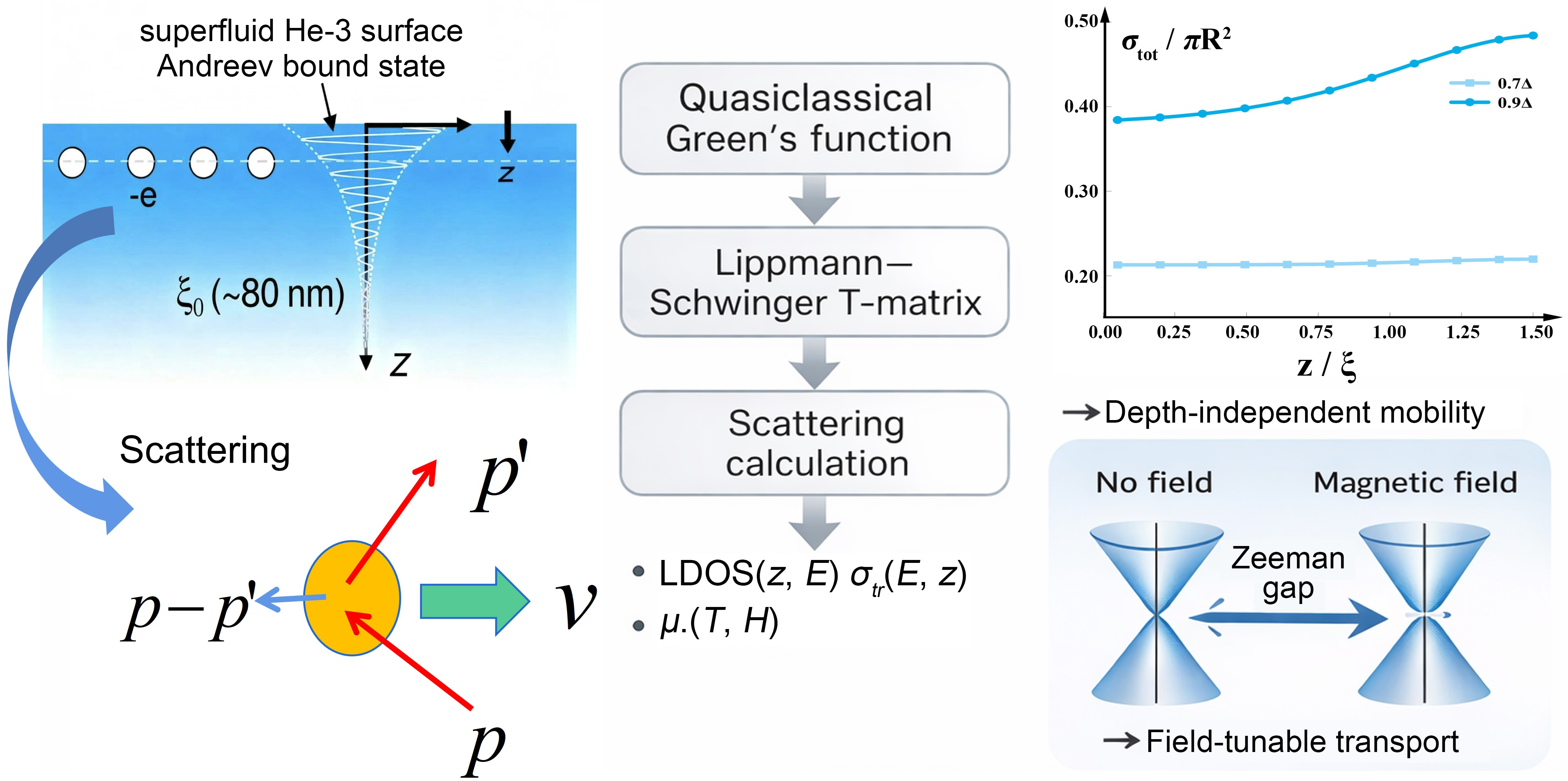
More.This work investigates the transport of an electron bubble near the free surface of superfluid 3He-B under applied electric and magnetic fields. Based on a theoretical framework combining the quasiclassical Green’s function and the Lippmann–Schwinger equation, we have calculated the scattering cross section and mobility of the electron bubble, together with their temperature and depth dependences. An electric field shifts the position of the electron bubble and thereby tunes its coupling to the surface bound states. The surface density of states decays with depth, whereas the transport cross section increases with energy and depth; these competing trends compensate, resulting in a nearly depth-independent mobility consistent with the linear dispersion of the surface states. In contrast, an applied magnetic field opens a Zeeman gap in the surface-state spectrum, which breaks the linear dispersion of the bound states. Our results demonstrate that external electric and magnetic fields provide effective control of the spectral structure and scattering properties of the surface bound states.
Less.Mengdi Liu, ... Jun Zhou
DOI:https://doi.org/10.70401/tx.2026.0013 - March 11, 2026
Ultra-thin spray cooling for high-power-density silicon chips
Driven by the escalating chip-level heat flux demands of artificial intelligence and high-performance computing, thermal management has emerged as a critical bottleneck for next-generation microelectronic integration. To address the prominent contradiction ...
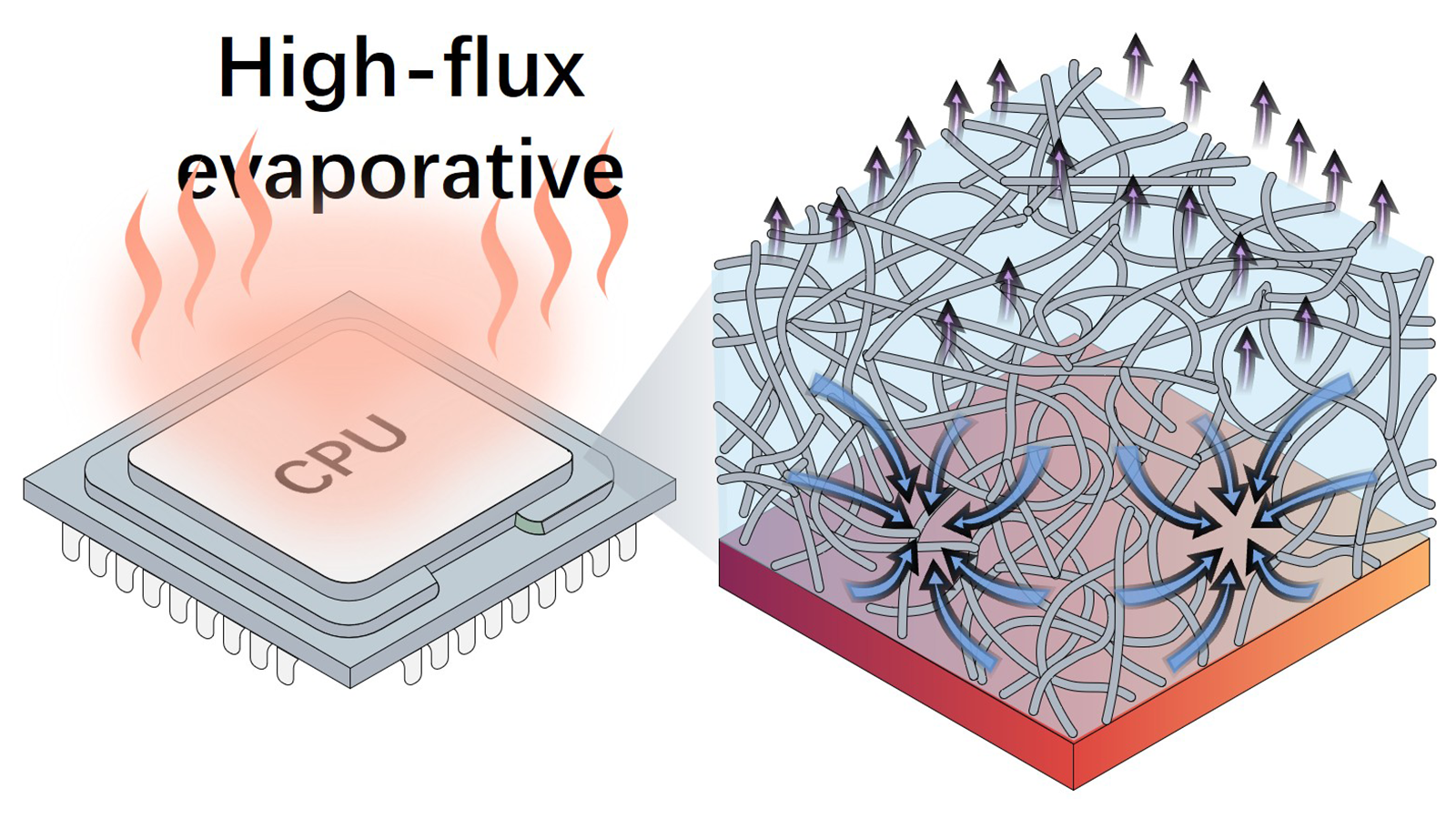
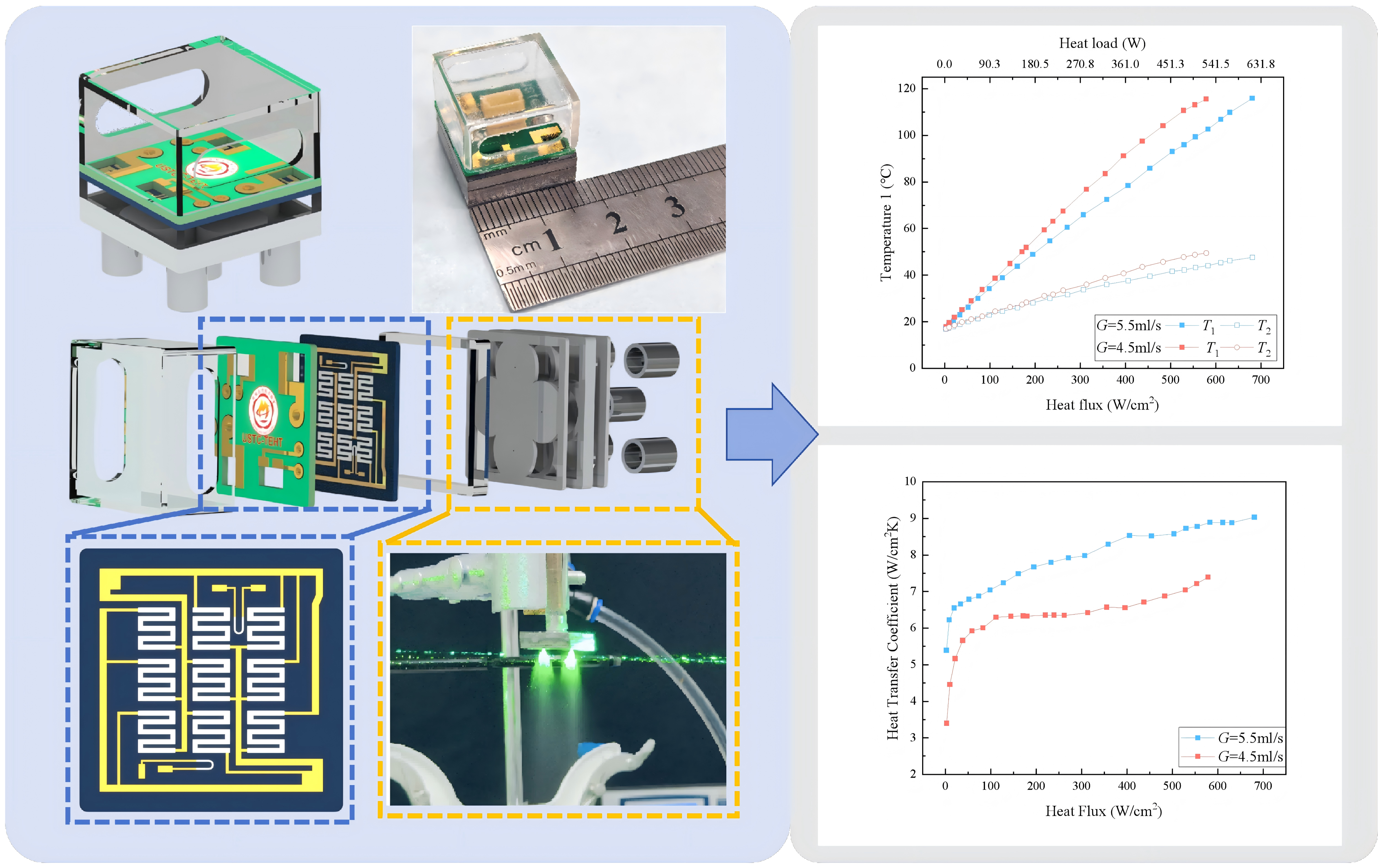
More.Driven by the escalating chip-level heat flux demands of artificial intelligence and high-performance computing, thermal management has emerged as a critical bottleneck for next-generation microelectronic integration. To address the prominent contradiction between the limited space and the high heat flux in silicon interconnect fabric chips, this research has overcome the key challenge of miniaturizing traditional spray cooling by designing and implementing an ultra-thin spray cooling heat sink embedded in a silicon-based test chip. The core advancement stems from a synergistic integration of topology-optimized micro-nozzle architecture and silicon-based microfabrication, achieving a total spray module thickness of merely 3.5 mm and enabling uniform near-field atomization from four nozzles under low pressure. Experimental results demonstrate that the heat sink removes 614 W at a junction temperature of 92 °C from a compact footprint of 9.5 mm × 9.5 mm, yielding a peak surface heat transfer coefficient of 9.03 W/(cm2·K). This performance not only validates the feasibility of spray cooling in ultra-thin packaging architectures, but also presents one of the first experimental demonstration of the monolithic integration of a spray cooling system with a silicon-based integrated circuit. This work establishes a viable pathway for ultra-high heat flux thermal management under extreme spatial constraints, enabling the practical deployment of spray cooling in high-power-density electronics, including high-performance computing and artificial intelligence chips.
Less.Rui Zhou, ... Wen-Long Cheng
DOI:https://doi.org/10.70401/tx.2026.0014 - March 09, 2026