
Where are the Affect Detectors in Educational Practice?
Time
12:30 PM, October 12, 2026 (Adelaide Time)10:00 AM, October 12, 2026 (Beijing Time)
Meeting ID: 869 7781 9271
Passcode: 199417
Join Zoom Meeting:
https://us06web.zoom.us/j/86977819271?pwd=QaxKVtxOudoaEiIVrLiw8rd6Ji2Svb.1
Contact Us
Email: ecjournal@sciexplor.comSpeaker
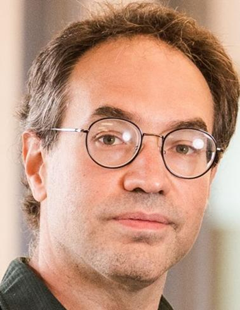
Prof. Ryan Shaun Baker
College of Education, Behavioural and Social Sciences, Adelaide University, Adelaide, SA, Australia.
Ryan Baker is Professor of Artificial Intelligence and Education at Adelaide University and Director of the Penn Center for Learning Analytics at the University of Pennsylvania. Prof. Baker has developed models that can automatically detect student engagement and/or affect in over a dozen online learning environments, and has led the development of an observational protocol and app for field observation of student engagement and affect that has been used by over 150 researchers in 7 countries. Predictive analytics models he helped develop have been used to benefit over two million students, over a hundred thousand people have taken MOOCs he ran, and he has coordinated longitudinal studies that spanned over a decade. He was the founding president of the International Educational Data Mining Society, is Associate Editor of the Journal of Educational Data Mining, was the first technical director of the Pittsburgh Science of Learning Center DataShop, currently serves as Co-Director of the JeepyTA learning platform, and founded two Master's degree programs in Learning Analytics. Prof. Baker has co-authored published papers with over 600 colleagues and has been cited over 40,000 times.
Host

Asst Prof. Alwyn Vwen Yen Lee
National Institute of Education, Nanyang Technological University, Singapore, Singapore.
Asst Prof Lee is an education researcher and leader who has directed research and development teams across both academic and industry projects. His work focuses on Artificial Intelligence in Education (AIED), Learning Analytics, Affective Computing, Knowledge Building, Technology-Enabled Assessment, and the Internet of Things (IoT). He is recognized for advancing the use of machine learning and learning analytics to illuminate learning impacts and affective dynamics within collaborative learning and knowledge-building processes within Computer-Supported Collaborative Learning (CSCL) environments. Asst Prof Lee is a Fulbright Visiting Research Scholar at the University of Pennsylvania and is currently elected to the Executive Committee of the Asia-Pacific Society for Computers in Education (APSCE) and the Inaugural Chair of the APSCE Student Wing. He is also an Associate Editor of the Asia Pacific Journal of Education and an Associate Editor of the Learning: Research and Practice. He has received multiple accolades, including the NIE Dean's Commendation for Research (twice), the Outstanding Mentor Award in the Science Mentorship Programme, and the 3M Best Poster Award. He currently teaches undergraduate and postgraduate students, and continues to work with in-service educators, while expanding his international research collaborations.
Discussants

Prof. Carolyn Penstein Rosé
School of Computer Science, Carnegie Mellon University, Pittsburgh, PA, USA.
Prof. Carolyn Rosé is the Kavčić-Moura Professor of Language Technologies and Human-Computer Interaction at Carnegie Mellon University's School of Computer Science. Her research advances Sociotechnical Artificial Intelligence from a multidisciplinary perspective, exploring human-AI complementarity and multi-agent teaming, with a current emphasis on abstraction and decomposition for improved learnability and generalizability. She investigates these issues across multimodal conversational process analysis, document understanding, clinical text processing, knowledge-based question answering, and language models of code. Her group's interdisciplinary work spans over 330 peer-reviewed publications across Language Technologies, Learning Sciences, Cognitive Science, Educational Technology, and Human-Computer Interaction, with awards in four of these fields. She is a Past President and Inaugural Fellow of the International Society of the Learning Sciences, Senior Member of IEEE, Founding Chair of the International Alliance to Advance Learning in the Digital Era, and a 2020-2021 AAAS Leshner Leadership Institute Fellow for Public Engagement with Science (AI Cohort).

Assoc Prof. Jaclyn L. Ocumpaugh
Department of Curriculum & Instruction, College of Education, University of Houston, Houston, TX, USA.
Dr. Ocumpaugh is an Associate Professor of Curriculum & Instruction in the College of Education at the University of Houston, where she studies how students learn - and how students experience this learning. Her work typically focuses on learning contexts that have been constructed using AI, including Intelligent Tutoring Systems and online learning games. Drawing on her background in linguistics, sociology, and ethnographic methods, she has partnered with developers of a wide range of online learning systems and pioneered methods for scaling qualitative data that is historically difficult or labor intensive to collect. Dr. Ocumpaugh uses innovative methods to better understand how affective experiences interact with the development of interest and self-regulated learning. Recent honors include selection for the 2024-2025 Fellow at the Quantitative Ethnography Institute at the University of Wisconsin and the 2024 Test of Time Award from the International Educational Data Mining Society for a paper she coauthored in 2012.
Her current work seeks to find ways to investigate cultural and individual variation across and within different student populations, which is necessary for improving the fairness of both detection of learning-related constructs and the personalized supports required to improve online learning systems. In this effort, she also serves as Co-Editor of Computer Based Learning in Context. This free, open-access journal is cohosted by the University of Pennsylvania and by Ateneo de Manila University, and it seeks to highlight research that allows us to better understand how cultural differences may manifest in online learning environments.
Her current work seeks to find ways to investigate cultural and individual variation across and within different student populations, which is necessary for improving the fairness of both detection of learning-related constructs and the personalized supports required to improve online learning systems. In this effort, she also serves as Co-Editor of Computer Based Learning in Context. This free, open-access journal is cohosted by the University of Pennsylvania and by Ateneo de Manila University, and it seeks to highlight research that allows us to better understand how cultural differences may manifest in online learning environments.
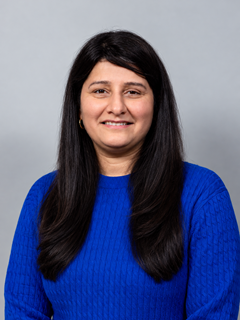
Dr. Sadia Nawaz
Department of Data Science & AI, Monash University, Melbourne, VIC, Australia.
Dr. Sadia Nawaz is a Senior Lecturer in the Department of Data Science and Artificial Intelligence at Monash University and a researcher with the Centre for Learning Analytics at Monash (CoLAM). Her research lies at the intersection of artificial intelligence, learning analytics, cognitive science, and computing education, with a particular focus on designing AI-powered educational technologies that enhance student learning and capability development. She leads research on AI-responsive teaching and learning, learner-centred feedback, and teamwork analytics. Beyond research, she is passionate about translating evidence into educational practice through curriculum innovation, authentic assessment, and industry partnerships that prepare students for the future of work.
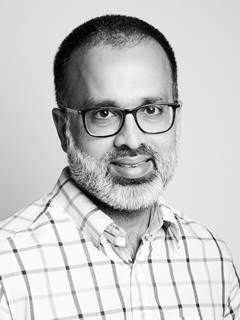
Assoc Prof. Omar Mubin
School of Computer, Data and Mathematical Sciences, Western Sydney University, Sydney, NSW, Australia.
Associate Professor Omar Mubin is an Associate Professor of Human-Computer Interaction at Western Sydney University, Australia. He received his PhD in Human-Robot Interaction from Eindhoven University of Technology, the Netherlands, and has research expertise across human-centred computing, interaction design, human-robot interaction, social robotics, artificial intelligence, and large language models. His recent and ongoing work is strongly focused on applications of adaptive chatbots, conversational agents, and agentic AI systems, particularly in education, healthcare, digital wellbeing, and human-centred technology design. He has published widely in international HCI, AI, robotics, and digital health venues and contributes to international research collaborations across Australia, Europe, the Middle East, and Asia.
Introduction
Over the last two decades, researchers have demonstrated that affective states such as boredom, frustration, confusion, and engaged concentration can be detected with reasonable accuracy across diverse platforms, populations, and educational contexts. These detectors have enabled substantial advances in understanding how affect shapes learning. Yet no digital learning platform in use at scale today employs affect detection to drive adaptation or reporting. This talk examines that paradox. I will trace the development and spread of sensor-free affect detection in education and contrast its trajectory with knowledge tracing and at-risk prediction—two educational data mining technologies that have successfully reached large-scale deployment. I then present seven hypotheses for the gap: 1) insufficient performance for real-time decision-making, 2) poor generalizability, 3) high training costs, 4) limited perceived value, 5) engineering complexity, 6) the availability of universal alternatives, and 7) ethical and cultural resistance. These barriers are situated within the histories of other technologies that stalled or scaled slowly, from expert systems to jetpacks to voice recognition. I discuss candidate solutions and argue that the most promising near-term directions involve reducing per-deployment detector cost, designing fail-soft interventions, embedding affect detection within existing school practices, and leveraging generative AI to address multiple barriers simultaneously.
Presentation
Prof. Ryan Shaun Baker: Presentation
25
Open Discussion
22


