Table of Contents
Enantioselective catalytic desymmetric ester aminolysis
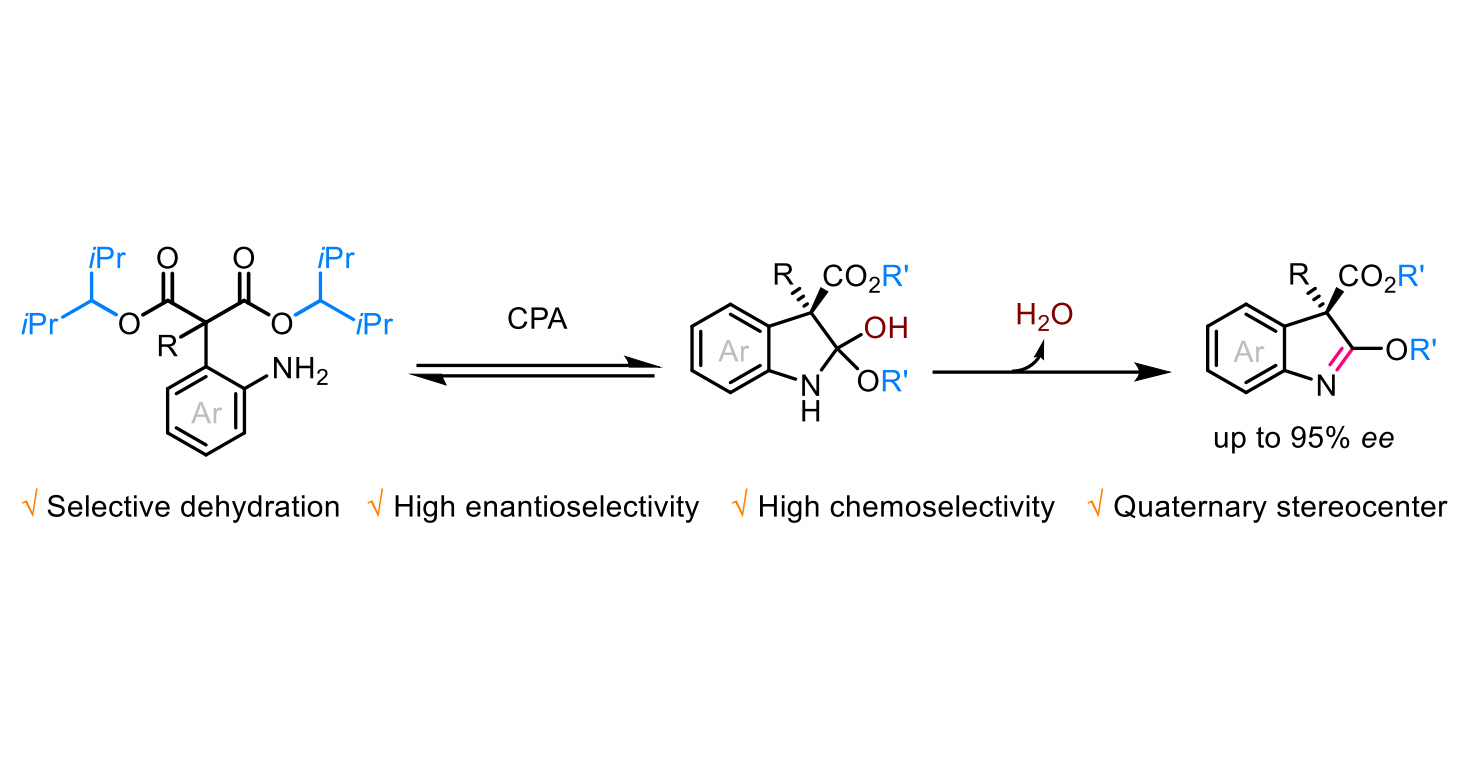
We report an organocatalytic enantioselective desymmetrization of 2-aminophenyl malonates enabled by intramolecular ester aminolysis. This protocol efficiently delivers C3-disubstituted oxindole derivatives bearing quaternary stereocenters under ...
More.We report an organocatalytic enantioselective desymmetrization of 2-aminophenyl malonates enabled by intramolecular ester aminolysis. This protocol efficiently delivers C3-disubstituted oxindole derivatives bearing quaternary stereocenters under mild conditions with excellent chemo- and enantioselectivities. Notably, this reaction follows an acid-promoted dehydration pathway instead of an alcohol elimination pathway, which differs from conventional ester aminolysis reactions reported previously. Gram-scale synthesis and further derivatization of the resulting products demonstrate the synthetic utility of this transformation
Less.Wen-Ya Zheng, ... Yu-Ping He
DOI:https://doi.org/10.70401/cc.2026.0037 - August 10, 2026
Dynamic kinetic resolution (DKR) of configurationally labile biaryls via enantioselective C−H functionalization
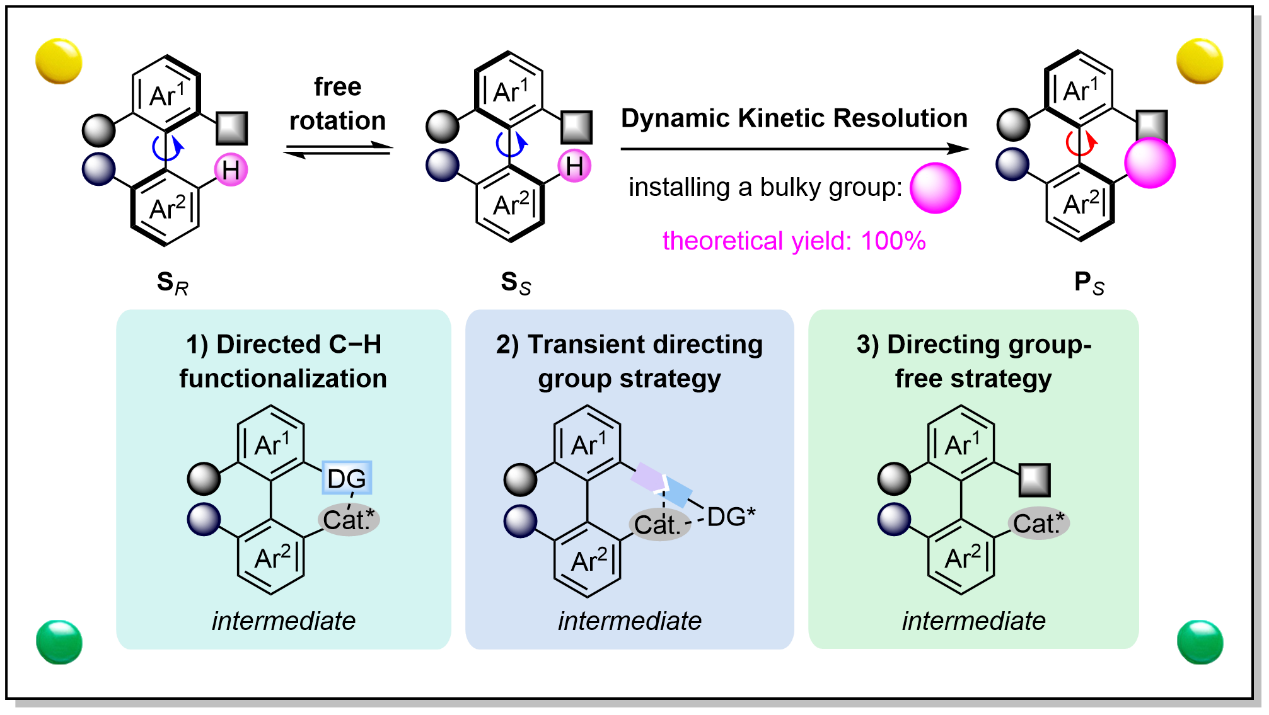
Owing to their stable axial chirality, atropisomeric biaryl compounds have found widespread applications in medicinal chemistry, natural product chemistry, and agricultural chemistry. Up to now, two principal strategies have been established for the ...
More.Owing to their stable axial chirality, atropisomeric biaryl compounds have found widespread applications in medicinal chemistry, natural product chemistry, and agricultural chemistry. Up to now, two principal strategies have been established for the synthesis of axially chiral biaryls: the enantioselective construction of the aryl-aryl axis via asymmetric coupling reactions, and the stereoselective modification of a pre-existing axis, which includes asymmetric construction of one aromatic ring, desymmetrization of prochiral substrates, and dynamic kinetic resolution (DKR) of biaryl skeletons. Among these strategies, enantioselective C−H functionalization avoids the use of pre-functionalized substrates and installs sterically demanding groups that enhance rotational barriers, thereby serving as an ideal DKR tool for the construction of atropisomeric biaryls directly from biaryl substrates with low rotational barriers. In this review, based on the nature of the directing groups, we summarize three distinct strategies for enantioselective C−H functionalization of biaryls with free axial rotation: directing group (DG)-mediated, transient DG-enabled, and DG-free approaches. The mechanisms and substrate scopes of selected representative reactions are also briefly discussed.
Less.Jie Zhang, ... Can Zhu
DOI:https://doi.org/10.70401/cc.2026.0036 - August 07, 2026
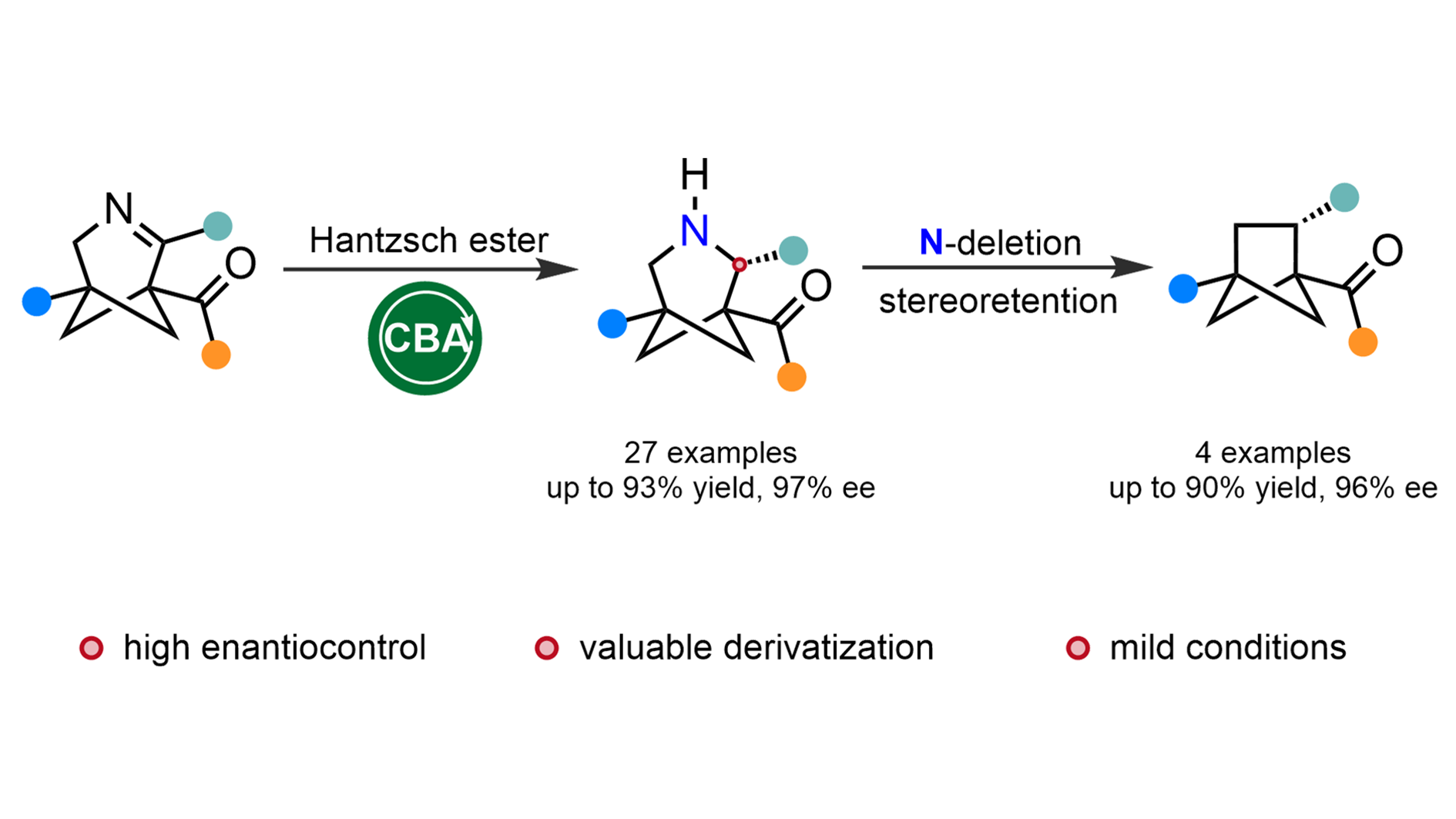
Chiral Brønsted acid-catalyzed enantioselective synthesis of 3-azabicyclo[3.1.1]heptanes
Although significant progress has been made in constructing three-dimensional, C(sp3)-rich bioisosteres for pyridines, the development of catalytic enantioselective approaches to access chiral nitrogen-containing bridged scaffolds ...
More.Although significant progress has been made in constructing three-dimensional, C(sp3)-rich bioisosteres for pyridines, the development of catalytic enantioselective approaches to access chiral nitrogen-containing bridged scaffolds remains limited and challenging. Herein, we report a chiral Brønsted acid-catalyzed enantioselective reduction of imines harnessing Hantzsch ester as the hydrogen source under mild conditions, delivering structurally diverse chiral 3-azabicyclo[3.1.1]heptanes (27 examples) in generally good yields with high enantiocontrol (up to 93% yield, 97% ee). The reaction can be scaled up to 2 mmol with full preservation of the excellent outcomes. These saturated heterocycles serve as versatile precursors, as demonstrated by conversion to bicyclo[2.1.1]hexanes via a facile nitrogen-deletion strategy with complete retention of enantiopurity. Notably, the enantioenriched 3-aza-BCHep can serve as a secondary amine organocatalyst, promoting the asymmetric Friedel–Crafts alkylation of indole with an α,β-unsaturated aldehyde in excellent yield and promising stereoinduction. This work establishes a practical route to access enantiopure saturated heterocyclic scaffolds, offering new three-dimensional candidates as potential pyridine isosteres in drug discovery and asymmetric catalysis.
Less.Minxin Deng, ... Bin Tan
DOI:https://doi.org/10.70401/cc.2026.0034 - July 22, 2026
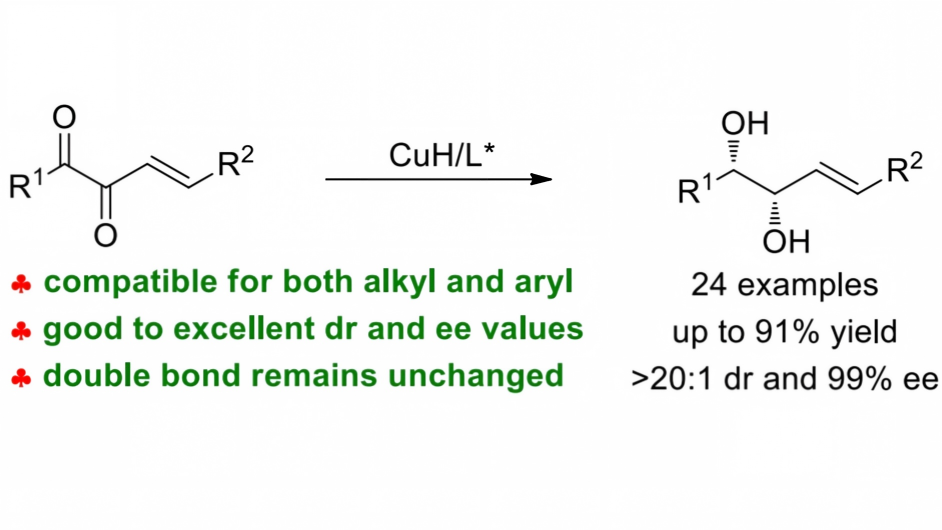
CuH-catalyzed asymmetric reduction of vinyl-substituted 1,2-diketones
The CuH-catalyzed regio-, diastereo-, and enantioselective reduction of vinyl-substituted 1,2-diketones has been achieved, efficiently affording a range of vinyl-substituted syn-1,2-diols, motifs that are ubiquitous in bioactive molecules and serve ...
More.The CuH-catalyzed regio-, diastereo-, and enantioselective reduction of vinyl-substituted 1,2-diketones has been achieved, efficiently affording a range of vinyl-substituted syn-1,2-diols, motifs that are ubiquitous in bioactive molecules and serve as valuable building blocks in organic synthesis. Totally 24 diol products were obtained smoothly (up to 91% yield) with a high level of stereoselectivity control (up to 99% ee and > 20:1 dr). The protocol tolerates both aryl and alkyl substrates, and the products facilitate a range of further transformations. The work represents a new choice that addresses the limitations of known methods.
Less.Chunyun Jiang, ... Xinqiang Fang
DOI:https://doi.org/10.70401/cc.2026.0033 - July 21, 2026